REVIEW · OSAKA
Mount Koya from Osaka: Cultural Small Group Day Tour
Book on GetYourGuide →Operated by 万達旅運株式会社 · Bookable on GetYourGuide
Cedar shade and sutras on a mountain. This Mount Koya day tour from Osaka is built around one big goal: help you understand what people come here to feel, see, and practice, from Okunoin’s quiet path to temple rituals and gardens. You get a full guided day, private transport, and a traditional meat-free lunch, so you’re not piecing it together on your own.
I especially like the Okunoin Cemetery walk, with its stone path, old cedars, and the sense that time slows down. I also love the Shojin Ryori lunch, because it’s not just food, it’s a practical look at Buddhist ideas shown through simple, seasonal cooking.
One consideration: this is a walking-focused day. You’ll be on your feet through temple grounds and cemetery paths, and the mountain weather can feel cooler, so you’ll want sturdy shoes and layers.
In This Review
- Key highlights worth waking up for
- Getting from Osaka to Koyasan without the headache
- Okunoin Cemetery: the cedar-lined walk that changes the pace
- Shojin Ryori lunch: a meal you can actually taste and understand
- Kongobuji Temple and Banryutei’s dragon rock garden
- Shakyo sutra copying or the Goma fire ritual
- Danjo Garan and Reihokan Museum: symbolism you can map
- Timing, walking, and mountain weather reality check
- Price and value: what you’re really paying for at $251
- Who this tour fits best (and who should skip it)
- Should you book Mount Koya from Osaka?
- FAQ
- FAQ
- How long is the Mount Koya day tour from Osaka?
- Where does pickup happen?
- Is this tour a private vehicle ride?
- What do I do at Kongobuji Temple?
- What is the difference between Shakyo and the Goma fire ritual?
- What is Shojin Ryori?
- Do I need to bring anything?
- Are there rules about food, pets, or smoking?
- Who can join, and is the group size guaranteed?
- What’s the cancellation and payment flexibility?
Key highlights worth waking up for
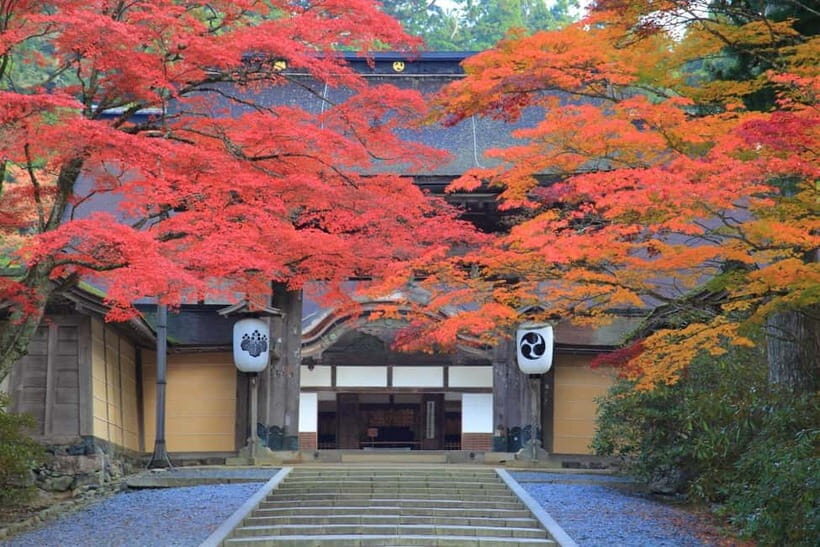
- Okunoin Cedar Trail: a stone-paved walk lined with ancient cedars and thousands of moss-covered tombstones
- Shojin Ryori Lunch: a meatless, fishless meal that keeps flavors gentle and seasonal
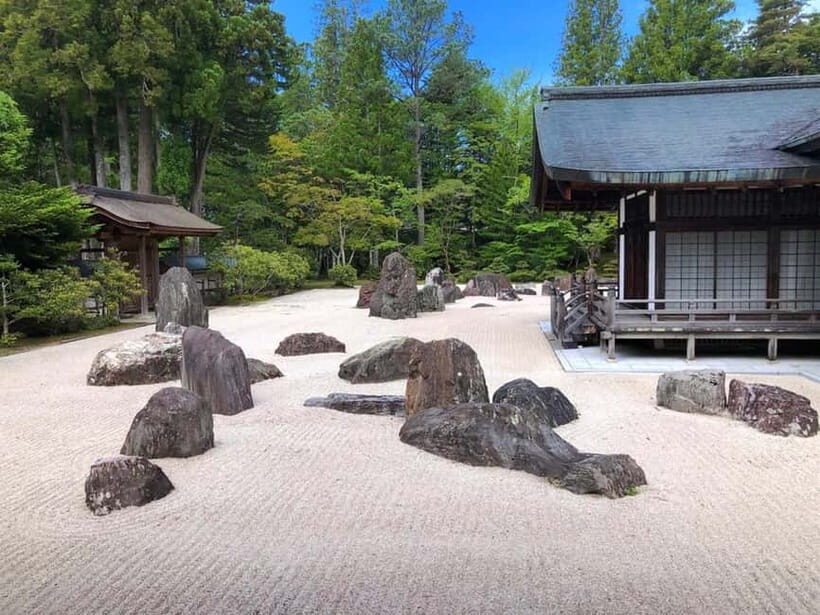
- Kongobuji Temple + Banryutei: fusuma ink paintings and Japan’s largest Zen rock garden
- Shakyo or Goma Fire: sutra copying to slow your mind, or Goma fire ritual to cleanse and pray
- Danjo Garan Complex: a symbolic arrangement of halls, pagodas, and statues in mandala-like harmony
- Reihokan Museum: context that helps you connect the art you’re seeing to the faith behind it
Getting from Osaka to Koyasan without the headache
Your day starts with pickup in central Osaka, so you avoid the typical “how do I get there?” stress. From there, you ride up to Koyasan in a private, comfortable vehicle. That matters because Mount Koya isn’t a quick hop; it’s a full-day pilgrimage zone. A private ride also keeps your group together and makes the start feel calm instead of chaotic.
Once you arrive, your professional English-speaking guide sets the tone with an introduction to why this mountain matters. Mount Koya is sacred for Shingon Buddhism, so the guide’s framing helps you read the places correctly, not just take photos. You’ll get the kind of background that makes later stops click—especially when you move from cemetery to temple architecture to ritual practice.
The tour is scheduled for a full 12 hours, which is long enough to include major sights but not so long that you’re stuck in transit all day. Still, plan to be mentally “on” through several stops. This is a culture and practice day, not a quick sightseeing loop.
You can also read our reviews of more tours and experiences in Osaka.


Okunoin Cemetery: the cedar-lined walk that changes the pace
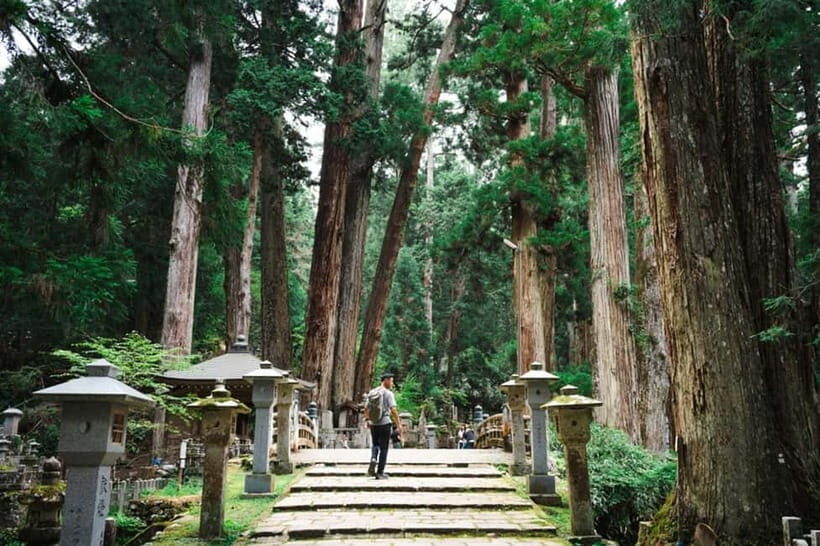
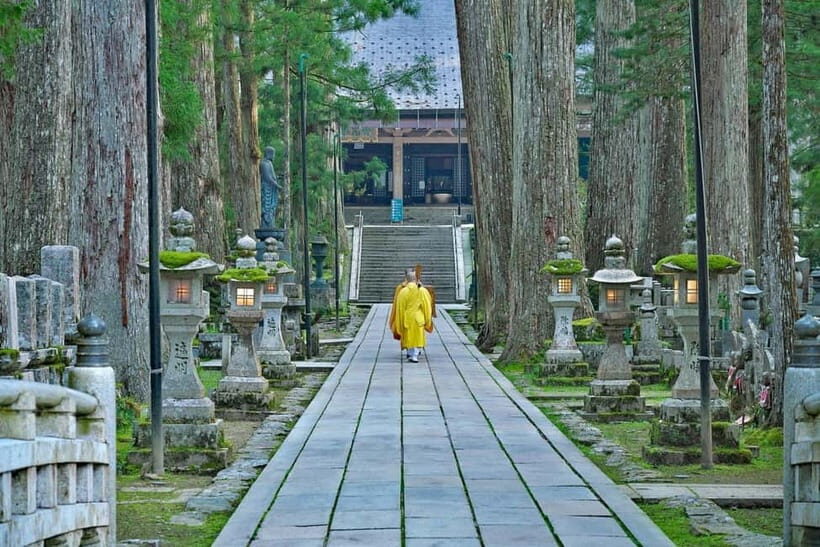
Okunoin is the first big emotional moment. It’s Japan’s largest and most revered cemetery, and the approach is part of the experience. You walk a stone-paved path through a corridor of ancient cedars, surrounded by thousands of moss-covered tombstones. It’s quiet in a way that feels intentional.
This section is described as silent, powerful, and emotionally resonant—and honestly, that’s exactly what you should expect. You’re moving through a landscape where people traditionally come to remember, reflect, and connect with spiritual presence. The setting is strong enough that you don’t need extra “entertainment” to make it meaningful.
The walk ends at the mausoleum of Kobo Daishi, who is believed to be in eternal rest. You’ll feel the shift from walking among markers to arriving at a place people treat as more than a landmark. Even if you don’t know all the doctrinal details, you’ll understand the respect built into how the space is approached.
Practical note: take your time. This isn’t a “power walk to the next stop” kind of place. If you tend to rush when you’re sightseeing, you’ll probably want to slow down here. That’s where the day’s best payoff tends to happen.
Shojin Ryori lunch: a meal you can actually taste and understand
After Okunoin, you get a Shojin Ryori lunch, and it’s one of the best value parts of the tour. It’s traditional Buddhist cuisine made without meat, fish, or strong seasonings. Instead of heavy sauces or loud flavors, it leans on seasonal vegetables and simple, mindful preparation.
This is the kind of lunch that teaches without lecturing. You’re not just eating to fuel up; you’re experiencing an expression of Buddhist values like harmony, compassion, and gratitude. If you’ve ever wondered how religion shows up in daily life, this is a clear, edible example.
The meal also helps reset your energy after the long walk. You’ll likely feel the difference between “temple day stomach” and normal eating, because the flavors are gentler and the portions are designed for a calm, steady rhythm.
One thing to keep in mind: substitutions for the lunch menu aren’t included. If you have strict dietary needs beyond what’s offered, you may need to plan carefully before you go. Otherwise, the lunch is a real highlight—not an afterthought.
Kongobuji Temple and Banryutei’s dragon rock garden
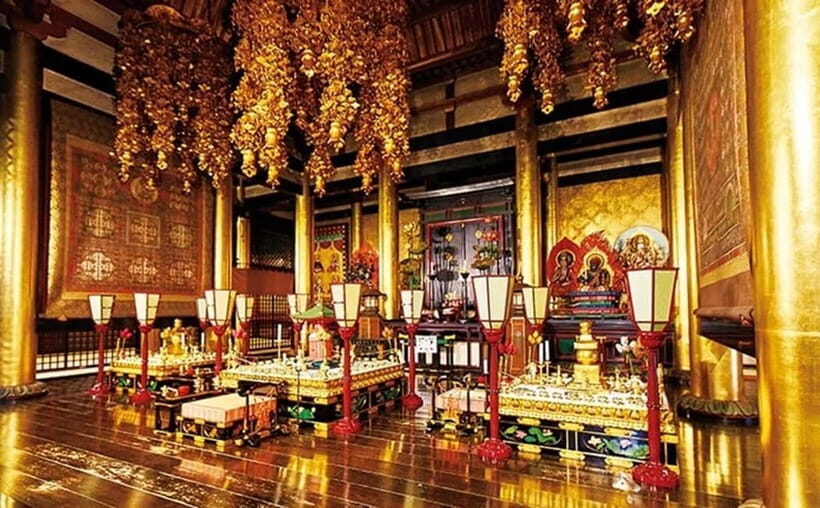
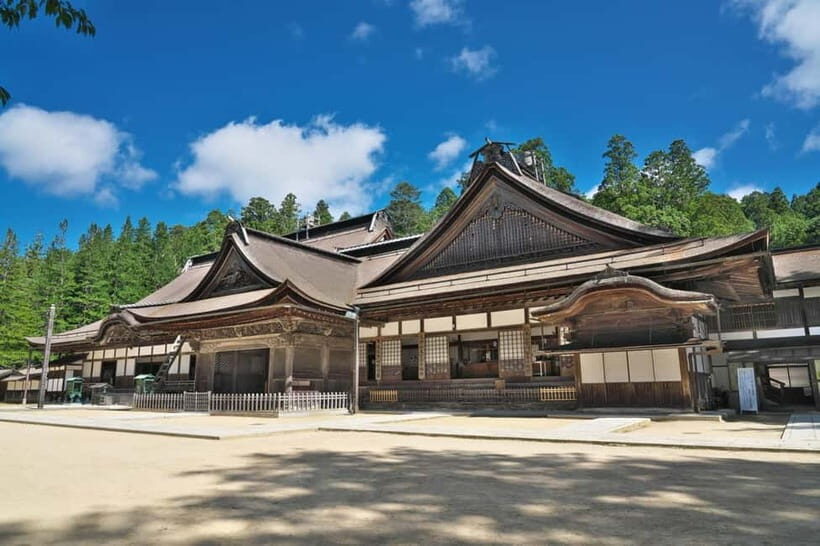
Next up is Kongobuji Temple, the head temple of Shingon Buddhism. This is where the visual language of the faith becomes easier to read. Inside, you can admire elegant fusuma (sliding doors) adorned with traditional ink paintings. These aren’t just decorations; they reinforce how carefully everyday movement and space are treated in temple life.
Then you stroll through Banryutei, which is described as Japan’s largest rock garden. It’s known for a symbolic scene: dragons emerging from clouds. Even if you don’t “see dragons” instantly, you’ll understand the intention. The garden turns contemplation into something you can walk through at human pace.
What I like about adding Banryutei here is sequencing. After Okunoin’s quiet cemetery walk, you move into a temple complex that’s structured for thought. You go from reflection in nature to reflection through design.
The tour also includes time to enter and explore parts of Kongobuji with guidance, so you’re not left guessing what you’re looking at. That matters with places like this, where small visual clues can be easy to miss when you’re moving quickly.
Shakyo sutra copying or the Goma fire ritual
Midday into the afternoon is where the day becomes more participatory. Depending on temple availability, you’ll either have a Shakyo (sutra copying) session or observe a Goma fire ritual.
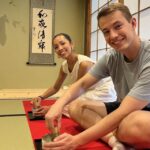
Shakyo is the calmer option. It asks you to slow down and copy sacred texts in a meditative way. Even if you can’t read Japanese script fluently, the act itself has value: you focus on lines, repetition, and attention. It’s practice you feel in your hands and breathing, not something you just watch from a distance.
The Goma fire ritual is the more dynamic choice. It’s described as a dynamic prayer ceremony using fire to cleanse negative energies. If you choose this option (or if the day offers it instead), you’ll be watching a living tradition that’s all about intention and ceremony.
This is one of those tour features that you should treat as a flexible bonus rather than a guaranteed checkbox. Temple scheduling can affect what’s available, but the core point stays the same: the day gives you a chance to connect with how Shingon practice is performed, not only how it looks.
If you’re the type who loves “hands-on” travel, Shakyo is likely to satisfy you. If you prefer witnessing ritual energy, the Goma ceremony may feel more memorable.

Danjo Garan and Reihokan Museum: symbolism you can map
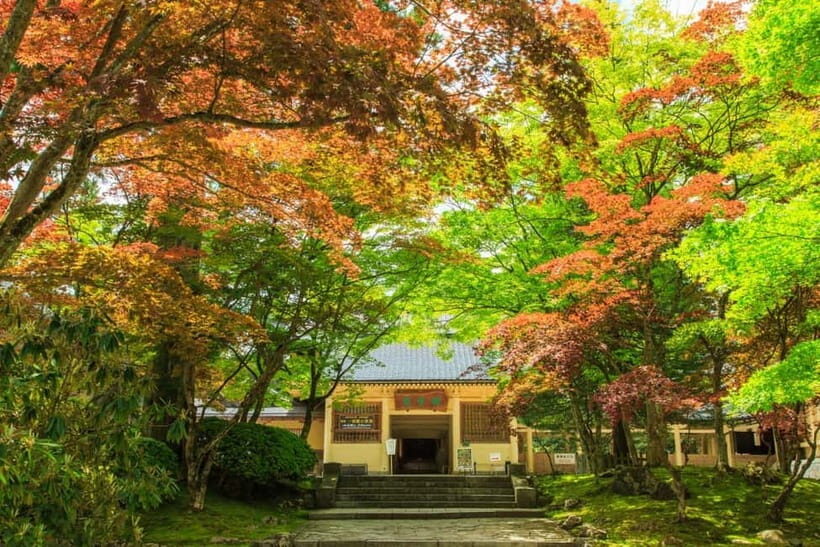
After the main temple experience, the tour includes Danjo Garan, a symbolic complex filled with pagodas, statues, and halls arranged in mandala-like harmony. “Mandala-like” is an important clue here. It means the layout isn’t random; it’s designed to express spiritual order through physical space.
Think of it like a visual map of belief. You’re not just seeing buildings—you’re seeing an arrangement meant to guide perception and contemplation. When your guide explains what you’re looking at, Danjo Garan becomes easier to follow, and it stops feeling like a list of structures.
Next, there’s a visit to Reihokan Museum. You get guided time there for about 1.5 hours, which is a smart pairing with the temple stops. Museums can feel optional on a day tour, but here it helps you connect art, objects, and the larger spiritual context that surrounds the practices you’ve seen. Even if you only absorb part of what’s explained, it improves your understanding of the day as a whole.
If you’re the type who likes to leave a place understanding why it matters, this museum stop is a big reason the itinerary feels complete.
Timing, walking, and mountain weather reality check
This is a 12-hour day, so the best way to enjoy it is to keep your expectations realistic. You’re combining early pickup, a scenic ride, multiple temple and cemetery visits, lunch, and a ritual or sutra activity. That’s a lot of “moving parts,” but it’s also why you get a guided private-transport setup instead of a free-for-all.
The itinerary also suggests a fair amount of walking, especially during Okunoin. Comfortable clothes and comfortable shoes are non-negotiable if you want to feel good by the afternoon. Even people who think they have good walking stamina can feel it on mountain paths.
Weather is another factor. The tour notes that mountain temperatures can be cooler, so bring layers. You don’t want to be shivering through temple time or sweating your way through a cedar-lined cemetery walk.
Also, bring cash. The day includes time to shop for items like incense or prayer beads, and cash is a practical backup.
Price and value: what you’re really paying for at $251
At $251 per person for a 12-hour small group day tour, the headline cost can look high until you break down what’s included. You’re not just paying for admission tickets. You’re paying for:
- Hotel pickup in central Osaka
- Private transport to Mount Koya
- A professional English-speaking guide throughout the key stops
- Guided time at major sites including Okunoin, Kongobuji, Danjo Garan, and Reihokan Museum
- A traditional Shojin Ryori lunch
- A temple practice experience: sutra copying (or potentially a Goma fire ritual, depending on availability)
The value logic is simple: Koyasan is a distance and timing problem for independent travelers, and temple understanding is hard to piece together alone. A guide helps you interpret what you’re seeing—fusuma paintings, rock garden symbolism, the purpose of the complex, and what the ritual or Shakyo is aiming to cultivate.
If your plan is to enjoy a spiritual day without transportation stress and without guessing what matters, this price starts to look fair. If you mainly want scenic views with minimal structure, you might feel it’s more than you need. But for a guided cultural/practice day, the cost aligns with the work of getting you there and teaching you what you’re looking at.
Who this tour fits best (and who should skip it)
This experience is best for you if you want a culture-and-practice day rather than a rush of checkboxes. It suits people who appreciate temples, gardens, and the meaning behind ceremonies. If you like guided explanations and you’re comfortable spending time in quiet, reverent spaces, you’ll probably find this day very satisfying.
It’s not a fit if you have mobility limitations. The tour notes it involves a fair amount of walking, and it’s explicitly not suitable for people with mobility impairments. It also isn’t appropriate for babies under 1 year, and there’s an upper age guidance of over 95 years.
You should also consider your comfort with a full schedule. This is one long day with multiple stops; it’s ideal for travelers who handle structure well.
Should you book Mount Koya from Osaka?
If your goal is to understand Mount Koya beyond postcard scenes, this tour is a strong choice. The combination of Okunoin’s cedar cemetery walk, Shojin Ryori lunch, guided temple stops, and a hands-on or observational practice (Shakyo or Goma) gives you a complete “why it matters” experience. You’ll also save yourself the hassle of transportation planning by using private transport and a clear pickup route.
Book it if you want meaning, not just movement. Skip it if you’re looking for a laid-back half-day, or if lots of walking and mountain cool temperatures would be a problem for you.
FAQ
FAQ
How long is the Mount Koya day tour from Osaka?
It runs for 12 hours.
Where does pickup happen?
Pickup is included from central Osaka. You’ll wait at the front entrance of your hotel at the pickup time.
Is this tour a private vehicle ride?
The transport to Mount Koya is described as private and comfortable, and the tour includes a professional guide.
What do I do at Kongobuji Temple?
You visit Kongobuji Temple with guided time, including inside viewing of fusuma with ink paintings and a stroll through Banryutei, Japan’s largest Zen rock garden.
What is the difference between Shakyo and the Goma fire ritual?
Shakyo is a sutra copying experience focused on slowing down and copying sacred texts in a meditative way. The Goma fire ritual is a prayer ceremony using fire to cleanse negative energies. Which one you get depends on temple availability.
What is Shojin Ryori?
Shojin Ryori is a traditional Buddhist lunch made without meat or fish and without strong seasonings, centered on seasonal vegetables and simple preparation.
Do I need to bring anything?
Wear comfortable shoes and clothes, and bring cash.
Are there rules about food, pets, or smoking?
Food isn’t allowed in the vehicle. Pets are not allowed, and smoking is not allowed during the tour.
Who can join, and is the group size guaranteed?
The tour requires a minimum of 4 participants. If fewer than 4 join, the tour will be cancelled. It’s not suitable for people with mobility impairments, babies under 1 year, or people over 95 years.
What’s the cancellation and payment flexibility?
You can cancel up to 24 hours in advance for a full refund, and there’s an option to reserve now and pay later.