REVIEW · OSAKA
Osaka: UTAGE Japanese Taiko Live Show
Book on GetYourGuide →Operated by 株式会社TryHard Japan · Bookable on GetYourGuide
A big drum, then the room goes electric. UTAGE in Osaka takes classic Japanese instruments like taiko, shamisen, and shakuhachi, and pairs them with computer-driven sound and sharp visuals.
Two things I really like: you get close to the performers in a small, lively setting, and you’re not stuck only watching. The show also builds in audience interaction, including a chance to join for one song.
One thing to consider: once the music starts, late entry isn’t allowed because of production timing. So arrive early, sit down, and be ready when the first beat lands.
In This Review
- Key takeaways before you go
- UTAGE in Osaka Cultural Center: close-up Japanese sound meets modern tech
- The 180 cm drum: why Kansai’s biggest taiko changes the room
- TRAinnovation and the instrument lineup you’ll actually hear
- Audience interaction: how the one-song stage participation works
- Small theatre energy: close seats, big feelings
- Getting there on time at Osaka Cultural Center
- Photo etiquette and what you can expect
- Price and value: is $40 worth it in Osaka?
- The downstairs photo stop: samurai swords and umbrellas
- Who should book UTAGE, and who might pass
- Should you book UTAGE Japanese Taiko Live Show in Osaka?
- FAQ
- Where does the UTAGE show start and end?
- How much does the Osaka UTAGE Japanese Taiko Live Show cost?
- What time should I arrive before the show?
- Can I enter after the show begins?
- What languages is the show presented in?
- What instruments are included in the performance?
- Can I participate as a performer?
- Are photos allowed?
- What are the cancellation rules?
Key takeaways before you go

- Kansai’s 180 cm taiko drum is a headline moment, built for impact you can feel in your chest
- Traditional instruments + computer music create a modern sound that still stays unmistakably Japanese
- Crowd participation includes one-song stage involvement for a limited time
- Small-theatre feel keeps you near the band, so the energy stays personal
- Photos before, during, and after are part of the experience, plus a downstairs photo corner
UTAGE in Osaka Cultural Center: close-up Japanese sound meets modern tech
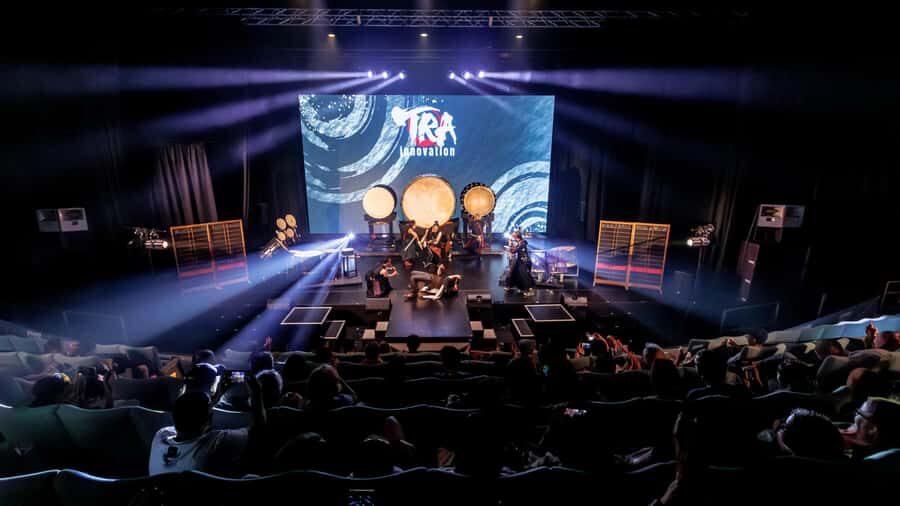
UTAGE LIVE SHOW is staged around a lineup of Japanese instruments: Japanese drums, shamisen, shakuhachi, and shinobue, among others. What makes it feel different from a typical concert is the way the performance blends those sounds with computer music and visual elements that keep the pace moving.
You’ll be sitting in a real show space, not a lecture hall or a distant amphitheater. The effect is that you notice details you usually miss at bigger venues: the sharper edges of the shamisen plucks, the breathy tone of shakuhachi, and the way the rhythm section locks everything together. If you’re the kind of traveler who likes a show that moves fast and stays fun, this is the setup.
The vibe is also international-friendly. Even if you don’t speak Japanese, this is mostly a listening-and-looking experience: hands, stance, posture, call-and-response moments, and the sheer volume control of percussion.
You can also read our reviews of more tours and experiences in Osaka

The 180 cm drum: why Kansai’s biggest taiko changes the room
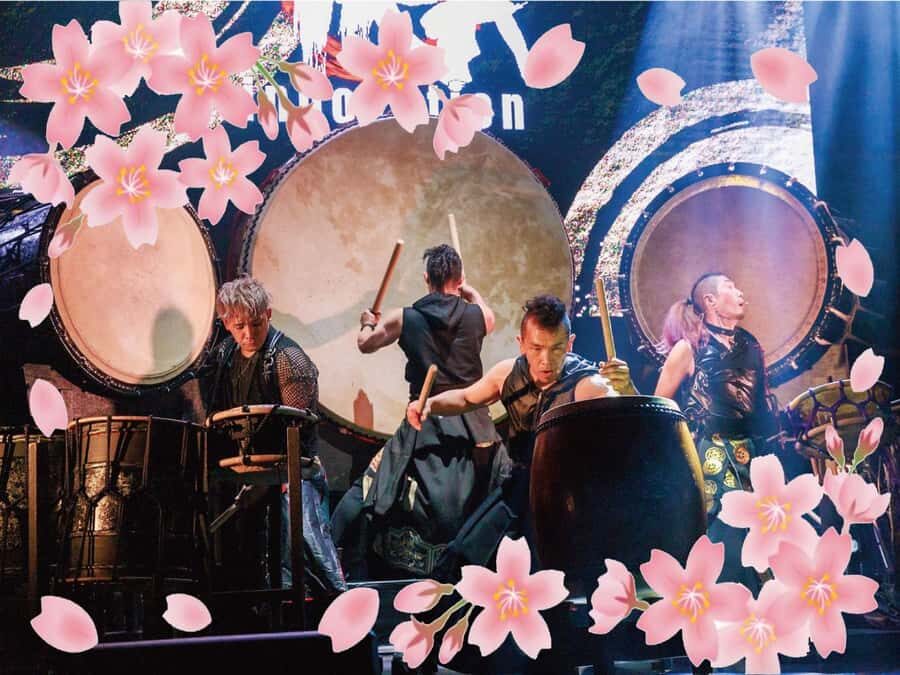
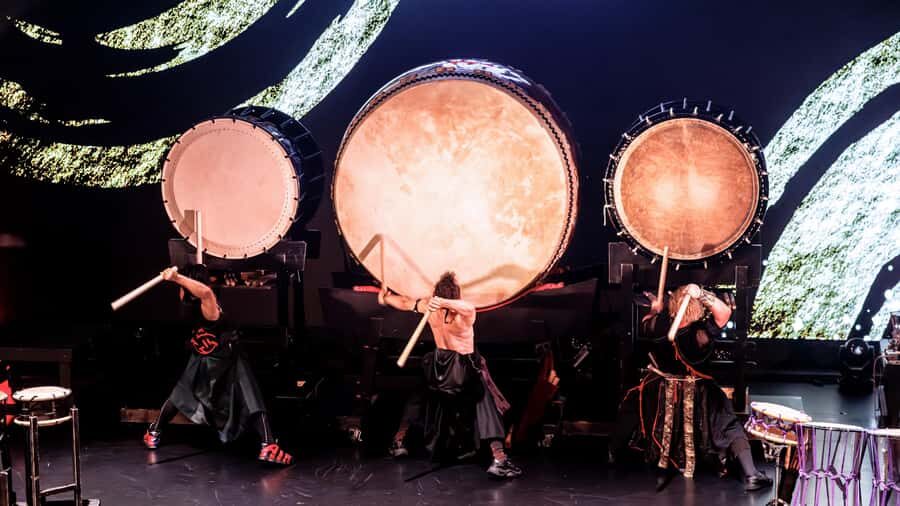
The headliner is a taiko drum with a 180 cm diameter, described as the largest large drum in Kansai. Size matters here in a practical way. A big drum doesn’t just sound louder. It carries a deeper body to the tone, and that makes the rhythms hit differently compared with smaller drums.
In performance terms, expect the drum to act like the anchor of the show. When the largest drum is introduced, the rest of the band typically makes room for it, so the show breathes around that moment. You’ll hear it as both rhythm and atmosphere, especially during transitions when the computer music is building momentum.
If you’ve ever watched taiko from the back of a hall, you know the risk: it can become all noise and less feeling. This show’s format pushes you closer to the action. Even one description of the staging points to the band being only a few meters away, and that’s exactly the distance where you start reading the performers’ timing, not just hearing it.
TRAinnovation and the instrument lineup you’ll actually hear
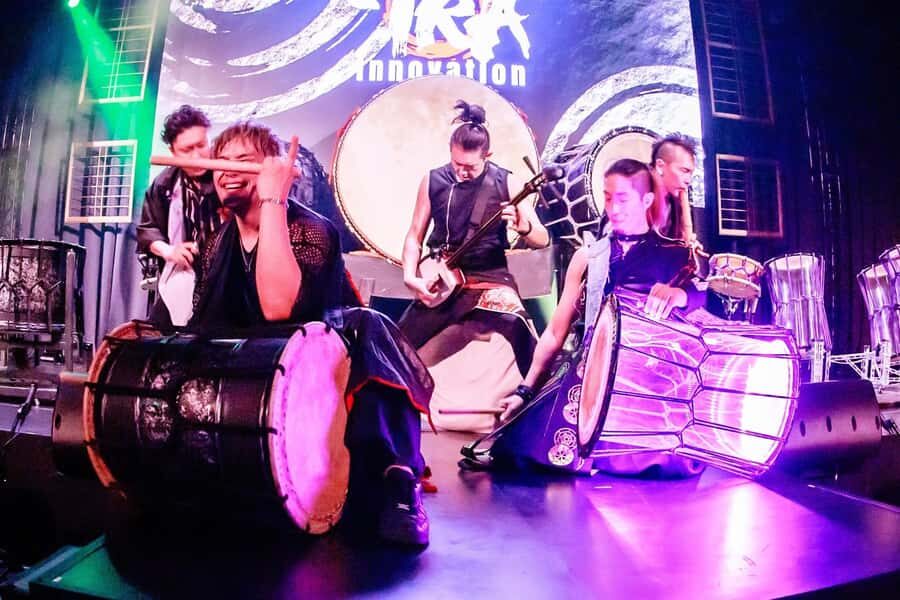
The band credited for exciting the audience is TRAinnovation. They’re paired with the instrument roster: Japanese drums plus strings and wind instruments like shamisen, shakuhachi, and shinobue. The show also adds computer music, so it’s not a museum performance. It’s performance music that uses modern tools to sharpen the atmosphere.
Here’s how to think about what you’re hearing, even if you’re new to Japanese instruments:
- Shamisen gives you that quick, percussive bite in the sound, like a rhythmic accent that can also turn melodic.
- Shakuhachi brings air and space. It’s less about volume and more about breath, tone color, and phrasing.
- Shinobue adds a bright, reactive whistle-like layer that tends to cut through when the rhythm needs a top line.
- Taiko handles the weight. It drives the structure, and it also acts as the emotional volume knob for the whole room.
The practical takeaway: don’t treat this like a sit-and-watch symphony. The instruments trade roles. Some moments are drum-forward. Others lean into wind or strings. And when the computer music shows up, it’s usually to connect those parts and keep the energy from flattening.
Audience interaction: how the one-song stage participation works
One of the best parts of UTAGE is that it’s not strictly spectator-only. The show invites customers to the stage and also offers an opportunity for you to participate in a one-song show for a limited time.
You should think of this as a short, structured moment rather than a free-form jam. There’s likely a selection process because it’s limited time and production needs to stay on track. The upside is that even if you don’t get picked, the show still includes audience energy—so you’re not left out.
If you do get the chance, the biggest practical advice is to watch what’s happening first. In a taiko-style environment, timing matters more than knowing the tradition perfectly. You don’t need technical skill. You need attention, a willingness to follow cues, and a bit of courage to step forward when called.
Also, plan to stay engaged to the end. The show’s rhythm is built for interaction, and the moments that include audience participation tend to land when the band is already warmed up and the crowd is fully with them.
Small theatre energy: close seats, big feelings
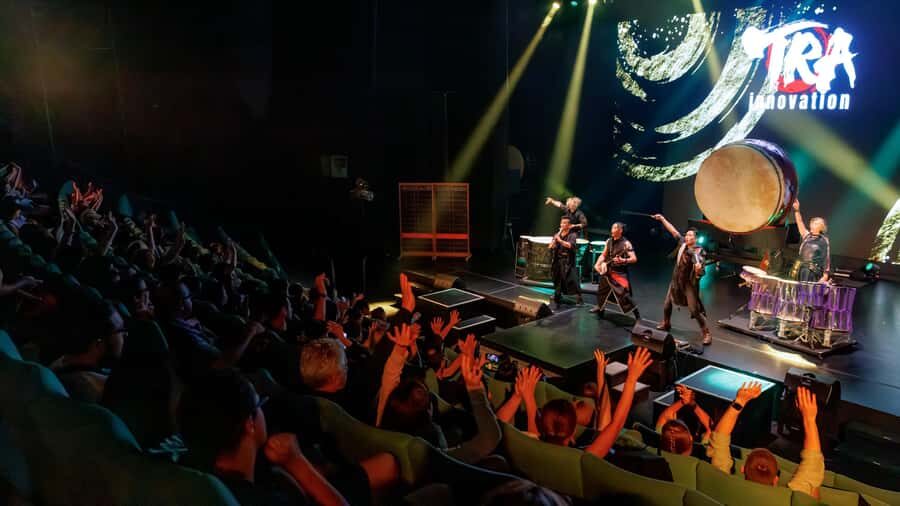
This is staged in a way that keeps you near the performers. One account described an audience of about thirty people seated in three rows, with the band only a few meters away. Even if your seating setup varies, the design goal seems consistent: keep the show intimate enough that you can track the performers’ focus.
That matters for two reasons. First, you get better sound balance. Second, the band can actually react to the crowd, not just perform at it. Several descriptions mention high energy throughout the show and strong audience engagement, including playful interactions during the performance.
If you’re traveling with family, this close setting can make a difference. Kids and teens often bounce off performances that feel distant or too formal. Here, the pacing and audience involvement give everyone something to do with their attention besides just watch.




Getting there on time at Osaka Cultural Center

UTAGE starts at Osaka Cultural Center, and the activity ends back at the meeting point. That’s a simple route plan, which is great if you’re pairing it with other Osaka plans.
Here’s the logistics truth: you need to arrive early. The guidance is to be at the venue at least 5 minutes before the show starts. Once the show begins, you will not be allowed entry due to production reasons. So don’t treat the start time like a suggestion.
Also note the language: Japanese. The interaction parts may include cues you can follow without perfect understanding, but you’ll still benefit if you go in with a relaxed, go-with-the-flow attitude.
Photo etiquette and what you can expect
There are two useful photo points from the experience descriptions:
- You can take photos during the performance.
- After the show, there’s a chance to meet and photograph with the performers.
A practical strategy: bring your phone charged and cleared of notifications, and be ready to follow any instructions from staff about when cameras are welcome.
Price and value: is $40 worth it in Osaka?
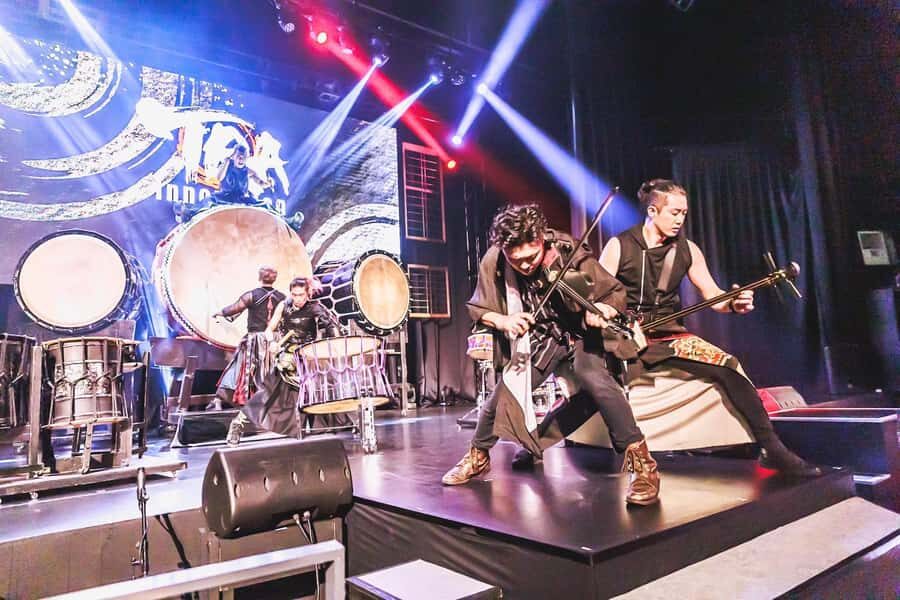
At $40 per person, UTAGE positions itself as a value show rather than a pricey concert ticket. For me, the value case comes down to three things you get that many shows don’t bundle:
- Real performance quality with top-tier musicianship across multiple instruments.
- Modern-to-traditional mixing (computer music plus classic instruments), which makes it feel current, not only preserved.
- Interactivity through on-stage participation for one song, plus post-show photo moments.
If you’re the type of traveler who likes one “big hit” evening activity, this works well. It’s also a solid option for mixed groups: people who love Japanese culture get the instruments, and people who just want energy and fun get the visuals, rhythm, and audience engagement.
The only value risk is timing: if you show up late and miss entry, you lose the whole experience. That’s not a cost problem; it’s an attention-and-timing problem. Plan to be early and you’re almost guaranteed to get your money’s worth.
The downstairs photo stop: samurai swords and umbrellas
There’s a shop-related add-on described as continuing after the performance. After the show, visitors can pose for complimentary photos with samurai swords and traditional Japanese umbrellas. Staff are described as enthusiastic, engaging, and helpful, which makes this feel less like a hard-sell souvenir grab and more like a fun photo moment.
What I like about this part is that it gives you something visual to take home without having to negotiate a purchase immediately. Even if you’re not buying anything, it turns the night into a complete experience: sound first, then a playful photo finish.
Who should book UTAGE, and who might pass
UTAGE makes sense if you want:
- A high-energy performance that blends traditional Japanese instruments with modern music tools
- A show where you can actually interact, not just sit quietly
- Something family-friendly that doesn’t require cultural background to enjoy
It might be less ideal if:
- You hate loud percussion or prefer very quiet, purely acoustic experiences
- You’re strongly sensitive to tight schedule constraints and can’t reliably arrive early
- You expect a lecture about instruments rather than a performance-first show
The best match is someone who likes live rhythm, visual cues, and a small-audience feel.
Should you book UTAGE Japanese Taiko Live Show in Osaka?
If you’re deciding between a big cultural show and a fun night out, UTAGE is one of the better ways to do both. The 180 cm taiko drum, the TRAinnovation energy, and the mix of shamisen and shakuhachi with computer music make it feel like Japanese tradition meeting the present.
Book it if you can be on time and you’re game for audience interaction and photo moments. Skip it if you only want a quiet, sit-and-listen concert or you don’t like the idea of being subject to entry timing once the show starts.
If your Osaka schedule has even one open evening, this is the kind of stop that turns into a story you’ll remember.
FAQ
Where does the UTAGE show start and end?
The show starts at Osaka Cultural Center and ends back at the same meeting point.
How much does the Osaka UTAGE Japanese Taiko Live Show cost?
The price is listed as $40 per person.
What time should I arrive before the show?
Please arrive at least 5 minutes before the show starts.
Can I enter after the show begins?
No. Once the show begins, entry is not allowed due to production reasons.
What languages is the show presented in?
The show language is Japanese.
What instruments are included in the performance?
The lineup includes Japanese drums, shamisen, shakuhachi, shinobue, and a blend with computer music.
Can I participate as a performer?
Yes. You can participate for one song for a limited time.
Are photos allowed?
Photos during the performance and meeting and photographing with the performers afterward are mentioned in the experience information.
What are the cancellation rules?
You can cancel up to 24 hours in advance for a full refund.