Night falls, and the garden lights up. At teamLab Botanical Garden Osaka, the real draw is the light-and-sound night transformation, where nature becomes part of a digital artwork. I especially like the glowing forest paths and the way light and sound seem to react as you move. I also like the standout water moment with floating resonating lamps on Oike Lake. One possible drawback: if you want lots of totally different scenes in a short time, this experience can start to feel repetitive.
This is a short evening outing, typically 1 to 2 hours, in the Nagai Botanical Garden area. You’ll walk through darkened pathways, guided by the art itself, ending up around the lake installations where the show effect is strongest.
Plan for a few rules that matter. You can’t bring outside food or drinks, there’s no luggage storage, and re-entry isn’t allowed after you exit. Also note that flashing lights and loud noises can happen, and tripods or other auxiliary gear are not allowed.
In This Review
- Key things to know before you go
- Price and timing: is $28 worth your Osaka night?
- Entering the dream: how the garden experience works at night
- Your main stop: Nagai Botanical Garden’s nighttime teamLab transformation
- Floating Resonating Lamps on Oike Lake: the moment many people wait for
- The luminous bald cypress forest and the role of sound
- How to pace yourself (and avoid feeling like it’s one long loop)
- Rules that affect your visit more than you think
- Getting there: near public transportation, plan for evening crowds
- Who will love this (and who might not)
- Should you book teamLab Botanical Garden Osaka tickets?
- FAQ
- What are the opening hours for teamLab Botanical Garden Osaka?
- How long does the experience take?
- How much do tickets cost?
- Is admission included?
- Can I bring outside food and drinks?
- Is there luggage storage or re-entry after I leave?
Key things to know before you go
- Interactive light response as you move through the garden paths
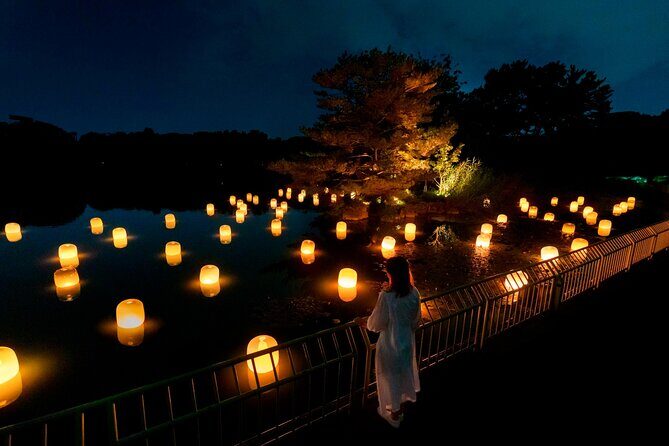
- Floating Resonating Lamps on Oike Lake with lights rippling across the water
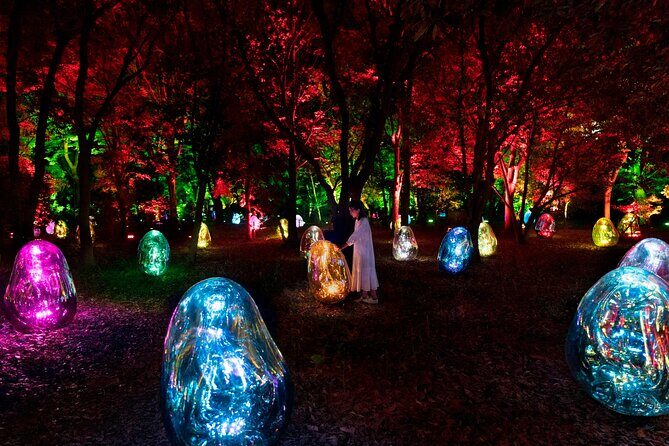
- Luminous bald cypress forest that changes during the experience
- Night-only hours (7:00 PM to 9:00 PM) during the listed season dates
- No luggage storage and no re-entry, so travel light
- No tripods/monopods/selfie sticks, which keeps the walk clearer for everyone
Price and timing: is $28 worth your Osaka night?
At $28 per person for about 1–2 hours, this ticket is priced like a ticketed, timed-night experience rather than a full-day attraction. That can actually be good value if you’re the type who enjoys optical effects and sound design more than long museum-style touring.
The key is matching the experience to your expectations. If you want something that works like a normal botanical garden visit—quiet, open space, lots of wandering—this isn’t that. It’s a digital art event built on a real garden setting, so your “time on site” is mostly spent in a controlled flow of light, sound, and interactive moments.
When you book, aim to arrive early within the opening window (7:00 PM to 9:00 PM). The venue operates at night only during the dates listed, and there’s no re-entry once you leave, so you don’t want to miss your chance to return for one more installation angle.
You can also read our reviews of more tours and experiences in Osaka

Entering the dream: how the garden experience works at night
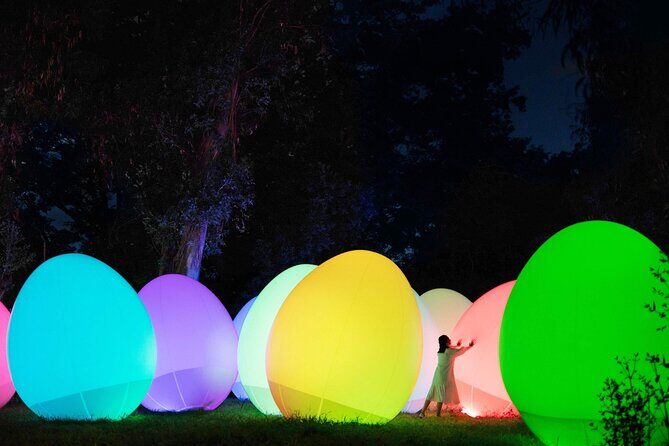
Once you’re in, the big idea is simple: you’re not just looking at art, you’re part of how it behaves. The garden pathways are set up so the lights respond to your movement, and sound echoes through the trees and water as you walk.
That interaction is the heart of the value. Even if you’ve seen teamLab-style light rooms elsewhere, the botanical setting changes the feel. You’re walking under trees with a nighttime glow that feels less like a showroom and more like a moving scene you pass through.
You should also expect a guided rhythm even if you don’t have a person leading you. The installations are arranged so you keep moving toward the more dramatic zones—especially the lake area.
And because it’s dark, the experience is also more physical than it sounds. You’ll be walking on nighttime paths with the art pulling your attention forward, so wear shoes that don’t mind wet-looking ground or uneven footing in the evening.
Your main stop: Nagai Botanical Garden’s nighttime teamLab transformation
The experience is located within Nagai Botanical Garden, and the night version is what you’re paying for. After sunset, the garden is transformed into a glowing walk where the digital layer rides on top of real plants and water.
Here’s what you can look for as you go:
- Glowing forests of cypress trees (the “bald cypress forest” is a named highlight)
- Interactive light moments triggered by your presence and movement
- Lakeside installations that use water as the canvas
This is the part where photos are easiest. Because the lighting is designed for night viewing, you’ll see strong color and reflection effects—especially near the water. But keep in mind the rules: you can’t bring tripods, monopods, or selfie sticks. If you’re trying to shoot long-exposure photos, you may need to plan for handheld only.
Floating Resonating Lamps on Oike Lake: the moment many people wait for
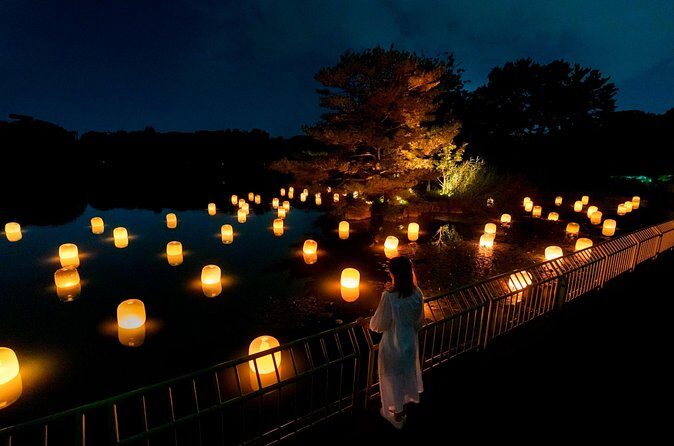
Oike Lake is the installation name you’ll keep hearing about for good reason. The standout feature is Floating Resonating Lamps on Oike Lake, where illuminated elements create shimmering effects on the water.
What makes this one special isn’t just that the lamps glow. It’s that they look synced with the overall sound environment, so the lake becomes the audio-visual anchor of your visit. Even if you’ve only caught brief glimpses of teamLab-style water works online, seeing it in person is usually more convincing because the reflections move as you walk and change your viewing angle.
Practical tip: when you reach the lake area, don’t just stop once. Walk to a couple of viewpoints if space allows. Water reflections shift quickly, and you’ll often get a cleaner look from slightly different positions.
Also, since lights and sound can be intense, this is a good place to reset your expectations and take your time. If you rush, you’ll miss the “show” feeling and treat it like just another photo stop.
The luminous bald cypress forest and the role of sound

Another major highlight is the luminous bald cypress forest, described as changing as you pass through. In a botanical garden, that’s a powerful pairing: tree silhouettes, trunks, and natural spacing become part of the projection-like light behavior.
The sound design matters here too. You’re likely to hear audio cues that echo through trees and water, reinforcing the sense that the artwork is responding to you and your path. That’s the psychological trick that turns a standard walk into an event.
Two things to consider:
- If you’re sensitive to flashing lights or loud noises, this is not the calm, soft-night vibe. The venue is explicit that you may encounter both.
- If you prefer low-stimulation environments, you might find some sections more intense than expected, especially in the darker forest zones where attention gets pulled into the light-sound cues.





How to pace yourself (and avoid feeling like it’s one long loop)
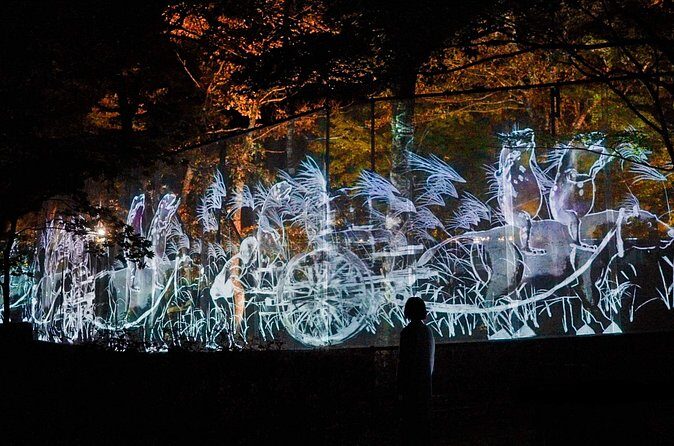
One downside that can happen with night light-art experiences is that they can run as a sequence of similar-feeling scenes. Some people find that each area can feel like a long stretch of the same look and the same type of interaction.
You can reduce that risk with pacing:
- Decide ahead of time what you want most. If it’s the lake, give yourself extra time there and move faster through the forest zones.
- Don’t stay too long at one viewpoint during transitions. If you notice you’re just repeating the same angles, shift locations.
- Keep your expectations flexible. This experience is built more around feeling and reaction than around constant new themes every few minutes.
Also, the experience is described as interactive, but interaction can be imperfect. If some interactive effects don’t respond as you expect, it doesn’t mean the experience is broken—it can be a limitation of how the art responds to your position at that moment. Still, it’s good to know that not every interaction will feel perfectly reliable every time you try it.
Rules that affect your visit more than you think
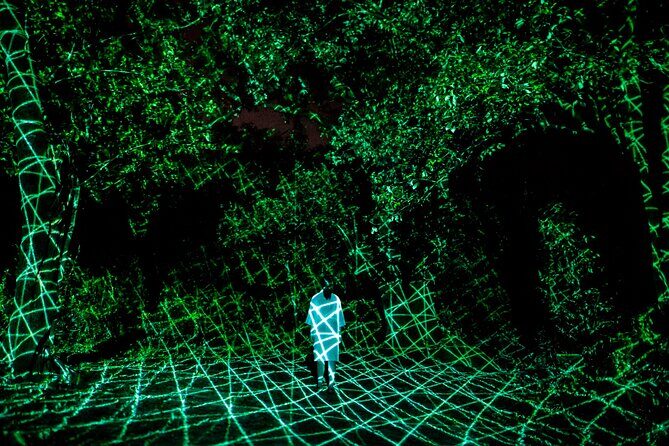
A handful of venue rules can shape how enjoyable your evening feels:
- No outside food or drinks inside the venue. Plan water before you enter.
- No luggage storage on site. Keep your bag small. If you arrive with a lot of shopping bags, you’ll likely regret it.
- No re-entry after you leave the venue. Use the restroom before you step too far in.
- No smoking or drinking.
- Flashing lights and loud noises may occur—so if that’s an issue for you, decide early.
- No tripods, monopods, selfie sticks, or auxiliary equipment. This can limit certain photo styles, but it also keeps paths from turning into filming lanes.
None of these rules are strange for a ticketed digital-art event, but together they make one big suggestion: treat this like a dedicated night outing, not a “drop in after dinner” plan with flexible detours.
Getting there: near public transportation, plan for evening crowds
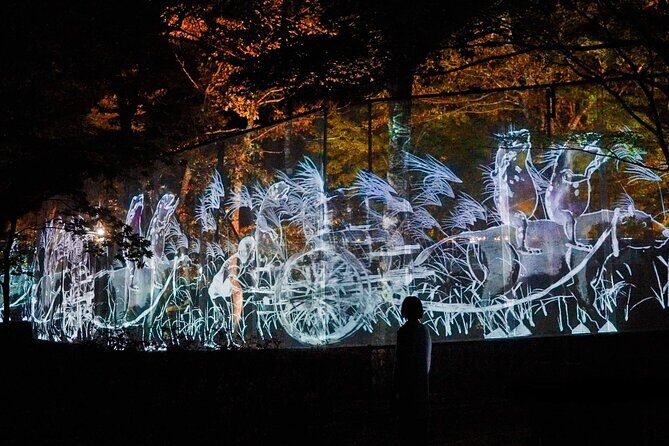
The venue is described as near public transportation, which is a win in Osaka. Still, because it’s a timed night slot, crowds can build around entry.
A smart strategy is to avoid arriving right at the start of the opening window if you can. Even a ten- or fifteen-minute difference can change how long you wait before you reach the installations.
Once you’re inside, the rule set and the art flow generally keep people moving. That’s good for atmosphere, but it also means you shouldn’t wait too long for a perfect photo moment if you feel the flow moving you forward.
Who will love this (and who might not)
This is a good fit if you like:
- Nighttime art and light-and-sound experiences
- Watching how reflections and shadows change in real spaces
- Photo moments that don’t feel like a typical museum
- The idea of walking through a forest where the scene evolves
It may not be your best match if:
- You want lots of totally different themed areas in a short time
- You expect interaction to work flawlessly every single time
- You hate flashing lights or loud sound cues
It’s also especially appealing for couples and anyone who enjoys a shared “walking and reacting” experience. Solo visitors can enjoy it too, but couples often get more value from pausing and finding a couple of viewing spots together near the lake.
Should you book teamLab Botanical Garden Osaka tickets?
Book it if you’re curious about how digital art and a real botanical garden can work together at night. At $28 for about 1–2 hours, it’s a straightforward spend: pay for the experience, then enjoy it for the time you’re there.
Skip it or think twice if you’re the type who needs constant novelty and lots of distinct sections. If you go, go with a clear plan: prioritize the Oike Lake lamps and set your expectations for a nighttime walk that focuses more on atmosphere than on endless variety. Also, if flashing lights or loud audio are a concern for you, treat that as a decisive factor.
FAQ
What are the opening hours for teamLab Botanical Garden Osaka?
The experience runs from 7:00 PM to 9:00 PM, Monday through Sunday, during the listed season dates.
How long does the experience take?
The visit is approximately 1 to 2 hours.
How much do tickets cost?
Tickets are listed at $28.00 per person.
Is admission included?
Yes. Admission to the attractions is included with the ticket.
Can I bring outside food and drinks?
No. Outside food and drinks are not allowed inside the venue.
Is there luggage storage or re-entry after I leave?
There is no luggage storage facility at the venue, and re-entry is not allowed after you leave.