REVIEW · OSAKA
One-Day Osaka Bike Adventure: 5–6 Hours
Book on Viator →Operated by In Kansai Experiences · Bookable on Viator
Osaka shrinks fast when you ride. This one-day Osaka bike adventure strings together the city’s headline sights—Osaka Castle, Shitennoji, and Shinsekai—while your guide adds the why behind each place. It’s an easy way to get your bearings without spending the whole day tracing routes on foot.
I especially like the small-group pacing and the fact that each stop is short, focused, and actually useful for orientation. I also love the mix of big landmarks and fun sidetrips, like the Tower Knives Osaka stop where you can try the tools yourself.
One drawback to plan for: this tour expects moderate fitness and it runs best in good weather. Even with a mostly easy ride, you’ll still cover around 20 km, and there can be a little extra effort near Osaka Castle.
In This Review
- Key highlights at a glance
- Why This 5–6 Hour Osaka Bike Loop Feels So Efficient
- Meeting at Tenma (9:30 a.m.) and What You’ll Actually Get
- Stop-by-Stop Route: Nakanoshima to Osaka Castle Park
- Nakanoshima Park: Osaka’s riverfront calm
- Mint Museum grounds: modernisation stories without the ticket
- Osaka Castle Park: major views, plus a small effort check
- Shitennoji and Shinsekai: Two Osaka moods back-to-back
- Shitennoji: a serene, early-history stop
- Shinsekai: the blue-collar Osaka photo moment
- Tower Knives Osaka and Namba Yasaka Shrine: The Fun Stops That Add Personality
- Tower Knives Osaka: meet the craft and try the tools
- Namba Yasaka Shrine: quick prayers and good-luck charm
- How the Guide Turns Streets Into Stories (and Keeps You Safe)
- Lunch Break: Local Food You Choose While the Route Keeps Moving
- Pace, Distance, and Bike Comfort: What Your Body Needs to Be Ready For
- Price Value: What $106.12 Really Buys You
- Weather, Crowds, and Common-Sense Tips for a Smooth Ride
- Should You Book This One-Day Osaka Bike Adventure?
- FAQ
- How long does the Osaka bike adventure last?
- What time does the tour start, and where does it meet?
- What’s included in the tour price?
- Is lunch included, and can I request a vegetarian option?
- Are there height and age requirements?
- What happens if the weather is bad?
Key highlights at a glance
- Up to 8 people means you’re not swallowed by a giant group
- English-speaking guide keeps the story tied to what you’re seeing
- Free-feeling stops at major sites, with built-in explanations
- Hands-on Tower Knives Osaka: history plus trying the craft tools
- Lunch break built in, with vegetarian options available
- 9:30 a.m. start gives you a solid chunk of Osaka before the evening crowds
Why This 5–6 Hour Osaka Bike Loop Feels So Efficient
A bike tour is the fastest kind of learning. You move between neighborhoods while everything is still fresh in your mind, and you get the big “city picture” in one day. For Osaka, it works especially well because the route hits both the grand monuments and the everyday local districts.
This is also a good fit for people who hate wasting vacation time. You’re not renting bikes and figuring out where to go next. You show up, get briefed, then spend the morning and early afternoon cycling through a route that covers the main highlights plus a few stops most first-timers wouldn’t choose.
You can also read our reviews of more cycling tours in Osaka

Meeting at Tenma (9:30 a.m.) and What You’ll Actually Get
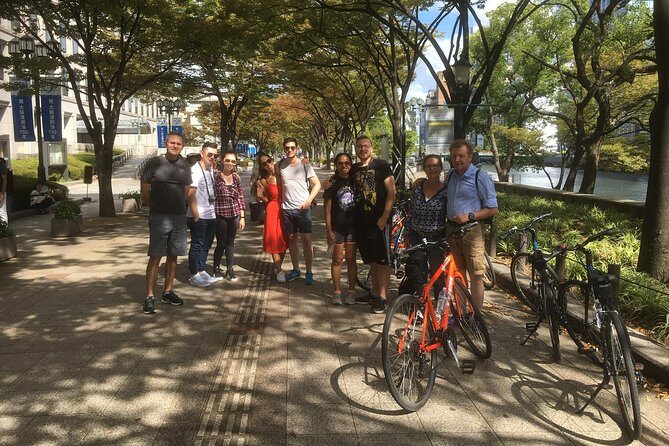
The ride starts and ends back at the meeting point in Tenma, Kita Ward (1-chōme-10-7 Tenma). The start time is 9:30 a.m., so plan on arriving early enough to feel calm, not rushed. The area is near public transportation, which matters because it makes the whole plan easier when you’re balancing other Osaka sights.
Your tour kit is practical: you get the bike and helmet, plus bottled water. Many sightseeing spots you visit have free admission, so your money is mainly paying for guide time, route planning, and the “how to look at this” context.
Also look at the tour size and rider rules. The group is capped at 8 travelers, and the tour expects moderate physical fitness. It’s not recommended for children aged 12 and under, and riders must be at least 140 cm tall.
Stop-by-Stop Route: Nakanoshima to Osaka Castle Park
This tour is built like a sequence of chapters. Each stop is short, but the guide turns it into something you can remember, not just photos you later scroll past.
Nakanoshima Park: Osaka’s riverfront calm
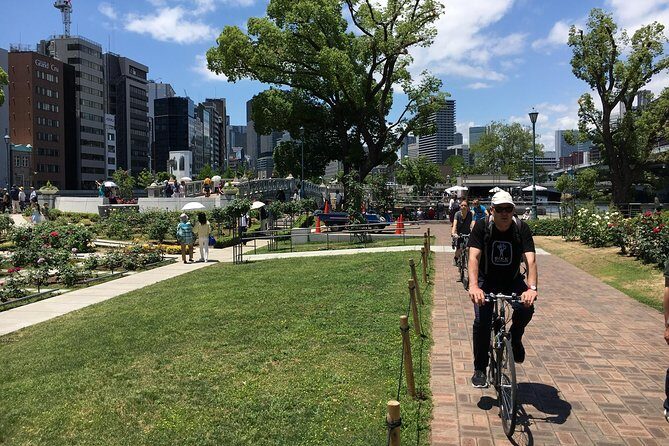
You begin at Nakanoshima Park for about 20 minutes. It’s a pleasant cycle through landscaped areas and older buildings connected to Osaka’s older business district vibe. If you’re still mentally in “Osaka station mode,” this helps you shift gears to the city’s slower, scenic side.
The best part here is how it frames Osaka’s relationship with water. You’re not just passing by the river—you’re learning how it shaped everyday life and city development.
Mint Museum grounds: modernisation stories without the ticket
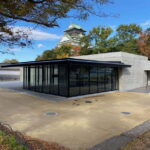
Next is a stop at the Mint Museum area for about 10 minutes. You won’t have time to enter, but you’ll learn the history of the area and how it ties into Japan’s modernisation. This is one of those stops that can feel skippable on paper, yet it works because your guide connects the street scene to the larger story.
If you like context more than rooms and exhibits, this is a smart use of time.



Osaka Castle Park: major views, plus a small effort check
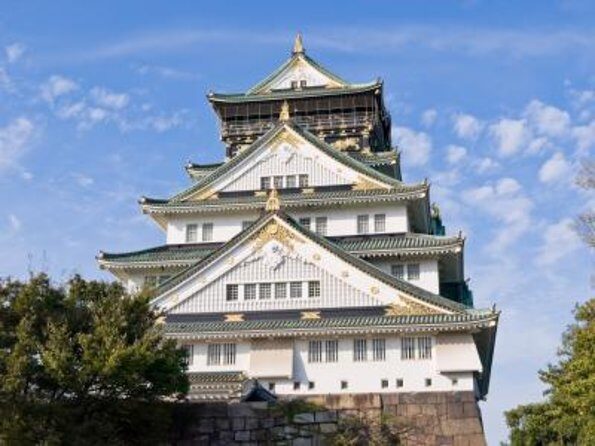
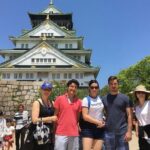
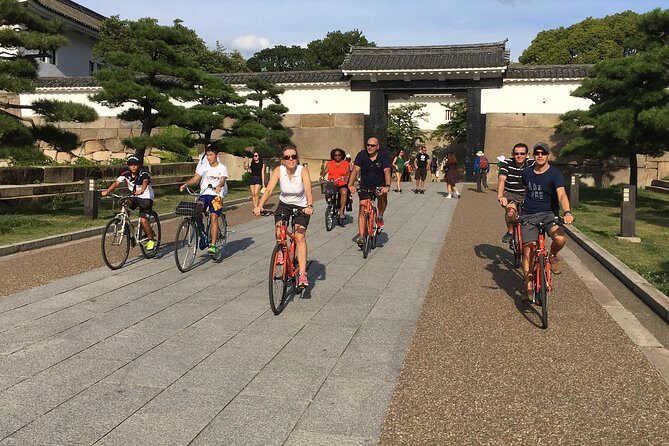
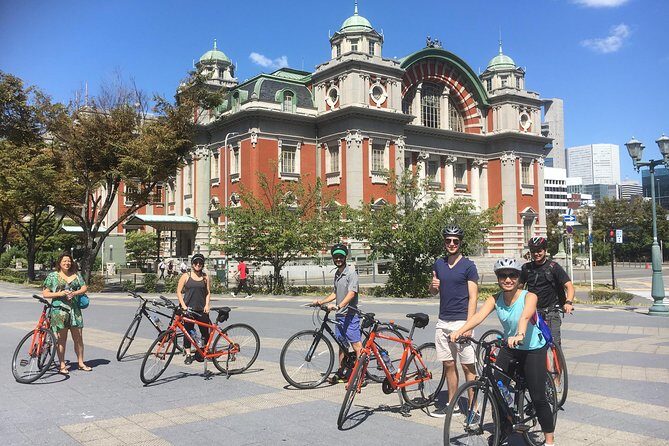
Then you roll into Osaka Castle Park for about 30 minutes. You get greenery, postcard-worthy photo chances, and an explanation of how the castle connects to Japan’s history and culture. Many riders find this to be one of the most memorable parts of the day, and there can be slight hills depending on your exact route.
This is also where the bike skills matter a bit more. You don’t need to be an athlete, but you should be ready for a few changing surfaces and the general “busy city near a landmark” feel.
Shitennoji and Shinsekai: Two Osaka moods back-to-back
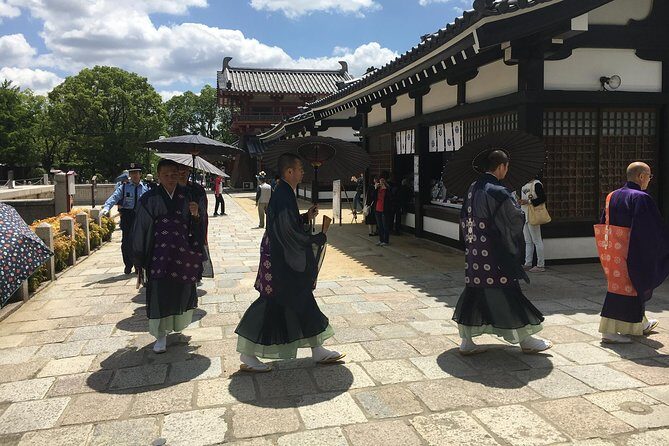
After the castle area, the tour shifts to spiritual calm and then to working-class energy. That contrast is part of the charm—you get to see Osaka’s range in the same ride.
Shitennoji: a serene, early-history stop
You spend about 15 minutes at Shitennoji Temple, described as Japan’s oldest Buddhist temple. The time is short, but the stop is built around serenity and learning—what it means in Japan’s development and how it shaped the way people practice and build.
The advantage here is simple: you’re not trying to cram a full temple visit into a half-hour. You’re getting the orientation, then moving on with your eyes open for details.
Shinsekai: the blue-collar Osaka photo moment
Next comes Shinsekai for about 15 minutes. This is the famous blue-collar district side of Osaka, where you’ll likely want your camera ready. You’ll pass through the area connected with the iconic Tsutenkaku tower, and you can expect colorful scenes, street life, and possible chances for small street food along the way.
This stop is short, but it gives you something walking can’t: a quick ride-through of how the neighborhood feels at street level. You also get a taste of the local rhythm—less museum and more everyday Osaka.
Tower Knives Osaka and Namba Yasaka Shrine: The Fun Stops That Add Personality
Not every tour includes a hands-on craft moment. This one does, and it’s a big reason people rate it so highly.
Tower Knives Osaka: meet the craft and try the tools
You get about 15 minutes at Tower Knives Osaka. The stop is described as a personal introduction to one of the consultants at Japan’s most famous knife exporter, along with a look at knife-making history in the area. The best part is that you don’t just watch—you get a chance to use tools yourself.
Even if you don’t care about knives, this is still valuable. It’s the kind of skill-based stop that makes Japan feel real, not just scenic. It also breaks up the day in a way that makes the later sightseeing more enjoyable.
Namba Yasaka Shrine: quick prayers and good-luck charm
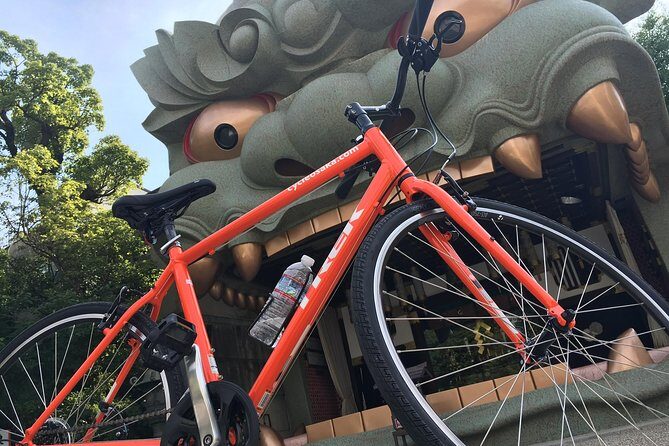
The final stretch includes a brief stop at Namba Yasaka Shrine for about 5 minutes. You’ll see the quirky, photogenic shrine area and spot prayers written on wooden plaques. You can also pick up a good luck charm, which is a fun souvenir that feels connected to the place, not mass-produced.
This is a short stop, but it works as a closing beat before you head back to the meeting point.
How the Guide Turns Streets Into Stories (and Keeps You Safe)
The tour is built around an English-speaking guide, and the guide is the real multiplier here. What makes this work is not only what you see, but how you’re taught to notice it.
Across past groups, guides like Matt, Takuma, Mayco, Akira, Yuki, and Ikura have been highlighted for knowing how Osaka fits into Japan’s larger story—and for keeping the ride fun. Some guides are also American residents with long time living in Japan, which often shows in the way they share small cultural details and daily-life context.
Safety is also a practical issue. A bike tour through busy intersections can feel intimidating at first. The setup here is designed to keep the group together, and many riders say they felt safe even when roads got crowded. That matters because your attention should be on the sights, not on worrying about the logistics.
Lunch Break: Local Food You Choose While the Route Keeps Moving

Lunch is part of the rhythm of the day, but it’s handled in a practical way. The lunch break is built in so you can refuel, and you’ll discuss options on the day. Vegetarian options are available if you tell the provider when booking.
The cost note is important: lunch is described as own expense. So think of this tour as including the planned time and recommendation, not covering the meal price in the upfront fee.
In terms of what you might end up eating, past lunch stops have been praised for dishes like sushi and curry. That’s a good sign if you want lunch to feel local instead of a generic tourist setting.
Pace, Distance, and Bike Comfort: What Your Body Needs to Be Ready For
This is a 5–6 hour tour, and many riders report covering around 13 miles (about 20 km) at a leisurely pace. That “easygoing” feel is real, but don’t confuse it with effortless cycling. You’ll still be on a bike long enough that leg muscles matter, and you’ll be moving through a real city.
Osaka is often described as cycle-friendly, with bike lanes and routes that help. Still, the bike ride is not staged on empty paths. You’ll share space with pedestrians and traffic, so being calm and alert helps.
Good news: guides have been praised for adjusting to different skill and strength levels. So if you’re an intermediate rider, you’ll probably be fine. If you’re a beginner, you still may enjoy it, but you should pick a day when you feel rested and confident about staying balanced.
Price Value: What $106.12 Really Buys You
At $106.12 per person, this isn’t the cheapest way to see Osaka. But it also isn’t priced like a simple bike rental. You’re paying for several bundled benefits that add up fast:
- An English-speaking guide who connects the dots between stops
- A bike and helmet
- Bottled water during the ride
- A route that hits major sights plus personality-building sidestops
- Stops with free admission, meaning your money is not swallowed by entry fees
The Tower Knives Osaka stop also adds real value because it includes a hands-on element—something you’d struggle to arrange on your own without time and local know-how. And the route is designed for orientation: you’ll leave with a clearer mental map of Osaka than you’d get by only visiting a few sites by train.
Weather, Crowds, and Common-Sense Tips for a Smooth Ride
This tour requires good weather, so check the forecast before you head out. If conditions are bad, the experience can be canceled and you’ll be offered another date or a full refund.
Crowds are part of Osaka. Some riders have noted busy street conditions and even major event days like triathlons. The way the tour runs on those days is handled by the guide and the group setup—so don’t try to turn it into solo sightseeing. Stay with the pacing, listen for instructions, and you’ll likely find the day flows.
For your own comfort, I’d plan on light, breathable layers, closed-toe shoes that grip well, and a small layer in case the air cools near the river.
Should You Book This One-Day Osaka Bike Adventure?
If you want a fast, fun orientation to Osaka—castle, temple, neighborhood street life, and a couple of stops that feel uniquely local—this bike tour is an excellent way to spend a single day. The strongest reasons to book are the efficient route, the short guided explanations at each stop, and the hands-on Tower Knives Osaka moment.
I’d skip it if you hate cycling or you’re not comfortable riding for several hours in city traffic conditions. And if weather is unreliable on your dates, keep flexibility in your plan.
Overall, this is the kind of tour that helps you stop guessing where to go next. By the time you finish, you’ll have enough context to enjoy the rest of your Osaka days without feeling like you’re walking in the dark.
FAQ
How long does the Osaka bike adventure last?
It runs about 5 to 6 hours.
What time does the tour start, and where does it meet?
The tour starts at 9:30 a.m. at 1-chōme-10-7 Tenma, Kita Ward, Osaka, 530-0043, Japan, and it ends back at the meeting point.
What’s included in the tour price?
Included items are an English-speaking guide, a bike and helmet, bottled water, and a lunch break (with lunch itself described as own expense).
Is lunch included, and can I request a vegetarian option?
Lunch is part of the day, but you’ll pay for your meal directly (own expense). Vegetarian options are available—you should advise at the time of booking.
Are there height and age requirements?
Yes. It’s not recommended for children aged 12 and under, and it’s not possible for riders under 140 cm.
What happens if the weather is bad?
The experience requires good weather. If it’s canceled due to poor weather, you’ll be offered a different date or a full refund.