REVIEW · OSAKA
Osaka: Private Tour of Shitennoji, Osaka’s Oldest Temple
Book on GetYourGuide →Operated by DeepExperience, Inc. · Bookable on GetYourGuide
Shitennoji feels quieter than the usual temple crowds. I love that this tour puts you inside Osaka’s oldest temple with an expert guide, and I also love the slow, calming pace of the Honbou Japanese Garden stop. One possible drawback: this isn’t a checklist tour with lots of different sights, so if you want maximum famous-photo stops, you may want something more wide-ranging.
With a private group format and a bilingual live guide (English and Japanese), you get time for questions without crowd friction. You’ll follow a clear route: start at the Stone Torii Gate, tour the central temple area, then shift into the garden and end at the Honbou garden area, finishing at 本坊庭園(極楽浄土の庭).
In This Review
- Key Highlights You’ll Actually Care About
- Osaka’s Oldest Temple: What Shitennoji Really Offers
- The 90-Minute Plan, Stop by Stop (and What to Watch For)
- 1) Meeting at the Stone Torii Gate (Shitennoji Ishinotorii)
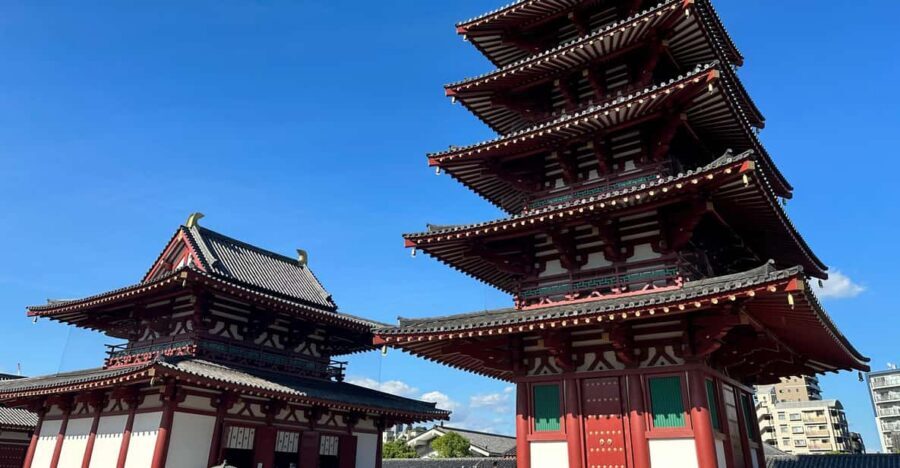
- 2) Central Temple Guided Tour (100 minutes of guided focus)
- 3) Japanese Garden Guided Time (30 minutes)
- 4) Viewpoint Stop (20 minutes)
- 5) Finish at Honbou Garden: 本坊庭園(極楽浄土の庭)
- Why the Guide Changes the Value (Even for a Short Tour)
- Price and Time: Is $60 for 90 Minutes a Good Deal?
- Who This Private Shitennoji Tour Suits Best
- Practical Tips for Getting the Most Out of Your Visit
- Should You Book This Shitennoji Private Tour?
- FAQ
- FAQ
- Where do I meet the guide for this Shitennoji tour?
- How long is the private tour?
- Is the tour private?
- What languages is the live guide available in?
- What’s included in the price?
- What is not included?
- How much does the tour cost?
- What areas of Shitennoji will I visit?
- Can I get a refund if I cancel?
- Is there a way to pay later?
Key Highlights You’ll Actually Care About
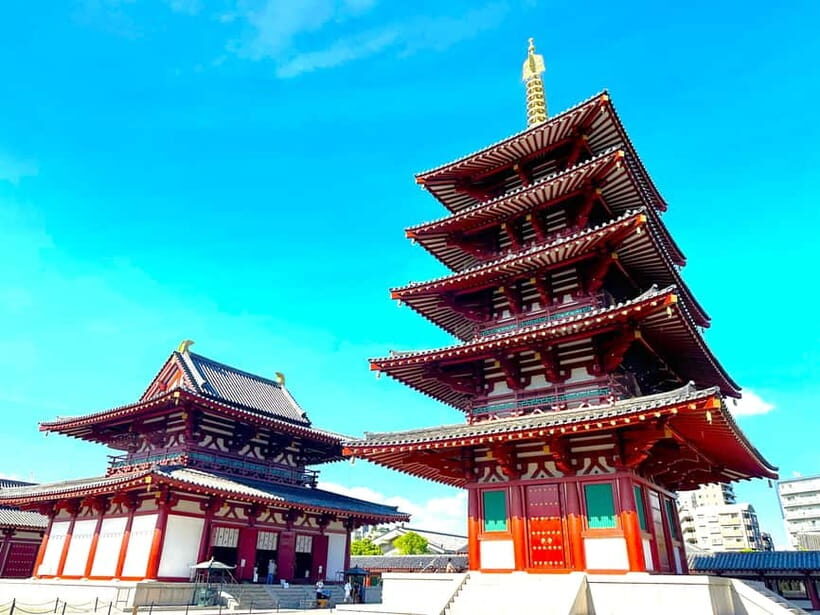
- Built in 593 by Prince Shotoku: you’ll hear how Buddhism took root in Japan through this site
- Central Temple + Honbou Japanese Garden tickets included: less hassle, more time walking and listening
- A guided route from the Stone Torii Gate onward: you don’t waste time guessing what to see
- Garden time that’s designed for calm: a real change of pace from street sightseeing in Osaka
- A viewpoint stop built into the plan: you’ll get a chance to pause and look around
- Private tour format: you set the tempo, not the crowd
Osaka’s Oldest Temple: What Shitennoji Really Offers
Osaka has plenty of famous stops, but Shitennoji has a different energy. It’s one of Japan’s oldest and most important temples, and it was built in 593 by Prince Shotoku. That name matters here. In Japan’s story of Buddhism, Prince Shotoku is tied to spreading the faith, and Shitennoji is one of the places where that history is physically present.
What I like about doing this as a guided visit is that you get the meaning behind the stones and the layout. Without context, a temple can blur into another beautiful courtyard. With a guide, you start noticing how the site is organized and why certain areas draw attention. You also get the practical benefit of visiting a temple that’s less crowded than many of the headline destinations, mostly because it’s not as central on the typical tourist circuit.
This tour is built around that exact idea: you’re not trying to rush through ten places. You’re learning how Shitennoji works—spiritually, historically, and visually—especially when the garden time slows your pace down.
You can also read our reviews of more private tours in Osaka


The 90-Minute Plan, Stop by Stop (and What to Watch For)
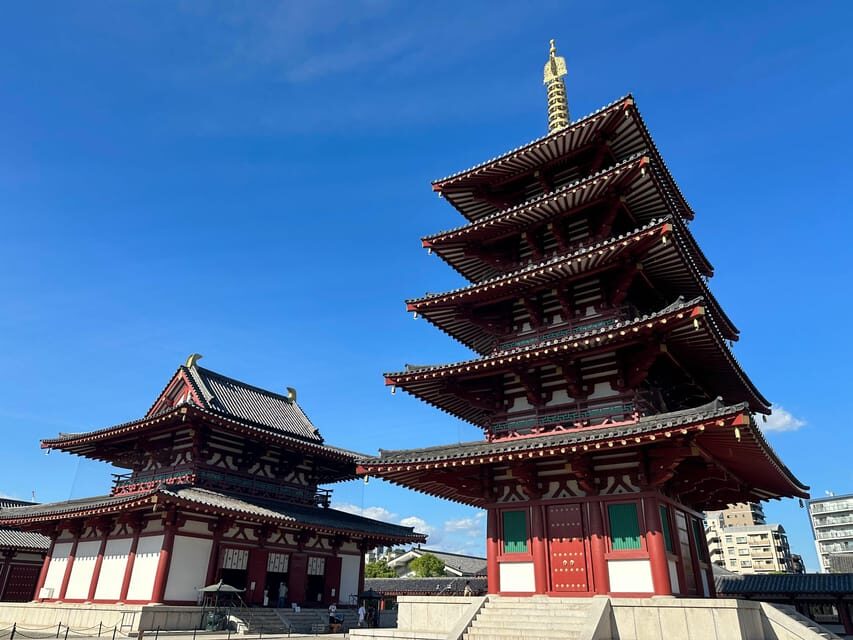
This experience is scheduled for 90 minutes total, structured as a focused walking-and-looking route. You’ll see the central buildings, enjoy Japanese garden time, stop at a viewpoint, then finish in the Honbou garden area (本坊庭園(極楽浄土の庭)). Since the timing is tight, each segment matters.
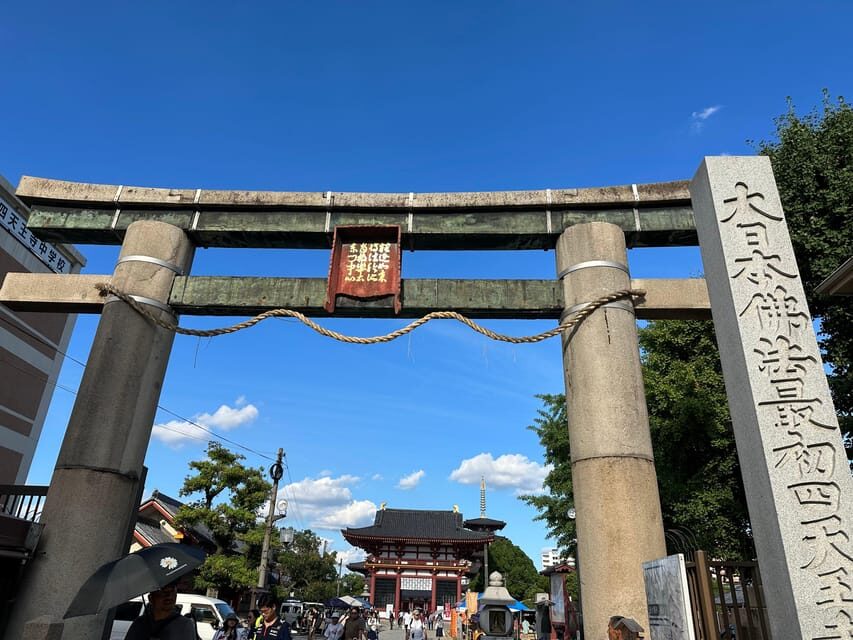
1) Meeting at the Stone Torii Gate (Shitennoji Ishinotorii)
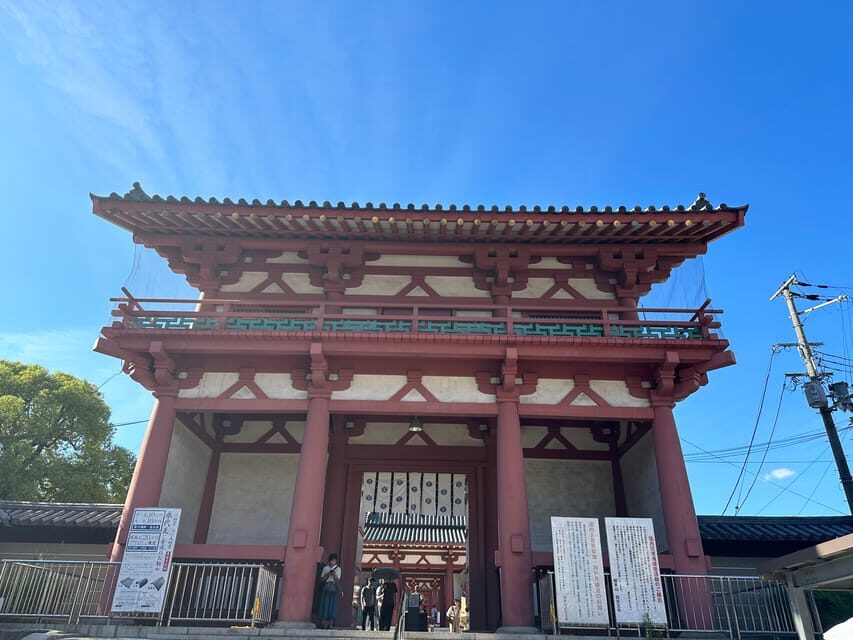
Your tour starts at the Stone Torii Gate at Shitennoji. This is a smart first move. A torii gate is a threshold symbol, and arriving there with your guide gives your visit a clear starting point instead of wandering in.
Your guide will be holding a yellow sign with the DeepExperience logo. If you like staying calm in busy areas, this kind of clear meeting marker helps. You’ll know exactly where to look, which means you can get into the temple experience sooner.
2) Central Temple Guided Tour (100 minutes of guided focus)
You’ll spend the biggest chunk of time on the central temple area with a guided visit. Even though the overall tour is listed as 90 minutes, the plan breaks out the guided central temple time as 100 minutes plus additional segments. Practically, that means this is the main part of the tour where you’ll get the most explanation and site orientation.
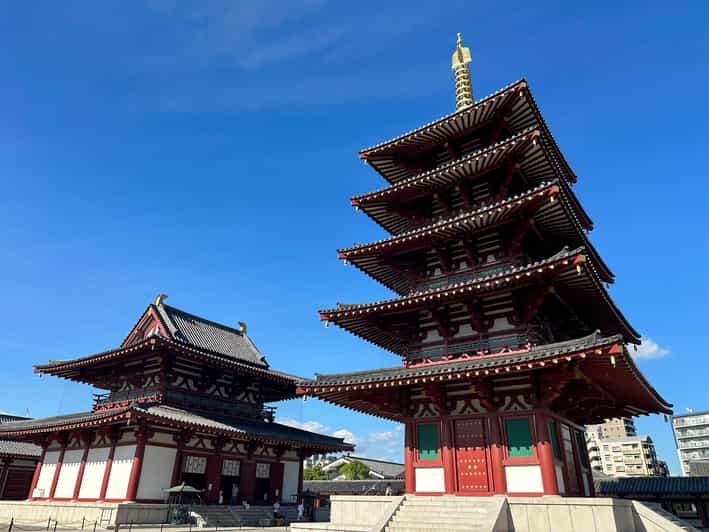
This is where the history comes alive. Shitennoji’s significance isn’t just that it is old—it’s that it’s tied to a key period when Buddhism was spreading in Japan. Prince Shotoku’s connection is a core thread of what you’ll hear, and it gives you a lens for understanding what you’re looking at.
What to watch for during the central area is how the guide ties together:
- the temple’s importance as one of Japan’s oldest and most important sites
- the spiritual atmosphere you feel when you’re in the core compound
- how the site’s age affects what you see today
A note on pacing: a central temple tour can feel more “learn and notice” than “take photos.” If you’re the type who likes both, try to listen first, then photograph second.
3) Japanese Garden Guided Time (30 minutes)
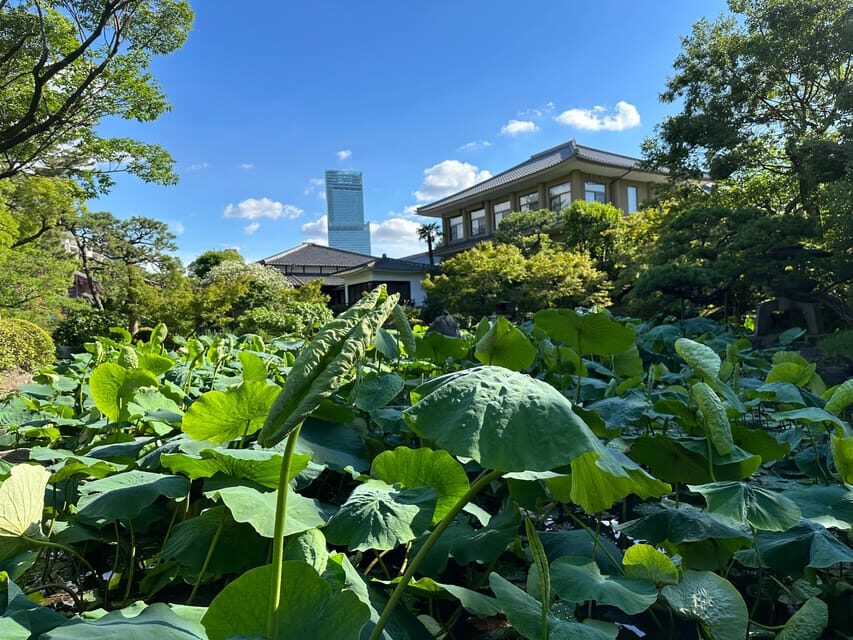
Then you shift into the garden. This part is the payoff for your senses. The garden at Shitennoji is described as beautiful and tranquil, and that’s exactly why it’s included as a dedicated segment rather than a quick walk-through.
Gardens in Japan often reward slower attention. In a guided setting, you’re more likely to notice composition and how the space guides your view. Think of it as a reset from city noise—your mind catches up to what your eyes are seeing.
Also, the included Honbou Japanese Garden ticket matters. You’re not squeezing this into a budget for another entry fee. Instead, you can treat the garden as part of the main experience.




4) Viewpoint Stop (20 minutes)
Next comes a viewpoint. This is a great contrast moment. After time in enclosed spaces and carefully designed garden views, a viewpoint gives you a wider look—your chance to step back and take in surroundings with fresh context.
Even when you don’t know what you’re looking at, a viewpoint can still be worth it because it changes your sense of scale. If the temple grounds feel structured and contained, the viewpoint helps you understand how the site sits in the city’s wider world.
5) Finish at Honbou Garden: 本坊庭園(極楽浄土の庭)
Your tour ends at 本坊庭園(極楽浄土の庭). Finishing here feels fitting because it returns you to the atmosphere of calm. This is the kind of stop that tends to stick with you longer than a single photo moment.
The phrase for this garden area points toward spiritual imagery associated with paradise-like ideals in Buddhist thought. Even if you don’t read that symbolism fluently, you’ll feel how the space is meant to encourage reflection.
If you’re someone who likes a satisfying ending—quiet, scenic, and not rushed—this final garden finish is one of the best parts of the whole route.
Why the Guide Changes the Value (Even for a Short Tour)
This tour includes a live guide (English and Japanese) and entry tickets to the key areas: the central temple and the Honbou Japanese Garden. That combination is what makes the time feel efficient.
Here’s the value logic I use:
For $60 per person, you’re paying for three things at once:
1) guided context for a historically important site
2) included admissions for the areas you’ll visit
3) a private flow that prevents time loss
At a temple like Shitennoji, context is the difference between seeing and understanding. A good guide helps you avoid the common mistake of treating the site like a photo backdrop. You start noticing relationships—between areas, symbolism, and what makes the temple important beyond its age.
There’s also evidence of guide quality from real bookings. One guide name you may run into is Adi, who was praised for history knowledge and also for practical advice about city life for a first stay in Japan. Even if your guide isn’t Adi, the point is consistent: the guide role here isn’t just reciting facts. It’s making your visit usable in real life.
And yes, private format helps. With a private group, you can ask follow-up questions when something clicks—or when you’re unsure what you’re looking at.
Price and Time: Is $60 for 90 Minutes a Good Deal?
Let’s talk straight value. $60 per person for about 90 minutes isn’t the cheapest option you’ll find, but it’s not overpriced for what’s included.
You get:
- a private tour setup
- a live guide (English and Japanese)
- entry tickets for the central temple and Honbou Japanese Garden
If you were to self-guide, you’d still need to figure out the route, decide what’s worth your time, and pay admissions separately. This tour packages those decisions for you.
The trade-off is obvious: you’re spending time on Shitennoji only. You’re not jumping between multiple top attractions. If you want depth at one site, this pricing makes sense. If you want variety, you may feel the time cap more than you’d like.
Who This Private Shitennoji Tour Suits Best
This tour is a strong match if you:
- like quieter, less overhyped sites in Osaka
- want Buddhism and temple history explained in a human way
- prefer a slower rhythm with garden time
- appreciate a private guide where you can ask questions
It may be less ideal if you’re on a packed itinerary and want to stack many landmarks into one outing. This is a temple-and-garden experience, not a “see everything famous” program.
Practical Tips for Getting the Most Out of Your Visit
Even with a guide, you’ll get better results if you show up ready to pay attention.
- Start mentally in listening mode. The early central temple segment is where context matters most.
- Treat the garden time like its own event, not a break between stops. If you rush it, you miss what the tour is designed for.
- If you’re visiting your first time in Japan, use the guide for smart city context too. One guide (Adi) was specifically praised for advice about first stays in Japan and city life.
Also, temples can be a calm place. That’s part of the appeal. Keep your expectations aligned with a quieter pace and you’ll enjoy it more.
Should You Book This Shitennoji Private Tour?
I’d book it if you want a meaningful Shitennoji experience without wasting energy figuring it out alone. For $60 per person, the included tickets and the private guided format make it a practical choice, especially since the site is significant and not always a top-of-mind Osaka stop for typical itineraries.
Skip it only if you’re chasing maximum variety or you need a longer, multi-location day. Shitennoji rewards people who slow down and pay attention—and this tour is built for exactly that.
FAQ
FAQ
Where do I meet the guide for this Shitennoji tour?
Meet your guide in front of the Stone Torii Gate at Shitennoji temple. The guide will be holding a yellow sign with the DeepExperience logo.
How long is the private tour?
The experience duration is listed as 90 minutes.
Is the tour private?
Yes. It’s a private group tour.
What languages is the live guide available in?
The live tour guide is available in English and Japanese.
What’s included in the price?
Included are entry tickets to the Central Temple and Honbou Japanese Garden, plus the guide.
What is not included?
Food is not included.
How much does the tour cost?
The price is listed as $60 per person.
What areas of Shitennoji will I visit?
You’ll start at the Stone Torii Gate, tour the central temple area with a guide, visit the Japanese Garden, make a viewpoint visit, and finish at 本坊庭園(極楽浄土の庭).
Can I get a refund if I cancel?
Free cancellation is available up to 24 hours in advance for a full refund.
Is there a way to pay later?
Yes. The listing offers reserve now & pay later, so you can book and pay nothing today.