REVIEW · OSAKA
Osaka : Live Ninja Samurai Show
Book on GetYourGuide →Operated by HI-partners Inc. · Bookable on GetYourGuide
A golden tea bowl changes everything. This 1-hour ninja show in Osaka mixes fast action, a simple family-friendly story, and a bit of comedy, all delivered with multi-language subtitles.
I really like how it works for different ages at once. The pace feels built for attention spans, and the story has clear stakes without getting too complicated.
One thing to consider: it’s a theater experience, so if you’re hoping for a hands-on activity or lots of breaks, this isn’t that. Plan around the full show block.
In This Review
- Key Things I’d Focus On
- Why This Ninja Show Feels Made for Osaka
- Finding YES THEATER From Dotonbori Without Stress
- Showtimes: How to Pick 11:00, 3:00, or 6:00
- The Story Setup: A Golden Tea Bowl and a Nervous Prince
- What Happens on Stage: Ninjutsu, Fight Choreography, and Theater Tricks
- The Legendary Beast: Why It’s More Than a Big Visual
- Subtitles in Four Languages: The Real Comfort Feature
- Price and Value: Is $24 Worth One Hour?
- When to Arrive and How to Time Your Evening
- Who This Show Fits Best (and Who Might Skip It)
- Should You Book the Osaka Ninja Samurai Show?
- FAQ
- FAQ
- Where is the Osaka Ninja Samurai Show held?
- How long is the ninja show?
- What showtimes are available?
- Do you get subtitles, and in which languages?
- How far is it from Dotonbori?
- Is food or drinks included with the ticket?
- Can I reserve now and pay later?
Key Things I’d Focus On
- Ninja + samurai-style action in one story that stays easy to follow
- Subtitles in several languages (English, Korean, Traditional and Simplified Chinese)
- Multiple daily showtimes (11:00 AM, 3:00 PM, 6:00 PM) so you can fit it to your day
- Only about a 10-minute walk from Dotonbori, making it simple to pair with sightseeing
- A legendary beast on stage, so the show aims for big visual moments
Why This Ninja Show Feels Made for Osaka
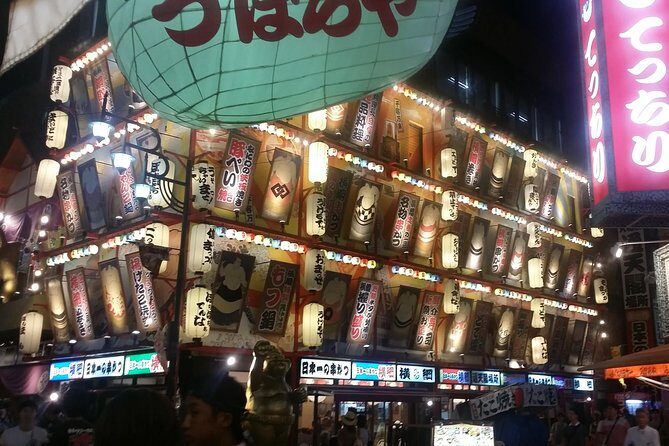
Osaka is famous for energy, and this show brings the same idea into a theater. You get a dramatic setup, then the action keeps moving—ninja sneaking, quick fighting, and theatrical surprises—without asking you to do homework first.
The core story is straightforward: calm days are disturbed when a ninja steals a golden tea bowl said to grant world rule. The bowl isn’t just a prop; it’s the reason everyone is motivated. That makes the plot easy to track even if you’re not fluent in Japanese.
And yes, it also leans into humor. The best part is that the comedy doesn’t cancel the choreography—it sits alongside it. So you’re not stuck in one emotional lane the entire time. The result is a show that feels like it knows what it’s doing with timing.
You can also read our reviews of more tours and experiences in Osaka

Finding YES THEATER From Dotonbori Without Stress
The venue is YES THEATER (Namba Grand Kagetsu Building). It’s your start point, and it’s also where the activity ends, back at the same location.
The practical win here is distance. From Dotonbori, it’s about a 10-minute walk. That matters because you can build the day around it instead of reorganizing your whole itinerary. If you’re already planning to be in the Dotonbori area (and most people are), you’ll likely treat this as an easy add-on rather than a major detour.
What to do before you go: give yourself enough time to find the building and settle in. The theater opens 30 minutes before the show, so you’re not stuck arriving at the last second and rushing seats.
Showtimes: How to Pick 11:00, 3:00, or 6:00
You can choose from three performances each day: 11:00 AM, 3:00 PM, or 6:00 PM. That flexibility is more useful than it sounds.
- If you want a quieter start, the 11:00 AM show can act like an early anchor while the day is still fresh.
- If you’re touring markets and shopping around midday, 3:00 PM can fit nicely between longer walks.
- If you want something atmospheric after your evening plans, 6:00 PM feels like a natural wrap.
Because the show itself is one hour, you can plan around it without committing your whole day to one attraction. Just remember: it’s a fixed schedule, so you’ll want to coordinate your Osaka strolling with the time you select.
The Story Setup: A Golden Tea Bowl and a Nervous Prince
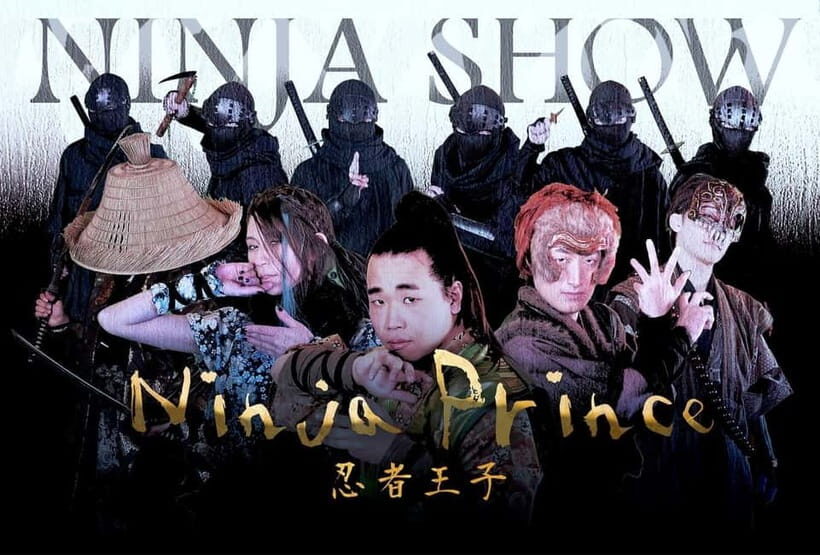
The show centers on a legendary item: a golden tea bowl believed to grant power to whoever holds it. A ninja sneaks into a castle and steals it, throwing the story into motion fast.
Opposing that theft is the prince of the Godai Clan, Takemaru. He’s described as a weak prince—someone more comfortable with hiding than fighting. That doesn’t sound like a hero at first, which is exactly why it works for the audience. You’re watching someone grow a little courage in real time.
The emotional hook is simple and strong: will a prince who’s known for hiding manage to protect something his clan guarded for generations? The stakes are clear, the motivation is easy to understand, and the plot is told in a way that children and adults can follow together.
Then the show ties it all together under the title The Ninja Prince, where ninjas use ninjutsu alongside a legendary beast. You don’t need to know Japanese folklore to get the point: the story is built to support spectacle.
What Happens on Stage: Ninjutsu, Fight Choreography, and Theater Tricks
This isn’t a passive performance. Expect dynamic action and a lot of movement designed for the stage.
The show’s structure seems to follow a pattern that keeps momentum:
1) a problem shows up (the theft),
2) the hero is challenged (Takemaru’s weakness),
3) the ninjas respond with techniques,
4) the legendary beast raises the spectacle level,
5) the outcome resolves the dilemma.
That progression matters because it prevents the show from dragging. Even if you can’t catch every word, you can still follow the rhythm of the scenes.
One of the most praised aspects is the way the show mixes comedy with superb choreography. In other words, the humor isn’t random—it’s timed to keep energy up while the action stays sharp. I like that approach because it keeps the whole room paying attention. It’s also a relief for adults: you’re not stuck watching a kids-only performance that forgets how to entertain grown-ups.
And you’ll likely notice how acting and surprising stage elements do the heavy lifting. Theater tricks matter here because the show is delivering a mythic story in a live format. When props and staging work, it turns a simple story into something you remember.



The Legendary Beast: Why It’s More Than a Big Visual
A legendary beast can easily turn into just a scary costume—if the show doesn’t know what it’s doing. Here, the beast is part of the story’s dramatic machinery, showing up as part of the theme of power, protection, and conflict around the golden tea bowl.
What you get, practically, is a built-in moment that grabs attention. For kids, it’s the “wow” factor. For adults, it’s a sign the production is aiming beyond simple swordplay and trying for larger-than-life theater.
If you’re traveling with different ages in your group, this kind of showpiece is a smart choice. It reduces the risk of someone getting bored because the show constantly offers new visual targets.
Subtitles in Four Languages: The Real Comfort Feature
Subtitles aren’t just a nice-to-have here; they’re part of how the story becomes accessible.
The show provides subtitles in:
- English
- Korean
- Traditional Chinese
- Simplified Chinese
That means you can enjoy the plot beats without constantly trying to figure out meaning from context. It also helps a lot if your group includes someone who can’t read Japanese.
I also like that the subtitle offering is broad enough for international travelers. You don’t need to pre-plan who speaks what. The show is set up so most people can follow.
Small practical tip: if you’re seated with a view of the subtitle screen(s), your experience will feel smoother. If you’re in a spot where subtitles are harder to read, arrive earlier so you can take a comfortable seat.
Price and Value: Is $24 Worth One Hour?
At $24 per person, this show lands in the “reasonable entertainment” category for Osaka. The key is what you get for that money:
- One full hour of staged storytelling and action
- Subtitles in multiple languages
- A story built for both children and adults
- A location close to major sightseeing, so you’re not paying extra time or transport friction
So the value isn’t only the choreography. It’s the combination: story clarity + show length + language support + convenience.
A theater ticket can feel overpriced if it’s short or confusing. Here, the hour-long format and the subtitle availability make it easier to justify. You’re paying for a complete package, not just for a few scenes.
If your group includes kids, this is even more compelling: it gives you a controlled activity that’s designed for entertainment, not a long walk with unpredictable results.
If your group is only into action and nothing else, you might still enjoy it, but it helps to know it’s theater-driven storytelling—so it’s not a gym-like martial arts demo.
When to Arrive and How to Time Your Evening
Plan to arrive with time to spare. The venue opens 30 minutes before the show, and that’s your buffer for:
- finding your seating,
- getting settled,
- and avoiding last-minute scrambling.
Because the show ends back at the meeting point, you don’t need a separate “exit plan.” You’ll simply be back at the theater area after the performance. That’s another reason it’s easy to slot into your itinerary near Dotonbori.
If you’re eating before or after, remember that food and drinks are not included. You’ll want to plan around nearby options. The good news: Dotonbori is close, so you’re not stuck hunting for a late snack far from the venue.
Who This Show Fits Best (and Who Might Skip It)
This Osaka ninja experience is a strong fit if you want:
- a family-friendly activity,
- a short commitment (one hour),
- and an atmosphere that mixes action with easy storytelling.
It’s also ideal if you care about language support. Subtitles in English, Korean, and both types of Chinese help you follow the story without missing the key plot.
I’d be more cautious if:
- you hate theater formats and only want outdoor sightseeing,
- you’re expecting an interactive experience (this is a performance you watch),
- or you need a lot of time breaks and wandering around during the activity.
But for most people—especially families and mixed-age groups—it’s a convenient way to experience Osaka flair in an indoor setting.
Should You Book the Osaka Ninja Samurai Show?
Yes, I’d book it if you’re looking for a compact, high-energy show near Dotonbori. The value mostly comes from the combination of one-hour runtime, multi-language subtitles, and easy access from central sightseeing.
Book it especially if you’re traveling with kids or if you want a plan that doesn’t depend on finding the right language skills on the street. And if your schedule is flexible, you can select 11:00 AM, 3:00 PM, or 6:00 PM to match your day.
One last practical note: you can reserve and pay later, and cancellations are allowed up to 24 hours in advance for a full refund. That makes it easier to keep your plans loose while you explore Osaka.
FAQ
FAQ
Where is the Osaka Ninja Samurai Show held?
The show starts at YES THEATER (Namba Grand Kagetsu Building).
How long is the ninja show?
The experience includes a one-hour ninja show.
What showtimes are available?
You can choose from performances at 11:00 AM, 3:00 PM, or 6:00 PM.
Do you get subtitles, and in which languages?
Yes. Subtitles are available in English, Korean, Traditional Chinese, and Simplified Chinese.
How far is it from Dotonbori?
The venue is about a 10-minute walk from Dotonbori.
Is food or drinks included with the ticket?
No. Food and drinks are not included.
Can I reserve now and pay later?
Yes. The booking includes reserve & pay later, meaning you can keep plans flexible.
—
If you tell me your travel month and whether you’re going with kids (and roughly what time you’ll be in Dotonbori), I can help you pick the best showtime.