REVIEW · OSAKA
Osaka: Roll and Authentic Sushi Making Class in Dotonbori
Book on GetYourGuide →Operated by Sushi Making Japan | Cooking Class in Japan · Bookable on GetYourGuide
Sushi feels friendlier with a teacher and a quiz. This Osaka class in Dotonbori mixes an interactive sushi history quiz with hands-on roll sushi and nigiri work you eat immediately after.
The pace is tight at 100 minutes, so you’ll want to focus when your sushi is ready to eat. The real star is the English-speaking crew, from instructors like Shoki to hosts such as Hinata and Rika, who keep everything light with jokes and food talk.
Meet at the 3rd floor of Galleria Acca Building, about a 5-minute walk from Shinsaibashi Station, and you’re close to Dotonbori for a post-class street snack crawl.
In This Review
- Key points at a glance
- Finding Sushi Making Osaka: Shinsaibashi to Dotonbori in 5 minutes
- 100 Minutes of Sushi: How the session flows
- Sushi Skills You Can Repeat at Home: The roll portion
- Nigiri and authentic Japanese sushi: shaping like a pro
- The quiz and sushi history: why it feels more than cooking
- What you make and eat at the end: enough to feel satisfied
- Dietary options in Osaka: vegan, halal, gluten-free, and allergy rules
- Price and value: is $45 worth it in central Osaka?
- Who should book this sushi class in Dotonbori
- Should you book Sushi Making Osaka in Dotonbori?
- FAQ
- How long is the sushi making class in Osaka?
- Where do I meet for the class?
- Do I need any prior cooking or sushi experience?
- Is the class taught in English?
- What sushi will I learn how to make?
- Can the class accommodate vegan, gluten-free, halal, or allergies?
- Is hotel pickup or drop-off included?
Key points at a glance
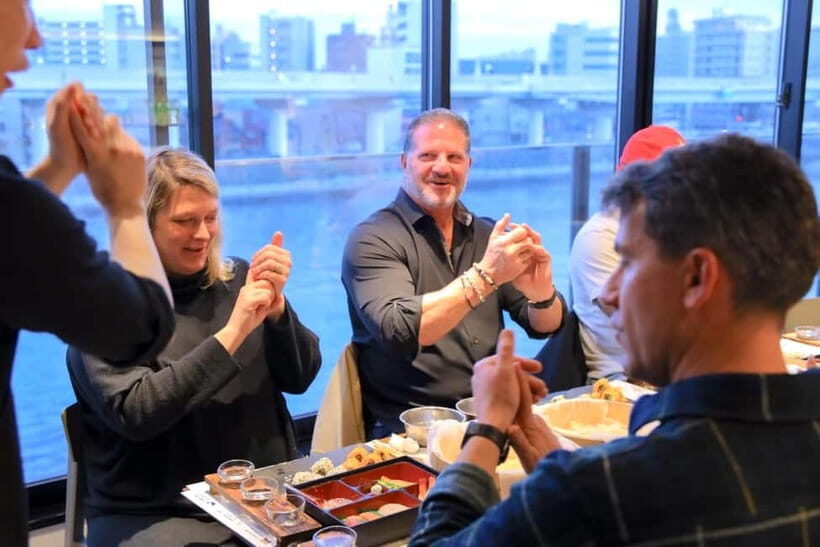
- Hands-on sushi you actually eat: roll sushi and authentic Japanese sushi (often nigiri and maki) end in a satisfying meal.
- A quiz that makes sushi stick: an interactive, light vibe turns history into something you remember.
- English-speaking instruction that helps fast: clear guidance for first-timers, with lively hosts like Shoki, Yui, Takara, and Fuji.
- Dietary options are built in: vegan, vegetarian, gluten-free, halal, plus strict allergy limits with advance notice.
- Clean, organized setup in central Osaka: easy to combine with Dotonbori and Shinsaibashi sightseeing.
Finding Sushi Making Osaka: Shinsaibashi to Dotonbori in 5 minutes
This class is set up for convenience. You meet at the 3rd floor of the Galleria Acca Building, roughly a 5-minute walk from Shinsaibashi Station. Since it’s in the Dotonbori/Shinsaibashi area, you can plan it around your food crawl instead of reshuffling your whole day.
One practical note: the building has an elevator, but it may not take you all the way to your exact workshop floor. If you’re using a wheelchair, the activity is listed as wheelchair accessible, but it’s smart to contact the team in advance so your route is smooth.
Also, there’s no hotel pickup or drop-off. That’s not a deal-breaker, but it means you should set aside time to get yourself there on foot or by train. The upside is you avoid waiting for transfers and can hop right back into Dotonbori after class.
You can also read our reviews of more tours and experiences in Osaka
100 Minutes of Sushi: How the session flows
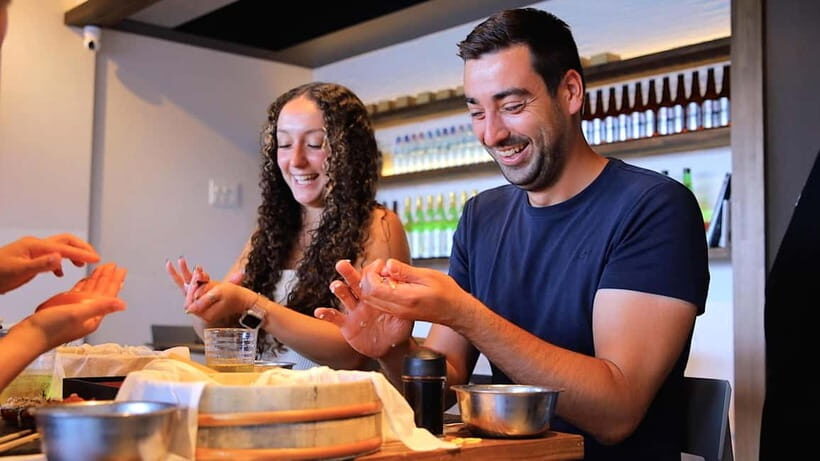
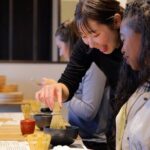
The class lasts 100 minutes, and it moves in a way that keeps you making food rather than just watching. The format is consistent: you get an introduction, you learn the basics with demos, you make sushi with the instructor’s help, then you sit down and eat your creations.
Here’s what you can expect from the flow:
- Welcome and quick setup: you’ll be guided in English, with friendly staff checking in so you know what to do next.
- A sushi history quiz: it’s interactive and playful, not a lecture. This is a big part of why the experience feels memorable after you leave.
- Technique practice with real instructions: rice handling, rolling steps, and topping/shaping basics are demonstrated and then repeated by you.
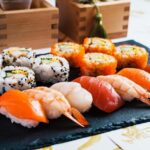
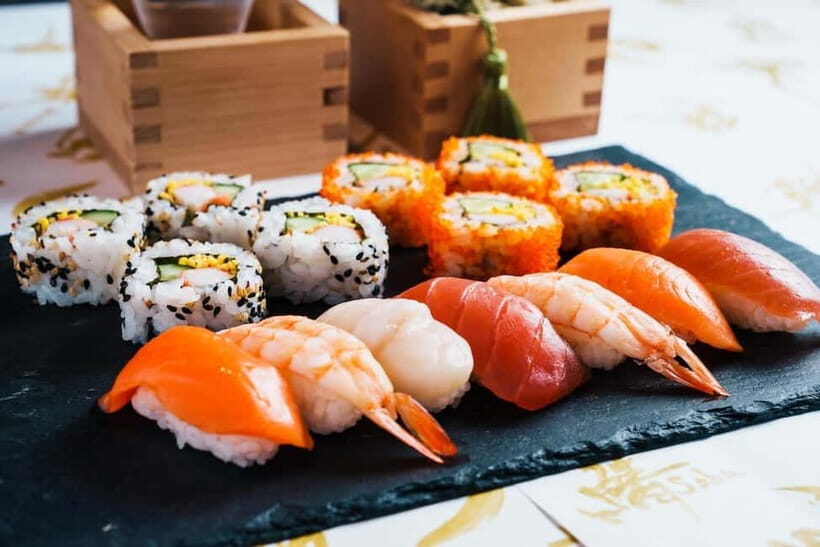
- Two sushi styles: you’ll make one type focused on roll technique and another type focused on authentic Japanese sushi (commonly nigiri-style).
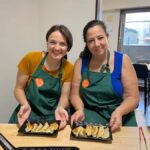
- Eat what you make: you end the class with a meal made by your own hands.
You’ll notice the instructors keep the mood up. Names that pop up again and again include Shoki and Yui, and hosts like Hinata and Rika. The common thread is clarity plus energy, with lots of joking and conversation in between steps.
Sushi Skills You Can Repeat at Home: The roll portion
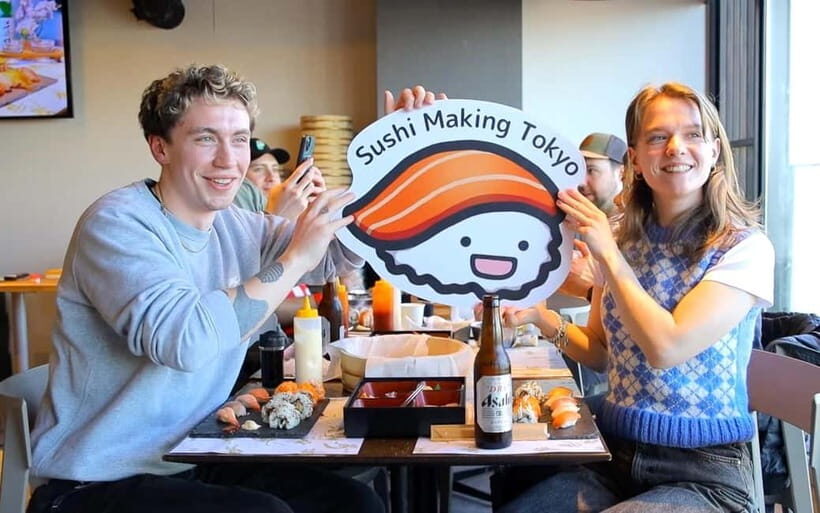
The roll part is designed for beginners. You start with the building blocks—rice and toppings/ingredients—then learn the sequence for assembling a roll that actually holds together.
What makes this portion valuable isn’t just the final slice. It’s the small technique cues the instructor gives while you’re working:
- How to handle rice so it stays workable.
- How to distribute filling so you get even flavor.
- How to roll with steady pressure rather than rushing.
- How to cut neatly so your pieces look like they belong on a sushi counter.
A theme in the teaching style is encouragement. Many people leave saying they feel more confident to try again later, because the steps are explained in a way that makes sense in real time.
Nigiri and authentic Japanese sushi: shaping like a pro
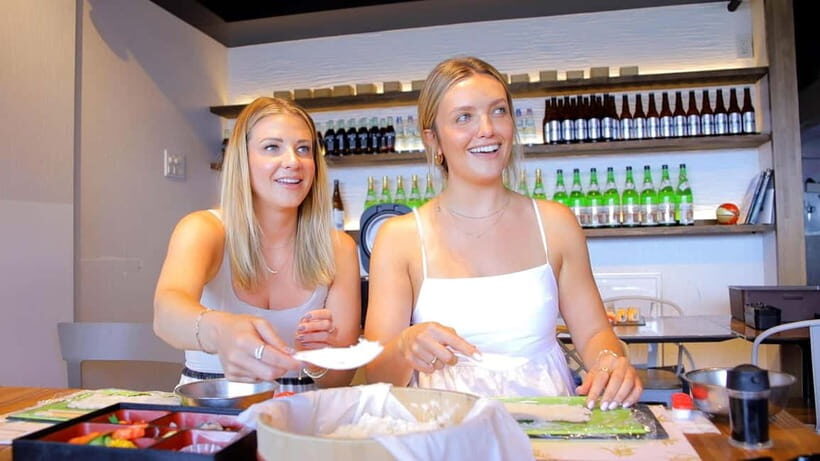
The second technique focuses on authentic Japanese sushi style, commonly nigiri alongside maki. This is where you learn that sushi is equal parts technique and restraint.
Nigiri-style learning usually centers on:
- Shaping the rice with the right firmness so it’s stable.
- Handling toppings so they sit properly and don’t tear apart.
- Timing—because once your sushi is ready, the class keeps moving to the tasting portion.
This is also where instructor personality matters. Some instructors are especially upbeat and funny, like Shoki, and others are more “chef coach” type, like Yui. Either way, you’re not left to guess. You get corrections while you’re still in the process.
The quiz and sushi history: why it feels more than cooking
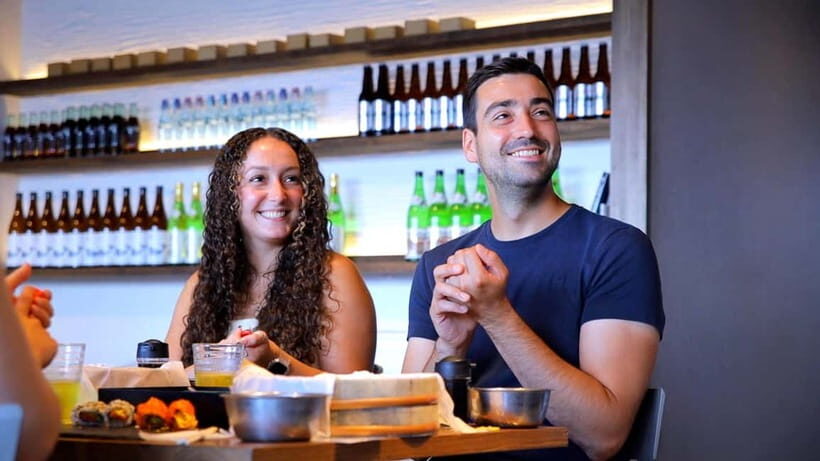
Sushi history might sound like extra trivia, but in this class it plays a real role. The interactive quiz turns background information into something you’re actively using while you’re cooking.
You get a short history intro, plus questions that help you connect what you’re making to what sushi means and how it developed. One reason it works: it’s lighthearted. You aren’t trapped in a classroom rhythm. You’re learning in between food steps, and the quiz makes your brain stick to the story.
In practice, this means your meal at the end lands better. You’re not just eating roll and nigiri—you’re eating something with context.




What you make and eat at the end: enough to feel satisfied
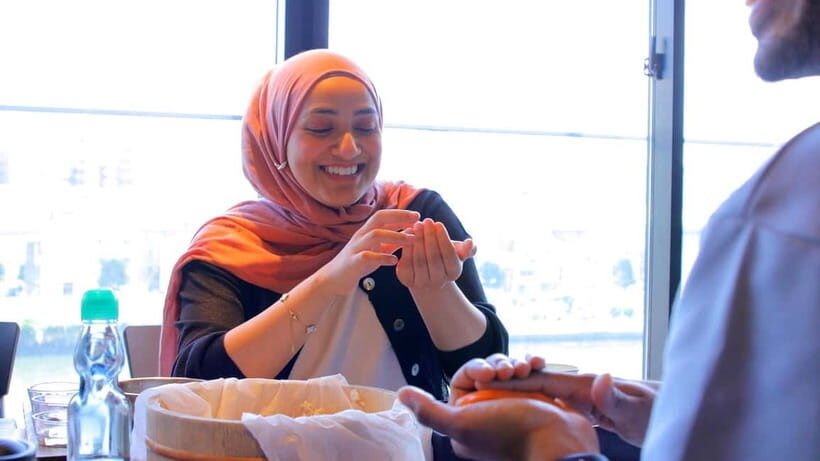
This class doesn’t end with a sad one-bite sample. The meal is part of the point, and it’s built around what you produce during the session.
The most common positive theme is that you eat what you make, and you get enough ingredients to enjoy the result. People also note a clean environment, which matters because you’ll be handling food close-up for the whole class.
Still, there’s one realistic consideration. At 100 minutes, you may feel a little time pressure near the end. One guest even said they wanted a few more minutes to eat more slowly. So my practical advice: when your sushi is finished, start eating sooner rather than later. If you wait, you’ll still be enjoying it, but you’ll feel rushed.
One extra tip from the way plates are handled: once you add small finishing items like ginger and wasabi, keep an eye on what your instructor clears. If you’re trying to enjoy the full flavor, plating promptly helps.
Dietary options in Osaka: vegan, halal, gluten-free, and allergy rules
This is a strong point if you have dietary needs. The class lists menu options including:
- Vegan
- Vegetarian
- Gluten-free
- Halal
For allergies, the rules are specific: meat, nuts, fruits, dairy are not used. That’s a meaningful limitation, but it also creates clarity. If your needs fit inside those boundaries, you can relax knowing they’re managing ingredients with structure.
There’s also a real process here:
- You need to request changes at least 3 days in advance.
- The team can’t respond on the same day.
- Ingredient specifications aren’t accepted.
If you’re choosing halal or you have allergies, I’d treat the 3-day window as non-negotiable. It’s the easiest way to get the version of sushi that matches your needs without last-minute uncertainty.
Price and value: is $45 worth it in central Osaka?
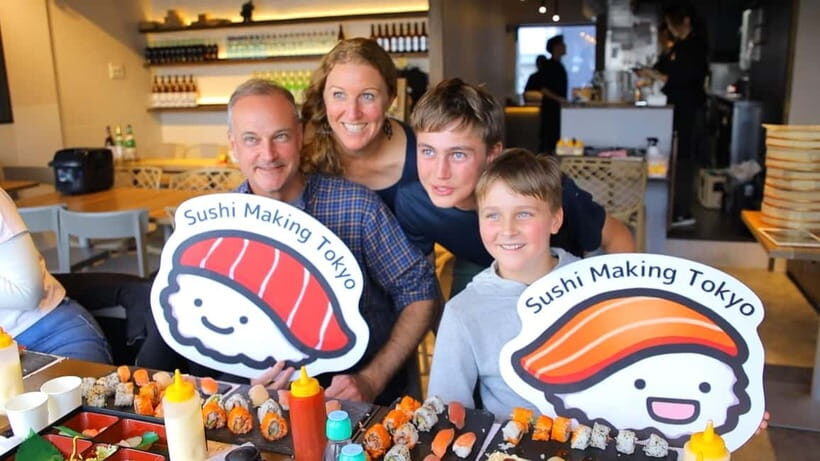
At $45 per person for a 100-minute hands-on class that includes the cooking instruction plus ingredients, this is usually a good deal—especially because you’re not just learning. You also leave fed.
The value math works like this:
- You’re paying for a real lesson, not a short demo.
- You get ingredients included (so you’re not doing a mini grocery run afterward).
- You eat your own sushi, which turns the class into a meal.
It’s also in a prime location: the area around Dotonbori and Shinsaibashi is where you’ll spend most of your time eating anyway. So the class acts like a central “food activity” instead of a detour.
One more perk: the experience is highly rated, with an average score of 4.9 from 239 reviews. That doesn’t replace your judgment, but it does suggest consistent quality, especially around teaching style and organization.
Who should book this sushi class in Dotonbori
This class fits best if you want:
- A first-time-friendly way to learn sushi techniques.
- A class with English-speaking guidance that doesn’t assume cooking skill.
- A fun mix of food plus an easy sushi history lesson.
- Central Osaka convenience near Shinsaibashi and Dotonbori.
It’s also a good choice if you like social energy. Many instructors are described as engaging and conversational—people mention sharing travel stories and getting local recommendations. Hosts like Takara and Fuji show up in notes as especially positive and supportive.
If you’re someone who wants deep, slow instruction where you take your time perfecting every detail, the 100-minute pace might feel a bit compressed. But if you prefer a structured lesson that ends with a satisfying meal, this is a strong match.
Should you book Sushi Making Osaka in Dotonbori?
Book it if you want a practical sushi skill you can use at home and you’d rather learn through doing than watching. The combination of roll + authentic nigiri-style technique, the interactive sushi history quiz, and the fact that you eat what you make makes the experience feel complete.
Skip it (or consider another option) if you’re sensitive to time limits and need a long sit-down meal without any sense of a ticking clock. At 100 minutes, the class runs with momentum.
If you’re planning a trip around Osaka’s food scene, this one is easy to plug into your schedule. And if you care about dietary needs, the listed vegan/halal/gluten-free options are a real advantage—just request changes early.
FAQ
How long is the sushi making class in Osaka?
The class lasts 100 minutes.
Where do I meet for the class?
You meet at the 3rd floor of the Galleria Acca Building, about a 5-minute walk from Shinsaibashi Station.
Do I need any prior cooking or sushi experience?
No experience is needed. The staff guides you in English.
Is the class taught in English?
Yes, the instructor and support are English-speaking.
What sushi will I learn how to make?
You’ll make two types of sushi: roll sushi and authentic Japanese sushi (the class commonly includes techniques like nigiri-style sushi along with rolls).
Can the class accommodate vegan, gluten-free, halal, or allergies?
Yes. Options include vegan, vegetarian, gluten-free, and halal. For allergies, meat, nuts, fruits, and dairy are not used. Menu changes must be requested at least 3 days in advance, and ingredient specifications are not accepted.
Is hotel pickup or drop-off included?
No. Hotel pickup and drop-off are not included.