REVIEW · OSAKA
Osaka: Sushi Class in Dotonbori
Book on GetYourGuide →Operated by Cooking Sun · Bookable on GetYourGuide
Sushi class in Osaka feels like a cheat code. In just 3 hours, you learn three sushi techniques and end with a plate you made yourself. I love that the class breaks sushi into clear, doable steps, and the instruction is in English.
My other favorite part is the payoff: you’re not just watching. You’ll make a salad roll, shape nigiri, and press Osaka-style oshizushi (box sushi), then eat plenty of it. One thing to consider: this is focused on technique and assembly, so if you were hoping for advanced fish-handling like slicing raw fish, you may find it a bit more instructional than hands-on at the cutting stage.
If your sushi goal is to go beyond ordering, this is a great use of time in Dotonbori.
In This Review
- Key things that make this class worth your time
- Finding Cooking Sun Osaka, Room 202, without wasting time
- A 3-hour sushi class with only 8 seats and an English-speaking instructor
- Salat roll: a healthy sushi start with nori and fresh crunch
- Nigiri: the global sushi you’ll finally understand
- Oshizushi in Osaka: pressed box sushi and the joy of clean squares
- How much you’ll eat (and why the price feels fair)
- What the instructors teach beyond the sushi
- Logistics that matter: timing, finding the room, and what to bring
- Who this Osaka sushi class suits best
- Should you book this Osaka sushi class?
- FAQ
- How much does the Osaka Sushi Class cost?
- How long is the sushi class?
- What sushi types will I make?
- Does the class include ingredients?
- Is the instructor available in English?
- Can I request vegetarian or gluten-free options?
- Where is the meeting point in Osaka?
- What is the group size?
- Is free cancellation available?
Key things that make this class worth your time
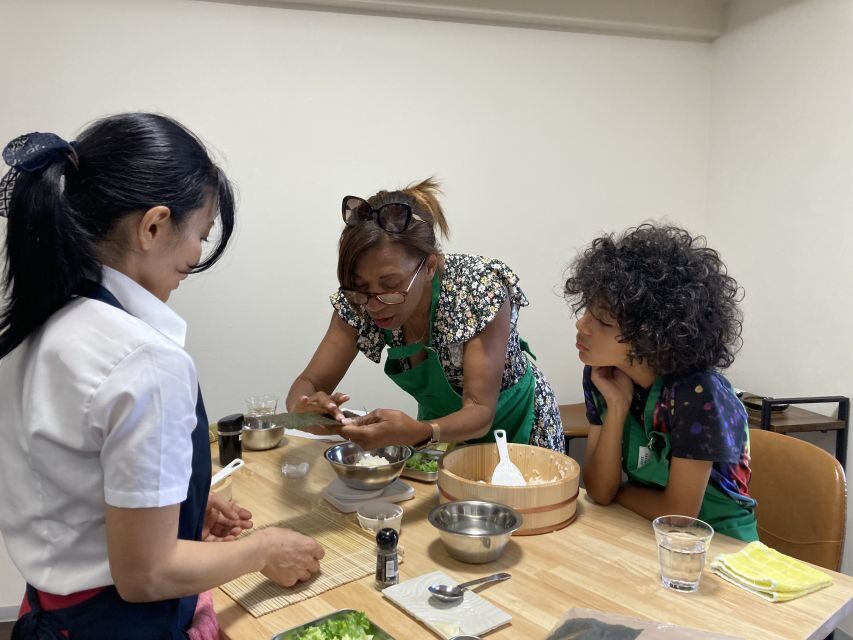
- Small group (up to 8) means you get real attention, not just a quick demo
- Three distinct styles: salad roll, nigiri, and Osaka’s oshizushi
- English instruction keeps the learning curve friendly for beginners
- All ingredients included so you can focus on doing the work (and eating the results)
- Staff like Yoshi, Yoko, Ami, Eriko, and Naomi come through in reviews as patient and interactive
Finding Cooking Sun Osaka, Room 202, without wasting time
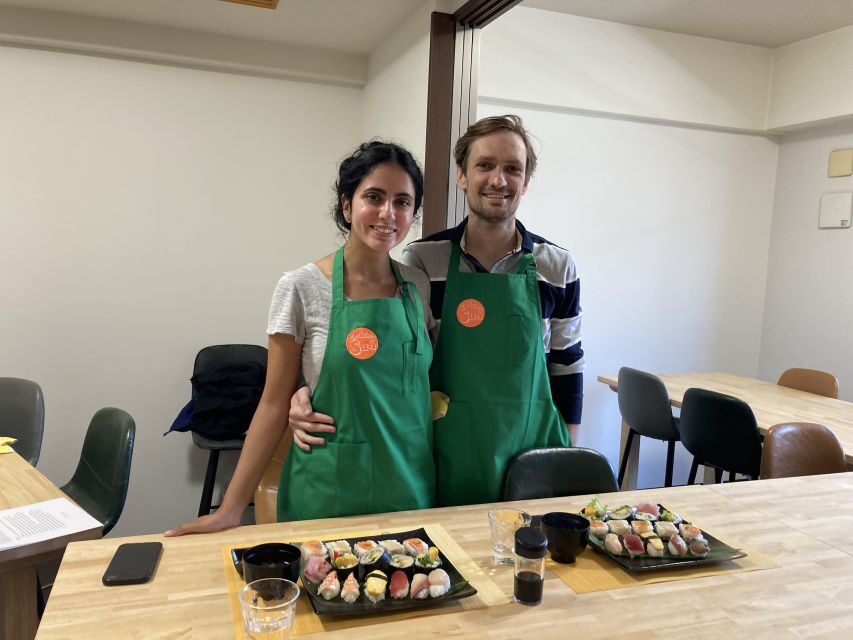
The meeting point is at Cooking Sun Osaka, room 202. When you arrive, go to the entrance, press 202, and then hit the 呼出 (call) button. That’s it. No wandering needed once you know the drill.
Now for the real-world part: one review notes the place can be tricky to locate at first, since even a cab driver had trouble. The good news is there’s a visible landmark (a tree out front), and it helps to plan a few extra minutes. If you’re arriving late, it’s worth checking in quickly rather than assuming the class will wait.
You can also read our reviews of more tours and experiences in Osaka

A 3-hour sushi class with only 8 seats and an English-speaking instructor
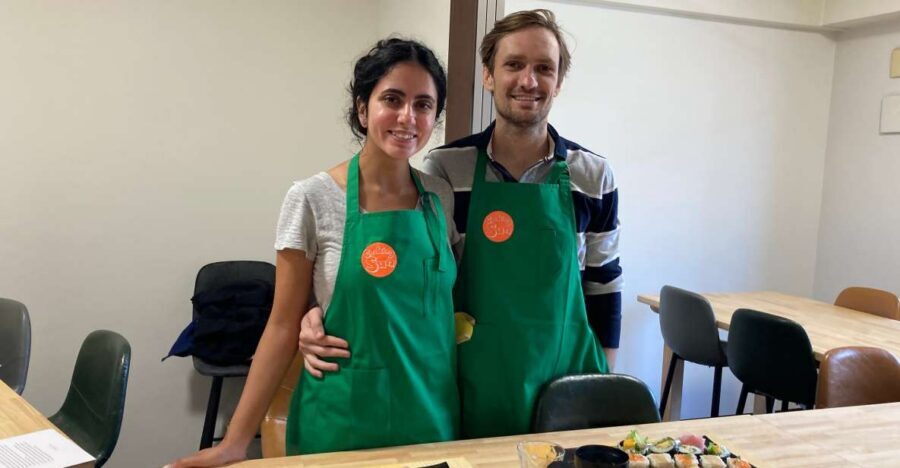
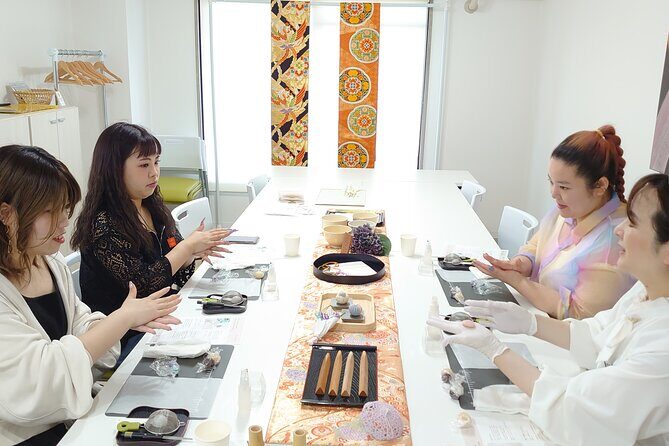
This experience is built for interaction. The group size is capped at 8 participants, which is the difference between learning one-on-one versus learning by osmosis.
The class runs 3 hours. That length matters. Sushi can be fiddly, especially when you’re working with vinegared rice, nori, and toppings that need the right feel and timing. A 3-hour session gives enough time to practice the steps, not just rush through them.
A few other details that help your planning:
- Instructor speaks English, so you won’t be stuck translating cooking gestures.
- Wheelchair accessible is explicitly listed.
- It’s set up so you can reserve now & pay later, which is handy if your Osaka schedule is still in motion.
Salat roll: a healthy sushi start with nori and fresh crunch
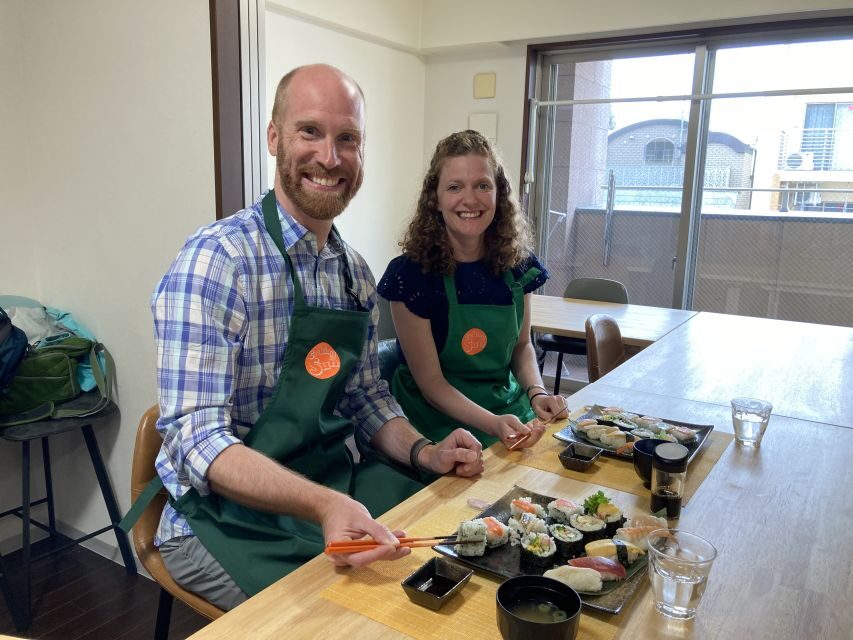
Your first make-and-take is the salad roll. Think of it as the friendly on-ramp to rolling sushi—still real technique, but with ingredients that feel familiar and forgiving.
Here’s what’s included for the salad roll:
- Crab-flavored kamaboko
- Lettuce and cucumber
- Tuna mixed with mayonnaise
- Rolled with nori seaweed
- With a core of tamagoyaki (egg roll)
Why this works as a first step: you’re learning how to assemble layers and keep the roll together without immediately jumping into the more delicate world of sushi rice-to-fish precision. You’ll still feel the structure—how nori wraps, how fillings behave, and how the roll becomes sliceable.
One practical note for your diet planning: the booking info says you can leave a note for vegetarian or gluten-free options. Since the salad roll as described includes kamaboko and tuna components, that request matters. If you have restrictions, send that note early rather than hoping substitutions happen on the spot.
Nigiri: the global sushi you’ll finally understand
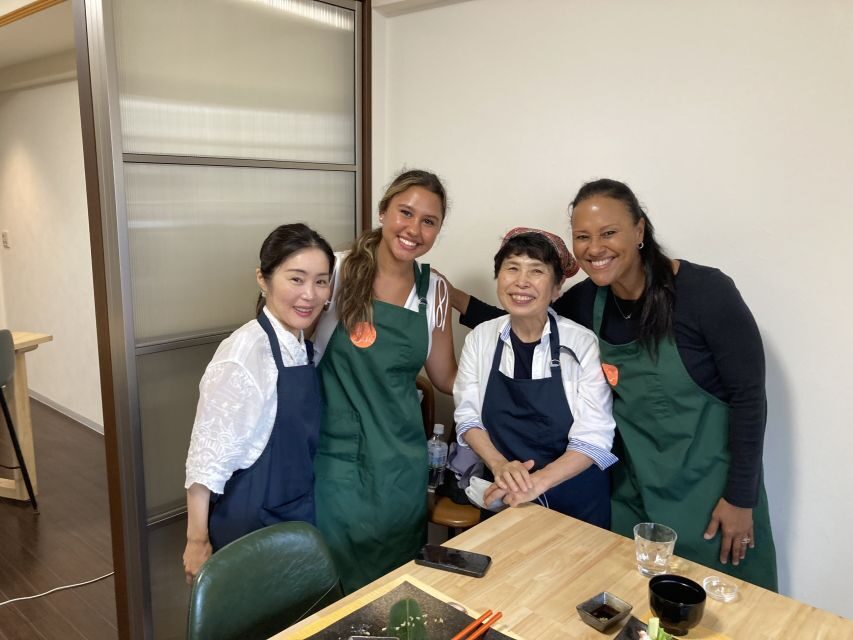
Next comes nigiri-zushi, one of Japan’s representative sushi styles. Nigiri is simple in concept but tricky in execution, and that’s why it’s so satisfying to learn.
What you’re making:
- Vinegared rice, shaped bite-sized
- Toppings placed on top—commonly fish, shellfish, and omelet types
Even if you love sushi, nigiri can feel mysterious until someone walks you through it. The key idea is balance: rice has to be seasoned and handled correctly, and toppings need to sit in the right way so each bite looks tidy and eats well.
This is also the style that turns into a real confidence builder later. Once you can shape rice and top it, you can order with more understanding—what you’re seeing, why it’s cut how it is, and what changes when the topping is thicker or lighter.
In reviews, instructors like Yoshi and Yoko are described as patient and very thorough with instructions. That’s what you want for nigiri: clear steps, not vague advice.
Oshizushi in Osaka: pressed box sushi and the joy of clean squares
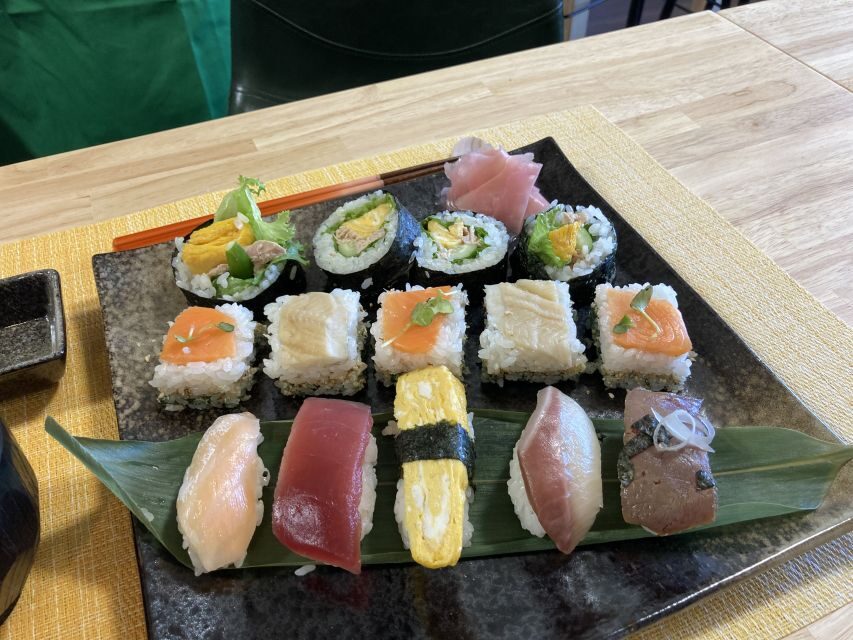
The local finale is oshizushi, also called box sushi in Osaka. This is the one that feels most like a regional stamp—Kansai style, not a generic sushi lesson.
How it works:
- You fill a square wooden frame with sushi rice and toppings
- Then you press the rice so it sticks to the toppings
- The result is a square
- You cut it into pieces just before eating
That last part is more important than it sounds. Pressed sushi holds together because of the compression, and cutting at the right moment helps keep it neat and properly portioned.
Why I think oshizushi is a great thing to learn in Osaka: it teaches you that sushi is not only about raw fish on rice. It’s also about preservation and texture, using methods that create consistent bites. It’s a technique you can’t fully appreciate just by eating it.
If you like the feel of hands-on making, oshizushi delivers. Pressing the sushi is physical and quick, and the square shape makes it feel like a finished product right away.




How much you’ll eat (and why the price feels fair)
At $67 per person for 3 hours, the value comes down to two things: inclusion and amount.
You’re told that all ingredients are included. That usually means you won’t pay extra for rice, nori, fillings, and the sushi-making basics. You’re also making three types of sushi, which is more than most “quick demo” classes.
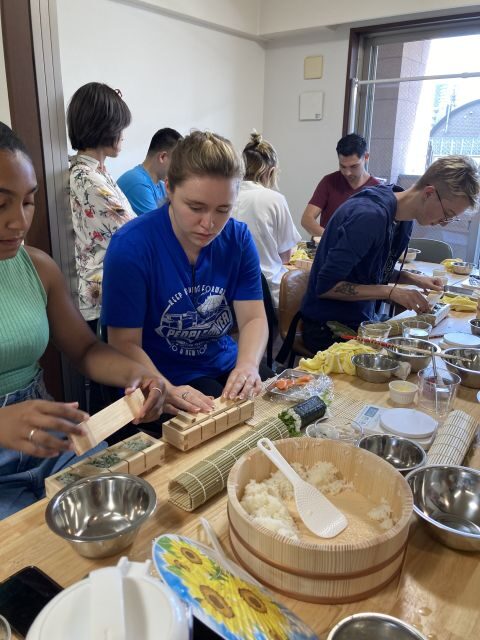
Then there’s the food part. Multiple reviews highlight that the quantity is substantial and delicious—people say they were very hungry after, and that the class produced enough sushi to satisfy big appetites. That aligns with the format: you’re not just tasting a bite. You’re building full pieces you can eat.
Also, in several reviews, instructors are praised for keeping energy high and instruction clear. That matters for value because sushi can be frustrating if you’re unsure what you’re doing. When the guidance is strong, you leave with a skill you can repeat.
What the instructors teach beyond the sushi
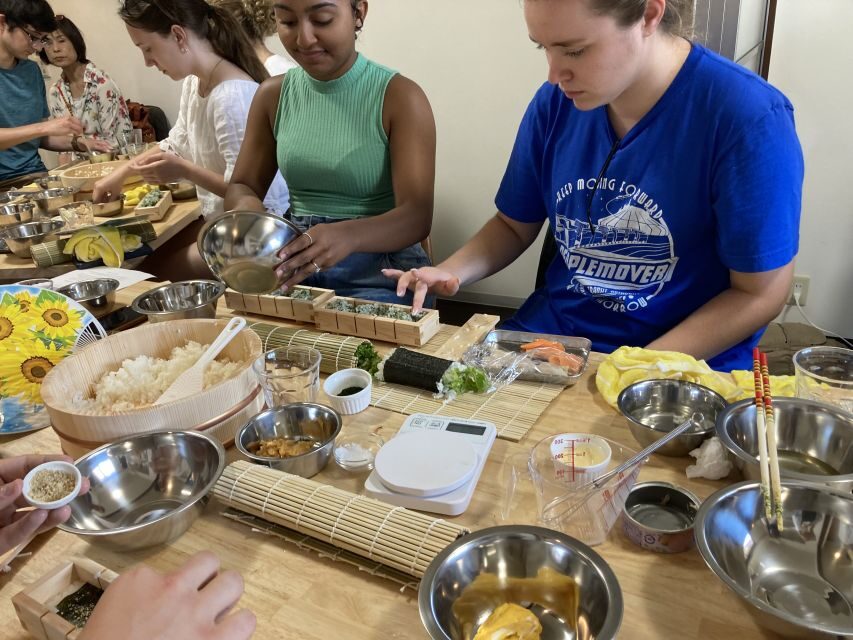
This class isn’t just shapes on a plate. Reviews mention that teachers go into cooking methods and the reasoning behind them—how food is preserved, and the meanings behind Japanese cooking approaches. That kind of context turns the class from a one-time meal into something you can connect to the rest of your trip.
Names that come up in reviews include Yoshi, Ami, Eriko, Yoko, and Naomi. Across the board, they’re described as:
- Clear with step-by-step guidance
- Attentive during the class
- Interactive, often asking about your trip and sharing food recommendations
That last point is worth paying attention to. A sushi class is a great time to ask, What should I try next? Instructors can point you toward foods and styles that fit what you just learned.
Logistics that matter: timing, finding the room, and what to bring
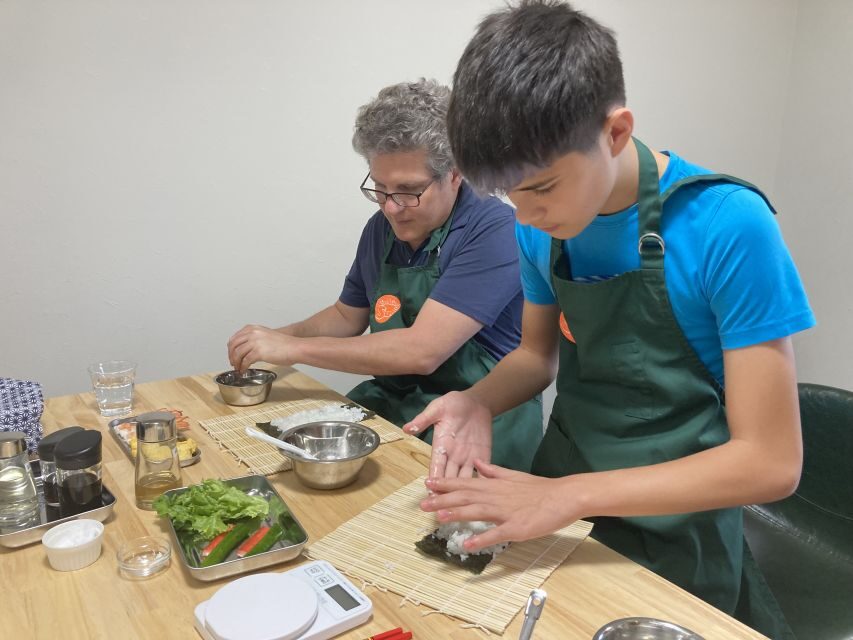
You don’t need much beyond a good appetite and a willingness to make a bit of mess (it happens). Here are the practical details that affect your day:
- Duration: 3 hours, so plan to have a meal after or build your schedule with a buffer
- Meeting point: Cooking Sun Osaka, room 202 with the press-and-call entry
- One review notes it can be hard to find at first, so arrive a few minutes early rather than sprinting in at the last second
- Ask for dietary accommodations by adding a note when booking for vegetarian and gluten-free options
On pace: because the group is small, you’ll likely move through steps with steady guidance. That’s especially helpful if you’re a first-timer.
Who this Osaka sushi class suits best
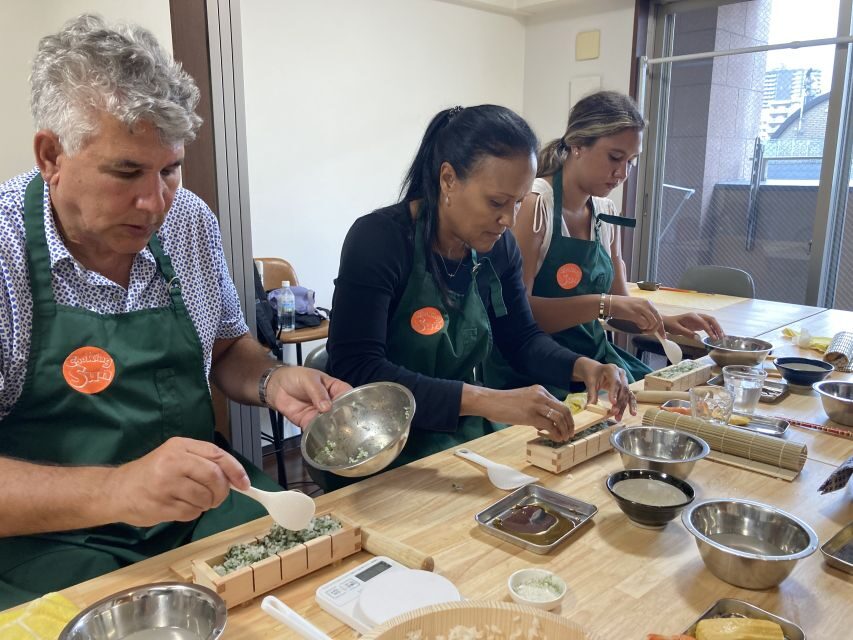
This class is a strong match if:
- You love sushi and want to understand what you’re eating
- You’re traveling as a couple, family group, or friends and want something hands-on (many reviews mention it as a top highlight)
- You’re a beginner and want structure, not guesswork
- You care about learning in English with a real instructor
It might be less ideal if:
- Your main goal is advanced knife work or slicing fish yourself. One review notes a wish for more chance to slice fish, so expectations for cutting skills should stay realistic.
- You want a wide variety of dishes. This class stays focused on the three sushi styles.
Should you book this Osaka sushi class?
If you want a practical souvenir you can actually use, I’d book it. Three hours, up to 8 people, English instruction, and three sushi techniques is a clear package. The price makes sense especially because ingredients are included and the class ends with a lot of food you made yourself.
Book it even if sushi feels intimidating. The best part is that the teaching style shows up in reviews again and again: patient, interactive, and detailed enough that you can succeed.
Only skip if you’re hunting for a very advanced culinary workshop with heavy fish-cutting skills. For technique, confidence, and a fun Osaka food memory, this one is hard to beat.
FAQ
How much does the Osaka Sushi Class cost?
It costs $67 per person.
How long is the sushi class?
The class lasts 3 hours.
What sushi types will I make?
You’ll make three types: a salad roll, nigiri, and oshizushi (pressed box sushi).
Does the class include ingredients?
Yes. All the ingredient for sushi making is included.
Is the instructor available in English?
Yes. The instructor provides instruction in English.
Can I request vegetarian or gluten-free options?
Yes. The booking info says to leave a note upon booking for vegetarian or gluten-free options.
Where is the meeting point in Osaka?
The meeting point is Cooking Sun Osaka, room 202. On arrival, press 202 and the 呼出 (call) button at the entrance.
What is the group size?
The class is a small group limited to 8 participants.
Is free cancellation available?
Yes. There is free cancellation up to 24 hours in advance for a full refund.