REVIEW · OSAKA
Osaka : 3/4/5 Hours Private Tour With Local Guide
Book on GetYourGuide →Operated by Osaka local · Bookable on GetYourGuide
Osaka in a few hours feels like you cheated. This private tour pairs hotel pickup with a tight route through Osaka Castle Park, Shinsekai, Den Den Town, Kuromon Market, Dotonbori, and ending in Amemura—so you get both the big sights and the everyday city. I especially like that the guide adapts to your interests and that you learn how to move around using the rail system without stress. One consideration: it’s a walking tour, so if you want zero walking or mostly sit-down stops, you may feel it.
In practice, the best part is the human scale. I’ve seen guides such as Hugo, Arnaud, Francois, Antoine, Khalid, and Kieran mentioned, and the common thread is they keep the explanations practical—history, yes, but also how local life works. You’ll cover a lot in 3 to 5 hours, and you’ll have time for food stops only if you want them.
In This Review
- Key points worth knowing before you go
- Why a Private Osaka Walk Works So Well in 3 to 5 Hours
- Starting at Your Hotel: The Real Value of a Pickup
- Osaka Castle Park: More Than a Landmark Photo Stop
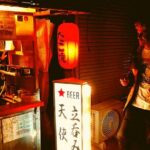
- Shinsekai: Working-Class Osaka With Character (and Optional Snacking)
- Den Den Town and Nipponbashi: Electronics, Anime, Maid Cafes, and Secondhand Thrills
- Kuromon Ichiba Market: Seafood Street Food Without the Guesswork
- Dotonbori Running Man and Triangle Park: Photos With Context
- Amemura: Finishing in the Youthful, Trendy Osaka Mood
- How the Day Runs: Walking Pace, Trains, and What You Should Budget For
- Value at $116 Per Person: What You’re Actually Buying
- Who This Tour Suits Best (and When to Skip It)
- Should You Book This Private Osaka Starter Tour?
- FAQ
- What areas of Osaka does the tour include?
- Does the guide pick me up from my hotel?
- Are tickets and entry fees included?
- Is food included?
- How long is the private tour?
- Can I cancel if my plans change?
Key points worth knowing before you go
- Hotel pickup means you start already in motion (no scrambling for meeting points).
- Big-name Osaka plus off-the-radar streets in working-class neighborhoods and shopping alleys.
- Den Den Town is built for people who like details: old video games, anime/figurines, electronics, and secondhand shops.
- Kuromon Ichiba Market puts seafood where it belongs—right in the middle of the action, with guidance on what to try.
- The guide helps you navigate trains so you’re not guessing route logic on your first day.
- Food is optional and personalized—snacks and tastings happen when they fit your pace.
Why a Private Osaka Walk Works So Well in 3 to 5 Hours
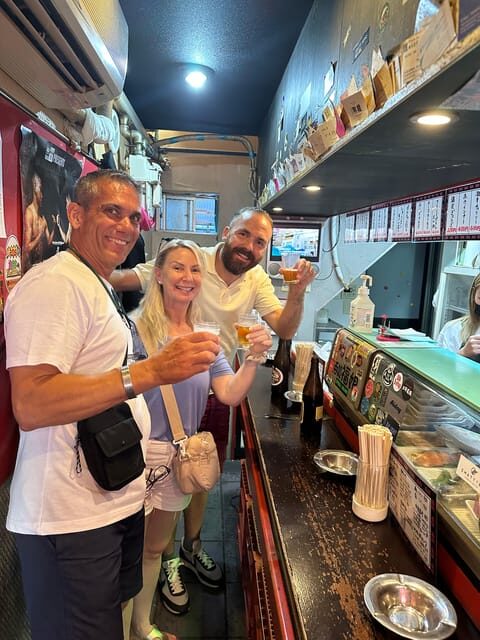
Osaka can be friendly, but it can also be chaotic—bright signs everywhere, neighborhoods with very different vibes, and train stations that can make you second-guess yourself. This private setup solves the main problem: you get one person who can connect the dots quickly. You’re not hunting for where to go next, and you’re not relying on a map that doesn’t explain what you’re seeing.
I like that the tour is built around contrast. You start with Osaka Castle Park (a landmark with context), then you shift to Shinsekai (working-class history and distinctive architecture), then you bounce into the neon world of Den Den Town and the food chaos of Kuromon. That variety keeps the day from feeling like a checklist.
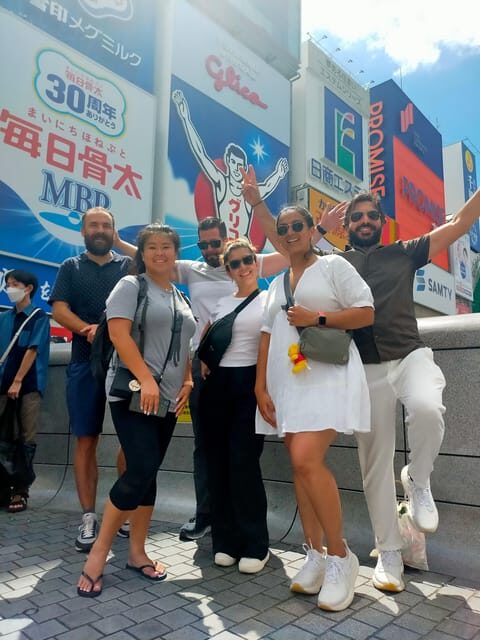
A private guide also changes the feel of photos. Instead of just stopping for the running man sign and moving on, you learn what the area is like, why people go there, and how to time your stops so the walk makes sense.
You can also read our reviews of more guided tours in Osaka

Starting at Your Hotel: The Real Value of a Pickup
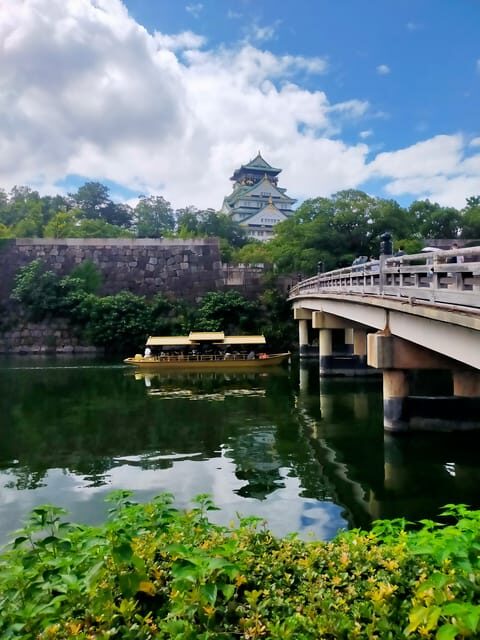
A lot of tours start with you finding the tour. This one starts with the guide coming to you—meeting you directly in front of your hotel reception if your place is in the designated zone in Osaka. That matters more than people expect. When you’re tired, jet-lagged, or just trying to get your bearings, losing 30 minutes to a meeting point can quietly wreck your schedule.
The tour runs as a private group, which usually means you can ask questions without feeling like you’re interrupting a bigger group’s pace. Guides like Hugo and others are known for checking what you want to focus on, then adjusting the walking flow so the day stays enjoyable rather than forced.
One small heads-up: tickets to any attraction are not included, and transportation isn’t included. The guide handles the route and planning, but you should still expect to cover subway/train fares and any ticketed entrances you decide to do.
Osaka Castle Park: More Than a Landmark Photo Stop
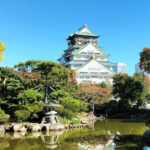
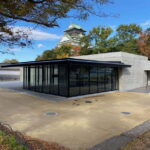
The day kicks off with a guided walk around Osaka Castle Park. You don’t just stroll for views—you get the history tied to Japan’s larger story. The castle area works well early in the tour because it gives you orientation. After that, every other neighborhood feels more connected instead of random.
Here’s what I think you’ll enjoy most about the castle portion: it’s structured walking. You’re moving, you’re learning, and you’re in a big open space that helps you reset your legs and your expectations before the denser parts of the city.
If you’re hoping for deep museum-style history, note that this tour is a walking tour with guided context—not a ticketed, indoor day plan. Still, the park and grounds are a strong way to start, especially if it’s your first time in Osaka.
Shinsekai: Working-Class Osaka With Character (and Optional Snacking)
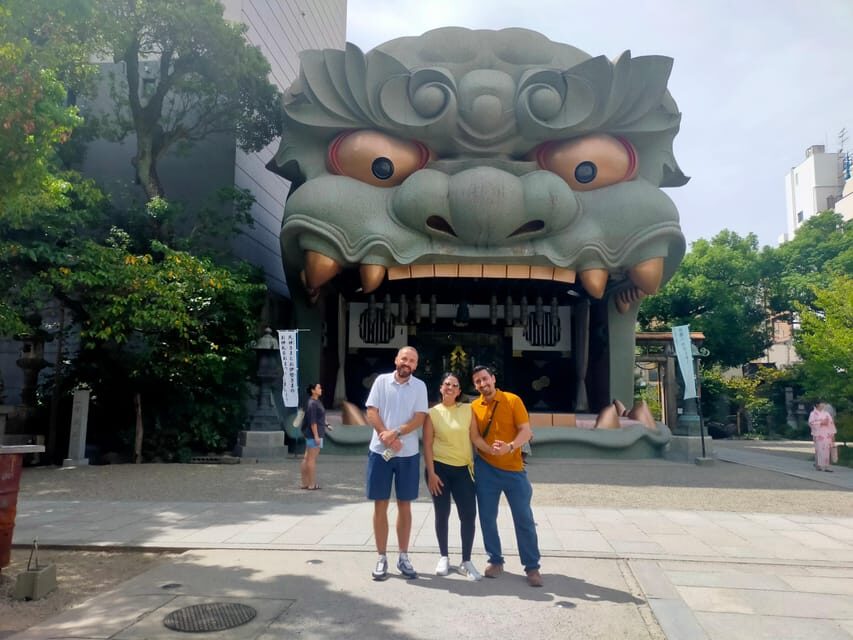
From the castle grounds, you head toward Shinsekai, a district known for its working-class feel and its standout architecture. This is where Osaka stops looking like a postcard and starts looking like a place people built their routines around.
The pacing here tends to feel human. You walk through streets that have a different rhythm than the tourist corridors, and you learn how the neighborhood developed. The tour also gives you an option to stop for a local specialty to taste. You don’t have to turn food into the mission of the day, but it’s there if you want it.
A practical consideration: Shinsekai is more about texture—streets, buildings, and atmosphere—than about big-ticket sights. If you want constant wow-factor landmarks every two minutes, you might find it calmer than the entertainment districts that come later.
Den Den Town and Nipponbashi: Electronics, Anime, Maid Cafes, and Secondhand Thrills
Then comes Nipponbashi and Den Den Town, Osaka’s electronics and anime zone. This part is fun for people who like detail. Expect electronic shops, old video games, anime and figurines, maid cafe culture, and secondhand stores.
What makes it special on a guided route is the guidance. Den Den Town can be overwhelming if you’re just wandering because the choices multiply fast: new tech stores, collector shops, hobby aisles, and weird little corners. With a guide, you can aim your time. You don’t need to know what each tiny store sells in advance; you just follow the logic of the area and stop where it makes sense.
This is also a great moment for flexibility. The tour is designed to be personalized, so if you care more about gaming nostalgia than electronics, or you want the figurine-and-anime angle more than the secondhand hunt, the guide can steer accordingly. Some guides are even noted for helping people find places they wouldn’t spot on their own.
If you’re traveling with a teenager (or an adult who never fully stopped playing), this is often the section that turns into a highlight.
You can also read our reviews of more private tours in Osaka

Kuromon Ichiba Market: Seafood Street Food Without the Guesswork
Next up is Kuromon Ichiba Market, a street food market known for seafood. This stop is short on paper, but it’s powerful because the market is the entire experience. You get the energy of people moving through stalls, and you get to focus on eating without doing the planning work yourself.
The tour is designed so you can try atypical foods that exist in Japan, not just the obvious picks you already know from Instagram. And again, it’s not all-or-nothing—you can sample, you can choose, and you can keep moving.
Practical advice: markets can be loud, crowded, and menu-heavy. The guide helps you understand what you’re looking at and makes the ordering process less awkward—especially when you hit items you’ve never seen before.
Also remember: food and drinks are not included. You’re paying for the guidance, the route, and the ability to choose better, not for a full meal package.
Dotonbori Running Man and Triangle Park: Photos With Context
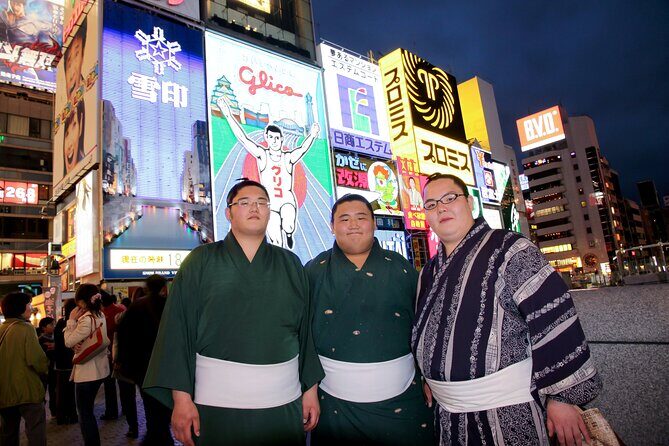
The tour continues to Dotonbori, Osaka’s entertainment district. You’ll do a photo stop and then get a guided walk through what makes the area tick, including seeing the famous “running man” sight.
This is one of those places where people either love it or find it exhausting. On your own, you might only notice the big sign. With a guide, you start noticing the smaller stuff—how the streets are laid out, where the energy comes from, and what areas tend to feel more local versus more showy.
After Dotonbori, you walk toward Triangle Park (Sankaku Park). This stop adds a calmer layer between the neon intensity and the trendier neighborhood you’ll finish in. It’s a good place to catch your breath without breaking the day’s flow.
Amemura: Finishing in the Youthful, Trendy Osaka Mood
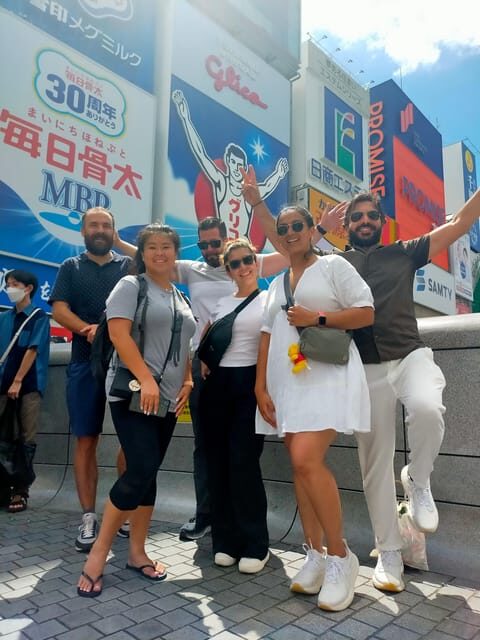
To close, you end around Amemura, the so-called American district area that’s popular with local youth. This is where Osaka shifts gears again: less souvenir mindset, more street-style energy, fashion-adjacent shops, and a neighborhood vibe that feels current.
What I like about ending here is that it gives you options after the tour. If you’ve got energy, you’re already in a place where people go out. If you’re tired, you’re near enough to keep things simple without feeling like you’ve reached the end of your day in an empty spot.
This finishing sequence is one reason the tour works well as a first day plan. You start with history, move through culture and food, then land in a modern neighborhood where you can decide how your Osaka day should end.
How the Day Runs: Walking Pace, Trains, and What You Should Budget For
This is a private walking tour that runs 3 to 5 hours. You’ll cover multiple neighborhoods and you’ll use the train system during the day. The big advantage is that your guide helps you figure it out, so you don’t spend your morning learning which subway line goes where.
From what I’ve heard from people who went, the guide doesn’t just point you at exits. They explain how to navigate the rail system and surrounding areas, which is exactly what you need early in your trip. That also reduces the mental load of carrying luggage, finding station entrances, and double-checking station transfers.
Budget-wise, plan for:
- Attraction tickets, if you choose to enter anything ticketed (not included).
- Food and drinks (snacks and tastings may happen, but they aren’t included as a full package).
- Transportation costs (the tour covers the route; you cover train/subway fares).
Also: it’s wheelchair accessible, and that’s a plus if you need step-free routes or extra flexibility. Since it’s a private tour, it’s easier for the guide to work with your pace.
Value at $116 Per Person: What You’re Actually Buying
At $116 per person, this isn’t a bargain tour. It is, however, priced like what it is: a private day plan that bundles together hotel pickup, guided walking, neighborhood context, and hands-on help using public transit.
So here’s the value math you should think about:
- If you’re doing this as a first day to get oriented, you’re basically paying to save time and confusion.
- If you care about food choices in Japan and you don’t want to guess from menus, a guide can reduce mistakes and improve what you try.
- If you’d otherwise pay for multiple separate tours or spend hours researching neighborhoods, this can act like a shortcut.
For solo travelers, it’s a bigger expense. For couples or small private groups, it can feel more reasonable because the guide’s attention isn’t diluted by strangers and you’re not stuck with a set group schedule.
Who This Tour Suits Best (and When to Skip It)
This tour fits best if:
- You want an organized way to hit Osaka highlights without feeling rushed.
- You like a mix of history, local neighborhoods, shopping areas, and street food.
- You’re nervous about train navigation on your first day and want a guide to help you get confident fast.
- Your group includes at least one person who likes electronics, anime, or secondhand finds—Den Den Town is a strong match.
Consider skipping or swapping for something else if:
- You want mostly one major attraction with lots of sitting breaks.
- You’d rather go fully at your own pace without a walking structure.
- You dislike markets and street food areas (Kuromon is part of the plan).
If you’re the type who enjoys asking questions and walking your way through neighborhoods, this is a great starting point.
Should You Book This Private Osaka Starter Tour?
If it’s your first time in Osaka and you want to get bearings fast, I’d book it. The hotel pickup, the neighborhood variety, and the guided help with trains are the big reasons. You’ll come away with a clearer sense of where Osaka’s different moods live—castle grounds, Shinsekai’s street character, Den Den Town’s hobby world, Kuromon’s seafood energy, and the neon-to-youthful arc of Dotonbori and Amemura.
One final thought: pick a tour length (3, 4, or 5 hours) that matches your stamina. This day is designed to feel full, not leisurely. If you choose the right duration, you’ll leave Osaka with that rare feeling of having seen a lot—and still knowing what you actually saw.
FAQ
What areas of Osaka does the tour include?
The route includes Osaka Castle Park, Shinsekai, Nipponbashi Den Den Town, Kuromon Ichiba Market, Dotonbori (including the running man area), Triangle Park (Sankaku Park), and the Amemura neighborhood to finish.
Does the guide pick me up from my hotel?
Yes. The guide meets you directly in front of your hotel reception if it’s within the designated pickup zone in Osaka.
Are tickets and entry fees included?
No. Tickets to any attraction are not included.
Is food included?
Food and drinks are not included. The tour can include optional local snacks or tastings if you wish, especially around Shinsekai and at Kuromon Ichiba Market.
How long is the private tour?
It runs for 3 to 5 hours, depending on the option you choose.
Can I cancel if my plans change?
Yes. You can cancel up to 24 hours in advance for a full refund.