REVIEW · OSAKA
Kyoto & Nara Private customized tour with English speaking Guide
Book on Viator →Operated by Hamzi · Bookable on Viator
Deer, temples, and no map stress. This private Kyoto & Nara customized tour turns a confusing day of trains into a smooth ride with an English-speaking guide, plus pickup options where you’re staying. I like how the itinerary can be tailored to your group, and I like that you get local help at every stop. One catch: some temple admissions (like Todai-ji and Tenryu-ji) are not included, so you’ll want a little cash set aside.
What makes it interesting is how many “headline” sights you can hit in one day—without feeling like you’re speed-running. You can build your own pace around famous places such as Nara Park’s deer, Arashiyama’s Bamboo Grove area, Kinkaku-ji (the Golden Pavilion), and Fushimi Inari’s red torii gates. And based on real experiences, guides such as Hamzah, Ali, Nomi, and Sha are the names that keep popping up for clear English and practical support.
Just know the day can be busy. If you’re traveling with kids, keep an eye on Nara deer (they can be persistent), and if you dislike crowds, plan to move with purpose rather than stopping for long hangs at the most popular photos.
In This Review
- Key points to know before you go
- How This Private Kyoto and Nara Day Really Works
- Nara Park and the Deer: Your First 1-Hour Taste
- Arashiyama Bamboo Grove and Tenryu-ji Zen Atmosphere
- Todai-ji Temple: UNESCO Time, and Ticket Budgeting
- Kinkaku-ji Golden Pavilion: The Included Ticket Stop
- Fushimi Inari’s Red Torii Gates (And When to Be Patient)
- Timing, Crowds, and How Much You’ll Actually Walk
- Value for $549: When a Private Van Makes Sense
- Who This Tour Fits Best (And Who Might Skip It)
- Before You Go: Questions to Ask Your Guide
- Should You Book This Kyoto & Nara Private Tour?
- FAQ
- How long is the Kyoto and Nara private customized tour?
- What is the price, and how many people can join?
- Where does the tour start and end?
- Is pickup available from Kyoto, Osaka, or Nara?
- Is lunch included in the tour price?
- Which stops have admission fees included or not included?
- Is WiFi and air-conditioning included?
- Is this tour private, or shared with other people?
Key points to know before you go
- Private van + English help: You skip transit stress and language guesswork.
- Route is adjustable: Your day can shift based on what your group actually wants.
- You’ll hit major Kyoto and Nara anchors: Nara Park, Arashiyama, temples, and Fushimi Inari.
- Kinkaku-ji ticket is included: One big paid stop is handled for you.
- Not all temple tickets are included: Todai-ji and Tenryu-ji require extra planning.
- Expect a long day: It’s listed at about 8 to 10 hours, with plenty of driving between sights.
How This Private Kyoto and Nara Day Really Works
This is a private, customized day trip for up to 6 people. That small group size matters. It means you’re not stuck with a rigid group rhythm, and you can ask for a stop order change if your family needs bathroom breaks, slower pacing, or extra photo time.
You start at Osaka Station (Umeda area: 3-chōme-1-1 Umeda, Kita Ward). The day ends back at the meeting point. Pickup is offered from Kyoto, Osaka, or Nara, which is a huge deal if you’re not staying right next to a rail hub. You also get a mobile ticket and WiFi on board, plus an air-conditioned vehicle—nice when Kyoto is hot or when the weather turns.
Here’s the real value of “customized.” Kyoto and Nara can feel like a stack of attractions that all demand attention at the same time. With a guide, you can choose whether you want more time at a single temple complex, more wandering for souvenirs, or a calmer pace through the hardest crowds. In real use, guides like Hamzah and Ali are often described as making the whole day easy to understand and manage, which is exactly what you want when you’re tired.
One thing to consider: in a few experiences, commentary quality varied. If you care a lot about storytelling and explanations, ask your guide what kind of pace and commentary style you’ll get. If you want mostly logistics and timing, you’ll probably still enjoy it.
You can also read our reviews of more guided tours in Osaka

Nara Park and the Deer: Your First 1-Hour Taste
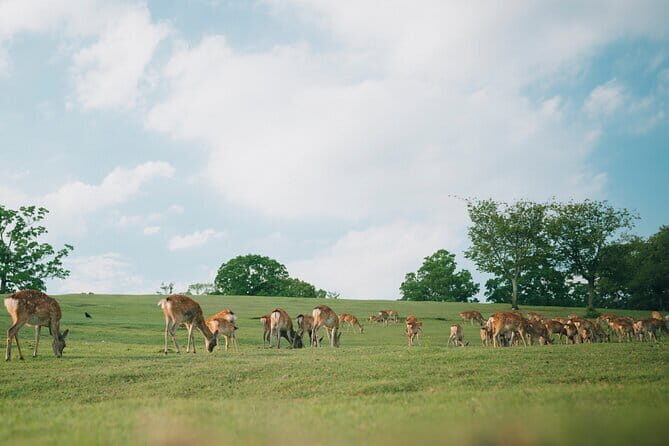
Nara Park is famous for a reason: the deer live freely in the park area, and you’ll see them up close right away. The stop is about 1 hour, and admission is free. That makes it a great starter, especially if your group needs a quick win before settling into a longer temple-and-walk day.
The practical advice is simple: watch kids and keep small snacks protected. Some deer can be food-focused, and you don’t want a surprise chase that ruins everyone’s mood. I also suggest you wear shoes you can move in fast. It’s not extreme walking, but the paths get busy because everyone wants the same “deer photo” angle.
What’s good about starting here is that it shifts your brain away from the temple queue mindset. It’s also a nice contrast with Kyoto’s more formal spaces later in the day. You’re basically warming up with something natural and playful, before stepping into major historic sites.
One caution: Nara can get crowded depending on the time of day. If your group hates waiting, treat the deer stop as a “do it early, do it smart” moment—walk first, photo second, and then be ready to move.
Arashiyama Bamboo Grove and Tenryu-ji Zen Atmosphere
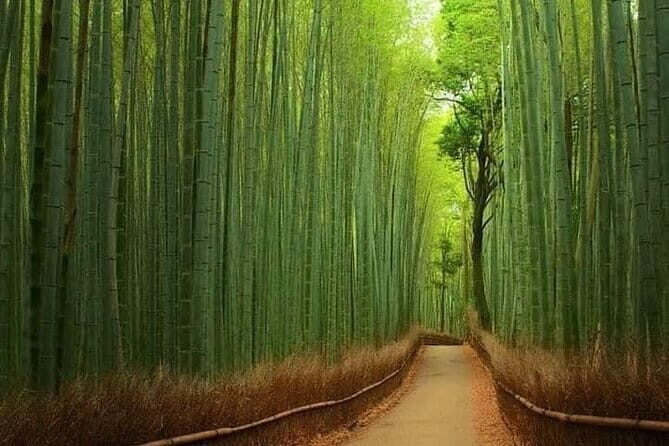
Next is Arashiyama, with about 1 hour of time. Admission is free for this stop, and it focuses on the Bamboo Grove area. Even when it’s crowded, the bamboo setting has an instant “Kyoto mood.” The good part of a private format here is that you’re not fighting the entire crowd in a single-file line. Your guide can help you find practical entry points and keep your group moving with less hesitation.
Then you add Tenryu-ji Temple in the Arashiyama area for about 30 minutes. Tenryu-ji is listed as one of Kyoto’s five great temples, it’s UNESCO, and it dates to the 14th century. Admission for this stop is not included, so you’ll want to budget extra if Tenryu-ji is a priority for your day.
Why this pairing works: bamboo gives you the visual wow early, and Tenryu-ji gives you the slower, calmer temple rhythm right after. It’s a good switch in tempo, which can help if you’re traveling with kids who need variety.
Potential drawback: 30 minutes can feel short if you love wandering slowly inside. If that’s you, ask to stretch the time at Tenryu-ji and trim a few minutes elsewhere.
Todai-ji Temple: UNESCO Time, and Ticket Budgeting
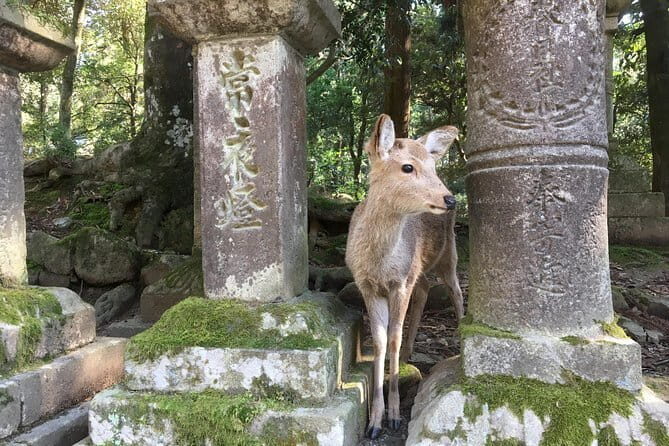
Todai-ji is one of Nara’s standout Buddhist temples, founded in the early 8th century during the Nara period, and it’s UNESCO-listed. Your stop here is about 1 hour, but admission is not included.
This stop is a good “centerpiece” in the day because Todai-ji represents the major historical weight of Nara. If your goal is to see more than just scenery—if you want landmark temples you’ll remember—this is one of the reason the tour is worth doing as a single organized day.
A practical consideration is money timing. Since Todai-ji admission is not included, you’ll want to arrive ready to pay on-site. I also suggest you plan your energy. One hour inside a major temple complex can be tiring if you’re also juggling crowds and heat, so don’t schedule additional “must-see” add-ons that would steal your rest time.
If you’re traveling with older adults, or anyone who needs frequent pauses, this is another point where a private guide can help by pacing the group and shaping the order of walking paths to reduce backtracking.
Kinkaku-ji Golden Pavilion: The Included Ticket Stop
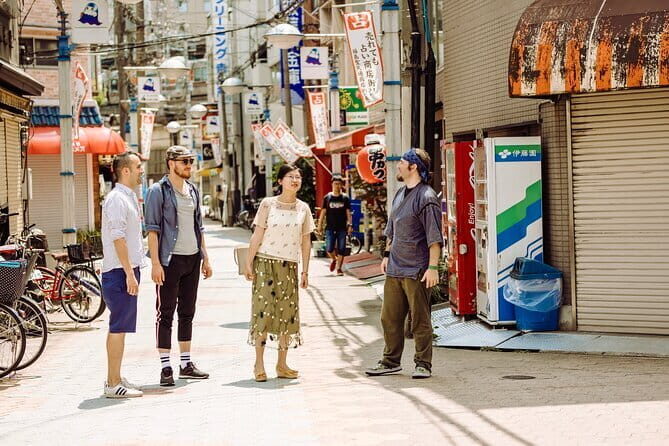
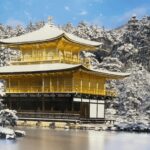
Kinkaku-ji—the Golden Pavilion—is one of the easiest reasons to book a private tour in the first place. It’s UNESCO-listed, famous for its dazzling golden exterior and serene gardens, and your ticket is included. The stop is about 40 minutes.
In practical terms, included admission is value. You’re removing one decision point from your day. You show up, you go in, and your time stays focused on the actual visit rather than figuring out ticket lines and rules.
Forty minutes is usually enough to see what you came for without feeling rushed. It’s also long enough for a few pauses, which matters because photography spots can be close together. If you’re the type who loves lingering for the “right angle,” ask your guide whether they can hold extra time here and cut a few minutes elsewhere.
One more reason this stop feels worth it: it’s a visual signature sight. Even people who are not temple-obsessed tend to enjoy Kinkaku-ji because the experience is immediately readable from the exterior and surrounding gardens.
You can also read our reviews of more private tours in Osaka


Fushimi Inari’s Red Torii Gates (And When to Be Patient)
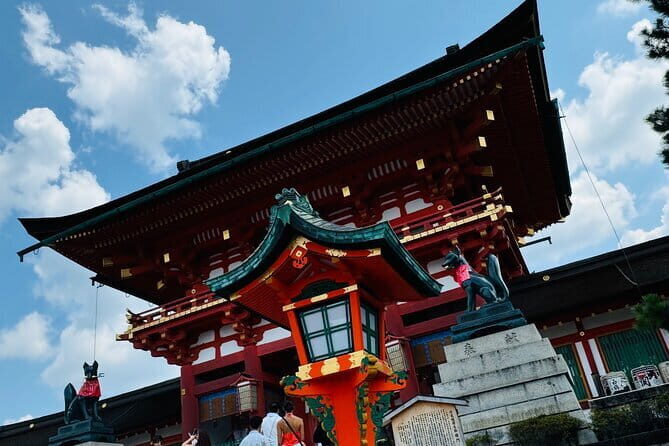
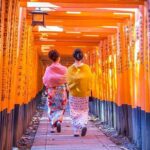
Fushimi Inari-taisha is your last major sightseeing anchor: a Shinto shrine known for thousands of vibrant red torii gates that form long tunnels through the shrine paths. The stop is about 1 hour, and admission is free.
This is one of the most iconic “I’m in Kyoto” moments. It also happens to be one of the most crowded. With a private guide, you have two advantages: you can time your movement through the busiest segments, and you can avoid losing your group while you’re hunting the best photo line.
My best advice here: don’t treat it like a single straight walk. Use your hour for a “choose your loop” strategy. If you want the classic tunnel images, go deep enough to feel the tunnel effect. If you want a more relaxed stroll, stay closer to the entrance areas and prioritize calm movement.
Also, keep water handy. Even if the stops seem short on paper, the total day has plenty of movement between areas, and Fushimi Inari can turn into a long walking stretch depending on how far you go.
Timing, Crowds, and How Much You’ll Actually Walk
The tour runs about 8 to 10 hours. That range matters because Kyoto traffic and walking distances can shift a schedule quickly. Some experiences describe the day as smooth and stress-free, while others note there can be more driving between stops than expected. That’s normal for this route: you’re crossing between Nara and Kyoto, then moving through multiple districts that are not close in real-world time.
Plan for a full-day rhythm:
- Start strong with Nara Park and Arashiyama.
- Expect Kinkaku-ji and Fushimi Inari to be photo-and-queue sensitive.
- Use your guide to tighten the schedule, not loosen it.
Walking-wise, this isn’t a hardcore hiking trip. But you will be on your feet repeatedly. Comfortable shoes are non-negotiable. If someone in your group needs a calmer pace, say so early. In real use, guides like Hamzah and Ali are described as flexible and accommodating, and that flexibility is what can prevent your day from feeling like one long sprint.
Crowd management is part of the value. If your guide is proactive about timing and route choices, you’ll spend more time seeing and less time standing around.
Value for $549: When a Private Van Makes Sense
At $549 per group (up to 6), this tour is priced for convenience and control, not budget minimalism. If you’re traveling with just one person or two, the cost can feel steep. If you’re splitting it among a family of four or six, it starts to look a lot smarter.
Here’s the value math I’d use:
- You’re paying for private transport between Osaka/ Kyoto/ Nara areas.
- You get an English-speaking guide to smooth language barriers and help keep your timing realistic.
- You get WiFi and an air-conditioned vehicle—small comforts, but they matter on a hot or rainy day.
- Kinkaku-ji ticket is included, which offsets one paid stop.
On the other hand, you still need to plan for extra admissions for Todai-ji and Tenryu-ji, since they’re listed as not included. Lunch is also not included. So your true spend is the base price plus those add-ons.
When is this the best deal? When you have limited time, you don’t want to wrestle with train changes, or your group includes kids or older relatives who will benefit from a controlled pace. For anyone who wants to “hit the headlines” in one day without logistical headaches, the private format is usually worth it.
Who This Tour Fits Best (And Who Might Skip It)
This tour fits best if you want a full day that’s both classic and flexible. It’s especially good for:
- Families who want an easy plan with time adjustments.
- First-time visitors to Kyoto and Nara who want the biggest sites without transit stress.
- Small groups who want to travel together and make quick decisions on what to prioritize.
It may not be the best match if:
- You want a very deep, lecture-style temple experience. In a small number of cases, guides were described as quieter or providing less commentary. You can reduce this risk by asking your guide directly what you can expect.
- You hate crowds and won’t be able to handle packed areas at Fushimi Inari or during peak Nara times.
- You prefer building your own day with public transit to save money.
Before You Go: Questions to Ask Your Guide
To get the day you want, ask these early (even before you start walking):
- What’s the plan for crowds at Nara deer and Fushimi Inari?
- Since your stops include temples with ticket fees, what should we budget for Todai-ji and Tenryu-ji?
- How flexible is the itinerary if we want more time at Kinkaku-ji or less time at another stop?
- What’s the expected walking level for the group, especially if you have kids or older adults?
- If we want a specific lunch style, can you point us to an option that fits?
Simple questions like these can also help ensure your guide’s communication style matches your expectations.
Should You Book This Kyoto & Nara Private Tour?
I’d book it if you want a stress-free Kyoto and Nara day with a private driver-guide, a customizable route, and an easy way to hit major sights like Nara Park, Arashiyama, Kinkaku-ji, and Fushimi Inari. The included Kinkaku-ji ticket is a real bonus, and the private format is especially helpful for families.
I would think twice if your top priority is deep temple storytelling and you’re picky about guide commentary style. Since the day includes both included and not-included admissions, also make sure you budget for extra temple tickets and lunch.
If you go in with the right mindset—comfortable shoes, extra patience for crowds, and clear priorities—this tour is one of the simplest ways to turn two of Japan’s most famous regions into one smooth day.
FAQ
How long is the Kyoto and Nara private customized tour?
It’s listed as about 8 to 10 hours.
What is the price, and how many people can join?
The price is $549 per group, up to 6 people.
Where does the tour start and end?
It starts at Osaka Station (3-chōme-1-1 Umeda, Kita Ward, Osaka) and ends back at the same meeting point.
Is pickup available from Kyoto, Osaka, or Nara?
Yes, pickup is offered from Kyoto, Osaka, or Nara.
Is lunch included in the tour price?
No, lunch is not included.
Which stops have admission fees included or not included?
Nara Park and Arashiyama are listed as free. Todai-ji and Tenryu-ji are not included. Kinkaku-ji is included. Fushimi Inari-taisha is listed as free.
Is WiFi and air-conditioning included?
Yes. You get WiFi on board and an air-conditioned vehicle.
Is this tour private, or shared with other people?
It’s private. Only your group participates.