REVIEW · OSAKA
Experience Samurai and traditional Culture to the fullest
Book on GetYourGuide →Operated by 株式会社武士の誉れ · Bookable on GetYourGuide
Osaka Castle, but with samurai swagger.
This 3-hour Osaka experience strings together kimono culture, calligraphy, tea ceremony etiquette, and hands-on samurai training, capped with armor photos on Osaka Castle grounds. I like how it focuses on practical technique (how to hold the brush, how to approach the sword), not just costumes, and I like that you get a real performance-meets-craft vibe instead of a quick stop-and-take-a-picture.
The biggest tradeoff is simple: you’ll want to plan around the schedule. You’re asked to arrive 30 minutes early for changing and instructions, and transportation (pickup or drop-off) is not included, so you’ll need to handle getting there on your own.
In This Review
- Key highlights to know before you go
- Osaka Castle samurai training in 3 hours: how the flow works
- Kimono change and the etiquette mindset before you write or swing
- Calligraphy practice that teaches grip, strokes, and control
- Samurai calligraphy: words of resignation
- Tea ceremony manners: the point isn’t tea, it’s behavior
- Sword trial cutting: respect, responsibility, and actually trying it
- Osaka Castle armor photos: your single best souvenir moment
- Optional seppuku/harakiri segment: choose carefully
- Price and value: is $168 per person fair for what you do?
- Where you meet and what to do when you arrive
- Who this suits best (and who should think twice)
- Smart tips so you get the most out of the 3 hours
- Should you book Samurai and traditional culture to the fullest?
- FAQ
- How long is the experience?
- How much does it cost?
- What activities are included?
- Is transportation or hotel pickup included?
- What language support do you get?
- What should I bring?
- Where do I meet the staff?
- Do I get digital photos after the session?
- Is this a private group?
- Who is it not suitable for?
Key highlights to know before you go
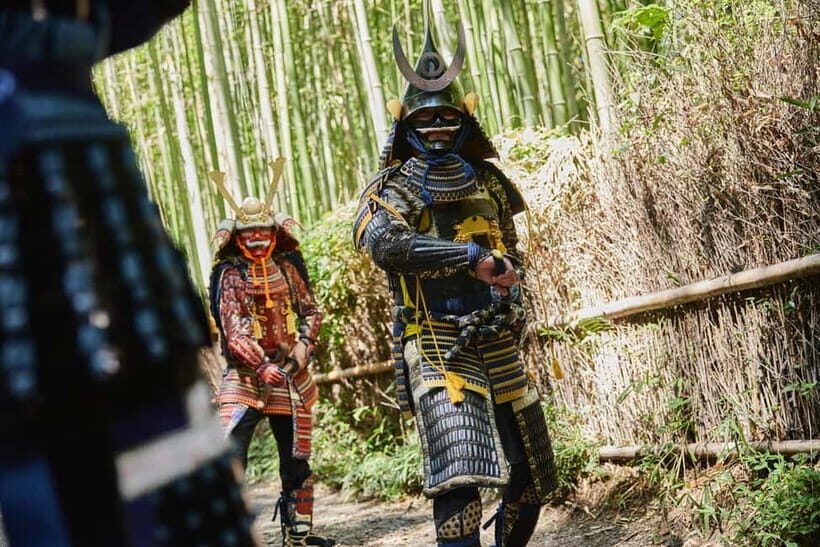
- Osaka Castle armor photos: you dress up and get photographed on the castle grounds.
- Samurai sword trial cutting: you learn how to use a sword and get time to try cutting.
- Calligraphy with a samurai theme: brush practice plus writing a kanji connected to words of resignation.
- Tea ceremony etiquette, hands-on: powdered green tea served while you learn manners and gestures.
- A photographer covering the moments: photo shooting is part of the package, with digital delivery by email.
- English-first support: English is the default interpreter language, with other languages available by schedule.
Osaka Castle samurai training in 3 hours: how the flow works
This is a compact, full-body style program based out of Honshu, in Osaka, built around one idea: you don’t just learn about samurai culture, you practice the rituals and disciplines that make the stories feel real.
You’ll start with traditional culture basics, then move into skills one by one. The day is paced so you’re doing something the whole time: changing into kimono, practicing brush technique, writing your own character, serving or receiving tea with correct etiquette, trying a sword-cutting drill, then finishing in armor with photographs by Osaka Castle.
The structure matters because samurai culture here is treated as a set of habits: posture, gesture, restraint, and respect. That’s why you’re not rushed through a single photo op. You’re guided through multiple short lessons and then allowed to try.
You can also read our reviews of more tours and experiences in Osaka.


Kimono change and the etiquette mindset before you write or swing
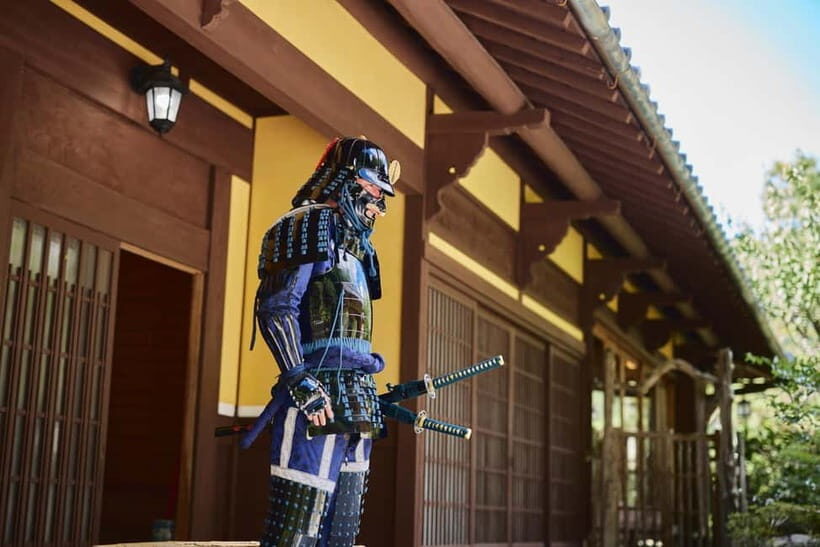
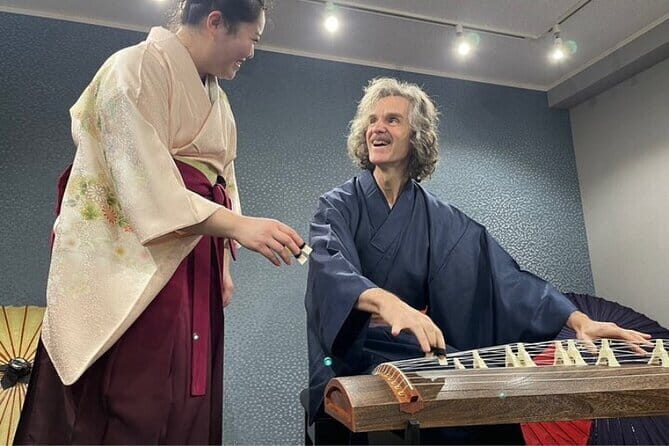
Before any tools come out, you’ll change into kimono. That first step is more than a costume moment. It’s a gentle way to slow your body down and pay attention to posture and movement, since kimono affects how you stand, walk, and hold yourself.
Then the session frames traditional culture through everyday arts: calligraphy and tea ceremony. The idea is that these aren’t random performances. They’re linked to courtesy, manners, and hospitality, which is also central to Bushido-style behavior.
Practical tip: wear a comfortable t-shirt as instructed. Everything else is handled for you with the provided samurai clothing and armor. You’ll also want to give yourself time to change smoothly, because the meeting instruction is to arrive 30 minutes early.
Calligraphy practice that teaches grip, strokes, and control
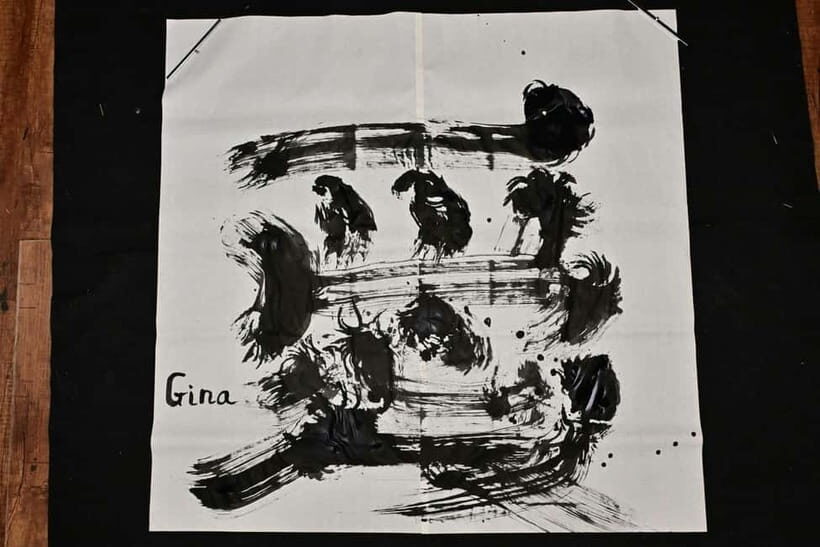
Calligraphy takes up real time, not a token few minutes. You’ll learn how to prepare, how to hold the brush, and how to use the tools correctly.
What I like about the way they teach it is that it starts with mechanics, then moves toward artistic expression. You practice basic brush strokes such as tome, hane, and harai. Then you choose a kanji character and follow the stroke order while practicing your version.
That combination is ideal if you’re the type who freezes when asked to do something traditional. Stroke order gives you a map. You can focus on doing it right rather than guessing.
Samurai calligraphy: words of resignation
After the basic practice, you write a themed character in what they call Samurai Calligraphy (Words of resignation). The session explains this resignation concept as a person stepping out of the world, with the words written as a kind of goodbye as he prepares to die.
Then it becomes a technique exercise: pay attention to how you execute the strokes while writing the kanji you selected. It’s not just aesthetic; it’s meant to make the act feel serious and deliberate.
If that theme sounds heavy for you, you should know it’s part of the calligraphy segment itself (not an optional add-on), so it’s best to decide your comfort level before you go.
Tea ceremony manners: the point isn’t tea, it’s behavior
Next comes Samurai Tea Ceremony. A tea master prepares and serves powdered green tea to guests, and you learn etiquette and gestures while you participate.
The session ties tea to honor and Bushido-style values. In other words, you’re being trained in the small things: how you hold yourself, how you move with intention, and how hospitality shows up in body language.
This part is valuable even if you’ve never done tea before. You get a structured, guided version of what people mean by manners in Japanese culture, instead of trying to figure it out from observation.
Also, it’s a nice rhythm change after brushwork. Calligraphy is quiet and controlled. Tea is still controlled, but it asks you to interact in a respectful way.




Sword trial cutting: respect, responsibility, and actually trying it
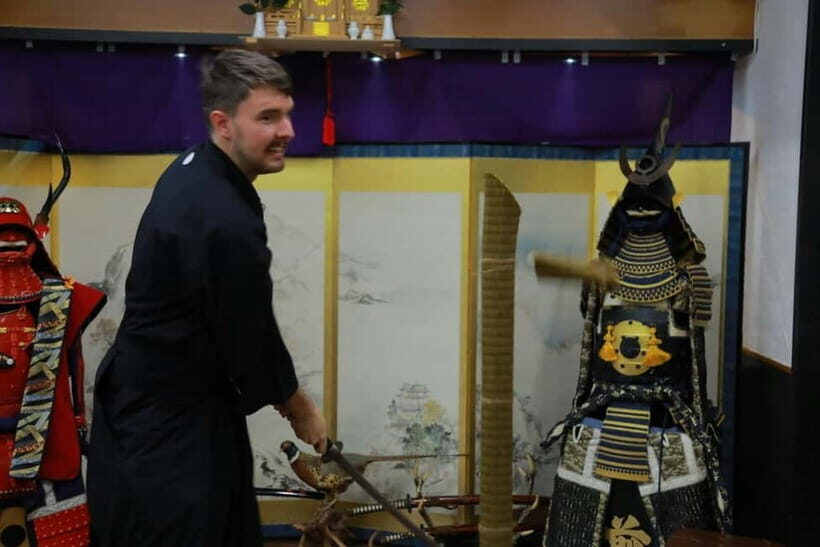
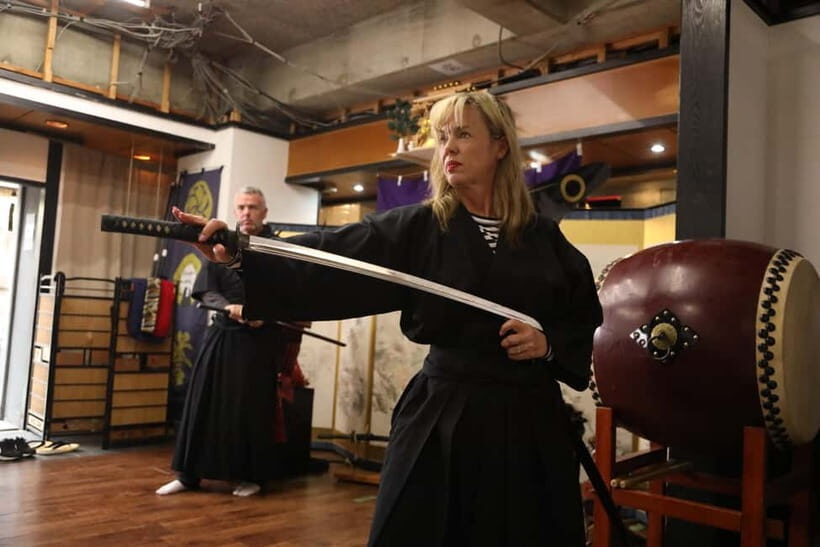
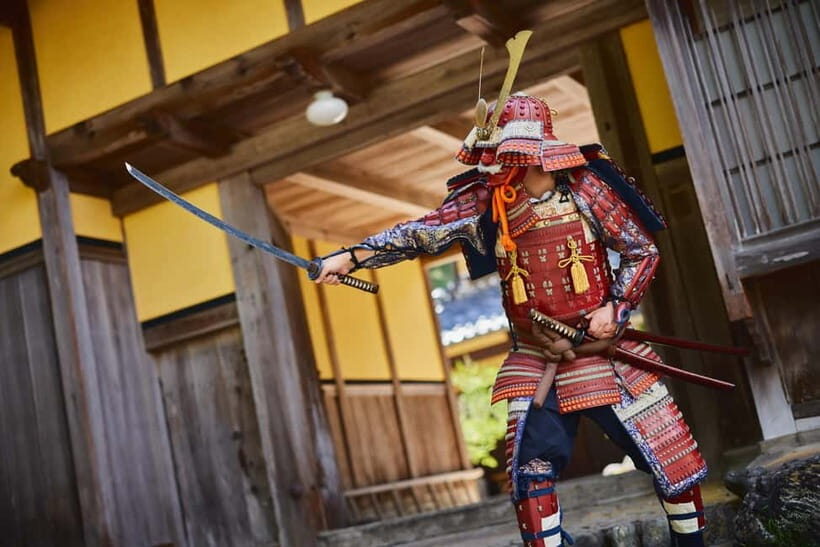
Then you move into the samurai sword portion. This is the most action-forward part of the 3-hour program.
You’ll learn how to use a sword and become aware of self-respect and the responsibility of carrying a deadly weapon. That framing matters because it sets the mood: this isn’t treated like casual video-game swinging. They emphasize seriousness.
You’re also allowed to wear a serious sword, and you’ll get time for samurai sword trial cutting. The program specifically highlights slashing as something you try yourself, with instruction and the chance to experience the feel of the cutting edge.
A note for your planning: even though this is only 30 minutes, it’s still a hands-on weapon activity. If you’re unsure about physical comfort or nervousness with the idea of using a real sword, it’s worth thinking through that before you book.
Osaka Castle armor photos: your single best souvenir moment
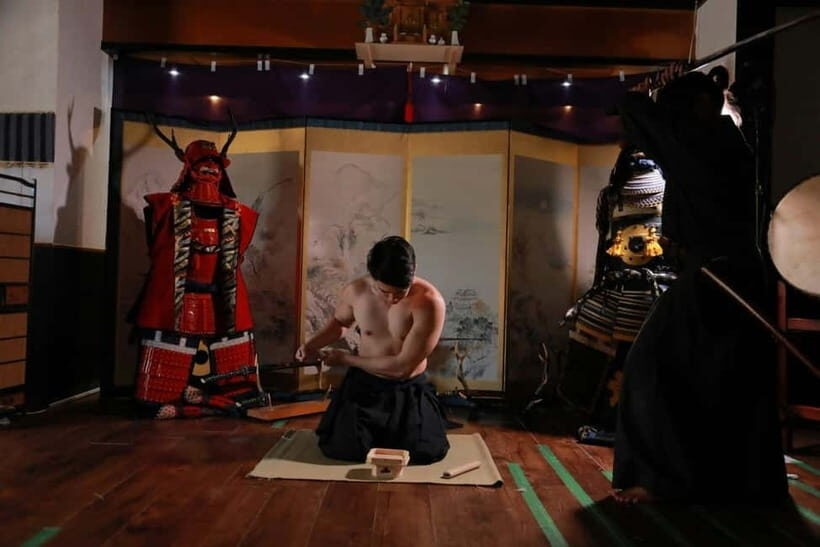
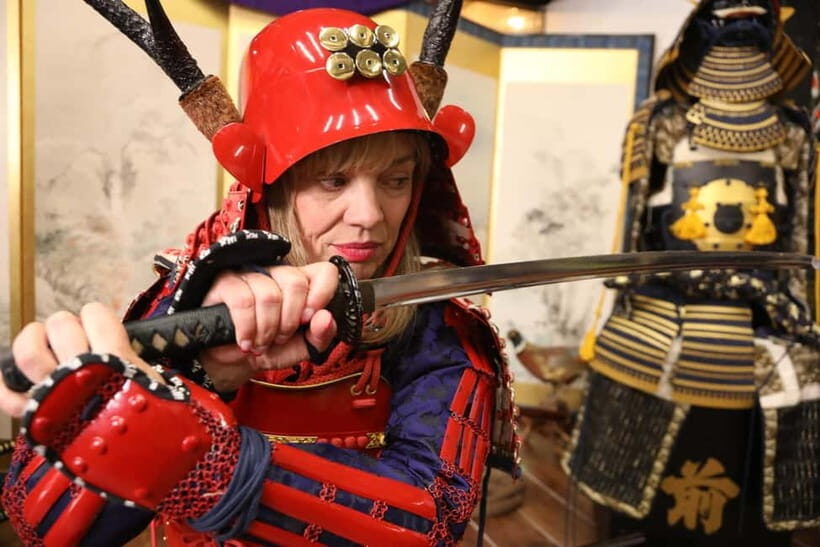
Finally, you put on samurai armor and join a battle-themed activity before the photo moment.
The program includes wearing armor indoors, and then you’re photographed on the grounds of Osaka Castle, pretending to be a soldier. It’s playful and dramatic, but it’s also the finish line for the whole experience: you’ve practiced calligraphy, etiquette, and sword discipline, and now your body is fully in the role.
This is where the value of the photo package shows up. Photo shooting is included, and digital data is sent to a designated email address, so you don’t have to scramble for a photographer or worry about getting the shot.
From the program descriptions and the strong feedback, the staff also seem focused on keeping things moving without feeling pushy, and a photographer is there for the events. That matters, because photos can otherwise feel awkward or chaotic when you’re in costume and transitioning between activities.
Optional seppuku/harakiri segment: choose carefully
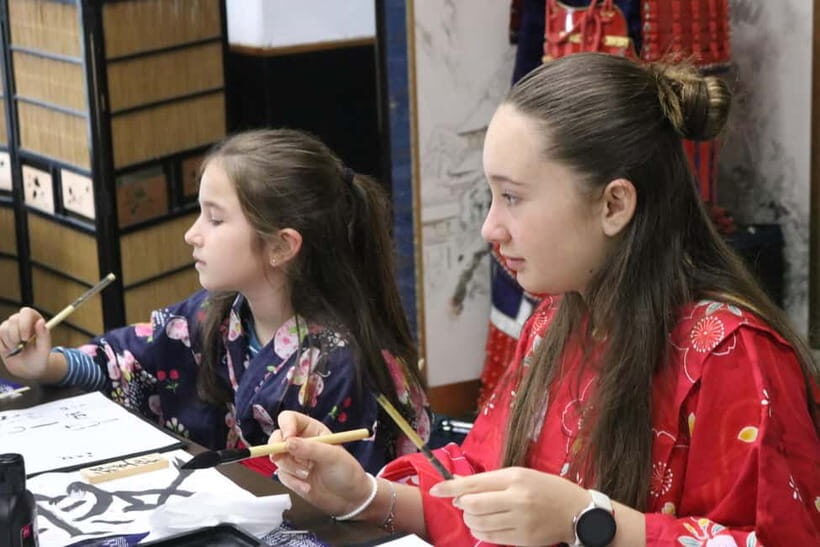
There is an option listed for seppuku/harakiri. It includes a conceptual explanation of a samurai being prepared to die for his lord and the paradox of dying beautifully in Bushido thinking.
Important practical point: this segment is listed as an option, but it is not included in the items marked as included. So if this topic concerns you, check whether it’s actually part of your booking before you show up, and consider skipping it.
Even if you’re interested in history, this topic is emotionally heavier than the rest of the program. Decide based on your own comfort, not on the fact that it fits the samurai theme.
Price and value: is $168 per person fair for what you do?
At $168 per person for 3 hours, this isn’t a cheap “quick activity.” The value comes from the number of separate disciplines bundled into one guided experience:
- Changing into kimono and learning how to move and behave in it
- Calligraphy instruction plus a themed final character
- Tea ceremony with etiquette and guided participation
- Sword trial cutting with hands-on time
- Armor and Osaka Castle photo with professional photo shooting
- English-speaking staff support (and other languages by schedule)
Also, tips and tax are listed as included, which removes a lot of the guesswork at the end of the session. The tradeoff is that transportation is not included, so you’ll pay your own way to the meeting point.
My take: if you want one concentrated sampler of samurai arts near Osaka Castle, this is strong value. If you only want the sword or only want costume photos, you may feel you’re paying for more culture segments than you needed.
Where you meet and what to do when you arrive
The meeting point is based on a clear landmark: a wooden sign that reads Honor of the Samurai. It’s described as a rack with samurai honor activity pamphlets out front, and there are kimonos and hakama hanging nearby.
You’ll also be told to arrive 30 minutes early for instructions and changing clothes. That’s not just a formality. It gives you time to settle in before you start handling tools.
The address is listed as:
Excellence Takayama 1F, 2-3-19 Shiginonishi, Joto-ku, Osaka-shi, Osaka 536-0014.
If you get stressed easily about finding places, give yourself a little extra buffer. The landmark is helpful, but the session still starts on time.
Who this suits best (and who should think twice)
This experience is best for adults and teens who like structured learning with a hands-on element. It fits you if you want to combine traditional arts and performance culture into one afternoon close to Osaka Castle.
It’s especially good if you enjoy:
- practicing skills (calligraphy strokes, etiquette gestures)
- guided technique (brush handling, how to approach sword trial cutting)
- themed dressing up with a meaningful setting (armor and Osaka Castle photos)
It’s not suitable for:
- children under 10
- babies under 1
- people over 95
Also, pets and alcohol/drugs are not allowed, and baby strollers or baby carriages aren’t allowed either. So if you’re traveling with little ones, plan something else in the area.
Smart tips so you get the most out of the 3 hours
A few small things will make the whole session feel smoother:
- Bring the t-shirt they request. You’ll feel better during changing time.
- Go in with the mindset that this is practice. Brush strokes and sword trial cutting are about technique and control.
- If you care about language, note that English is the default and other languages are offered depending on staff schedules. If you need a specific interpreter language, you should ask about availability when you reserve.
- Be ready to switch gears quickly: writing, then tea etiquette, then sword trial cutting, then armor and photos. That change is part of the value.
Also, remember that the program is set as a private group, so you’re not performing these arts in front of a huge mixed crowd. That usually makes it easier to focus and ask questions.
Should you book Samurai and traditional culture to the fullest?
If you’re spending time around Osaka Castle and you want more than a costume photo, book it. The blend of calligraphy, tea ceremony, and sword trial cutting, plus the armor photography on the castle grounds, gives you a real sequence of experiences in a single compact session.
Skip it (or at least reconsider) if you dislike heavier themes like resignation in the calligraphy segment, or if you’re uncomfortable with the idea of practicing with a sword, even in a trial setting. Also factor in the lack of pickup: you’ll want to be confident handling your own transport to the meeting point.
Overall, for a focused samurai-themed afternoon, this is one of the better ways to get your hands (and attention) on multiple traditions, not just the costume.
FAQ
How long is the experience?
It lasts 3 hours total.
How much does it cost?
The price listed is $168 per person.
What activities are included?
Included activities are kimono/samurai clothing, practicing calligraphy and samurai calligraphy, a samurai tea ceremony, samurai sword trial cutting, wearing armor, and photo shooting.
Is transportation or hotel pickup included?
No. Pickup and drop-off at a train station or hotel are not included, and transportation is also not included.
What language support do you get?
English is the default language for interpreters. Other languages (Italian, Spanish, French, Chinese, Thai, Indonesian) may be available depending on staff schedule, so you should inquire if you need one of these.
What should I bring?
You should bring a t-shirt.
Where do I meet the staff?
You meet at a place marked by a wooden sign that reads Honor of the Samurai. The address listed is Excellence Takayama 1F, 2-3-19 Shiginonishi, Joto-ku, Osaka-shi, Osaka 536-0014.
Do I get digital photos after the session?
Yes. Photo shooting is included, and the photo data is sent to a designated email address.
Is this a private group?
Yes, it’s listed as a private group.
Who is it not suitable for?
It is not suitable for children under 10, babies under 1, and people over 95.