REVIEW · OSAKA
The Dark Side of Osaka Walking Tour
Book on Viator →Operated by Localized Walking & Food Tours · Bookable on Viator
Neon, alleys, and the stuff behind the postcard. I love how this tour uses Shinsekai and the area’s long-running social history (including the getto district context) to explain why Osaka looks the way it does at night. I also love the way guides like Jay and Matt turn street scenes into real, human stories about how society works. One thing to consider: this route is gritty and red-light adjacent, so you should feel okay with darker themes and rougher streets.
You’ll do it in about 2 hours, starting at 5:30 pm, with a small group capped at 15 people. It’s built around a mobile ticket, and the stops are mostly walk-through sightseeing rather than paid entry.
What you’re paying for is the perspective and the pacing. All fees and taxes are included, but snacks are not, so plan to grab water or a bite on your own if you need it.
In This Review
- Key things I’d circle before you go
- Shinsekai: “New World” energy at the start
- Nishinari Dobutsuen-mae: the working-class street story
- Jyanjyan Yokocho: narrow alley nostalgia near Tsutenkaku
- Tobita Shinchi: Osaka’s largest red-light district, explained
- Tsutenkaku Hondori: the arcade world at the tower’s feet
- Price and value: what $25 gets you at night
- How the guides shape the experience (Jay, Matt, and Rico matter)
- Who should book this Dark Side of Osaka walk?
- Should you book it? My straight answer
- FAQ
- How long is The Dark Side of Osaka walking tour?
- What time does the tour start?
- Where do I meet the guide?
- Where does the tour end?
- How much does it cost?
- Is a mobile ticket used?
- Are snacks included?
- Is the group size limited?
- Do I need good weather, and what happens if it’s canceled?
- Can I bring a service animal?
Key things I’d circle before you go
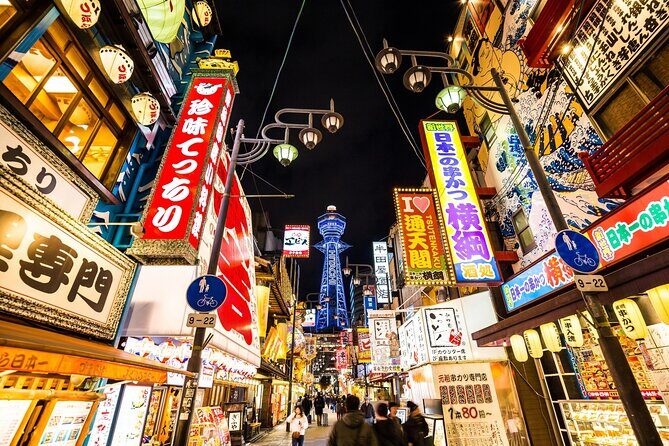
- Small group (max 15) for easier questions and less crowding in tight streets
- Mobile ticket keeps check-in simple at the start point
- 5:30 pm start puts you in Osaka at its nightly “street alive” hour
- Five focused stops from Shinsekai to Tsutenkaku’s arcades, with short walking segments
- Red-light district context at Tobita Shinchi, explained in a respectful, historical way
- Snacks not included, so bring or plan for your own bite if you want one
Shinsekai: “New World” energy at the start
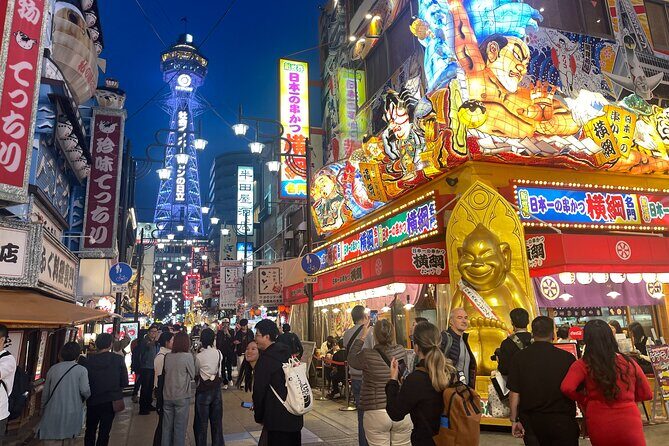
This tour begins in Shinsekai, a part of Osaka locals still treat like a living neighborhood, not a theme park. The area was set up in 1912 and was planned as a modern-feeling “New World” at the time, which helps you understand why it still looks like a throwback when you arrive. I like starting here because the mood is instantly clear: fun signage, retro street life, and that Osaka humor you won’t get from polished tourist zones.
You’ll spend about 30 minutes in this first stretch, and the guide’s job is to help you read what you see. Expect the conversation to connect past and present—how districts like this can keep their identity long after the original plan changes. You’ll also get help with simple orientation: where to look, what’s just background noise, and what matters for the story.
The trade-off? Shinsekai can feel loud and a bit chaotic if you’re expecting quiet “night views.” So if you’re the type who wants a calm stroll, this may be more active than you imagine. But if you’re here for real street atmosphere, this is a strong opener.
You can also read our reviews of more walking tours in Osaka
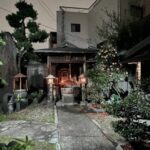

Nishinari Dobutsuen-mae: the working-class street story
Next you head to Nishinari Dobutsuen-mae, in southern Osaka. This area is known for an authentic, rough-edged feel, and the tour frames it through a working-class lens—once tied to day laborers and the people who lived around that daily grind. I appreciate this stop because it isn’t just “look at the neighborhood.” It’s more like: learn why it developed that way, and how those social layers show up in everyday street life.
Plan on about 30 minutes here. That’s enough time to catch the overall rhythm without rushing through it like a drive-by photo stop. The guide typically focuses on what you’d miss on your own: how you can spot community rhythms, old patterns, and the signs of long-term use of the streets.
One practical consideration: this is where you’re most likely to feel the change in atmosphere. You’ll be walking through places that still serve local needs, not curated nightlife. Keep your curiosity switched on, but keep your manners switched up too—this is not a costume set.
Jyanjyan Yokocho: narrow alley nostalgia near Tsutenkaku
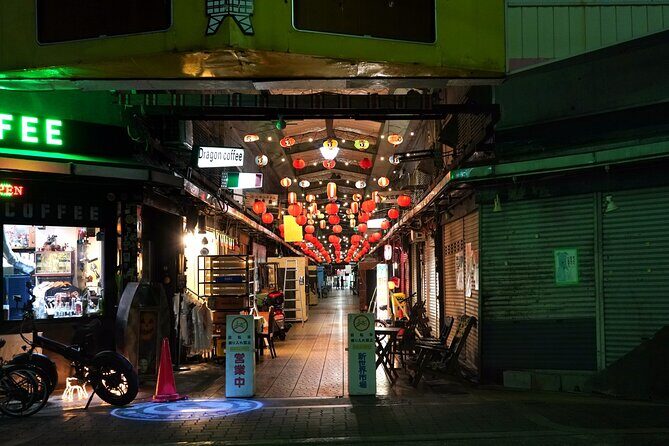
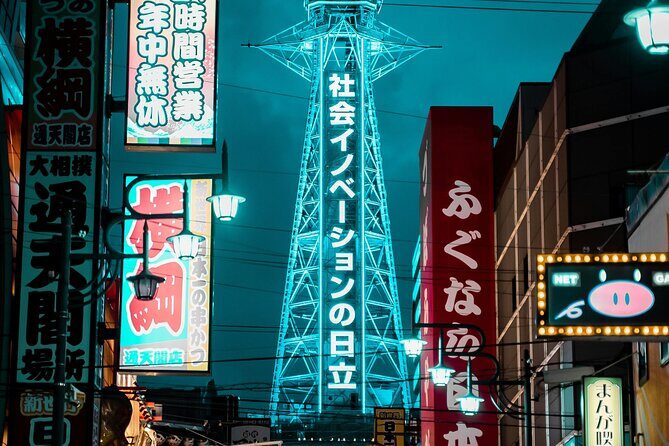
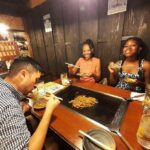
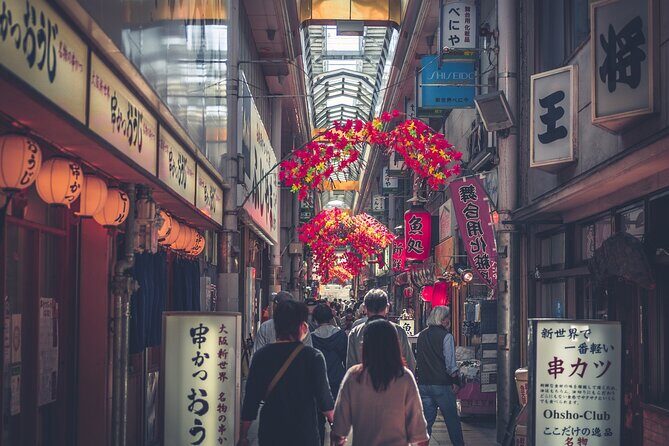
Then you move into Jyanjyan Yokocho, also known as the Nanyodori shopping district in the Shinsekai area. This is the “alley in miniature” stop—small, nostalgic, and centered on snack-and-supper energy. It’s located close to the Tsutenkaku Tower area, which makes it easy to connect the vibe of the towering landmark with what’s happening at street level.
You’ll get around 20 minutes here. That’s perfect for taking in the street form: tight pathways, close-up shopfronts, and that retro atmosphere that makes night photos look like they belong to a different decade. But it also has a practical side. If you want to test your appetite for Osaka street food, this is where you’ll feel the temptation most.
Since snacks aren’t included, think of this stop as inspiration. If you want to eat, do it because you’re feeling it in the moment, not because the tour promises a set meal.
Tobita Shinchi: Osaka’s largest red-light district, explained
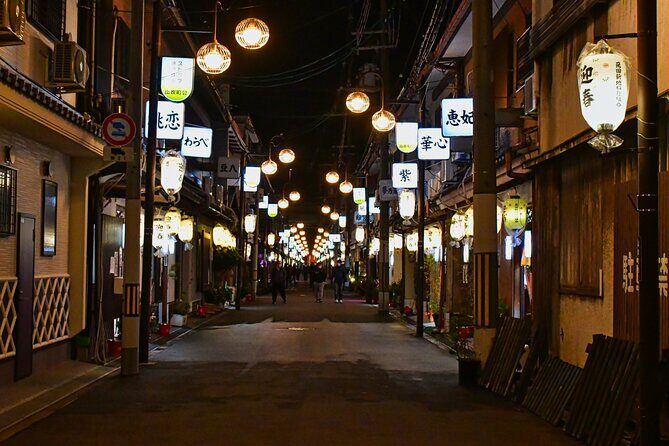
This is the “dark side” heart of the walk: Tobita Shinchi, Osaka’s best-known and largest red-light district. The tour presents it as a place with history running over a century, and it highlights the unique architectural style and the tightly regulated environment that shaped how sex work operates here.
You’ll spend about 20 minutes. That limited time matters, because this is a heavy topic. The guide’s approach is what makes it workable: it’s not sensational. You get the social-history framing—why this district exists, how it’s been controlled, and how “shadowed” parts of society stay connected to the city that tourists enjoy in daylight.
A key consideration: if you’re uncomfortable with sexual content, you might want to skip this stop. Even if the tour stays respectful, you may still see signs, storefronts, and street layout cues that point directly to the district’s purpose.
Tsutenkaku Hondori: the arcade world at the tower’s feet
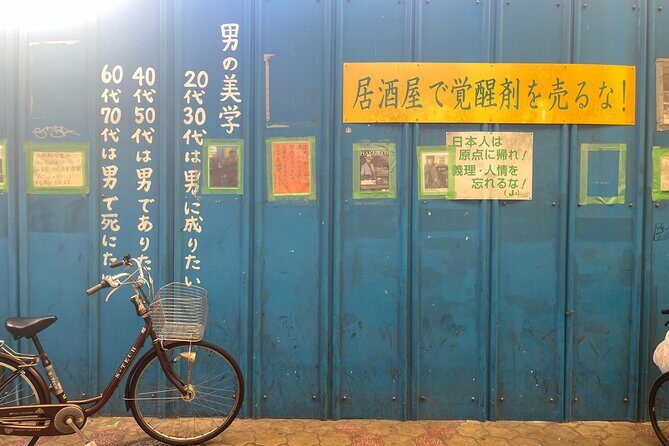
To finish, you’ll walk through Tsutenkaku Hondori Shopping Street at the base of Tsutenkaku Tower. This is a lively arcade area, made for wandering—shops, casual browsing, and that retro Osaka street feel continuing right up to the end point. Expect about 20 minutes here.
I like the way the tour ends on this “street life” note. You’ve seen the darker context, and now you see how the district sits in the larger city flow. In other words, it doesn’t feel like a lecture that cuts off mid-thought; it feels like a full circle from headline landmark to everyday commerce.
If you want to keep exploring after the tour, this ending location is useful because the tower area is easy to navigate from. You can grab an after-walk drink or simply continue wandering at a slower pace while your brain is still tuned to the street-level stories.




Price and value: what $25 gets you at night
At $25 per person for about 2 hours, this is a good deal if you care about context. The stops themselves have no ticket admissions required (each listed stop shows admission ticket free), and the tour includes all fees and taxes. So what you’re really paying for is your guide’s framing—how they connect street scenes to social history, and how they keep the pacing tight enough that you don’t feel lost in the dark.
The small group cap (max 15) also makes a difference. When a guide can actually answer questions without yelling, you get more than just “see this street, move on.” This matters a lot on tours dealing with sensitive neighborhoods and social systems.
What it does not promise is a food tour. Snacks aren’t included, so if you want a built-in meal plan, you’ll need to handle that yourself. For most people, that’s fine. For hungry people, it’s worth planning ahead with water and a light bite strategy.
How the guides shape the experience (Jay, Matt, and Rico matter)
The stand-out theme from guide feedback is how they turn questions into useful answers. Names that come up include Jay, Matt, and RICO, and the consistent idea is that they’re attentive and keep the talk grounded in local social history. You’ll likely hear thoughtful explanations as you walk, plus practical tips along the way for how to look at each street scene.
I also appreciate the pace. The tour segments are short—mostly 20 to 30 minutes—so you’re not stuck trudging for an hour with no payoff. It’s structured enough to feel guided, but flexible enough that you can ask what you’re seeing.
Who should book this Dark Side of Osaka walk?
This fits best if you want Osaka beyond the usual photo spots. If you’re curious about how neighborhoods develop and how social systems show up in buildings and street patterns, you’ll get a lot out of it.
It’s also a good choice for night owls because the timing (5:30 pm) lands you when streets are active and the contrast between bright signage and darker context feels real. And if you like walking tours with discussion, the small group size helps.
On the other hand, I’d think twice if you want a purely relaxing stroll with zero heavy topics. Tobita Shinchi is part of the core route, and the tour doesn’t pretend that side of the city is tidy.
Service animals are allowed, and the meeting area is near public transportation, which helps if you’re pairing it with other evening plans.
Should you book it? My straight answer
Book it if you want a guided night walk that explains the why behind what you see—especially if you enjoy social history told through real streets. The guide quality and the small-group format are the big reasons this works at $25.
Skip it or choose a different tour if you’re easily unsettled by red-light districts or you strongly prefer tourist-only neighborhoods. This one is honest about Osaka’s shadowy side, and that’s the whole point.
FAQ
How long is The Dark Side of Osaka walking tour?
The duration is approximately 2 hours.
What time does the tour start?
The start time is 5:30 pm.
Where do I meet the guide?
Meet at MEGA Don Quijote Shinsekai, 3-chōme-4-36 Ebisuhigashi, Naniwa Ward, Osaka, 556-0002, Japan.
Where does the tour end?
The tour ends at Tsutenkaku, 1-chōme-18-6 Ebisuhigashi, Naniwa Ward, Osaka, 556-0002, Japan.
How much does it cost?
The price is $25.00 per person.
Is a mobile ticket used?
Yes, the tour uses a mobile ticket.
Are snacks included?
No, snacks are not included.
Is the group size limited?
Yes. The tour has a maximum of 15 travelers.
Do I need good weather, and what happens if it’s canceled?
The tour requires good weather. If it’s canceled due to poor weather, you’ll be offered a different date or a full refund. You can cancel for a full refund up to 24 hours in advance.
Can I bring a service animal?
Yes, service animals are allowed.