Osaka comes at you fast, then slows down. This walking route stitches together Osaka Castle Park views and the city’s street-food heart, with guided context that turns neon and alleys into a real story. I love how the day mixes big landmarks with the little lanes that make Osaka feel human.
My second favorite part is the guide experience. You’ll hear city life and history from guides like Tim (15+ years in Japan), Scott (NA immigrant, English-first), Kenzo (easy to talk to), and Adam (16+ years in Japan), so the explanations land in everyday terms. The one thing to plan for: it’s mostly on foot and involves two short train rides, and the ride fares plus attraction tickets are not included in the price.
In This Review
- Key highlights worth knowing before you go
- Osaka in a Single Day on Foot (and Why It Works)
- Price and What You Truly Get for $73.29
- The Route Logic: Castle Views to Neon Canals to Old Alleys
- Stop 1: Osaka Castle Park Views Without Castle Entry
- America-mura: Youth Culture in Narrow Streets
- Shinsaibashi-suji: A Covered Shopping Street With Staying Power
- Dotonbori Tsuribori: Neon Canal Energy (with Real-World Context)
- Hozenji Yokocho and Hozen-ji Temple: Lanterns, Cobblestones, and Calm
- Kuromon Market and the Lunch Strategy for Street-Food Lovers
- Shinsekai and Tsutenkaku: Old-School Osaka With Retro Neon
- Pace, Shoes, and the Two Train Rides You Should Budget
- Best For: First-Timers, Food Fans, and People Who Want a Real Guide
- Should You Book This Osaka Walking Tour?
- FAQ
- Is Osaka Castle included for entry?
- What does the price include?
- How long is the tour?
- Are train fares included?
- Is pickup available?
- Can the lunch accommodate vegan or gluten-free diets?
Key highlights worth knowing before you go
- Small group size (max 11), so you can ask questions and keep moving without a crowd crush.
- Street-food focus, including time at Kuromon Market and a lunch that’s Osaka-style with a drink.
- You see Dotonbori twice in spirit, first for the neon canal energy, then again through the old lantern alley vibe near Hozenji.
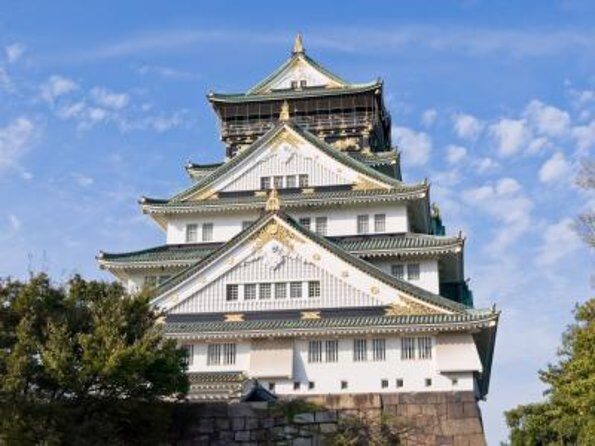
- Castle time without entry, so you get the big visual payoff without waiting in ticket lines.
- Route variety in one day, from youth culture at Amerika-mura to nostalgia in Shinsekai.
Osaka in a Single Day on Foot (and Why It Works)
This tour is built for travelers who want to understand Osaka, not just photograph it. You cover a lot of ground, but it stays logical: old power and samurai-era symbolism, then shopping streets, then food, then night-life energy, then back to older, smaller streets.
Group size matters here. With a maximum of 11 people, you’re not shuffling through shoulder-to-shoulder bottlenecks the whole time. I like that this keeps the day conversational. Your guide can stop and explain something without the group getting lost, and you’re able to ask the annoying questions too, like how locals actually use certain streets or what a district’s reputation really means.
You can also read our reviews of more walking tours in Osaka
Price and What You Truly Get for $73.29
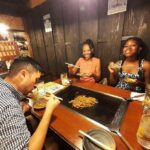
The price is $73.29 per person, and value comes from what’s included versus what’s left to you. You get a guided day, a lunch with Osaka-style street food plus a drink, and you don’t have to coordinate tickets or a self-made route. That’s the core of the bargain.
What’s not included:
- Walking is the method of transportation, but you still cover two short train rides and the fares aren’t included (¥240 and ¥190).
- Attraction tickets aren’t included.
- Osaka Castle entry isn’t part of the tour plan.
So yes, you’re paying for time and guidance. But you’re also saving time that matters in Osaka: knowing which streets to trust, where to pause, and how to read neighborhoods at walking speed.
The Route Logic: Castle Views to Neon Canals to Old Alleys
The day runs about 5 to 7 hours depending on the option you choose. You’ll start at Ōsakajōkōen Station, walk most of the time, and use two short train rides to connect districts efficiently. The ending point is different from the start, so plan your next stop accordingly.
If you’re trying to fit Osaka into a tight schedule, this route is a smart way to do it. You’ll hit the obvious places (Dotonbori, Kuromon Market, Shinsekai) but you’ll also get the in-between neighborhoods that make the city feel like a place people actually live.
Stop 1: Osaka Castle Park Views Without Castle Entry
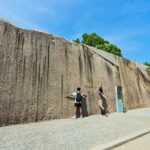
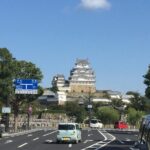
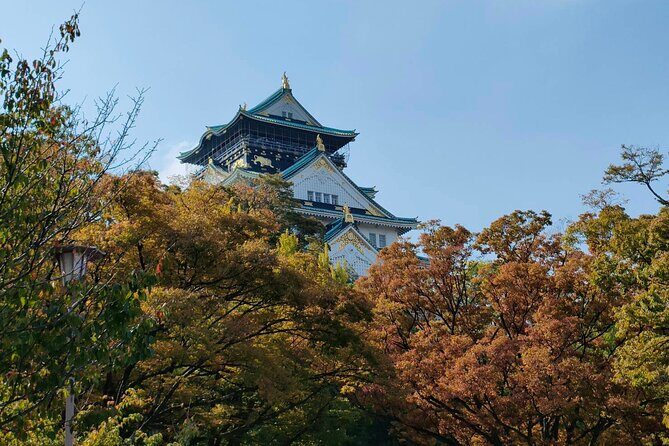
You begin at Osaka Castle’s area and get the big-picture introduction to why it mattered. Osaka Castle is often treated like a single attraction, but the guide frames it in the bigger story of Japan’s samurai-era unification in the 1500s. Even without going inside, that context changes how you see the site.
One hour and thirty minutes is a lot of time for an exterior-focused stop. That’s useful if you want photos, time to breathe, and a guided explanation without rushing to the next train. You’ll also avoid the common problem of wasting part of your day in long lines for ticketing.
The trade-off is simple: you do not enter Osaka Castle, and any entry ticket costs are on you (but in this plan, you’re not buying them). If your goal is specifically museum interiors or a deep dive into the castle building itself, this may feel like a compromise.
America-mura: Youth Culture in Narrow Streets
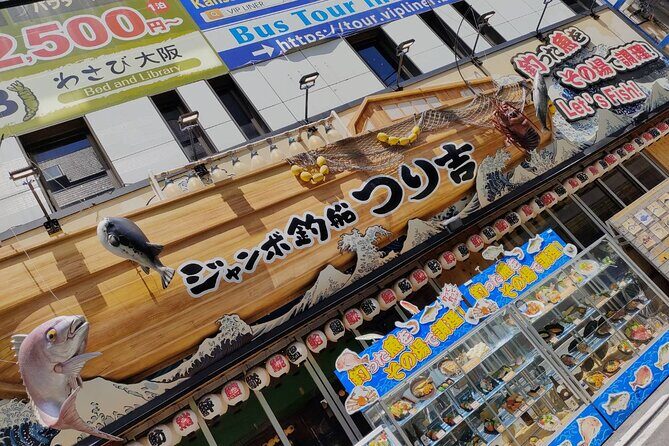
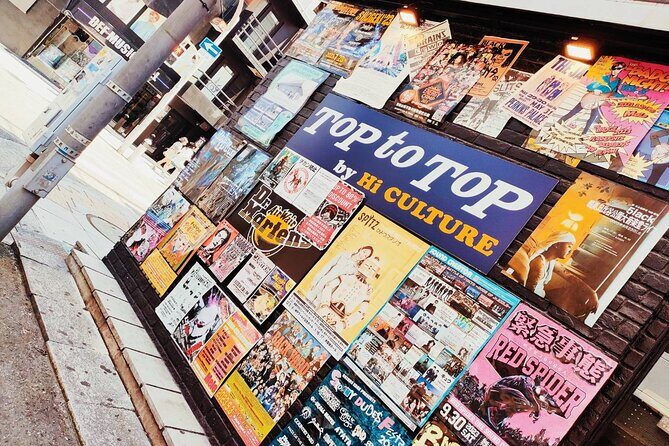
Next up is Amerika-mura (Amemura). Think of it as Osaka’s fashion-and-music hangout zone. The area is described as a warren of narrow streets with shops aimed at people into urban apparel and hip-hop wear.
Why this stop is worth it: it shows Osaka as more than history and food. You’re seeing what young locals do with their leisure time, and you get a feel for how districts form around identity instead of around a single landmark.
This is also one of the quickest stops on the walk. You’ll only have about 30 minutes, so keep your pace steady. Go with a simple strategy: pick one or two streets to browse, then let the guide point out what’s typical versus what’s just a storefront for tourists.




Shinsaibashi-suji: A Covered Shopping Street With Staying Power
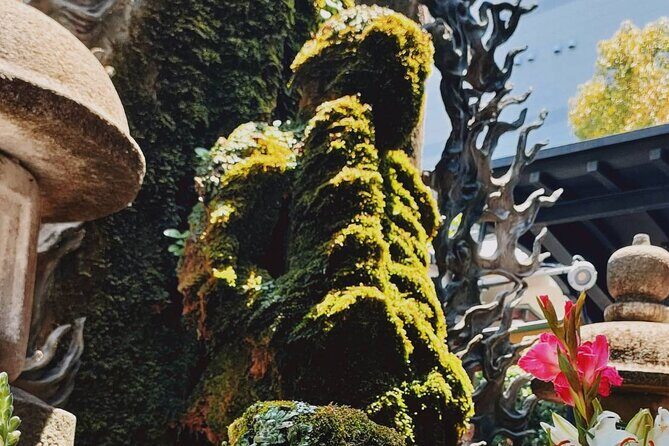
Then you move into Shinsaibashi-suji, a covered shopping street that’s been an important retail corridor for about 400 years. It’s around 600 meters long, so it works well as a “flow street” in the middle of a long day.
This part is less about buying and more about reading the city. Covered streets in Japan change how people move in rain or summer heat, and you can feel the design choices the moment you walk under the canopy.
If shopping isn’t your thing, you can still enjoy it as a contrast stop. America-mura is identity-focused, while Shinsaibashi-suji is a long-running shopping backbone. Together they show how Osaka handles both trend and tradition side by side.
Dotonbori Tsuribori: Neon Canal Energy (with Real-World Context)
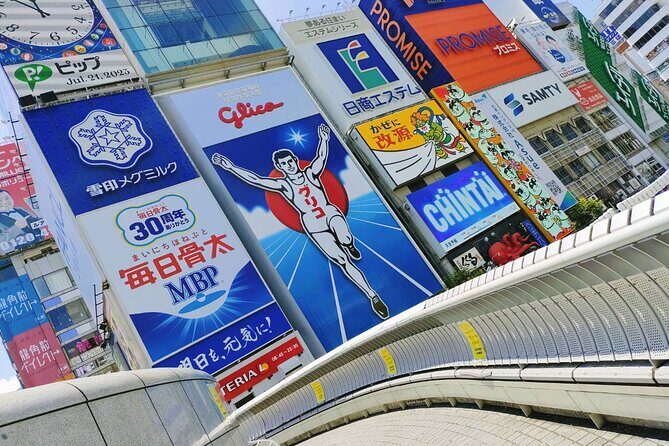
Dotonbori is famous for a reason. You’ll be along the canal at Dotonbori Tsuribori, where neon lights and street-food culture take over the streets. The guide’s job here is to give you context so you don’t just stare at signs.
At this point in the day, I like to treat Dotonbori like a stage. Watch the rhythm of foot traffic, notice what people choose to eat, and use the time to set your own food expectations for later. Even if you don’t snack at every corner, you’ll come away with a better sense of what “Osaka style” means in practice.
Hozenji Yokocho and Hozen-ji Temple: Lanterns, Cobblestones, and Calm
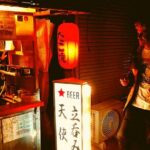
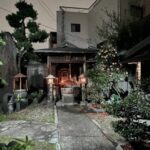
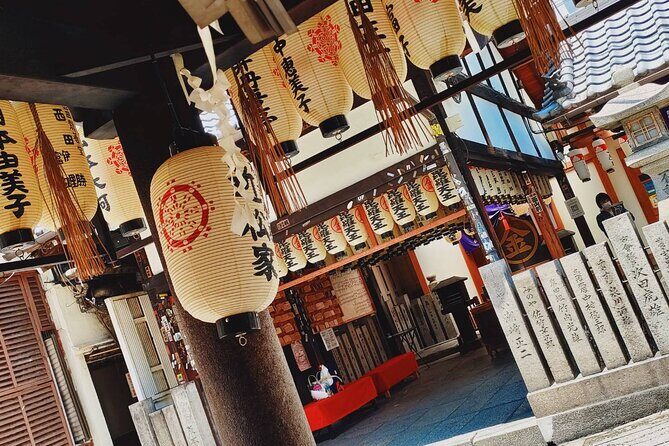
Right after Dotonbori’s loud energy, you get a breather at Hozenji Yokocho. This narrow alley is built for the older atmosphere of Osaka: traditional lanterns and cobblestone paths, tucked off the main flow.
That contrast is the point. Osaka doesn’t only do neon. It also preserves quiet corners that feel like a time cutout. This stop gives your day a “slow down” moment.
Just off the alley is Hozen-ji Temple, a smaller Buddhist temple built in the 17th century. It’s dedicated to Fudo Myoo, one of the five wisdom kings in Buddhism. You won’t get a long museum-style lesson here, but you’ll get enough to understand why this place feels protected from the surrounding chaos.
If you’re the type who likes atmosphere more than monuments, this is one of the most satisfying stops. You can pause, look up at lanterns, and feel Osaka’s older face without needing tickets.
Kuromon Market and the Lunch Strategy for Street-Food Lovers
Kuromon Market is often nicknamed Osaka’s kitchen, and here you get time at the market area in addition to your included lunch. The plan treats food as a theme, not an afterthought.
Even in 30 minutes, you can do something practical:
- Look for what’s busy, not just what’s pretty.
- Follow your guide’s cues on what’s worth trying.
- Use the market time to build ideas for what to eat later in your stay.
Important food note: vegan and gluten-free can’t be catered for at lunch. If your dietary needs are strict, you’ll want to decide in advance whether you can handle the lunch as-is or plan snacks elsewhere with your own choices.
Still, even if you can’t eat much at the included meal, Kuromon is valuable as a sensory map. You’ll learn what fresh seafood and traditional stall-food looks like in real life, and your future restaurant picks get easier.
Shinsekai and Tsutenkaku: Old-School Osaka With Retro Neon
You end with Shinsekai, a district developed before World War II and centered around Tsutenkaku Tower, the nostalgic symbol of the area. Expect retro vibes and that older Osaka feel, but with enough modern foot traffic to keep it lively.
This stop works well as a finale because it pulls the day’s theme into one last mood: Osaka as a place of memory. It’s not only about what’s new, and it’s not only about what’s official. It’s about districts that kept their identity even as the city changed around them.
You’ll have about 30 minutes here, so use it like this: take a slow walk, find a good photo angle of Tsutenkaku, and then just watch how people move through the streets. Shinsekai is one of those neighborhoods where observation is part of the experience.
Pace, Shoes, and the Two Train Rides You Should Budget
This tour is mainly walking. Reviews commonly point out that it can land around 15,000 steps, depending on the exact day and pacing. The good news is the pace is usually described as steady rather than sprint-mode. Still, comfortable shoes are not optional.
You’ll also do two short train rides, and the fares aren’t included. Budgeting a small amount for local transit makes the day smoother. When you’re on the ground and following the group, it’s easy to forget you need to pay those fares yourself.
One more practical tip: filming isn’t permitted on the tour. If you like taking video, keep your phone ready for photos and quick clips only where allowed, and follow your guide’s direction.
Best For: First-Timers, Food Fans, and People Who Want a Real Guide
This tour makes the most sense if:
- You want a guided overview in one day and don’t want to build a complex itinerary yourself.
- You care about food culture and want time at Kuromon Market and Dotonbori.
- You like history told in human terms, not just dates and plaques.
- You want to bounce between Osaka’s eras: samurai-era symbolism, postwar nostalgia, and present-day street fashion.
It may not be the best fit if you have limited walking tolerance. The schedule is built for moving, and even with stops, the walking is the engine of the whole day.
Also keep in mind the lunch limits. If vegan or gluten-free is required, you’ll need to adjust expectations since lunch can’t be catered.
Should You Book This Osaka Walking Tour?
Yes, if you want an efficient, street-level introduction to Osaka that mixes major highlights with quieter lanes and a real food orientation. The price feels fair when you factor in the guided day plus the included lunch, and the small group size keeps it from turning into a herding experience.
I’d skip it only if your priority is entering Osaka Castle itself, or if your dietary needs require vegan or gluten-free options for the included meal. Otherwise, this is a strong way to see the city in a single day without missing the details that make Osaka feel like Osaka.
FAQ
Is Osaka Castle included for entry?
No. The tour plan includes time at Osaka Castle but does not enter the castle. Attraction tickets are not included.
What does the price include?
The tour includes a complimentary lunch with Osaka-style street food and a drink, plus guided time at the listed stops. Two short train rides are required, but their fares are not included.
How long is the tour?
You can choose options of about 5, 6, or 7 hours.
Are train fares included?
No. You’ll need to pay train fares separately (¥240 and ¥190).
Is pickup available?
Pickup is not offered for group tours. The tour information indicates pickup is offered, but it’s not available for group participants.
Can the lunch accommodate vegan or gluten-free diets?
No. Vegan and gluten-free cannot be catered for at lunch.