REVIEW · OSAKA
Osaka Local Foodie Walking Tour in Dotonbori and Shinsekai
Book on Viator →Operated by MagicalTrip Inc. · Bookable on Viator
Osaka smells like fried joy, fast and loud. This 3-hour local food walk takes you through Shinsekai’s retro streets and Dotonbori’s neon lanes with multiple tastings and real cultural stops, led by guides from MagicalTrip.
I especially like the clear focus on Osaka classics like kushikatsu and okonomiyaki, not just random snacks. I also like the way the guides (I saw strong guide names like Aika and Yuma in the mix) connect what you’re eating to what’s going on around you, including photo moments and easy explanations as you walk.
One key consideration: gluten-free and vegan needs cannot be accommodated on this tour. If that affects you, plan a different Osaka food option or you may end up disappointed.
In This Review
- Key points before you go
- Shinsekai meets Dotonbori: why this food walk works
- Price and what you’re really paying for ($111.42)
- Meeting point in Osaka: start point matters
- Stop by stop: Tsutenkaku and Jan-Jan Yokocho kushikatsu
- Shinsaibashi-suji: the retro shopping street and Billiken statue
- Dōgu-ya-suji in Dotonbori: knives, alleys, and souvenirs
- Hozen-ji Temple walk: snacks, Ukiyo-koji, and a temple pause
- The Glico Sign photo stop: classic Osaka neon
- Sennichimae Doguyasuji: okonomiyaki finale in Dotonbori
- What’s included (and what isn’t)
- Dietary limits: plan early or skip
- Pace, weather, and comfort tips that save your feet
- Best for who? Who this tour fits like a glove
- Should you book this Osaka food tour?
- FAQ
- FAQ
- How long is the Osaka Local Foodie Walking Tour in Dotonbori and Shinsekai?
- What food and drinks are included?
- Is gluten-free or vegan food available?
- Is there a vegetarian option?
- How many people are in the group?
- How much is the tour, and what isn’t included?
- Where do I meet, and where does the tour end?
- Can I cancel for a full refund?
Key points before you go
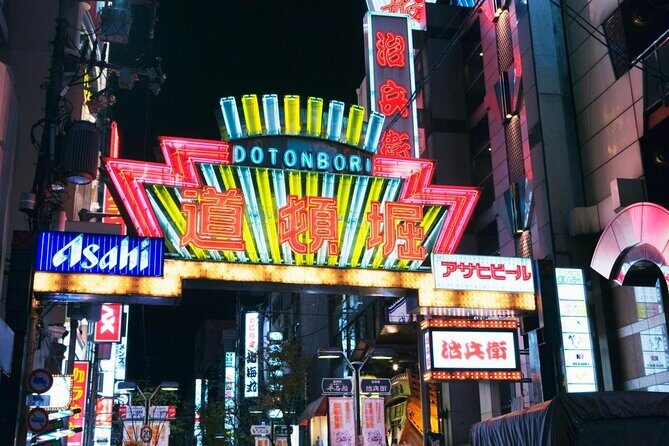
- Small-group tour (max 7 people) keeps the vibe friendly and makes it easier to ask questions.
- Three big tastings are included: kushikatsu, okonomiyaki, and takoyaki, plus 3 drinks.
- Shinsekai + Dotonbori combo gives you old-school street energy and the city’s signature neon.
- You’ll hit major photo stops like Tsutenkaku and the Glico sign, without turning the whole walk into a photo-only tour.
- Vegetarian is possible, but not fully dairy or pork-free because dashi (pork broth) may still be used.
- The walk can feel brisk between food and sight stops, so wear comfy shoes.
Shinsekai meets Dotonbori: why this food walk works
If you only have one day to “get it” in Osaka, this tour’s route makes sense. Shinsekai and Dotonbori feel like two different Osaka moods: Shinsekai leans retro and slightly gritty in a charming way, while Dotonbori is pure street spectacle.
The magic here is that the food is tied to the streets you’re walking. You’re not just sampling in a vacuum. You’re eating kushikatsu in the alley atmosphere that made it a neighborhood staple, then shifting to temple and shopping streets where Osaka’s everyday culture is on display.
The tour also stays social and manageable. With a group size capped at 7, you’re less likely to feel swallowed by a crowd, and more likely to get real answers when you ask.
You can also read our reviews of more walking tours in Osaka

Price and what you’re really paying for ($111.42)
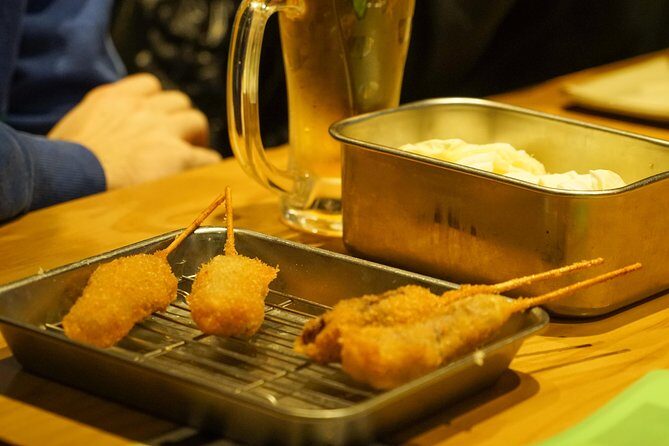
At $111.42 per person, this isn’t the cheapest way to eat in Osaka. You’re paying for three things: a guide, a set tasting plan (not a menu buffet), and smooth navigation between popular areas and side lanes.
Here’s the practical reality: you get tastings, not an all-you-can-eat meal. The included food list is specific—6 pieces of kushikatsu, 1 piece of okonomiyaki, and 1 box of takoyaki—plus 3 drinks. For many people, that’s a satisfying “first night” start, especially if you’ll still eat more later on your own.
That said, some diners care deeply about variety or quantity. If you’re the type who likes lots of tiny samples at many spots, you may wish there were more stops. If that’s you, set expectations ahead of time and plan one extra bite after the tour so nobody goes home still thinking about what they missed.
Meeting point in Osaka: start point matters
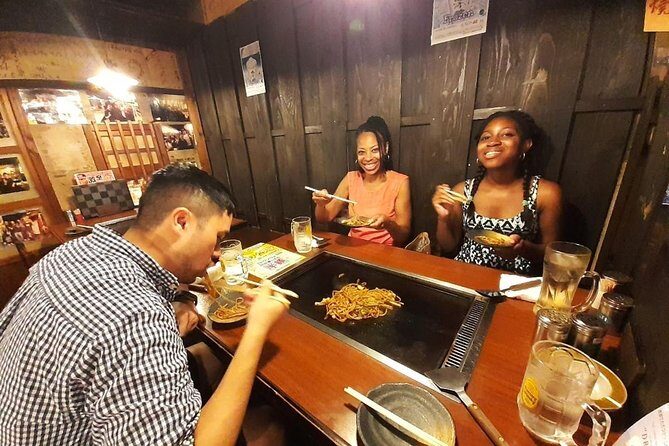
The tour begins at FamilyMart Japan, in Nishinari Ward, Sannō 1-chōme 17-6 (The West Side). It’s near public transportation, and you’ll have a mobile ticket for check-in.
Two practical notes. First: the tour starts on time and late arrivals can lose the chance to join. Second: before you leave your hotel, pull up the exact pin location on Google Maps so you’re not guessing at the right street side.
The end point is the Glico Sign in Dotonbori, so the walk finishes where you can easily keep exploring on foot or find your next train.
Stop by stop: Tsutenkaku and Jan-Jan Yokocho kushikatsu
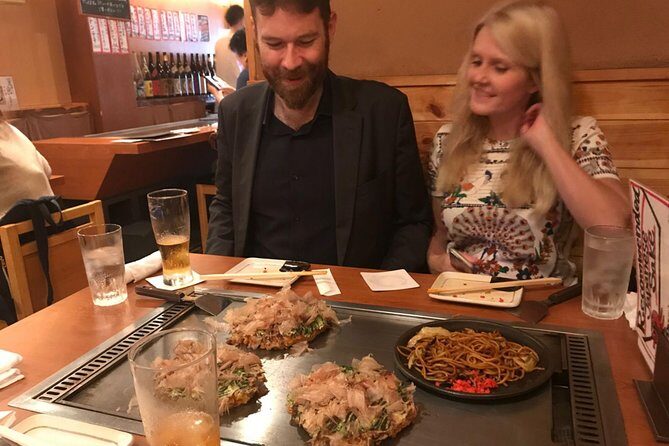
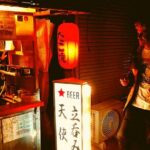
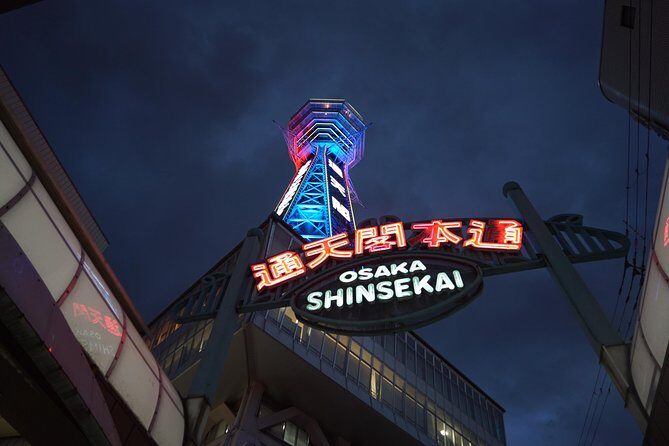
Your first food stop happens with Tsutenkaku Tower watching over the neighborhood. You’ll walk through the Jan-Jan Yokocho alley and then enjoy your kushikatsu tasting.
This is a smart opener. Kushikatsu is one of those Osaka foods that works best when you experience it in the setting that created it—tight alley space, casual energy, and everyone casually eating skewers.
You’ll get six pieces of kushikatsu, and the tour runs about 30 minutes at this stop. If you’re sensitive to broth: the tour information explains that for vegetarian kushikatsu, dashi (pork broth) is still used. So if you avoid pork for dietary or religious reasons, vegetarian here may not fit.
Shinsaibashi-suji: the retro shopping street and Billiken statue
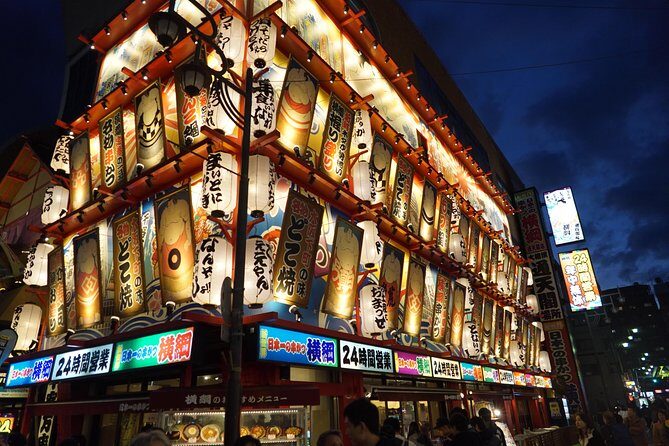
Next comes a street-walk that’s more about Osaka atmosphere than another food hit. You’ll spend about 20 minutes at Shinsaibashi-suji (with the plan also referencing the Shinsekai market, Tsutenkaku area, and a Billiken statue photo moment).
This part is useful because it helps you understand the city’s “show” style. Osaka markets and shopping streets weren’t built just for shopping. They were built for hanging out, meeting people, and spending time.
If you like street photography, this segment is a good reset. You’re also moving into the next phase: Dotonbori’s louder energy.
You can also read our reviews of more tours and experiences in Osaka


Dōgu-ya-suji in Dotonbori: knives, alleys, and souvenirs
Then you shift to Dotonbori with a stop that’s split into a daytime and night plan. You’ll browse along Dōgu-ya-suji, including the area near Hōchō-ya, a knife shop. There’s also a chance to pick up small souvenirs nearby.
This isn’t a complicated stop, but it’s a handy one. If you want something Osaka-specific, shopping streets are where you find practical gifts that fit in a suitcase. And if you’re learning your way around, it’s good to get oriented while you still have daylight-like momentum.
The tour keeps this segment fairly short—about 15 minutes—so don’t plan on deep shopping binges. Think of it as “window shopping with purpose.”
Hozen-ji Temple walk: snacks, Ukiyo-koji, and a temple pause
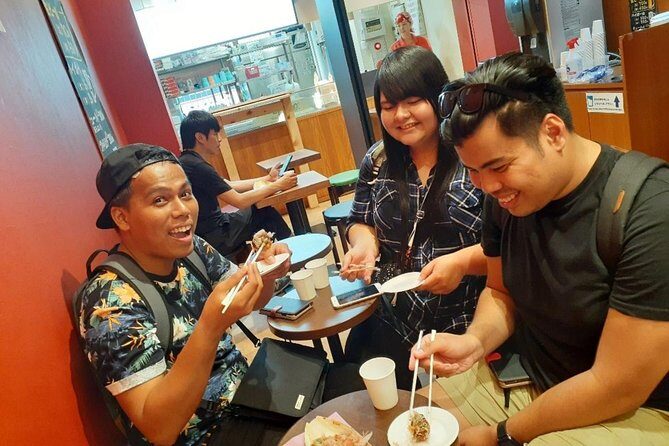
After Dotonbori shopping lanes, you get a slower moment at Hōzen-ji Temple. You’ll walk through the temple area and the Ukiyo-koji (Ukiyo Alley), where the plan includes snacking like takoyaki and sweets.
The itinerary specifically mentions around ¥500 for snacks at this part. That’s your hint to bring some cash or extra card capacity, just in case the snack menu runs a bit above what you expected.
This temple stop is also a good pacing break. After eating and walking, it’s nice to stand somewhere calmer for a moment, take photos, and let the guide explain why this area matters in the city’s everyday rhythm.
The Glico Sign photo stop: classic Osaka neon
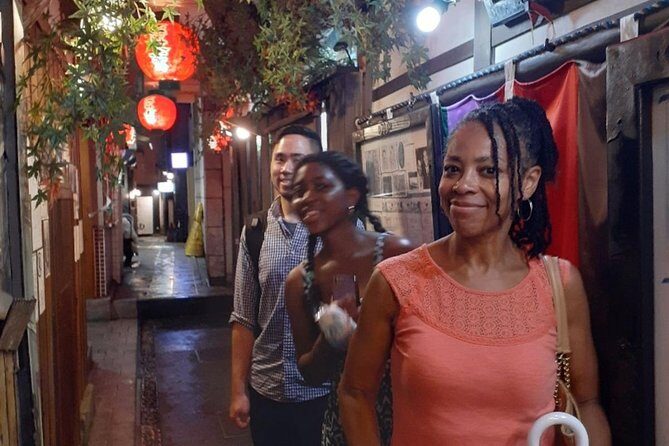
You’ll also stop at the Glico sign for photos. The plan lists a dedicated photo time of about 10 minutes, and the Glico area is where Osaka does its loud, visual branding.
This is a good moment to reset your bearings. Once photos are done, you’re ready for the final food push.
If you’re walking at night (or even early evening), watch your footing. Bright signage is great, but Osaka sidewalks can get crowded and uneven depending on the alley layout.
Sennichimae Doguyasuji: okonomiyaki finale in Dotonbori
The tour’s closing stretch centers on Sennichimae Doguyasuji, where you’ll enjoy Osaka-style okonomiyaki. This is the longest food stop, about 40 minutes, and it’s where you’ll get that included 1 piece of okonomiyaki.
One highlight from the experience details is that at least some groups get a hands-on element—one review specifically noted grilling their own okonomiyaki. So don’t be surprised if you get a more active role than you expected.
Okonomiyaki is the right finale because it’s warmer and more filling than a quick street bite. After the earlier crunch of kushikatsu and the snackable vibe of takoyaki, okonomiyaki gives you a steadier meal feel while still fitting the walking-tour format.
The tour ends back in Dotonbori near the Glico sign, meaning you can roll directly into your next plan without a long commute.
What’s included (and what isn’t)
Included food and drinks:
- 6 pieces of kushikatsu
- 1 piece of okonomiyaki
- 1 box of takoyaki
- 3 drinks (alcohol and non-alcohol options are available)
Not included:
- Transportation fees (listed as 190 JPY)
- Optional extra snacks: the temple area mentions about ¥500 for snack spending
The drinks matter more than you might think. In Japan, a drink pairing can turn a simple tasting into a more relaxed sit-and-chat moment. And since the tour includes three drinks, you won’t feel stuck paying for everything out of pocket.
Dietary limits: plan early or skip
This tour is not flexible for every diet. The key limitation is simple: gluten-free and vegan cannot be accommodated.
Vegetarian is possible, but there’s an important catch. The tour information states that vegetarian kushikatsu can still use dashi (pork broth). So vegetarian here is not the same as no-animal-products or pork-free.
If you have allergies or dietary needs, you’ll need to inform the operator at least one day in advance. The tour also says it can’t guarantee allergy-free meals because food is prepared in kitchens outside the guide’s control.
My practical advice: if your dietary needs are strict, message your provider before booking. If they can’t meet your needs, choose a different tour that matches your requirements.
Pace, weather, and comfort tips that save your feet
This is a walking tour, and it moves. Some people loved the pace. Some found it quick. Your best bet is to assume it will feel active.
Wear walking shoes you can handle on uneven pavement. Bring a small water bottle and consider hand wipes, especially if you’re doing multiple Osaka street-food stops in one day.
Japan’s weather can swing hard—summer can reach up to 40°C (110°F) and winter can drop to -5°C (20°F). Plan clothing accordingly. If it’s hot, you’ll want lightweight layers and a plan for shade breaks.
Also keep in mind the tour guideline: it starts on time, and arriving late can cut you out of the experience.
Best for who? Who this tour fits like a glove
You’ll likely enjoy this most if you:
- Want an easy first-night way to sample Osaka’s signature foods in the right neighborhoods
- Like walking routes that mix food + culture stops (temple and shopping streets are built in)
- Prefer a small-group format where it’s not chaos the whole time
- Want photo moments that match Osaka’s landmarks, like Tsutenkaku and Glico
You may want to skip (or carefully confirm) if you:
- Need gluten-free or a fully vegan meal plan
- Have serious allergies and require allergy-free preparation (the tour can’t guarantee this)
- Expect lots of tiny samples at many different restaurants
Should you book this Osaka food tour?
I’d book it if you want a structured, efficient way to get your Osaka bearings fast while eating three of the city’s most recognizable foods. The Shinsekai-to-Dotonbori route is a smart pairing, and the small-group format usually makes the tour feel personal rather than conveyor-belt.
I would hesitate if your priority is maximum food variety or strict dietary accommodation. This tour is built around a fixed tasting plan. For some people, that’s perfect. For others, the price-to-food-feel ratio depends on how picky you are about stop count.
If you’re flexible, comfortable with street-food portions, and you want your evening to include landmarks plus real local context, this is a solid bet for Osaka.
FAQ
FAQ
How long is the Osaka Local Foodie Walking Tour in Dotonbori and Shinsekai?
The tour lasts about 3 hours.
What food and drinks are included?
You get 6 pieces of kushikatsu, 1 piece of okonomiyaki, 1 box of takoyaki, and 3 drinks. Alcohol and non-alcohol drinks are available.
Is gluten-free or vegan food available?
No. The tour states that gluten-free and vegan cannot be accommodated.
Is there a vegetarian option?
A vegetarian course exists if you choose or request it in advance. The tour also notes that vegetarian kushikatsu may still include dashi (pork broth).
How many people are in the group?
The tour has a maximum of 7 travelers.
How much is the tour, and what isn’t included?
The price is $111.42 per person. Transportation fees of 190 JPY are not included.
Where do I meet, and where does the tour end?
Meet at FamilyMart Japan in Nishinari Ward (Sannō 1-chōme 17-6, The West Side). The tour ends at the Glico Sign area in Dotonbori.
Can I cancel for a full refund?
Yes, you can cancel up to 24 hours in advance for a full refund.
If you tell me your travel dates and whether you need vegetarian or any allergy handling, I can help you decide if this fits your situation.