REVIEW · OSAKA
Osaka Castle & Dotonbori Lively One-Day Walking Tour
Book on Viator →Operated by KAMNAVI Tours · Bookable on Viator
Osaka clicks into place on a single walk. This one-day route strings together castle views, old-town replicas, and the Dotonbori lights so you see how Osaka went from samurai-era power to street-food nightlife. I like that it’s built as a smooth mix of big landmarks and everyday neighborhoods, not a checklist of stops.
I also like the small-group feel (max 5) paired with guided public transport—so you spend time looking, not figuring out. One thing to consider: it’s a real walking day, so bring comfy shoes and expect you’ll be on your feet for most of the 7 hours.
In This Review
- Key Points You’ll Care About
- A 7-Hour Osaka Mix: Castle Views to Dotonbori Neon
- Small-Group Hotel Pickup on Public Transit (Max 5)
- Stop 1: Osaka Museum of History and the Castle View
- Stop 2: Osaka Castle’s Moats and Stone Walls
- Tenjinbashisuji Shopping Street: Japan’s Longest Arcade
- Osaka Museum of Housing and Living: Walk Through Old Osaka
- Kuromon Market: Food Culture Time Without the Rush
- Dotonbori: Canal Nightlife With a Guided Route
- Price and What You’re Actually Paying For ($141.23)
- Who Should Book This Tour (And Who Might Want Another Plan)
- Best Guide Vibes to Look For
- Should You Book This Osaka Castle & Dotonbori Walking Tour?
- FAQ
- How long is the Osaka Castle & Dotonbori one-day walking tour?
- What’s included in the tour price?
- Is food included?
- How large is the group?
- Is there hotel pickup?
- Where does the tour start and end?
- What if the weather is bad?
- What is the cancellation window?
Key Points You’ll Care About
- Max 5 people: enough attention from your guide, without the chaos of a big bus group
- Hotel pickup + public transport: you get moving fast and avoid meeting-spot stress
- Admissions included: Osaka Museum of History, Osaka Castle, and Osaka Museum of Housing and Living are part of the package
- Tenjinbashisuji + Kuromon: two classic shopping/food zones, with time to stroll and browse
- Dotonbori at the end: you finish where the neon is, after you’ve earned it by seeing the city’s story first
A 7-Hour Osaka Mix: Castle Views to Dotonbori Neon
This tour is designed like a well-paced storyline. You start with Osaka’s big historical framing, then shift into how people actually lived, shopped, and ate, and you wrap up in the city’s most famous entertainment district. The payoff is that you’re not just seeing famous places. You’re also learning what each place was for.
For me, the best kind of Osaka day is one where the “old” and “new” talk to each other. Osaka Castle and the history museum give you the power-and-defense backdrop. Then Tenjinbashisuji and Kuromon Market show the daily rhythm. And finally Dotonbori lands you in the modern Osaka vibe.
You can also read our reviews of more walking tours in Osaka


Small-Group Hotel Pickup on Public Transit (Max 5)
Logistics can eat a day in Japan. Here, you’ve got two helpers working for you.
First, the group size is kept tiny—up to 5 travelers. That matters because Osaka moves fast, and it’s easier to ask questions, hear directions clearly, and adjust pace when you’re not packed in.
Second, the tour uses public transportation (and that fare is included). That’s a smart choice here because you’re jumping between central neighborhoods. Plus, several past guides have helped people understand how to use the subway without turning it into a stressful puzzle. (One guide, Satomi, was specifically praised for teaching the subway system.)
If your brain hates meeting points, you’ll likely appreciate how many groups report hassle-free pickup from the Osaka hotel lobby. Even if you do start from the meeting location at Osaka Station (Umeda area), the day is still built around guided movement rather than navigation on your own.
Stop 1: Osaka Museum of History and the Castle View
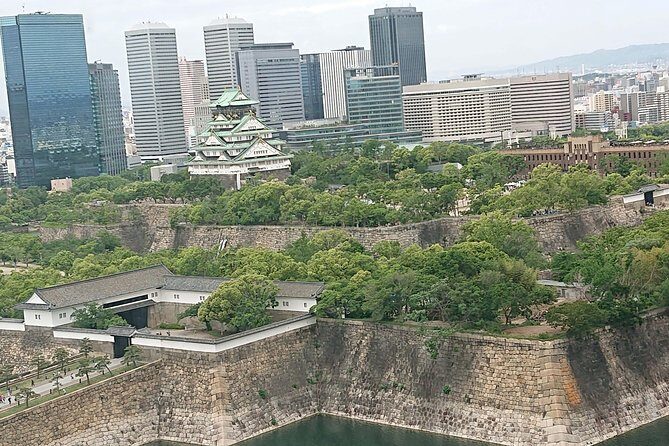
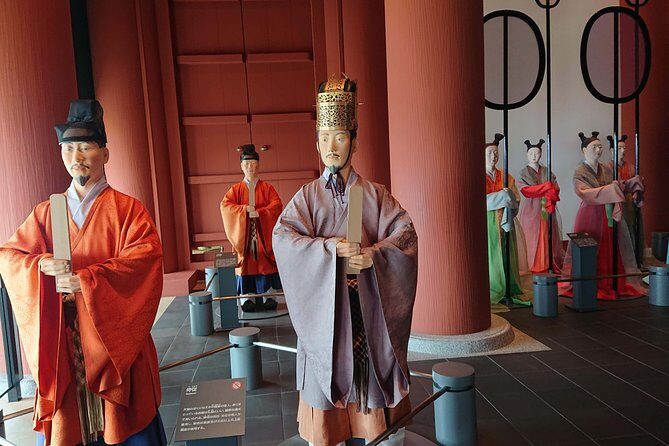
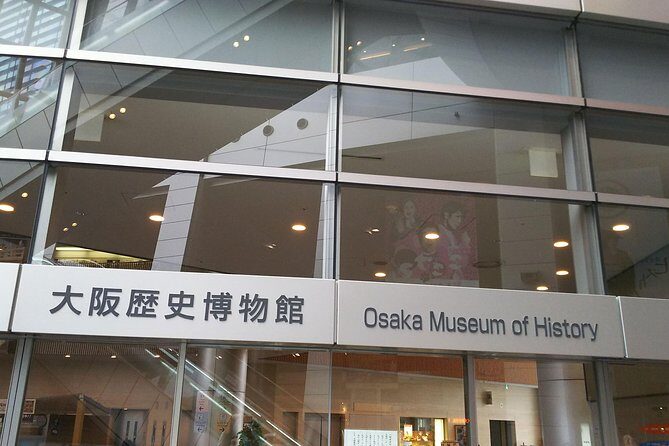
You begin at the Osaka Museum of History, right in front of Osaka Castle. The building sits on the site of an ancient palace, so even before you get deep into exhibits, you’re standing in a place with layers.
The standout is the elevated perspective. The museum’s upper floor is a great spot to look out and line up Osaka Castle in your mind—what you see from inside the story maps to what you’ll see walking toward the castle later. It’s also a useful trick for first-timers: your eyes learn the “shape” of the area before you reach the main landmark.
Practical notes:
- You get about 1 hour here.
- Admission is included.
- Go in with one simple goal: notice how the museum frames Osaka’s change over time. That makes the next stops easier to follow.
Stop 2: Osaka Castle’s Moats and Stone Walls

Osaka Castle is the kind of stop that can feel either inspiring or overwhelming, depending on how you approach it. With a guide, you’re more likely to get the structure and the meaning, not just the photo angles.
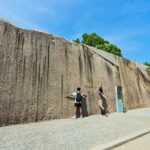
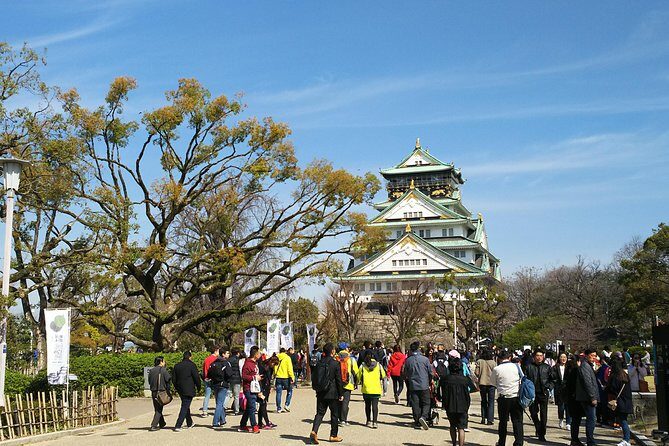
The tour focuses on the castle as a 17th-century stronghold built by the Tokugawa Shogunate, with defenses like double moats and tall stone walls. In other words: it’s not only about the exterior beauty. It’s about why the place was built to hold power and resist pressure.
You’ll also spend about 1 hour 30 minutes at the castle, and admission is included. That length is enough to walk around without feeling like you’re being hustled through.
How to enjoy it more:
- Keep your pace steady and look for defensive design features as you move.
- If it’s crowded, it’s still worth it. The guide’s job is to help you keep moving in a way that keeps the story clear.
Tenjinbashisuji Shopping Street: Japan’s Longest Arcade
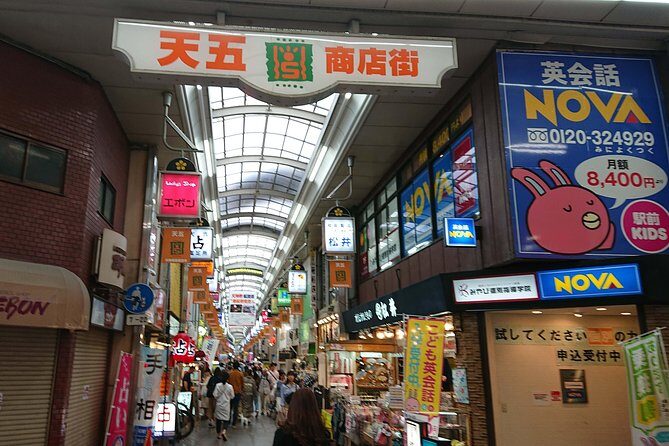
After the castle, the tour shifts gears from fortification to city life. Tenjinbashisuji is Japan’s longest arcade, about 2.6 km and lined with roughly 600 shops. It’s packed with local energy, and the real fun is how normal it feels. This isn’t just a tourist walkway. It’s a working shopping street.
You’re given about 1 hour to stroll and browse, and there’s no admission fee for this segment. That’s a nice rhythm break after museums: you can slow down, peek into stores, and get a feel for what people buy and carry day to day.
Tip: look at everyday items, not only souvenirs. Osaka has a reputation for practical, delicious living, and the shops reflect that.





Osaka Museum of Housing and Living: Walk Through Old Osaka
This is one of my favorite-style stops on any Japan tour: a place that shows you how ordinary life worked.
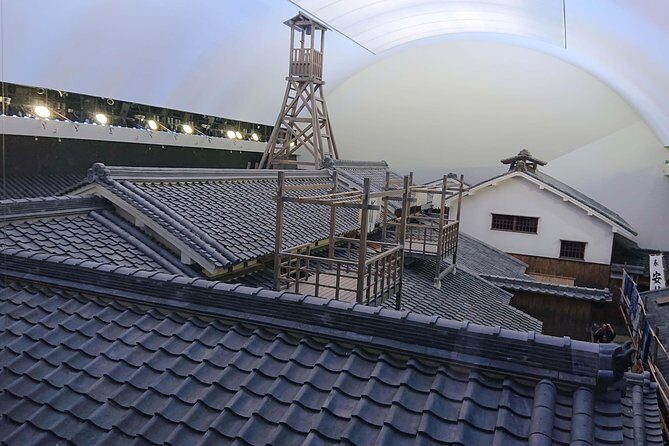
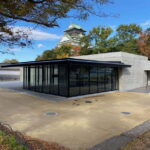
Here, you get a full-size reproduction of Osaka townscape from about 180 years ago. The emphasis is hands-on and experiential. You can see, touch, and step into older domestic structures. The goal is to make the past feel physical—walls, layouts, products, and everyday space.
You’ll spend around 40 minutes, and admission is included.
Why this stop is valuable: Osaka history isn’t only about samurai and castles. It’s also about how people built homes, sold goods, and lived their routines. This museum helps you “translate” what you saw earlier into daily life.
If you’re the kind of traveler who likes architecture or daily-life details, this is a highlight.
Kuromon Market: Food Culture Time Without the Rush
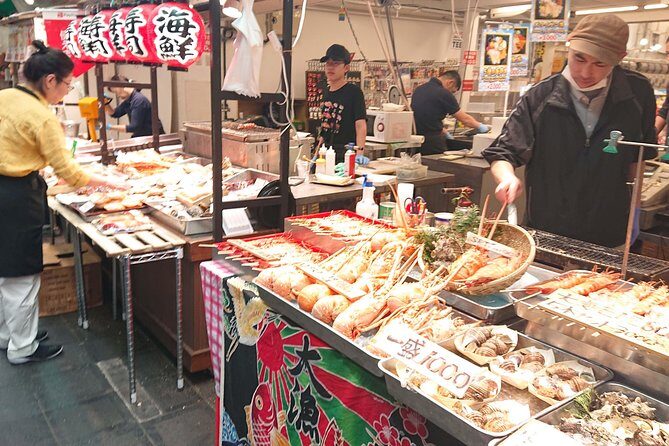
Then you head to Kuromon Market, one of Osaka’s most famous food areas. This stop ties directly into Osaka’s identity as a city that loves eating out and treating food like part of civic pride.
You get about 30 minutes, with no admission fee. That short window works well because it keeps the day moving while still giving you time to browse stalls, smell the food, and decide if you want to buy snacks.
Important for planning: food & drink isn’t included. So budget some yen (or be ready with cash/card) if you want to taste things here. If you don’t want to eat, you can still enjoy it as a sensory market stroll.
My practical advice: if you see something that looks simple and popular, try it. Markets are best when you go with what locals reach for.
Dotonbori: Canal Nightlife With a Guided Route
You finish in Dotonbori, Osaka’s most famous nightlife district. The tour gives you about 30 minutes here, also without an admission fee.
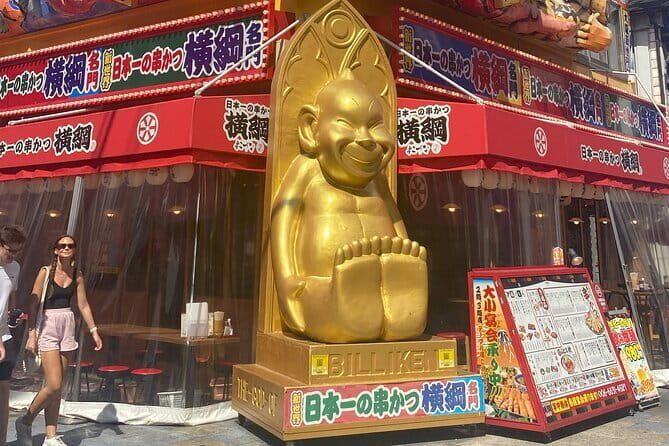
Historically, Dotonbori started as a local entertainment area, with theaters along the canal. Today, it’s known for restaurants and the colorful billboards that make the canal area look like a living signboard.
This is a good ending because by the time you reach it, you’ve already learned the city’s backbone. Now you see the personality.
If you want to make this stop work for you:
- Take photos early, before you get too distracted by food lines and signage.
- If it’s raining, don’t panic. Many people still enjoy the area because the neon reflects off wet pavement and keeps the mood going.
Price and What You’re Actually Paying For ($141.23)
At $141.23 per person, the big question is whether this is worth it compared to doing things alone.
Here’s the value logic that makes this price make sense:
- Admission fees are included for multiple major stops (Osaka Museum of History, Osaka Castle, Osaka Museum of Housing and Living).
- Public transportation fare is included, so you’re not calculating routes and paying separate train tickets for each hop.
- A professional guide handles the flow, explains what you’re seeing, and keeps timing realistic across a 7-hour day.
- The group limit (max 5) reduces the “lost in the shuffle” problem.
Food isn’t included, so you’ll still spend on snacks and lunch. But you’re free to choose what fits your tastes and budget, instead of being locked into a fixed meal.
If you like Osaka but don’t want the mental overhead of planning each transfer and ticket, this is strong value.
Who Should Book This Tour (And Who Might Want Another Plan)
This tour fits best if you:
- want a high-structure day with history + neighborhoods, without doing homework
- like walking but prefer it guided rather than self-navigated
- value getting into major sights without ticket juggling
- want a day that ends in Dotonbori without wasting time on trial-and-error
It might be less ideal if you:
- don’t handle lots of walking well (some people said they expected more vehicle time, but this is fundamentally a walking tour)
- want a fully flexible schedule with long free time at one stop
One more thing: the tour asks for moderate physical fitness, which mostly means you should be comfortable with steady walking and stair/indoor museum movement.
Best Guide Vibes to Look For
Guides are part of what makes the day feel easy. In past groups, the tour has been led by guides such as Chuji, Tomoko, Noriko, Taka Sakai, Yoko-san, Mizuho, Satomi, Nick, and Saori. The common theme in the feedback is clear communication, a pace that doesn’t feel rushed, and guides who help with what you want—whether that’s answering questions at Osaka Castle or helping you find something practical, like a lunch spot.
So when you book, keep this mindset: ask questions. This tour is set up for interaction, not just passive listening.
Should You Book This Osaka Castle & Dotonbori Walking Tour?
I’d book it if you want one day in Osaka that tells a story from samurai-era power to modern street life. It’s especially good value because key admissions and transit are built into the price, and the max 5 group size keeps it personal.
I wouldn’t book it if you hate walking or you want a totally loose plan. This is structured. You’ll be moving.
If you’re a first-timer aiming for Osaka’s “greatest hits” with meaning behind the photos, this is a very sensible choice.
FAQ
How long is the Osaka Castle & Dotonbori one-day walking tour?
It runs for about 7 hours.
What’s included in the tour price?
The price includes a professional guide, public transportation fare, and admission fees for the listed attractions.
Is food included?
No. Food and drink are not included, so you’ll want to budget for snacks and meals during stops like Kuromon Market.
How large is the group?
The tour is a small-group experience with a maximum of 5 travelers.
Is there hotel pickup?
Yes, the tour offers hassle-free pickup from your Osaka hotel.
Where does the tour start and end?
It starts at Osaka Station 3-chōme-1-1, Umeda (Kita Ward, Osaka) at 9:00 am, and it ends back at the meeting point.
What if the weather is bad?
This experience requires good weather. If it’s canceled due to poor weather, you’ll be offered a different date or a full refund.
What is the cancellation window?
You can cancel up to 24 hours in advance for a full refund.