REVIEW · OSAKA
Amanohashidate & Ine Funaya Kyoto coast day trip from Osaka/Kyoto
Book on Viator →Operated by TrevoTour Travels · Bookable on Viator
A sandbar and a fishing village in one day. This long Osaka/Kyoto-area outing links together Amanohashidate, Chion-ji Temple, and Ine no Funaya with guided timing that keeps the day from feeling chaotic.
I love the way Amanohashidate turns into a natural “bridge in heaven” made of sand and 8,000+ pine trees, plus the fun tradition of viewing it upside down. I also love Ine no Funaya, the Kyoto coast stretch of wooden boathouses (funaya) sitting right at the water’s edge.
The main drawback is the day runs 9 to 10 hours including bus time, so you need to be okay with a long ride and a couple of optional add-ons (ropeway and ferry).
In This Review
- Key highlights
- Kyoto coast from Osaka: what a 9–10 hour day feels like
- Amanohashidate: pine-lined sandbar views and the upside-down look
- The ropeway and View Land option
- Hyakumanben Chion-ji: a quick temple stop for wisdom and academic success
- Ine no Funaya: wooden boathouses on the Kyoto coast
- The optional ferry and bird watching
- Ropeway and ferry add-ons: how to choose without overspending
- Guides and meeting tips: where good days are made
- Timing, weather, and comfort for the Kyoto coast
- Value check: is $84.25 a fair deal?
- Who should book this day trip (and who might not)
- Should you book Amanohashidate & Ine Funaya from Osaka/Kyoto?
- FAQ
- How long is the Amanohashidate & Ine Funaya day trip from Osaka/Kyoto?
- What does the price include?
- Are the admission fees included for the main sights?
- How much do the optional tickets cost?
- Is lunch included?
- How many people are in the group?
- What languages will the guide speak?
- How do child pricing rules work?
- What is the cancellation policy?
Key highlights
- Two famous Kyoto-coast sights, one efficient route: Amanohashidate then Ine no Funaya in the same day
- Amanohashidate views you can tailor: basic viewing is free, but the ropeway/view land is an extra option
- Hyakumanben Chion-ji is short but meaningful: a focused temple stop tied to wisdom and academic success
- Ine Funaya is all about the funaya boats and water: plus an optional ferry that can bring birds into the mix
- Guides make a difference: from Jay’s humor to Andrew’s upbeat planning and Naomi’s photo-friendly tips
- Expect bus time: one heads-up repeated in feedback is that it can take a big chunk of the day
Kyoto coast from Osaka: what a 9–10 hour day feels like
This is the kind of day trip that works best if you plan mentally for travel time. You’re looking at roughly 9–10 hours total, and the travel leg back and forth is real, especially from Osaka. One helpful detail is that the tour is designed to be guided and organized, not a free-for-all, with meeting times clearly set by the guide.
The good news is the schedule is built around three stops with specific time windows: about 2 hours at Amanohashidate, about 30 minutes at Hyakumanben Chion-ji, and about 1 hour at Ine no Funaya. That balance is a practical compromise. You don’t get a full-day at either spot, but you do get enough time to see the headline views without feeling rushed at every single minute.
Group size is capped at 48 travelers, and the tour has a multilingual guide (Chinese/English/Japanese/Korean). In plain terms, this usually means you’ll understand where to go and when—especially if you’re the type who likes a clear plan rather than hopping trains on your own. Still, one caution: at the start, there can be confusion if you’re not paying attention to which pickup point applies to you.
You can also read our reviews of more tours and experiences in Osaka
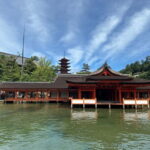
Amanohashidate: pine-lined sandbar views and the upside-down look
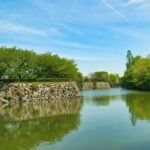
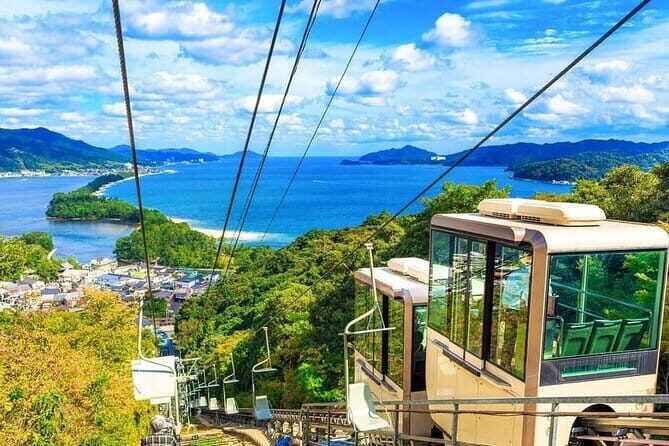
Amanohashidate is one of Japan’s top scenic spots for a reason: you’re staring at a naturally formed sandbar cutting across Miyazu Bay, lined with 8,000+ pine trees. The name literally means bridge in heaven, and once you arrive, that metaphor clicks. The whole place reads like a long, scenic “line” stretched over water.
You’ll get about 2 hours here, and the key value is flexibility. Basic viewing is the highlight, and admission is free for this stop. That means you can keep your spending predictable and just enjoy the scene, take photos, and walk the areas that feel most comfortable.
Now, the fun part: there’s a tradition of viewing Amanohashidate upside down. You’ll see people doing it, and it’s a great low-effort way to bring play into a classic sightseeing stop. It also changes how you interpret what you’re seeing. Instead of a simple “sandbar with pines,” it turns into a kind of optical/angle trick that makes the view feel new again.
The ropeway and View Land option
Admission at Amanohashidate is free, but you may see signs and options for View Land Ropeway (extra cost). That add-on can be worth it if you’re trying to get a different angle or you want a higher perspective without doing lots of stairs. But if you’re traveling on a tight budget, you can skip it and still enjoy Amanohashidate fully.
Hyakumanben Chion-ji: a quick temple stop for wisdom and academic success
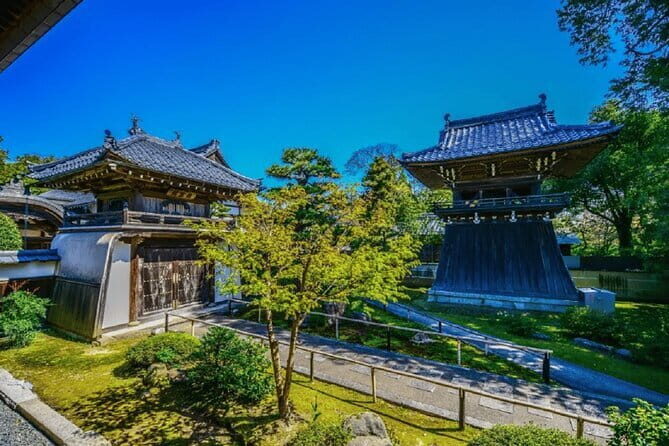
After the coastline and pines, the tour shifts to something quieter: Hyakumanben Chion-ji Temple at the southern end of Amanohashidate. Your time here is about 30 minutes, and admission is free.
This stop is specifically tied to Monju Bosatsu, the Bodhisattva of wisdom. The temple is often associated with praying for wisdom and academic success. So if you like travel with a purpose, this is a nice change of pace: you’re not just seeing a pretty spot, you’re stepping into a place people visit with real hopes.
In a short time window, the best approach is to keep your expectations realistic. You won’t have time for a long museum-style temple visit, but you can still do a meaningful prayer walk and enjoy the calm atmosphere. The value here is that the temple stop anchors the day. It gives you contrast after open water views and before Ine no Funaya.
One practical point: because this is a short stop, wear shoes you can move in comfortably. You’ll want to stay nimble so you’re not rushing when you get there.
Ine no Funaya: wooden boathouses on the Kyoto coast
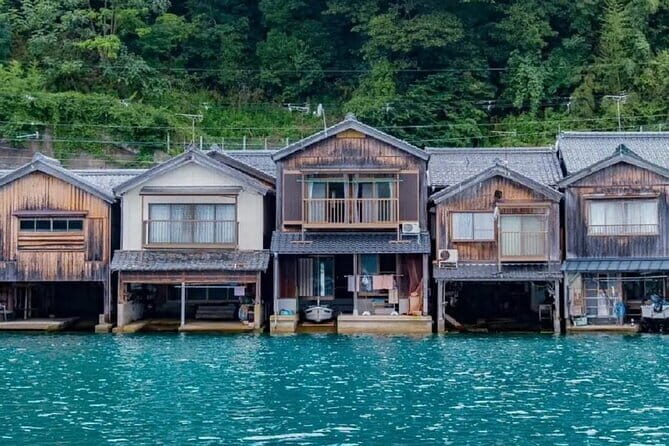
Then comes Ine no Funaya, the spot many people know as the Venice of Japan. This is a fishing village along the Kyoto coast where wooden boathouses—funaya—sit along the shoreline. The look is instantly memorable: water-level structures, traditional building style, and a coastline that feels more local than touristy.
You’ll have about 1 hour here, and admission is free for the village area. That hour is enough to do two things well:
- Walk along the waterfront for the boathouse views
- Decide whether you want to take the Ine Funaya ferry (extra cost)


The optional ferry and bird watching
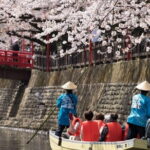
The ferry is an extra ticket (adult 8 / child 4). If you choose it, one perk is the chance to see birds close up while you’re on the water. Some guides and routes highlight the bird show, and it can be a fun moment because it’s not something you can replicate on land. It’s not guaranteed in the sense of a schedule, but it’s a common highlight.
If you’re not into ferry rides, you can still enjoy Ine no Funaya from land. Just know that skipping it changes the feel of the stop. The village is about still views on shore, while the ferry adds motion and new angles.
Ropeway and ferry add-ons: how to choose without overspending
Your base tour price is $84.25 per person, and the included support is a guided day with multilingual interpretation. What’s not included is important: Ropeway/View Land tickets at Amanohashidate and the Ine Funaya ferry ticket are both optional add-ons, with set prices.
That structure can be good value if you like building your own version of the day. The clever move is to decide based on what you want from each site:
- If you want variety in viewpoints at Amanohashidate, consider the ropeway. If you’re already happy with ground-level views, skip it.
- If you want a water-level experience in Ine, consider the ferry. If you prefer walking and shoreline time, stay on land.
Also, lunch is not included. You might hear about a fresh seafood lunch on this route, but it’s at your own expense. So budget for that in advance. This is common on Japanese day trips: your “included” part is the sights and guide, and your “choose what you eat” part is up to you.
Guides and meeting tips: where good days are made
What really shapes the experience is how smoothly the group moves. The best examples from feedback are guides who keep the day organized with clear instructions and humor. Names that stood out include Jay, Andrew, Naomi, Liu, Frederick, and LU. Across those experiences, the common theme is that the guide helps you understand what you’re seeing and where to go next, not just where to stand for photos.
I also appreciate the practical guidance style. Some guides call out exactly where to meet, explain timing, and point you toward good photo angles. One guide was even praised for being a strong photographer, which matters if you’re trying to get nice shots without spending an hour fiddling with settings.
That said, pay attention at the beginning. There can be multiple pickup points (Osaka and Kyoto are both referenced), and if you pick up at the wrong place you can lose time fast. If you have messages before departure, read them carefully and confirm your exact pickup point.
And remember: this is a group tour, so you’ll follow a plan. That’s great for convenience, but it also means the day is less flexible if you want to linger somewhere longer than the schedule allows.
Timing, weather, and comfort for the Kyoto coast
This tour depends on the outdoors, so good weather matters. If it’s canceled due to poor weather, you’ll be offered a different date or a full refund. Since you’re visiting a coastal sandbar and a seaside fishing village, weather can shift the experience quickly.
For your own comfort, treat the day like a mini road trip:
- Dress for changing coastal temperatures (wind can be different near water)
- Plan for lots of sitting on the bus, especially since the travel portion is often a big chunk of the day
- Bring a way to keep your energy up for a long schedule (snacks and water)
Also, keep an eye on optional tickets. If you decide on the ropeway and ferry, do it in a way that won’t make you feel stressed. The tour already has set time windows for each main stop.
Value check: is $84.25 a fair deal?
Here’s how I think about value on this route.
You’re paying for guided transportation across regions plus expert coordination, with a multilingual guide and group size under 48. The “included” portion also covers admission for the main sights in the schedule (Amanohashidate viewing stop, Hyakumanben Chion-ji, and Ine Funaya village areas). Then you have two big optional costs: the Amanohashidate ropeway/view land and the Ine ferry.
So the value depends on your interests:
- If you want a structured day that hits two top Kyoto-coast areas from Osaka/Kyoto without planning trains and transfers, $84.25 feels reasonable.
- If you already plan to do these sites independently and you know you’ll skip the ropeway and ferry, you might question the price. You’re still getting the bus and the guide, but your budget would be tighter if you don’t fully use the guided structure.
One more thing: the tour is commonly booked about 51 days in advance, which suggests demand is decent. If you’re traveling in a busier season or want a specific date, book early so you’re not scrambling.
Who should book this day trip (and who might not)
This tour fits you if you:
- Want to see Amanohashidate and Ine no Funaya in one go
- Prefer a guided schedule over independent train planning
- Like a day with a mix: big nature views, a short temple stop, then a traditional fishing village
It might be less satisfying if you:
- Hate long bus rides. Even good days have a lot of time on the road.
- Want deep temple study or long conversations about the local ecology and history at each site. One drawback echoed in feedback is that the stops can feel like efficient drop-offs rather than slow exploration, depending on guide style and how the audio/communication lands that day.
- Are sensitive to communication issues. While guides are described as helpful and clear, one negative experience mentioned microphone and English clarity problems.
If you’re the kind of traveler who thrives on structure and wants the highlights without the planning headache, this is a strong pick for a single day.
Should you book Amanohashidate & Ine Funaya from Osaka/Kyoto?
My take: book it if your priority is hitting two of the Kyoto coast’s most recognizable places without spending your vacation figuring out connections. The guide experience seems to be a big part of the success—especially when your guide uses humor and gives practical, specific instructions like meeting points and timing. The scenery payoff is also clear, from Amanohashidate’s pine-lined sandbar to Ine’s funaya boathouses.
Skip it if you’re trying to avoid long transit. If you want slow travel, or you already know you’ll spend most of the time wishing you had more minutes at one stop, this route may feel too time-tight. In that case, you might consider splitting your plans across more days instead.
If you do book, show up ready for a full day, keep your optional ropeway/ferry decisions flexible, and pay close attention to the pickup point details. That’s the difference between a smooth day trip and a day trip that feels like it fights you.
FAQ
How long is the Amanohashidate & Ine Funaya day trip from Osaka/Kyoto?
The tour lasts about 9 to 10 hours, and that total includes transportation time.
What does the price include?
The price includes a Chinese/English/Japanese/Korean-speaking guide. It does not include the optional ropeway/view land or the Ine Funaya ferry tickets.
Are the admission fees included for the main sights?
Admission is listed as free for Amanohashidate, Hyakumanben Chion-ji Temple, and the Ine no Funaya stop.
How much do the optional tickets cost?
Amanohashidate View Land Ropeway costs $6 for adults and $3 for children. The Ine Funaya ferry costs $8 for adults and $4 for children.
Is lunch included?
Lunch is not included. You can expect a fresh seafood lunch to be available, but it’s at your own expense.
How many people are in the group?
The tour has a maximum of 48 travelers.
What languages will the guide speak?
The guide is listed as speaking Chinese, English, Japanese, and Korean.
How do child pricing rules work?
Children aged 0–2 are free as long as they will not occupy separate seats. Children aged 3+ are charged the same rate as adults.
What is the cancellation policy?
You can cancel for a full refund up to 24 hours before the experience starts. The experience requires good weather, and if it’s canceled due to poor weather, you’ll be offered a different date or a full refund.