REVIEW · OSAKA
Kuromon Market Food Walking Tour in Osaka (6 stops, 6 tastes)
Book on Viator →Operated by MagicalTrip Inc. · Bookable on Viator
Six tastes. One seriously useful route. This Kuromon Market food walking tour strings together Kuromon Market and the Namba/Dotonbori area with a guide who helps you place orders and understand what you’re eating, without turning the whole thing into a tourist parade.
What I love most is the mix of food and street-level context. You’re not just tasting takoyaki-style classics—you’re also getting local color that makes the market feel like part of everyday Osaka life, with guides like Nina and Yuto getting called out for being warm, funny, and great with questions (even from kids).
One consideration: six tastes in about two hours is great for variety, but it may not satisfy a huge appetite or replace a full meal. If you’re a big eater, plan to add extra snacks with cash after the tastings, and do note that dietary options can be limited depending on your needs.
In This Review
- Key things you’ll feel on this walk
- Kuromon Market: the smart place to start
- Doguyasuji: kitchen shops that make better souvenirs
- Namba Grand Kagetsu, Namba, and Dotonbori: food district energy
- The 6 tastes: variety, pacing, and what to expect
- How ordering works (and how you don’t get stuck)
- A small-group walk means you can actually interact
- Price (about $50.41): how to judge the value
- Practical tips before you go (so it stays fun)
- Should you book? Yes, if you want a guided Osaka food intro
- FAQ
- Where do I meet for the Kuromon Market Food Walking Tour?
- How long is the tour, and how many stops/tastes are included?
- What if I have dietary requests or allergies?
- Do I need to pay for the guide’s food?
- Is gluten-free or other restricted eating guaranteed?
- Can I cancel for free?
Key things you’ll feel on this walk
- Small group pace (max 7 people): you get room to ask questions and not get swept along
- 6 stops / 6 tastes in ~2 hours: focused sampling instead of a long marathon
- Kuromon Market first: it’s the easiest way to orient yourself in Osaka’s food rhythm
- Doguyasuji kitchenware street: shop for knives, tableware, and cooking tools you’ll actually use
- Namba and Dotonbori photo-and-sign walking: Glico-style icons plus the high-energy vibe
- Language help at the table: guides help with ordering and what to expect at each spot
Kuromon Market: the smart place to start

Kuromon Market sits in Minami, the central Osaka area where food is the main event. It’s the kind of place where you can snack your way through stalls and counters all day, but doing it with a guide saves you the guesswork.
The tour’s opening move is the key: you start by walking and eating through Kuromon so you build a baseline for what Osaka markets feel like. That matters because Osaka has a lot of intense, high-choices food zones nearby—if you begin here, you learn what “normal” looks like (lines, menus, ordering flow) before you wander into the louder entertainment streets.
This is also where the best guides earn their keep. Nina gets mentioned for being kind and funny, and guides like Yuto and Taku are repeatedly credited with helping people order correctly, avoid missteps, and understand the basics behind what they’re eating. Translation: you spend less time pointing at pictures and more time enjoying the food.
You can also read our reviews of more walking tours in Osaka

Doguyasuji: kitchen shops that make better souvenirs
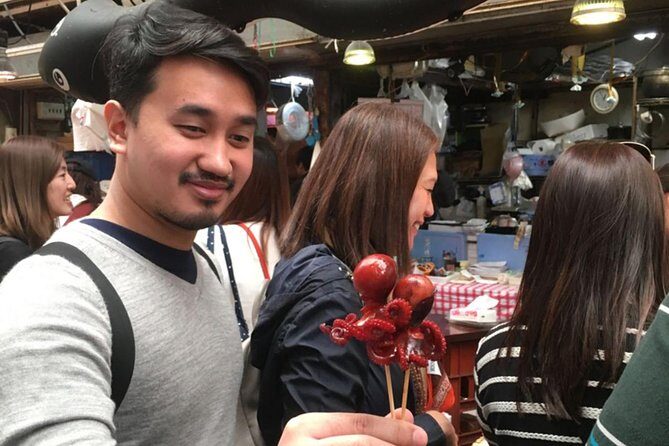
A big plus of this tour is the stop that’s not only about eating: Doguyasuji street. This is the kitchenware-and-tableware stretch where you can browse cooking equipment and shop for the kind of items you can bring home and actually use.
I like this added layer because it turns your Osaka visit into something more practical. Many food tours focus only on bites. Here, you also get a reason to look around at tools and shops—good for travelers who want something beyond magnet-and-postcard souvenirs.
And because this part of the walk is tied to local knowledge, it’s easier to browse without feeling lost. You’ll know what you’re seeing and why people shop there, not just that it’s full of cookware.
Namba Grand Kagetsu, Namba, and Dotonbori: food district energy
After Kuromon, the route pushes outward into the Namba and Dotonbori areas—Osaka’s entertainment zone where food sits right next to neon, theaters, and big signboards.
The tour passes by places like Nanba Grand Kagetsu (the comedy theater) and then works the walk through Namba and Dotonbori. You’ll see the giant billboard style that Dotonbori is famous for, including icons like the Glico sign and other dramatic theater signage. Even if you don’t plan to go inside a theater, this section helps you connect Osaka’s food culture to its nightlife energy.
Here’s why this part is valuable for your trip: once you’ve been walked through it, you can return on your own without getting overwhelmed. You’ll remember the “shape” of the area—where people cluster, how the streets open up, and where the food flow is easiest to follow.
Also, if you’re traveling solo, this is a strong photo moment. Taku is specifically praised for taking good photos, which is a nice bonus in a district built for pictures.
The 6 tastes: variety, pacing, and what to expect
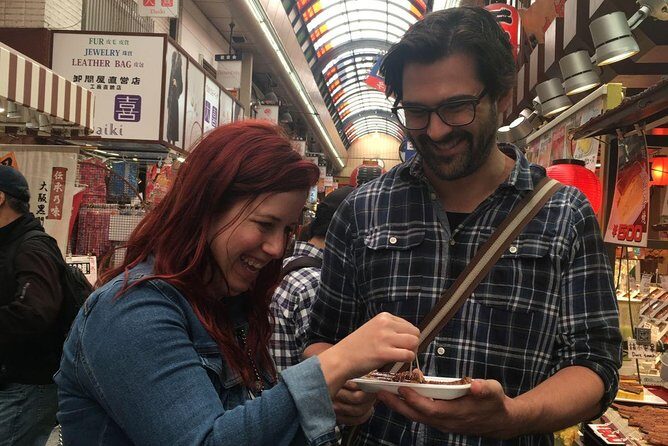
This tour is built around 6 stops / 6 tastes, and it usually fits into about 2 hours. That format is perfect for an introduction: you get a mix of Osaka favorites without committing to a full food crawl that eats up your whole day.
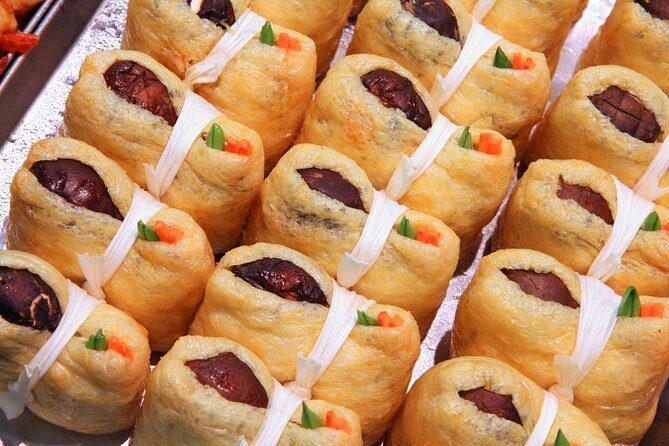
You should expect the tour to focus on classic, street-friendly items. In the experience details and the food mentions connected to the tour, you’ll commonly see Osaka-style standbys like takoyaki, plus other popular bites that may include items such as sushi, yakitori, dumplings, gyoza, and oden. The exact lineup can vary depending on the day and the eateries available, but the overall promise is consistent: you’re trying multiple different things, not repeating one.
How ordering works (and how you don’t get stuck)
One of the most practical benefits is language support. Guides are positioned to help you navigate ordering and handle questions so you don’t waste time in that awkward stage of pointing while everyone’s watching the clock.
If you have dietary limits, the approach is still helpful, but you need to plan smart. The tour info says gluten-free accommodation is not straightforward, and there are also notes that vegetarian/vegan and gluten-free options may be possible but limited. So the right move is to message your needs at least one day before you go. Then, on the day, don’t assume “safe” means “guaranteed allergy-free.”
If you want a simple rule: treat this tour as a way to broaden what you eat in Osaka, not as a medical-grade guarantee. That mindset keeps you relaxed and lets your guide use the options available.
You can also read our reviews of more food & drink experiences in Osaka


A small-group walk means you can actually interact
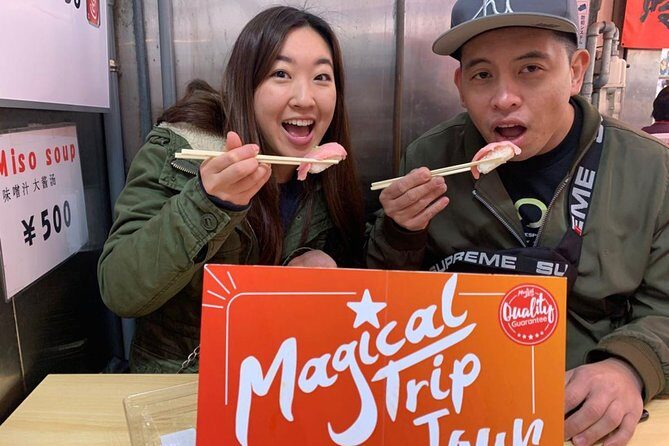
The tour caps at 7 travelers, which changes the whole vibe. With a big group, you tend to follow and wait. With a small group, you can slow down at a stall, ask about a menu item, and get a real explanation.
That’s why guides like Aina and Rie get such strong mentions. People describe guides as patient with questions, helpful with navigation, and able to keep pace comfortable—especially for families. One family experience notes a guide offering hand wipes after messier foods, which sounds small, but it’s the kind of practical touch that makes street eating easier.
Also, a guide-led route helps you avoid the common trap in busy food areas: you don’t always end up in the place with the busiest signs. You end up in the place that makes sense for what you’re trying to taste—and what you’re ready to order.
Price (about $50.41): how to judge the value
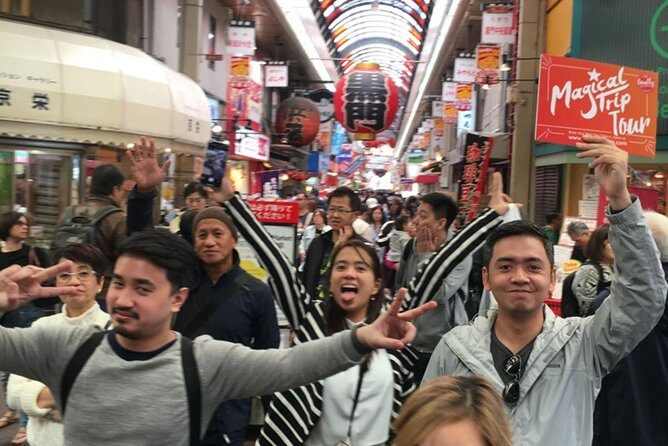
At $50.41 per person for about 2 hours and 6 tastes, this tour lands in the “worth it if you want direction” category.
Here’s how I think about value in Japan food tours:
- You’re paying for time-saving (finding the right spots and knowing what to order)
- You’re paying for less stress (ordering support and pacing)
- You’re paying for context (what the food and market culture mean)
If you’re the type who loves wandering and you already know what you want, you could probably piece together a similar day on your own. But if you don’t read menus comfortably, don’t want to gamble with your time, or want help staying out of the most obvious tourist traps, the price starts to look fair fast.
And because the tour includes both market eating and the kitchenware browsing street, you’re getting more than a single-district food hit. That’s a real part of the value.
Practical tips before you go (so it stays fun)
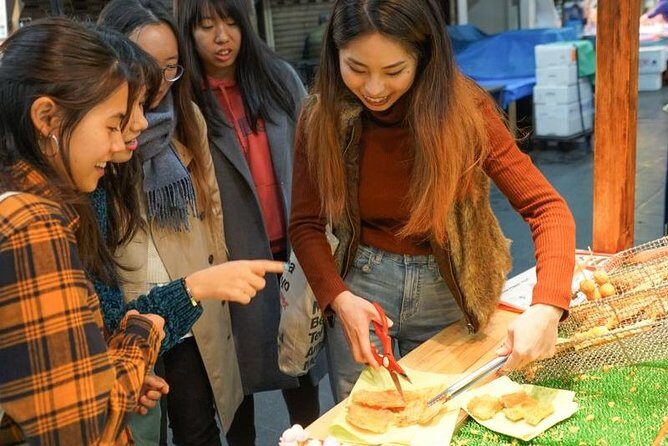
Osaka weather can be intense: summer can reach up to 40°C / 110°F, and winter lows can drop to -5°C / 20°F. Dress for extremes, bring water when it’s hot, and wear shoes you can walk in for stretches of market and entertainment streets.
A few other practical notes matter:
- The tour says you don’t need to cover the guide’s food and drinks, but you should bring cash if you want extra snacks or drinks.
- The tour uses a mobile ticket, so have it ready on your phone.
- The tour starts on time, and late arrivals may miss the group with no refund or reschedule. Set an earlier meeting mindset, not a last-minute scramble mindset.
One more good move: if you’re traveling with kids or you’ll be carrying a baby, the small-group size tends to help. You’ll still want to be flexible, but guides are described as capable of working around family needs.
Should you book? Yes, if you want a guided Osaka food intro
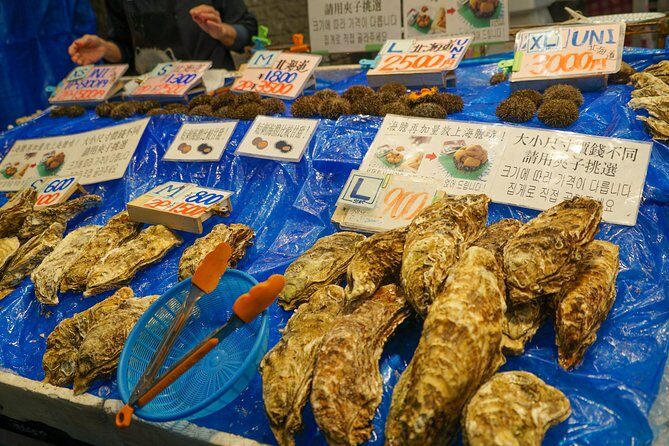
Book this tour if:
- You want a fast, focused way to start eating in Osaka
- You want help ordering so you can spend energy enjoying the food
- You like the idea of a market plus Doguyasuji kitchenware browsing, not just a random snack list
- You value small-group pacing and guides who actually talk with you (Nina, Yuto, and others are repeatedly praised for that style)
Skip it (or do a lighter expectation plan) if:
- You’re a very heavy eater and six tastes won’t feel like enough
- You need strict allergy-level gluten-free safety guarantees (the tour information shows the situation is complicated, and advance notice is required)
- You mainly want to wander without guidance or explanations
FAQ
Where do I meet for the Kuromon Market Food Walking Tour?
You meet in front of the SMBC ATM at Nippon-bashi 1chome near Kintetsu Nippon-bashi Station (Exit 10). The meeting point address is listed as Osaka, Chuo Ward, Nipponbashi, 1-chōme with the building name shown in the activity details. The tour ends back at the meeting point.
How long is the tour, and how many stops/tastes are included?
The tour runs for about 2 hours and includes 6 stops with 6 tastes.
What if I have dietary requests or allergies?
You should inform the provider at least one day before the tour with dietary requests or allergies. Requests made on the tour day cannot be accommodated. The information also notes that gluten-free accommodation is not available in some cases, while vegetarian/vegan and gluten-free may be possible but options may be limited—so it’s important to confirm before you go.
Do I need to pay for the guide’s food?
No. The tour states you do not need to cover the cost of the guide’s food and drinks. If you want extra snacks or drinks, bring cash.
Is gluten-free or other restricted eating guaranteed?
No guarantee is stated. The tour information explains that kitchens not operated by the guide are involved and allergy-free meals cannot be guaranteed, with limited options depending on the diet. Plan carefully and confirm in advance.
Can I cancel for free?
Yes. You can cancel for a full refund if you cancel at least 24 hours before the experience’s start time. Free cancellation is available up to that window.
If you want, tell me your travel dates and whether you eat meat, fish, dairy, or anything you need to avoid, and I’ll help you sanity-check whether this format fits your appetite and dietary reality.