REVIEW · OSAKA
Absolute Osaka Food Tour
Book on Viator →Operated by Arigato Japan KK · Bookable on Viator
Neon lights and snack smells start it fast. This Osaka street-food tour pairs four tastings with an expert English-speaking guide and even a side trip to a quieter shrine tucked away from the main crush. I love the focus on classic Osaka bites like takoyaki and kushikatsu, plus the way the guide layers in local traditions so it feels more than just eating on the move. One catch: it’s not recommended for gluten-free, and the exact food can shift with season and restaurant schedules.
Here’s what makes it practical: it’s only about 3 hours, capped at a small group of up to 10, and you’ll start at Dōtonbori before moving toward the Sennichimae area. I also like that the tour is family-friendly and vegetarian/pescetarian friendly, with guides who help you find options at the stops.
In This Review
- Key Points You’ll Care About
- Dotonbori Orientation: Glico Man and Getting Your Bearings
- Minami (Namba) and the Street-Food Strategy: Taste Without Wasting Time
- Hozenji Yokocho: A Quieter Lane for Food Break Rhythm
- Sennichimae Doguyasuji Shotengai and Kuromon Market: Eating Like You Have a Plan
- Misono Building and the Included Dessert: Finishing Sweet, Not Full
- Guides, Group Size, and Why Stories Matter on a Food Walk
- Price and Value: What $231 Buys You in Osaka
- Logistics You Should Plan For: Meet Time, Weather, and Pace
- Who Should Book This Food Tour (and Who Might Skip)
- Should You Book the Absolute Osaka Food Tour?
- FAQ
- FAQ
- How long is the Absolute Osaka Food Tour?
- What’s included in the price?
- What time does the tour start, and where does it end?
- Is hotel pickup included?
- Is the tour family-friendly?
- Is it suitable for gluten-free diets?
Key Points You’ll Care About
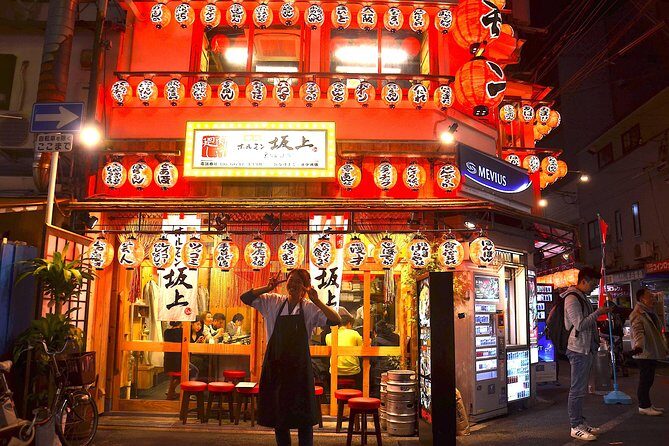
- Dōtonbori orientation first with the Glico Man story at the Dōtonbori Glico Sign
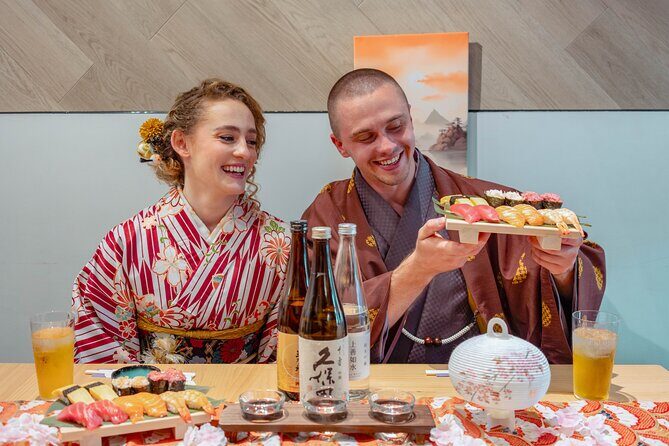
- Four food stops plus a drink and a traditional Japanese dessert included
- Route design to dodge the longest queues, using side areas rather than only the main showroom streets
- A secret shrine detour that adds calm and context to the food walk
- Small group (max 10) for easier pacing and questions
- Vegetarian/pescetarian friendly, but not recommended for gluten-free
Dotonbori Orientation: Glico Man and Getting Your Bearings
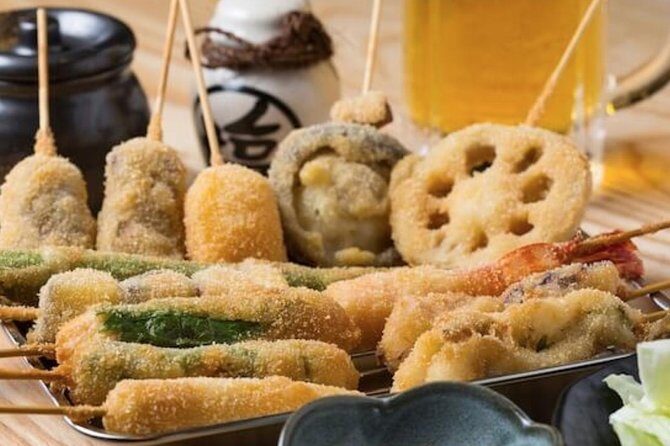
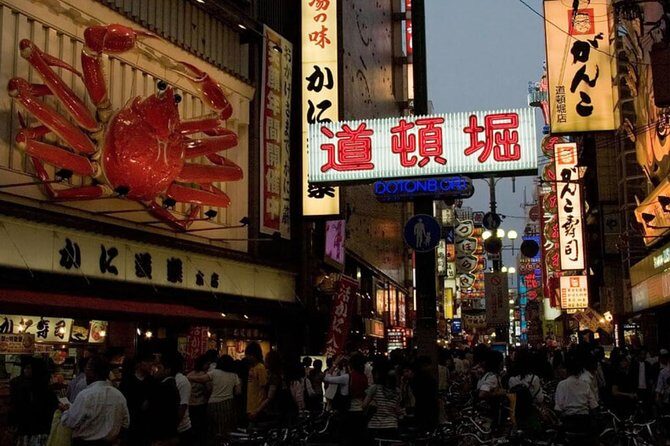
This tour starts in the Dōtonbori area, where the first minutes are basically an Osaka welcome kit: neon, crowds, and a street layout you’ll want to understand before you start hunting for food.
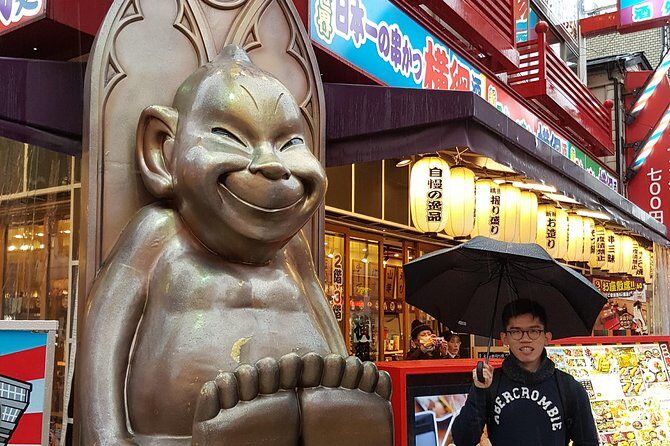
Your first stop is the Dōtonbori Glico Sign, where you’ll learn the story behind the famous Glico Man. The guide connects it to a Filipino sprinter, Fortunato Catalon, and explains how that name helped inspire both a nation and a company. It’s a quick lesson, but it changes how you see the street. Instead of just photo spots, you get something closer to cultural context.
Right after, you’ll walk through the Dōtonbori District with your guide’s help. This is where the tour shows its real value: Dōtonbori can pull you toward the most commercial options and the longest tourist lines. The point isn’t to avoid fun—it’s to keep you from wasting time when your goal is to taste.
You also get a feel for how Osaka orders work in practice: snack timing, sharing, and moving between stops without turning the whole evening into a logistics headache.
You can also read our reviews of more food & drink experiences in Osaka

Minami (Namba) and the Street-Food Strategy: Taste Without Wasting Time
After Dōtonbori, you shift into Minami, also known as Namba—one of Osaka’s central zones for food culture. This is where the tour leans into the real “street-food crawl” idea: you’re not just walking past shops, you’re stopping at places chosen for what you’ll actually eat.
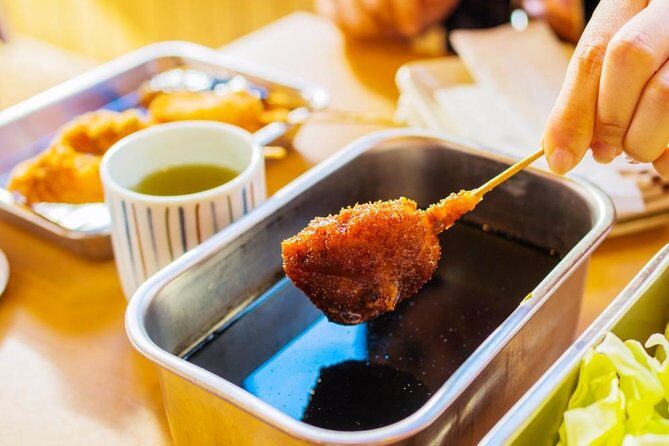
The tour’s pitch is clear: you’re tasting the best street foods, and you’re getting help with what to choose and how to order. Over the course of the tour, you’ll sample Osaka classics such as takoyaki and kushikatsu skewers. Since only four food stops are included, this matters: the guide is steering you toward variety instead of forcing you to buy extra to fill the time.
You’ll also hear insider stories and local traditions along the way. In past runs of this tour, guides like Asli and Melissa have been praised for mixing practical guidance with history-style storytelling. That combination is what keeps the walking portion from feeling random. You know why you’re there, not just where you’re going.
One practical consideration: the tour includes 1 drink and mentions a minimum drinking age of 21, so plan your pace accordingly if you’re traveling with teens or you’re not drinking. Even if you skip the drink, the included meal structure still gives you a solid value anchor.
Hozenji Yokocho: A Quieter Lane for Food Break Rhythm
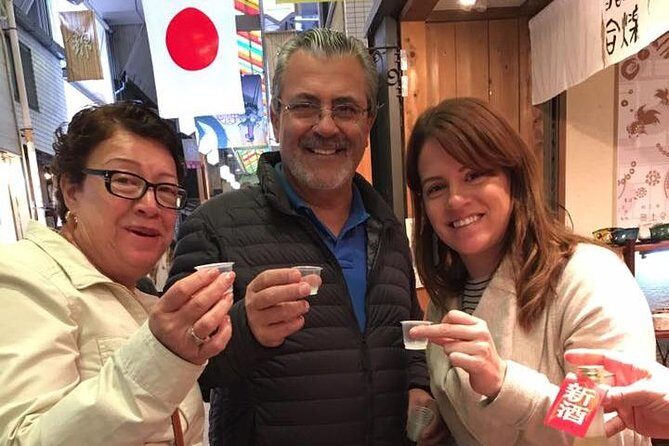
Midway through the route, you’ll reach Hozenji Yokocho, a named stop that signals a shift in tone. Instead of staying locked on the busiest main corridors, the tour uses areas that feel more like back-alley Osaka.
This is also where you start to feel why the tour calls out a secret shrine away from the crowds. The group isn’t just moving from one photo spot to the next. You get small pockets of calm inside an evening that otherwise moves fast—then you’re back to eating.
At this point in the evening, I find people relax a bit. The guide’s job is easiest when everyone is already in walking mode and knows the rhythm: you’ll stop, eat, walk again, and keep the pace steady.
What you should remember is that this tour is designed around four food stops, so the stops aren’t random add-ons. Each stop is part of the overall plan to give you a range of tastes in a compact timeframe.
If you’re sensitive to walking distances, keep in mind the tour suggests a moderate physical fitness level. The pace is manageable, but it’s still a food walk, not a sit-and-sip dinner tour.
Sennichimae Doguyasuji Shotengai and Kuromon Market: Eating Like You Have a Plan
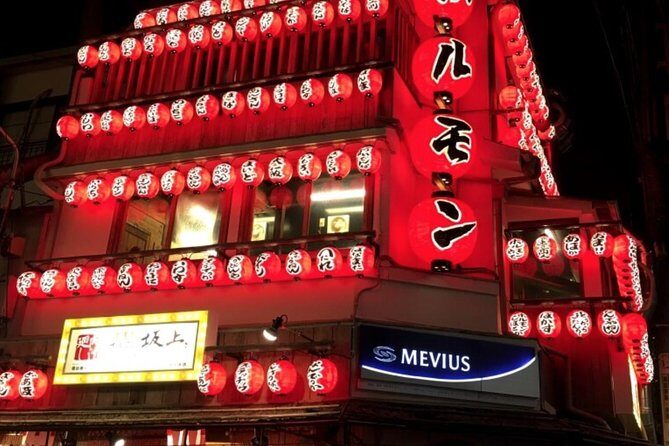
As the tour pushes toward the Sennichimae area, two named stops anchor the last stretch: Sennichimae Doguyasuji Shotengai and Kuromon Market.
These are both high-traffic zones, but you’re not there to wander aimlessly. You’re there because they fit the tour’s goal: find places where Osaka’s food culture is front and center. The guide helps manage the hardest part of street food: deciding what to order and knowing you’re choosing something worth the wait.
In this part of the route, the tour becomes most useful if you like the idea of eating things you might skip on your own. Several guides on this tour have been praised for helping people try foods they would not have picked without direction. That’s not just about taste. It’s also about confidence—when you’re standing in front of a menu you don’t fully read, a guide’s call makes the whole experience smoother.
You’ll also see how the tour balances the night’s energy. Dōtonbori can make it easy to overdo it on photos and distractions. Moving through Sennichimae and Kuromon keeps the evening anchored in practical choices, with the guide steering you back to the food.
Vegetarian and pescetarian guests have done well on this tour. In particular, Melissa received praise for finding vegetarian options at each stop, not just one rescue meal. That’s a big deal when you only have four included food stops.
Misono Building and the Included Dessert: Finishing Sweet, Not Full
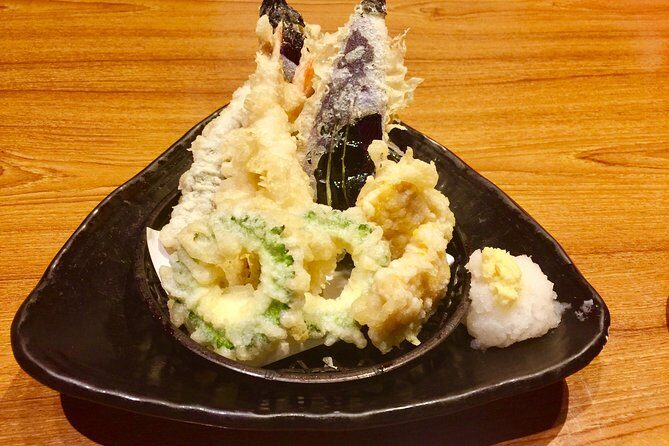
Your route includes Misono Building as another stop. By the time you reach the later portion of the tour, you’ve usually had savory bites and a drink or two. The inclusion of a traditional Japanese dessert helps the timing make sense.
I like that the tour doesn’t leave the sweet finish to chance. When a dessert is included, you’re not scanning menus in a busy area trying to guess what’s best. You also get to end the night with something light enough to feel like closure rather than a final stomach scramble.
Because the tour price is fixed and includes the dessert plus a drink, it’s easier to budget. You might still buy additional items, but you won’t have to. The tour explicitly notes that extra food and additional drinks aren’t included, which is helpful if you’re trying to keep control of your spend.
There’s also a realistic expectation built in: food can change with season and restaurant availability. If you’re a picky eater or have strict dietary needs, this matters. The tour is listed as vegetarian/pescetarian friendly, but it is not recommended for gluten-free, so plan accordingly.
You can also read our reviews of more tours and experiences in Osaka


Guides, Group Size, and Why Stories Matter on a Food Walk

This tour runs with a local English-speaking guide and a maximum group size of 10. That small size is more than a nice-to-have. It means you’re not fighting the crowd for attention, and it’s easier for the guide to check on everyone’s pace and preferences.
In the feedback people highlight the guides by name—Marie and Asli show up often, and Melissa is specifically praised for guiding vegetarian options and adding Osaka history alongside the food. That combination is exactly what turns a snack tour into a memory you can explain later.
Also, the tour accepts single travelers, which helps a lot in Osaka. When you’re traveling alone, street food can be intimidating because you don’t want to ask awkward questions or make ordering mistakes. With a guide, you just move with the group and let them handle the tricky parts.
If you’re the kind of traveler who enjoys hearing the why behind things, you’ll likely feel the tour delivers. The stories aren’t just facts; they give you a way to connect each stop to a bigger picture of the city.
Price and Value: What $231 Buys You in Osaka
At $231 per person, this tour isn’t the cheapest way to eat around town. But it’s also not priced like a high-end sit-down dinner.
Here’s what you’re paying for, based on what’s included:
- 4 food stops with tastings chosen for variety
- 1 drink included
- A traditional Japanese dessert
- A local English-speaking guide who handles ordering and pacing
- A route built around key Osaka neighborhoods, starting near Dōtonbori and ending around Sennichimae
In practical terms, this can save you time and decision fatigue. Street food is fun, but if you arrive hungry and confused, the night can get expensive fast through extra purchases and wrong turns. This tour gives you a structured plan for the evening and builds in variety within a short 3-hour window.
It’s also worth noting that the tour is often booked about 38 days in advance on average. That suggests it fills up during peak periods. If your travel dates are firm, you’ll usually get better selection by reserving earlier.
Logistics You Should Plan For: Meet Time, Weather, and Pace
The tour starts at 5:00 pm and runs about 3 hours. The meeting point is in the Dōtonbori area at a specific address in Chuo Ward, and you’ll finish in the Sennichimae area.
You’ll use a mobile ticket, which is convenient if you don’t want to juggle paper. Hotel pickup isn’t included, but the tour is described as near public transportation, so plan to arrive on your own means.
The tour also requires good weather. If the weather doesn’t cooperate, you should expect an alternate date or a full refund. That’s a key point for Osaka in general: evenings can change quickly.
Finally, the tour suggests moderate physical fitness. You’re walking between stops, including through areas that can get crowded, so wear comfortable shoes and keep your plans flexible.
Who Should Book This Food Tour (and Who Might Skip)
This one fits best if you want Osaka street food in a structured way.
You’ll likely love it if you:
- Want a guide to help you choose and order at street-food spots
- Prefer a small group and a manageable 3-hour plan
- Enjoy classic Osaka hits like takoyaki and kushikatsu
- Travel as a single person and want an easy social setup
- Are vegetarian or pescetarian (options have been found at each stop on past tours)
You might skip or choose a different option if:
- You need a gluten-free plan. The tour explicitly says it’s not recommended for gluten-free
- You’re expecting lots of sitting time. This is a walking food tour, not a restaurant-hopping lunch with breaks
It’s family-friendly, and children must be accompanied by an adult. There’s also a minimum drinking age of 21, so if you’re traveling with younger kids, focus on the included food rather than the drink.
Should You Book the Absolute Osaka Food Tour?
I’d book this tour if you want a simple answer to the question What should I eat in Osaka tonight? The route makes sense: it starts in the most iconic street-food atmosphere around Dōtonbori, then shifts toward neighborhoods where the tour can keep you fed without turning your evening into queue management.
The best reason to choose it is the combination of four included tastings, a guide who explains what you’re eating, and a small-group pace. If you’re a solo traveler or you’re traveling with someone who wants guidance, it’s a smart way to get a lot of Osaka flavor without second-guessing every menu.
If gluten-free is a must for you, I’d treat this tour as a no and look for a different setup. Otherwise, it’s a strong choice for an early evening start and a fun, food-first Osaka experience.
FAQ
FAQ
How long is the Absolute Osaka Food Tour?
It lasts about 3 hours.
What’s included in the price?
You get 4 food stops, 1 drink included, a local English-speaking guide, and a traditional Japanese dessert.
What time does the tour start, and where does it end?
The tour starts at 5:00 pm and ends in the Sennichimae area.
Is hotel pickup included?
No, hotel pickup isn’t included (it can be arranged for an additional charge).
Is the tour family-friendly?
Yes, it’s family-friendly. Children must be accompanied by an adult.
Is it suitable for gluten-free diets?
No, it’s not recommended for gluten-free. Vegetarian and pescetarian options are supported.