REVIEW · OSAKA
From Osaka: Himeji Castle, Arima Onsen & Mt. Rokko Day Tour
Book on GetYourGuide →Operated by VIP Japan Tour · Bookable on GetYourGuide
White Heron Castle in a single day. I like the way this tour pairs Himeji Castle with Koko-en, and I like the Arima Onsen break that resets your legs and your mood. You also get the big skyline payoff from Mt. Rokko over the Akashi Strait and Osaka Plain.
This is still a long day. Plan for lots of walking and stairs at the castle and garden, and if you’re tall you might notice the bus seating isn’t built for comfort.
The best part for me is how the day flows without feeling chaotic. Guides like Nick, Gary, and Harry are repeatedly praised for keeping people together, answering questions in English/Chinese, and making time for photos and self-exploration.
In This Review
- Key highlights worth marking on your mental map
- A 10-hour loop from Osaka that actually covers the must-sees
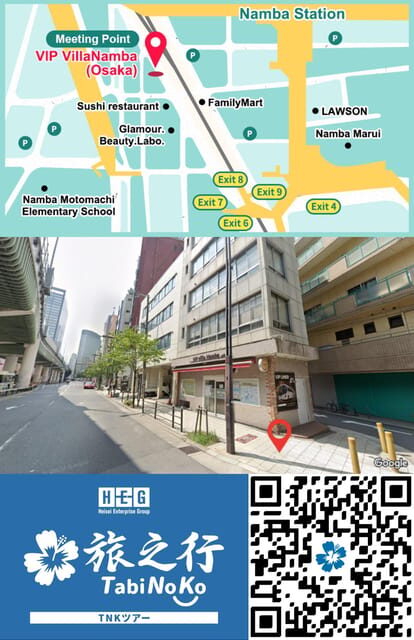
- Meeting at VIP Villa Namba, then settling into the day
- Himeji Castle: the White Heron, UNESCO, and the “don’t-miss” views
- Ticket reality: March 1 changes what you pay for
- Koko-en Garden: nine gardens built to frame Himeji
- Karoyashiki-ato Park lunch break: a historic reset between big sights
- Arima Onsen town time: old hot springs plus real snack wandering
- Onsen admission is extra
- Mt. Rokko from 880m: Akashi Strait to Osaka Plain
- Lunch with Senhime Gozen: if you want an easy, local-style tempura set
- What you’re paying for at $53: value and the key extras
- How to enjoy this day tour without feeling rushed
- Should you book this Osaka: Himeji Castle, Arima Onsen & Mt. Rokko day tour?
- FAQ
- What does the tour price include?
- Are the hot spring (onsen) entry fees included?
- Do I need to buy tickets for Himeji Castle and Koko-en?
- What’s the lunch option, if I choose it?
- How long do you spend at each main stop?
- What languages are available for the guide?
Key highlights worth marking on your mental map
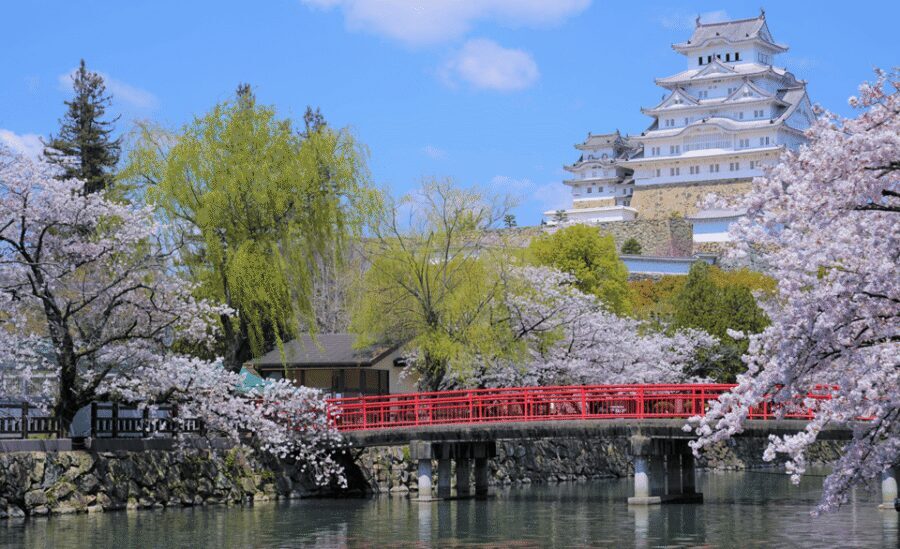
- Himeji Castle + Koko-en back-to-back for classic views and easy sightseeing flow
- Arima Onsen on the schedule so you actually get a real hot-spring town break
- Mt. Rokko at 880m with views across the Akashi Strait and Osaka Plain
- Scored snack strolls in Arima with options like Tansan Senbei and Kinsen-yaki
- Guides such as Nick and Gary who keep the pace calm and the stories clear
- Optional Senhime Gozen lunch set if you want an easy, local-style meal
A 10-hour loop from Osaka that actually covers the must-sees
If you’re using Osaka as a base, this kind of day tour can be the difference between seeing a few highlights and getting the full “western Kansai” feeling. You’re doing UNESCO-level architecture, a garden designed for lingering, an old hot-spring town, and one of the best view stops around Kobe.
What makes this one work is balance. The castle and garden are your main sightseeing blocks, but you’re not stuck in a museum mode all day. Arima Onsen is the breathing space. Then Mt. Rokko turns the page with wide-open views and the kind of scenery that makes the long bus ride feel justified.
It’s also built for multi-language travelers. You’ll have an English/Chinese-speaking guide, and depending on the group mix you may ride with people on different language tracks, but the day stays coordinated.
You can also read our reviews of more tours and experiences in Osaka
Meeting at VIP Villa Namba, then settling into the day
Most people start around VIP Villa Namba, いな音ビル, and drop off back in that same area. Your exact meeting point can vary by what you booked, so arrive early enough to find the right spot without stress.
You’ll be on an air-conditioned vehicle through the moving parts of the day. Many reviews mention that the bus driver is professional and that the ride feels safe and well-run. Still, there’s one practical drawback: if you’re tall, you may feel the seat space is tight. Bring a water bottle and plan to stretch a bit when you can at stops.
Good sign: the day is designed with real self-guided time at each place, not just bus windows and rushed checkmarks. The guide’s role is to keep timing under control and help you see what matters most, while still giving you room to wander.
Himeji Castle: the White Heron, UNESCO, and the “don’t-miss” views
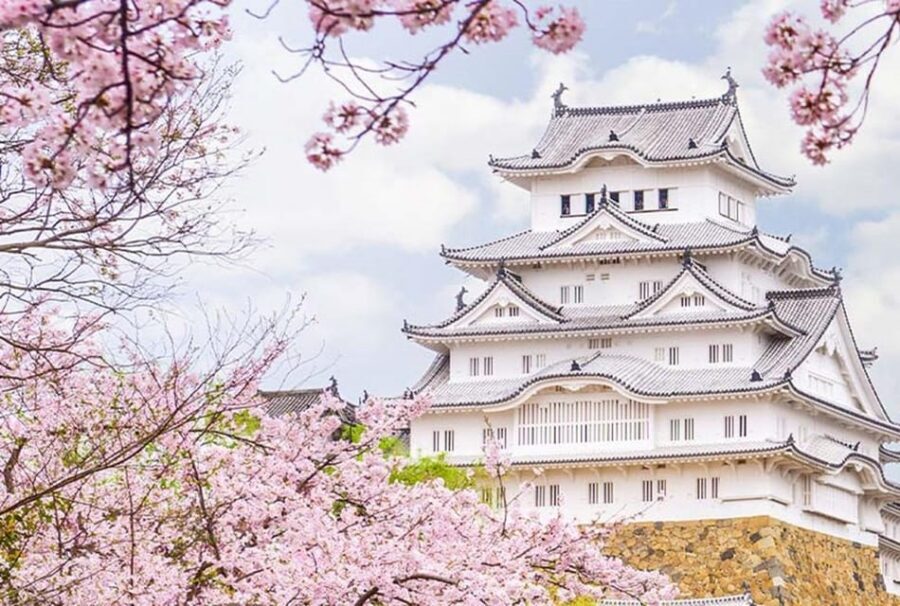
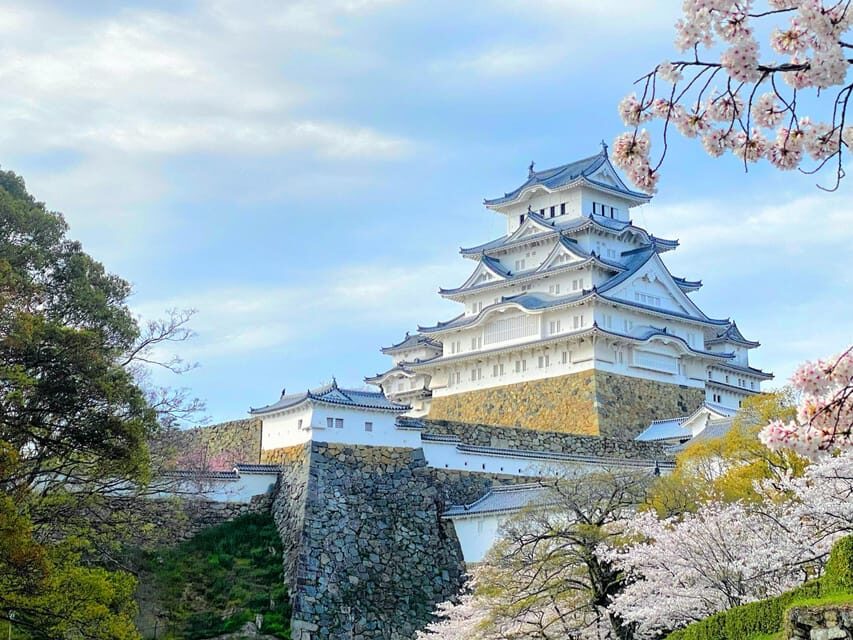
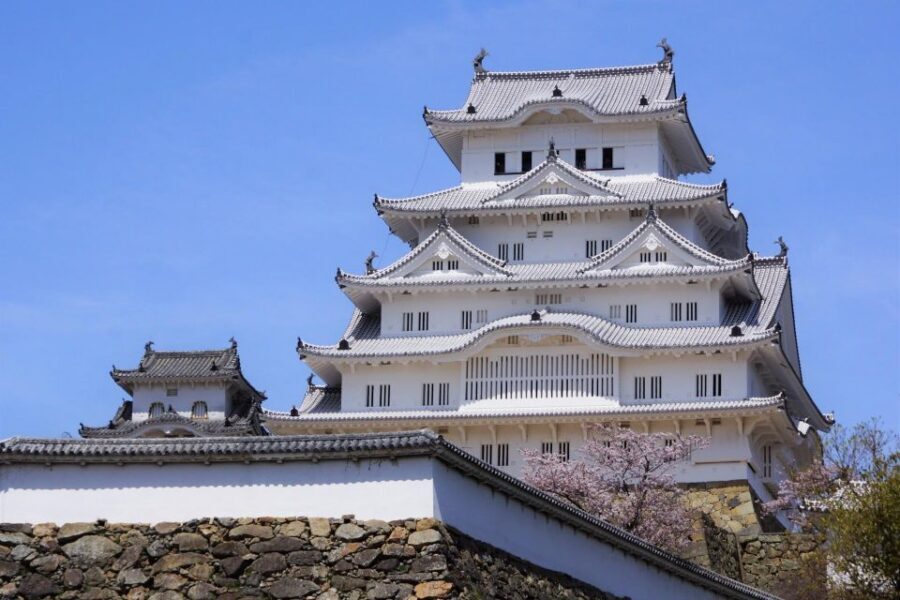
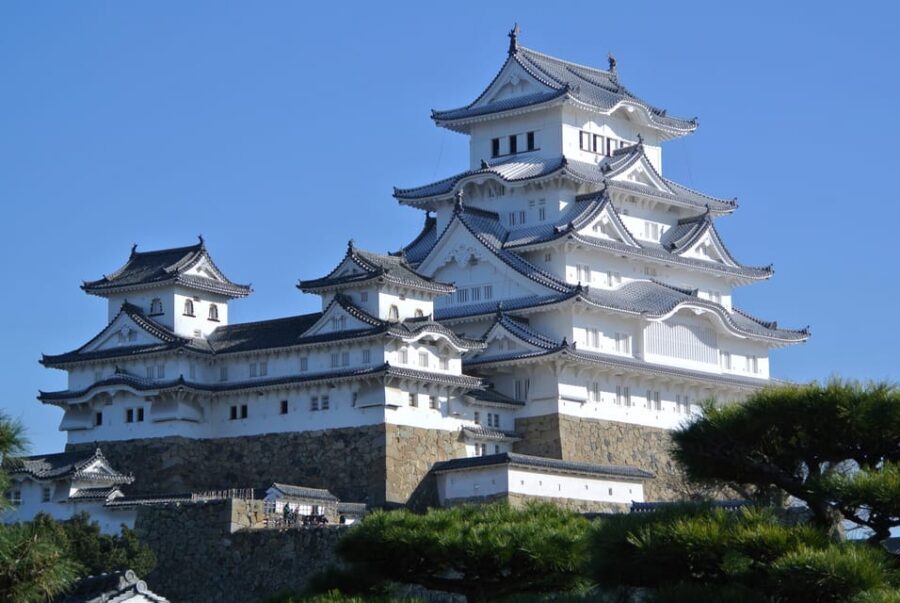
Himeji Castle is famous for a reason. It was registered as Japan’s first UNESCO World Cultural Heritage Site in 1993, and the story is spread across centuries: built in the late 14th century, with the current magnificent structure completed in 1609. The nickname White Heron Castle fits the look—elegant white walls that seem to float above the grounds.
The castle is also a lesson in how Japanese castles worked. You’ll see the wooden construction and defensive design choices that reflect the shift from Sengoku-era conflict to early Edo-era stability. Another detail that matters for visitors: it’s one of the rare castles that still has a complete set of original keeps remaining.
Your time here is about two hours with a photo stop, guided orientation, and self-paced exploring. That’s enough for the major viewpoints, but you should go ready to climb and walk. Reviews repeatedly flag stairs and steps, so comfortable shoes are not optional.
Ticket reality: March 1 changes what you pay for
There’s a key date-based change to plan for. From March 1, you need to purchase a 2,500 JPY entry ticket yourself if you want to explore the interior structures. From the tour’s valid period until Feb 28, Himeji Castle entry fees are included. After that, you’ll pay on the day.
If you want a smoother experience, decide in advance whether you’ll buy the interior ticket. Once you’re inside, the castle’s defensive layout makes it easier to enjoy when you can actually access the main areas you care about.
Koko-en Garden: nine gardens built to frame Himeji
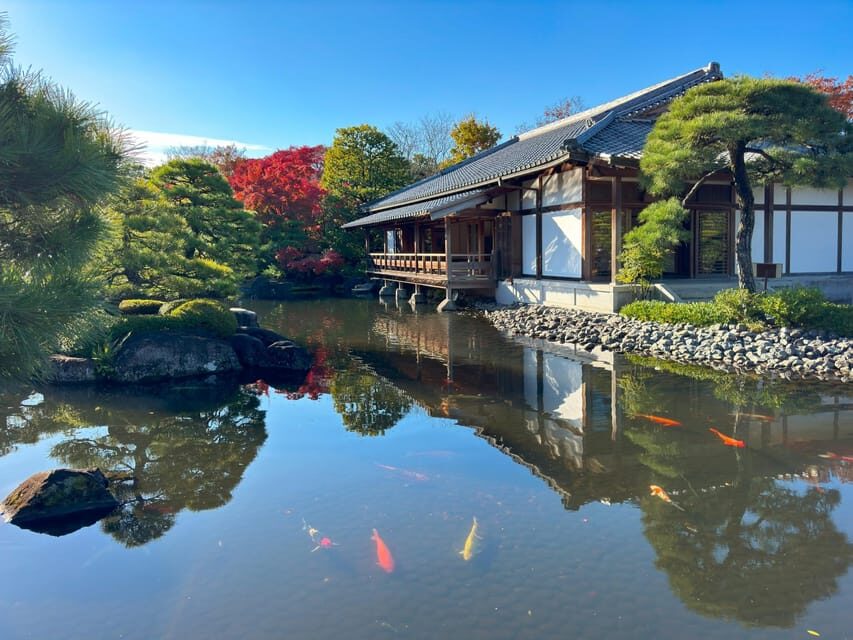
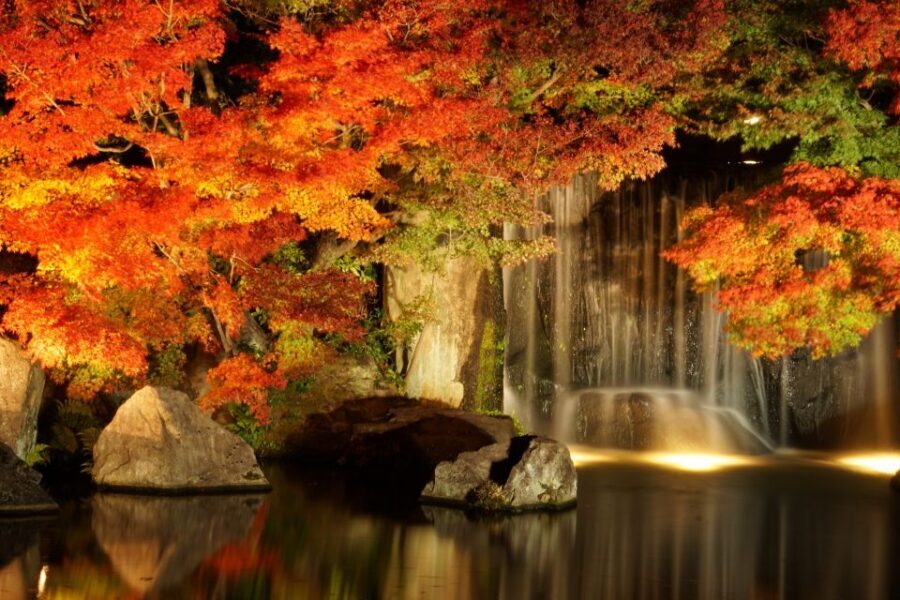
Right after Himeji, you’ll head to Koko-en, a garden that uses the castle as its backdrop. The idea is simple and smart: you don’t just visit a garden, you borrow the castle’s presence to make the garden feel bigger and more dramatic.
Koko-en covers about 10,000 tsubo (around 3.5 hectares) and includes nine distinct garden styles. Two features you’ll want on your radar:
- Oyakata-no-niwa, a pond-centered stroll garden
- Soju-an, a sukiya-style teahouse garden (with the tea room Soju-an)
A big reason people love this stop is atmosphere. It’s Edo-period mood with pathways designed for slow walking and picture-taking. It also has a practical advantage: even if you’re not a garden superfan, the castle backdrop gives you a built-in reason to pause at each viewing spot.
From the March 1 date onward, Koko-en entry requires a ticket you purchase yourself at the castle on the day. Before that date, entry fees are included as part of the tour.
You get about one hour here. That’s just enough to enjoy the different garden sections without rushing yourself into exhaustion.


Karoyashiki-ato Park lunch break: a historic reset between big sights
After the castle-and-garden double feature, the day gives you a small breather at Karoyashiki-ato Park, described as a historic site park. You’ll have lunch and about one hour total for this stop, with free time to walk and reset.
This portion of the day is valuable because it breaks the rhythm. Himeji’s steps can wear you down. Then Koko-en adds more wandering. Lunch here helps you avoid the common mistake: trying to “power through” Arima without feeling hungry or tired.
If you choose the lunch option, it’s served as a set meal. If you don’t, you can still use this time to refuel on your own, since you’ll have free time. Either way, think of this stop as the hinge point of the day.
Arima Onsen town time: old hot springs plus real snack wandering
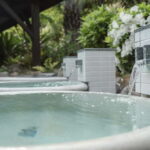
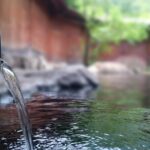
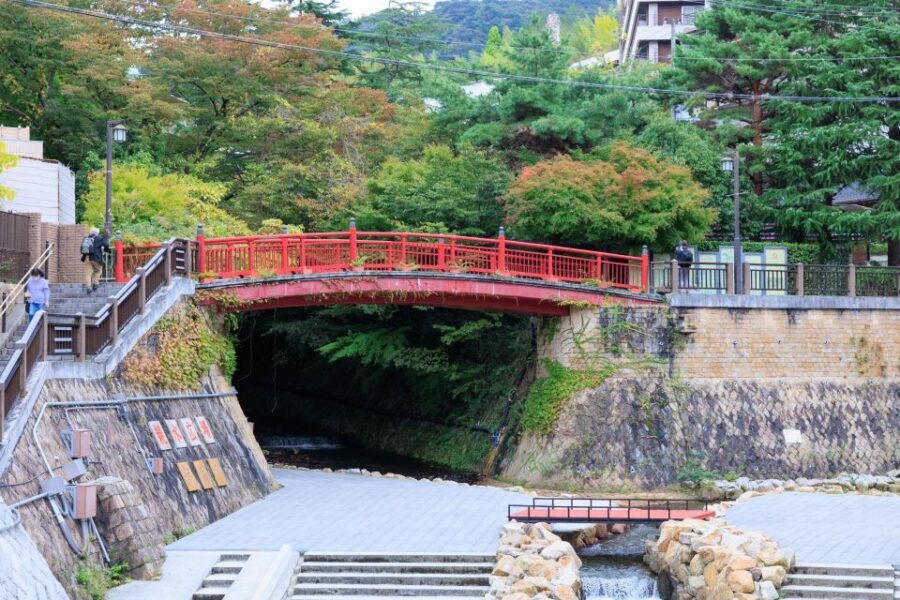
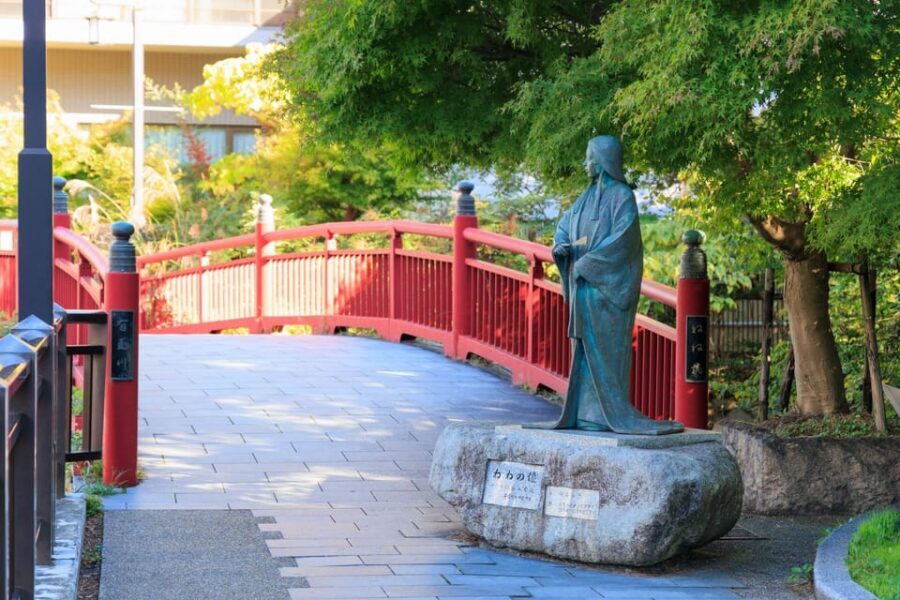
Arima Onsen sits in Kobe, Hyogo Prefecture, and it’s counted among Japan’s Three Oldest Hot Springs. The town experience is part of the magic: narrow, sloped streets make you walk along the hillside and discover little shops and treats.
Your onsen-town time is about 1.5 hours, with a break period and free time to explore on foot. This is where the tour feels most “you-time.” You can follow your pace, look for souvenirs, and snack casually without needing to stay with the guide every second.
Two snack names to keep in mind:
- Tansan Senbei from Mitsumori Honpo
- Kinsen-yaki pastries
Arima is also a good contrast to the castle-and-garden scenery. Instead of architecture and design, you’re in human scale streets and everyday local life.
Onsen admission is extra
Here’s the big cost detail: onsen entry isn’t included. The tour provides time to visit, but you’ll pay for bathing yourself at the onsen you choose (or based on whatever facility the plan assigns). If hot-spring time is the main reason you booked this tour, budget for that extra admission.
Reviews consistently describe the onsen portion as a relaxing highlight. It’s also one of the best ways to recover from all the walking before the view stop.
Mt. Rokko from 880m: Akashi Strait to Osaka Plain
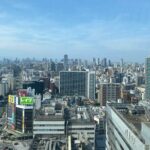
After Arima, the tour climbs to Mt. Rokko, with time at Rokkosan Garden Terrace near the summit. The elevation is around 880 meters, and the view span is the headline: you can see from the Akashi Strait across toward the Osaka Plain.
Your time is shorter here—about 30 minutes, plus a photo stop and scenic views on the way. That limited window means you should decide fast what you want: photos first, then shopping or a final wander if you still have energy.
The view is the whole point. Even if the road and weather make the scenery less perfect than you imagined, you still get a strong “from up here” perspective that connects Kobe, the strait, and the Osaka region. It’s the type of viewpoint that turns a long day into a memorable one.
Lunch with Senhime Gozen: if you want an easy, local-style tempura set
Lunch can be added as an optional tempura set meal, Senhime Gozen. The set includes:
- a mini anago (conger eel) rice bowl
- warm mini udon
- tender mini steak
- assorted tempura
- fresh seasonal fruit
This option is convenient because it removes decision fatigue in the middle of a busy day. You’re not hunting for a place that fits your schedule, and you get a meal designed as a set rather than a guessing game.
If you have dietary needs, it’s worth noting that vegetarian travelers in the reviews mentioned they skipped the meal option and still found alternatives around the castle area. Your best bet is to plan to eat around major stops if you’re not choosing the set lunch.
What you’re paying for at $53: value and the key extras
At about $53 per person for a 10-hour guided day trip, the value is mainly in the structure. You’re paying for air-conditioned transport, an English/Chinese-speaking guide, and coordinated stops that cover a lot of ground.
The other major value lever is ticket inclusion timing:
- Until Feb 28, Himeji Castle and Koko-en entry fees are included, along with Koko-en.
- From March 1, those entry fees are not included, and you’ll purchase them yourself on the day.
Then there’s the onsen: onsen admission is not included.
So the real budgeting equation is simple: your base price covers guidance and transport, but you’ll likely pay for interior/castle access (from March 1) and you’ll definitely plan for onsen entry.
How to enjoy this day tour without feeling rushed
Even with scheduled self-time, you’ll get the best results if you travel with a few habits.
First, pace your energy at the start. Himeji and Koko-en are the walking-heavy portions. Once you’re at Arima, slow down on purpose. That hot-spring town time is meant to feel calmer, not like another checklist.
Second, use the guide wisely. Reviews repeatedly highlight guides who help with practical things like photo spots, reminders on timing, and meal suggestions. If you have a question—where to stand for the best castle angle or what snack to try—ask early. A good guide can save you time later.
Third, bring a small plan for the onsen. Since onsen entry is extra, decide in advance whether you want a longer bath session or a quick soak. The tour’s schedule gives time for it, but you’re still working within a day.
Should you book this Osaka: Himeji Castle, Arima Onsen & Mt. Rokko day tour?
Book it if you want one day to cover the highlights that normally take multiple trips: Himeji Castle (UNESCO), Koko-en garden, Arima Onsen, and a high viewpoint from Mt. Rokko. It’s a good fit if you don’t want to figure out transport across several areas on your own.
Skip or reconsider if you hate walking and stairs, or if you were hoping for fully included hot-spring entry and fully covered admission every step of the way. Also be aware that the bus ride seat space may feel tight for taller travelers.
If you’re the type of traveler who likes a guided “spine” but still wants time to wander, this tour hits the sweet spot.
FAQ
What does the tour price include?
The tour includes an air-conditioned vehicle, an English/Chinese-speaking guide, and Himeji Castle & Koko-en entry fees only for tours valid until Feb 28. Lunch is included only if you select the option.
Are the hot spring (onsen) entry fees included?
No. Entry to the hot springs is not included, so you’ll need to pay for onsen access separately.
Do I need to buy tickets for Himeji Castle and Koko-en?
It depends on your tour date. Tours until Feb 28 include Himeji Castle & Koko-en entry fees. From March 1, you must purchase entry tickets yourself on the day (including a 2,500 JPY entry ticket for exploring castle structures).
What’s the lunch option, if I choose it?
The optional lunch is Senhime Gozen, a Japanese set meal with a mini anago rice bowl, warm mini udon, mini steak, assorted tempura, and seasonal fruit.
How long do you spend at each main stop?
You’ll typically get about 2 hours at Himeji Castle, 1 hour at Koko-en, 1 hour around Karoyashiki-ato Park (lunch and free time), 1.5 hours in Arima Onsen, and about 30 minutes at Mt. Rokko (plus time for scenic views on the way).
What languages are available for the guide?
The guide is available in English and Chinese. Depending on the day, different language groups may depart in the same vehicle.