REVIEW · OSAKA
Osaka: Kuromon Market Street Food Tour with Pro Local Guide
Book on GetYourGuide →Operated by Trip with Goku · Bookable on GetYourGuide
Kuromon makes Osaka taste like a friend. In a 2-hour walk with a pro guide through Kuromon Market, you’ll sample 4–5 local dishes and get stories about how the market and food scene work. The tradeoff: it’s not suitable for people with food allergies, and you’ll be on your feet for the full time.
I also like that the group stays small (max 10), so you can ask real questions and adjust the stops to your tastes. Expect detours beyond the stalls into places like Sennichimae Doguyasuji Shotengai and Hozenji Yokocho, where Osaka’s alley life shows up right after the food.
In This Review
- Key points before you go
- Entering Kuromon Market like you know the rules
- The 2-hour game plan (and why it works)
- Kuromon Ichiba Market: food sampling with real context
- Sennichimae Doguyasuji Shotengai: kitchenware street time
- Hozenji Yokocho: the alleyway atmosphere shift
- The guide makes the difference (and it can be a friendly one)
- Price and value: what $51 buys in the real world
- Logistics that actually matter: meeting points, cash, and walking
- Who this tour is best for
- Should you book the Kuromon Market street food tour?
- FAQ
- How long is the Kuromon Market street food tour?
- How many food samples are included?
- What’s included in the tour price?
- Where do we meet, and where do we end?
- What language is the tour in?
- Can the tour accommodate dietary requests?
Key points before you go
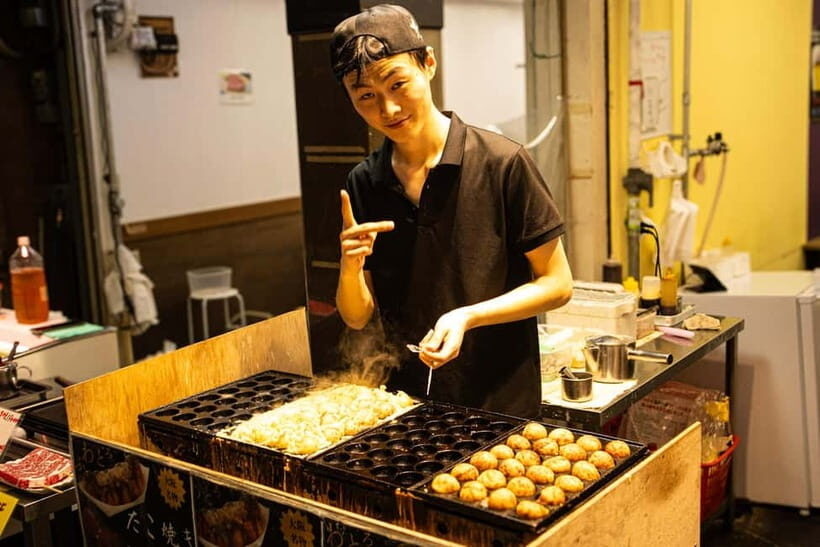
- 4–5 dish tastings geared to what Osaka is known for, like yakitori skewers, takoyaki, and grilled scallops
- Small group, max 10 so the guide can respond to your interests instead of herding people
- Kuromon Market tour with market-food culture and history explained in plain English
- Sennichimae Doguyasuji Shotengai for kitchenware and the feel of a traditional shopping street
- Hozenji Yokocho for an atmosphere shift into old-school alley lanes
- Two meeting-point options: ピカソ日本一ビル or a Sumitomo Mitsui Banking Corporation ATM
Entering Kuromon Market like you know the rules
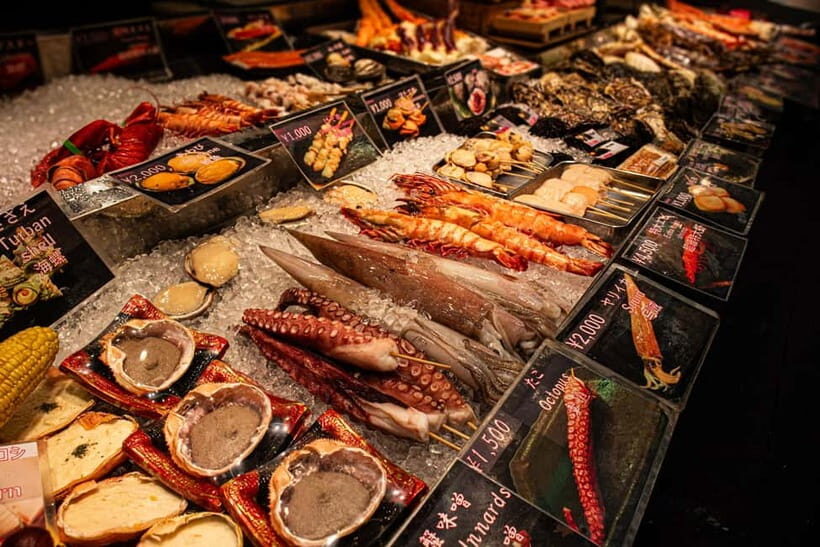
Kuromon Market is the kind of place where eating is easy—but knowing where to look is the real trick. That’s why I like this tour format: you’re walking with a local guide who understands what’s worth your time, what’s typical, and how to behave in and around busy food stalls.
The biggest value here isn’t just the food. It’s the guidance. You’ll learn market etiquette and how Osaka’s food culture formed around these kinds of gathering spots. And when someone can explain what you’re tasting (and why it matters), every bite lands harder.
Just remember the “not for allergies” point. The tour is built around food samples and market stops, and the setup isn’t designed for guests with allergies.
You can also read our reviews of more food & drink experiences in Osaka

The 2-hour game plan (and why it works)
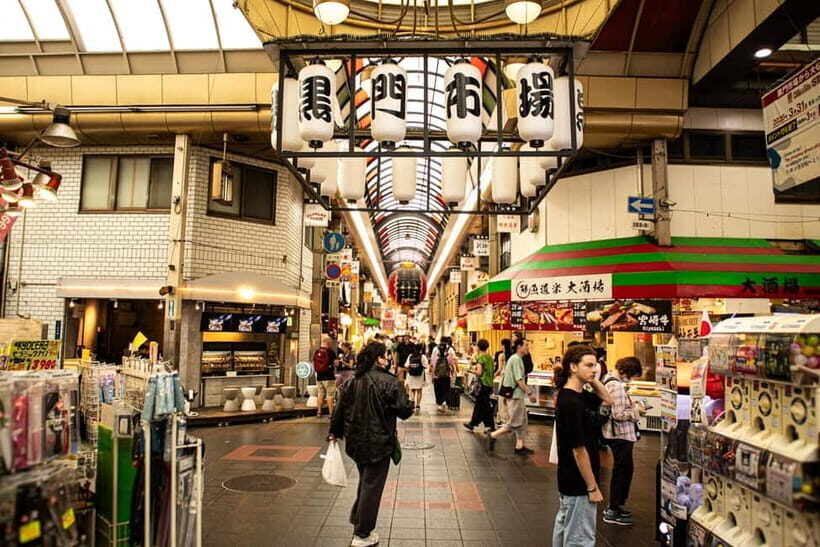
This is a tight 2-hour walk, so it’s designed to fit into a normal sightseeing day without turning into a half-day endurance event. You’ll start at one of two meeting points, meet your guide, then move through the market area and into nearby streets.
Here’s what makes the pacing smart for you:
- You get 4–5 samples rather than just walking past stalls and hoping you’ll pick right.
- The route adds two extra stops that aren’t only about food: Sennichimae Doguyasuji Shotengai and Hozenji Yokocho.
- You don’t lose time switching neighborhoods on your own. Your guide handles the “which street next” choices.
You’ll end back at one of the drop-off points that matches your start option (ピカソ日本一ビル or the Sumitomo Mitsui Banking Corporation ATM).
Kuromon Ichiba Market: food sampling with real context
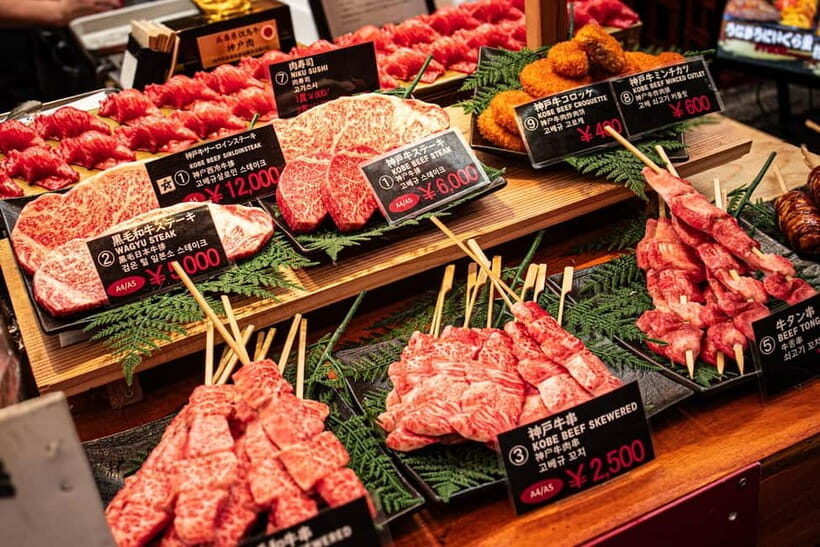
Kuromon Market is often described as Osaka’s Kitchen, and you feel that fast when you’re surrounded by stalls and smoke and the smell of grilling. In this tour, the market visit is the core experience, where you get your main food tastings and your guide explains how market food works in everyday Osaka life.
What you can expect to taste includes Osaka staples such as yakitori skewers, takoyaki, and grilled scallops. The specific stalls and samples can vary, but the point stays the same: you’re trying a handful of what Osaka does well, not random snacks that could be found anywhere.
Why this part is worth paying for:
- A guide can steer you toward good choices quickly, without you translating, comparing menus, and guessing.
- Market explanations help you understand what you’re seeing—why some stalls feel “signature,” why certain flavors are tied to the city, and how these neighborhoods function as food systems, not just attractions.
Practical tip: come hungry. The tour is about those included tastings, and you’ll enjoy it more if your stomach isn’t already full from an early meal.
Sennichimae Doguyasuji Shotengai: kitchenware street time
After the food focus, the tour shifts gears toward shopping streets and everyday Osaka culture. Sennichimae Doguyasuji Shotengai is where you’ll notice a different kind of market energy: less about eating right away, more about the objects that support cooking and daily life.
This stop matters because it connects the dots. Osaka isn’t only about what’s on the grill. It’s also about the tools and traditions behind the flavors—things like kitchenware that local cooks would actually want.
You’ll also get help with souvenir ideas from your guide. Even if you’re not planning to buy much, I find it useful to learn what’s worth carrying home and what’s just noise.
If you like wandering streets where locals shop rather than only chasing landmark photos, this is a strong mid-tour break.
Hozenji Yokocho: the alleyway atmosphere shift
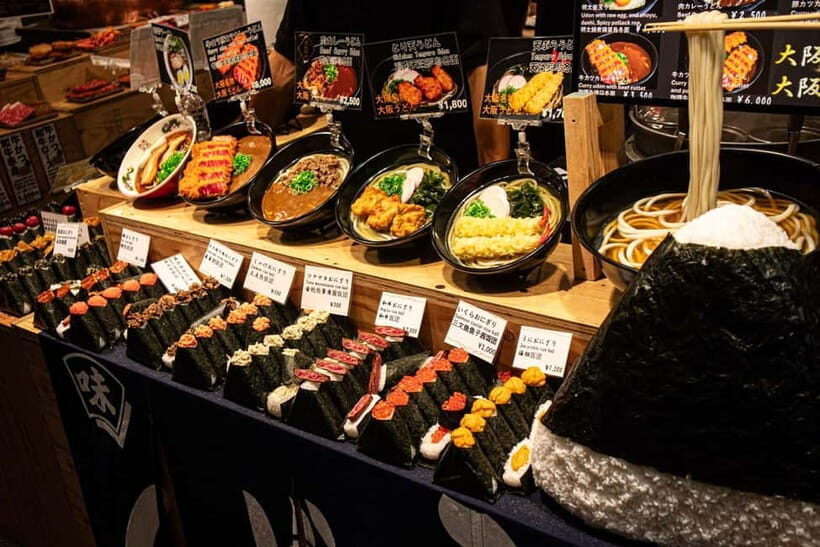
Then comes Hozenji Yokocho, a traditional alley lane that changes the mood in a hurry. One minute you’re in market mode. The next, the alley vibe feels more like old Osaka—tight lanes, small spaces, and that “you’re in the story” feeling that only works when you’re not doing it alone.
This stop is less about learning ingredients and more about understanding space—how these lanes create community around food. It’s a nice counterbalance if you think street-food tours can become repetitive. You’re still food-close, but you’re also seeing how Osaka organizes its social life around small places.
If you like the idea of photography and atmosphere, bring your camera for this part. It’s also a good moment to slow down, ask questions, and let the day’s food settle.
You can also read our reviews of more tours and experiences in Osaka
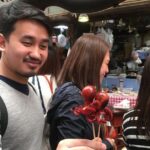

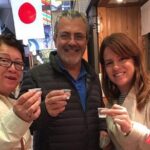
The guide makes the difference (and it can be a friendly one)
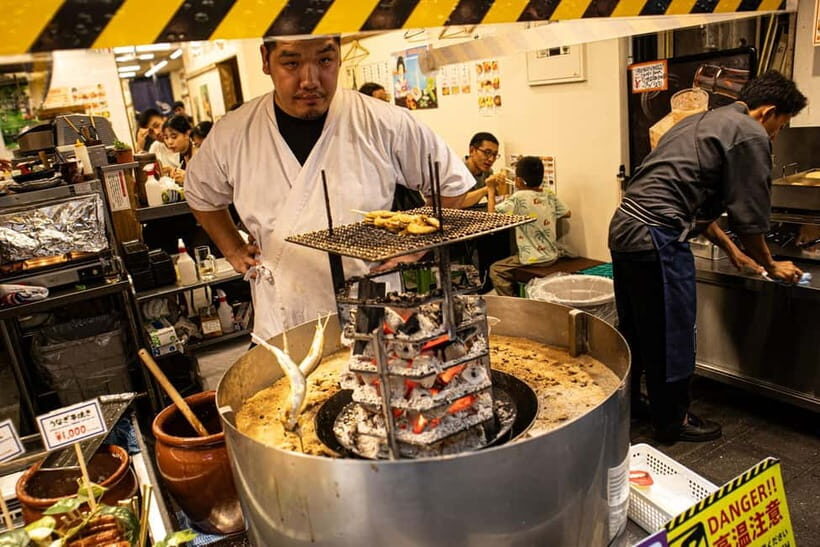
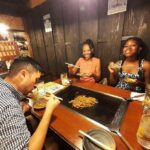
The tour runs with a professional Japanese guide, and the experience leans heavily on cultural and food-history context plus etiquette. You’re not just tasting. You’re learning how to read the room—how markets work, how people order, and how to interact respectfully.
Language-wise, the tour is conducted in English, and additional languages may be available on request, including French, Spanish, Russian, and Japanese.
And yes, the human factor shows up in the feedback. One guest highlighted a guide named Yuna for strong local knowledge and the ability to flex the route around individual likes and dislikes. Another mentioned a guide named Goku and praised how the tour felt great not only for the food, but for the rapport and recommendations. That’s the main thing you want from a guide: competence plus an easy personality.
If you’re the type who likes asking why something tastes a certain way, you’ll probably enjoy this.
Price and value: what $51 buys in the real world
At $51 per person for about 2 hours, this is a fair street-food price for Osaka—especially because the tour includes:
- The guide
- A market visit
- Visits to Sennichimae Doguyasuji Shotengai and Hozenji Yokocho
- 4–5 local dish samples
What isn’t included is just as important:
- Transportation to and from the meeting point
- Additional food and drinks
So you’re paying for direction, translation help (where needed), and access to the “right stalls” decision-making. If you tried to do this on your own, you’d spend time figuring out what to eat, where to stand, and how to order without slowing everything down. This tour compresses that work into a guided route and keeps you moving at a comfortable pace.
My rule of thumb: if you want a simple, low-stress way to eat well in Kuromon, this kind of guided tasting tour is usually worth it—because the market is sensory overload for first-timers.
Logistics that actually matter: meeting points, cash, and walking
You’ll meet at one of two options, and your starting point can affect where you begin your walk:
- ピカソ日本一ビル
- Sumitomo Mitsui Banking Corporation ATM
Drop-off locations match the same two options.
Bring:
- Comfortable shoes (you’ll be walking for the full 2 hours)
- Camera
- Cash
Cash matters because this tour doesn’t include extra food and drinks. You might want to buy something small during the walk or later, and the market and alley streets can be cash-friendly.
Dietary requests can be accommodated, which is helpful if you have preferences. But if you have food allergies, this is explicitly not suitable—so plan a different food experience that can truly handle allergy requirements.
Who this tour is best for
This is a great fit if you:
- Want Osaka street food without the guesswork
- Enjoy market atmosphere plus a bit of shopping street culture
- Like small-group experiences (max 10) where you can ask questions
- Want a quick 2-hour plan that doesn’t steal your whole day
It may not be for you if:
- You have food allergies
- You don’t like walking or standing in market areas for a short period
Should you book the Kuromon Market street food tour?
I’d book it if your goal is straightforward: eat well in Osaka with a guide who can explain what you’re tasting and why it’s worth your attention. The $51 price makes sense when you compare it to the value of a professional local guide plus multiple included samples and the added alley and kitchenware street stops.
If you want to eat like you actually understand what you’re eating, this tour gives you that. And if you’re happy eating several bites over two hours, you’ll get a satisfying mix of market food energy and quieter alley atmosphere.
FAQ
How long is the Kuromon Market street food tour?
It’s a 2-hour walking tour.
How many food samples are included?
You’ll have 4–5 curated samples of local dishes as part of the tour.
What’s included in the tour price?
Included are the 2-hour street food walking tour, a professional guide, visits to Kuromon Market, Sennichimae Doguyasuji Shotengai, and Hozenji Yokocho, plus the food samples.
Where do we meet, and where do we end?
You meet at one of two possible locations (ピカソ日本一ビル or a Sumitomo Mitsui Banking Corporation ATM). Drop-off is at one of those same options.
What language is the tour in?
The tour is conducted in English, and French, Spanish, Russian, or Japanese may also be available upon request.
Can the tour accommodate dietary requests?
Dietary requests can be accommodated, but the tour is not suitable for people with food allergies.