REVIEW · OSAKA
Osaka Early Morning Tour with English-Speaking Guide Dotonbori
Book on Viator →Operated by GuideMe Japan · Bookable on Viator
Osaka wakes up fast on this walk. You’ll get a small group feel (max 8) with an English-speaking guide, then start tasting your way through the city with a street food item and a drink built into the tour. Along the route, guides like Shizuka and Yusuke bring local context, so stops feel more like stories than checkboxes.
One thing to note: Osaka Castle entry isn’t included, so you’ll spend time on the grounds and viewpoints, not inside the keep. If you’re hoping to go upstairs, you’ll want to plan for that separately.
In This Review
- Key highlights at a glance
- A 4-hour early-start plan that actually covers the good stuff
- Meeting at Osaka Castle Park, then finishing at the Glico sign
- Osaka Castle grounds: iconic views without the extra ticket pressure
- Shinsekai: old-school Osaka vibe, right next to modern shopping
- Kuromon Market: the Osaka Kitchen moment with your included tasting
- Nipponbashi Denden Town: anime, gaming, and electronics without the confusion
- Sennichimae Doguyasuji: kitchenware street for chef tools and gadgets
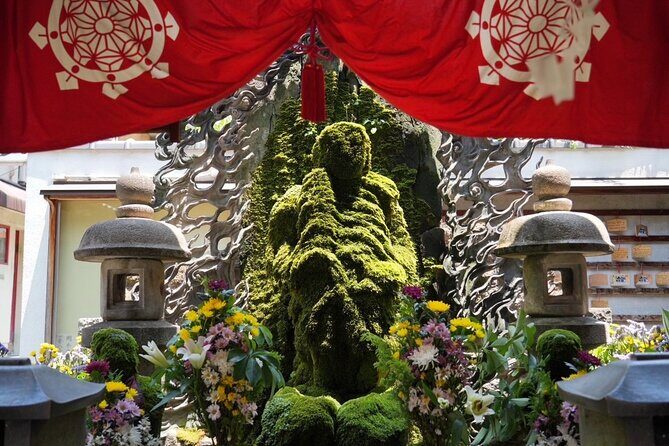
- Hozen-ji Temple: a quiet, mossy pause in the middle of Osaka noise
- Dotonbori canal finale: Ebisu Bridge, Glico sign, and photo-ready Osaka
- English-speaking guide value: pacing, stories, and real flexibility
- Price and what you’re really paying for
- Getting around: trains happen, so bring the right transit mindset
- Who this tour is best for (and who should tweak expectations)
- Should you book this Osaka early-morning tour?
- FAQ
- FAQ
- How long is the Osaka early morning tour?
- What time does the tour start?
- Where do I meet the guide?
- Where does the tour end?
- Is an English-speaking guide included?
- What food and drinks are included?
- Are entrance tickets included for Osaka Castle or other stops?
- Is public transportation included in the price?
- What is the group size limit?
- Can I cancel and get a refund?
Key highlights at a glance
- Max 8 people keeps questions easy and the pace relaxed
- Osaka Castle grounds plus photo stops without buying extra attraction tickets
- Kuromon Market food time with a tasting item and drink included
- Anime, games, and electronics in Nipponbashi Denden Town
- Hozen-ji Temple and moss-covered Fudo Myo-o statue for a quieter reset
- Dotonbori Canal finale at Ebisu Bridge and the Glico running man sign
A 4-hour early-start plan that actually covers the good stuff
This tour is built for people who want an Osaka orientation fast. Four hours is short enough that it doesn’t drain your entire day, but long enough to hit several distinct neighborhoods with a guide steering the route.
The timing matters. Starting at 9:30 am helps you avoid the thickest crowds at the market-adjacent spots later in the day. It also gives you momentum for the rest of your itinerary after the tour ends in the middle of Dotonbori, where you can keep wandering (or stop for a second snack).
And you’re not stuck with an assembly-line group. The tour caps out at 8 travelers, which tends to make the experience feel like a guided walk with friends rather than a race to the next photo angle. In the best moments, your guide can slow down when someone has questions—or speed up when everyone is moving comfortably.
You can also read our reviews of more guided tours in Osaka

Meeting at Osaka Castle Park, then finishing at the Glico sign
You meet at a Starbucks at Osaka Castle Park (JO-TERRACE OSAKA area). That’s a smart pick. You’re anchored right where the day starts, and you don’t waste time hunting for a meeting dot on side streets.
The tour ends on the Dotonbori side, in front of the Glico running man sign. This is one of those practical details that changes everything. Dotonbori is a natural hub for food, nightlife atmosphere, and easy taxi/subway connections. If you need help getting back to Namba Station, the guide can assist.
One extra benefit: the tour uses a mobile ticket, so you’re not juggling paper tickets or losing them in a daypack. It’s a small thing, but small things matter when you’re moving quickly.
Osaka Castle grounds: iconic views without the extra ticket pressure
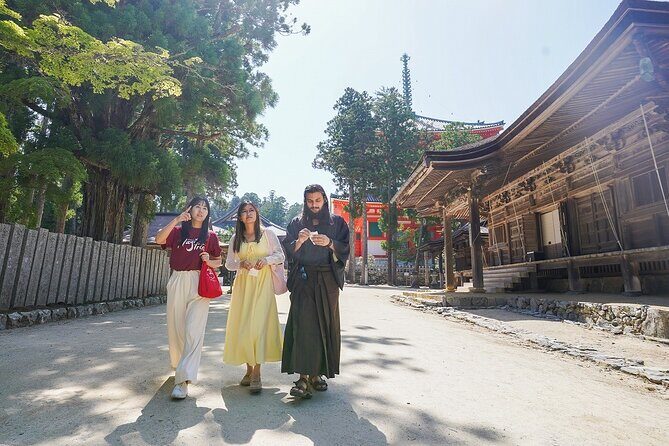
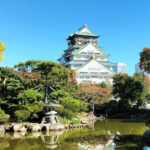
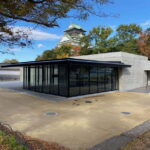
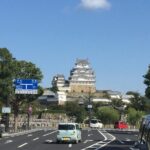
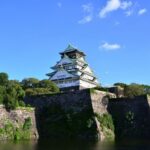
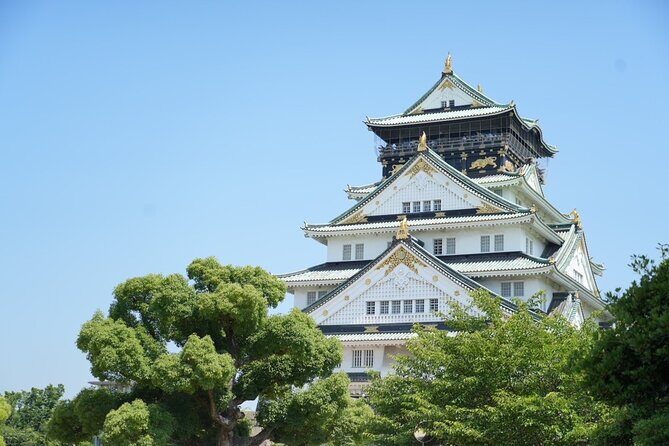
Stop 1 is Osaka Castle. It’s hard to overstate how much this location frames Osaka’s story. The castle was built in the late 16th century and is tied to the era of unification in Japan. Even if you don’t go inside, the grounds give you real structure: walls, angles, gardens, and the kind of open sightlines that make the area feel grand.
Here’s the key catch: castle admission isn’t included. So your time is spent walking the perimeter and absorbing the architecture and views rather than entering the main tower areas. That’s fine for many people—especially if you like outdoor wandering and photo stops—but it’s a mismatch if your priority is museum-style castle interiors.
If you’re the type who wants the inside experience, you can still do it. Just treat it as a separate add-on before or after your walking tour window. The tour itself gives you the orientation and the signature Osaka Castle look.
Shinsekai: old-school Osaka vibe, right next to modern shopping
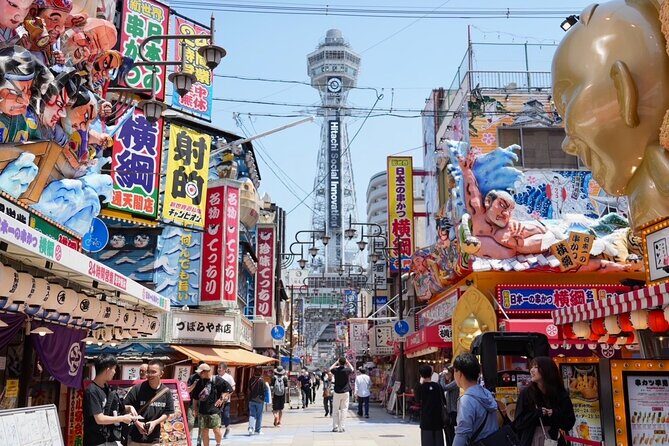
After the castle, you head to Shinsekai, a district famous for its nostalgic charm. Think: a neighborhood that feels like it remembers an older Osaka while still doing its daily business with shops and eateries.
This is a good stop for two reasons:
- It breaks up the day after the castle area, so you’re not only looking at history in stone.
- It gives you a sense of local “life in motion,” which helps when you later hit Dotonbori and compare the styles.
Also, it’s short. About 30 minutes. That keeps your energy for the food stop and the pop-culture section that comes next.
Kuromon Market: the Osaka Kitchen moment with your included tasting
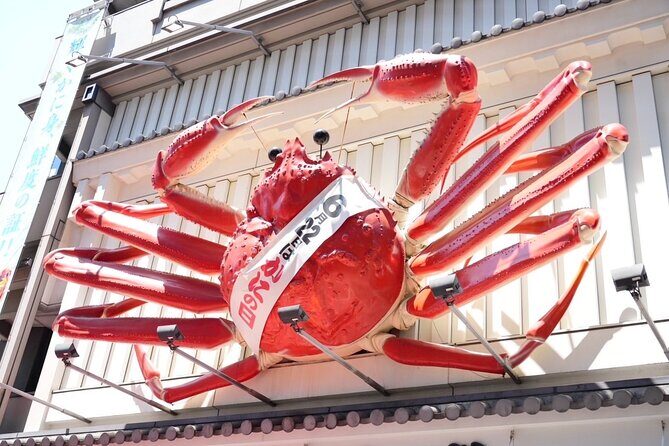
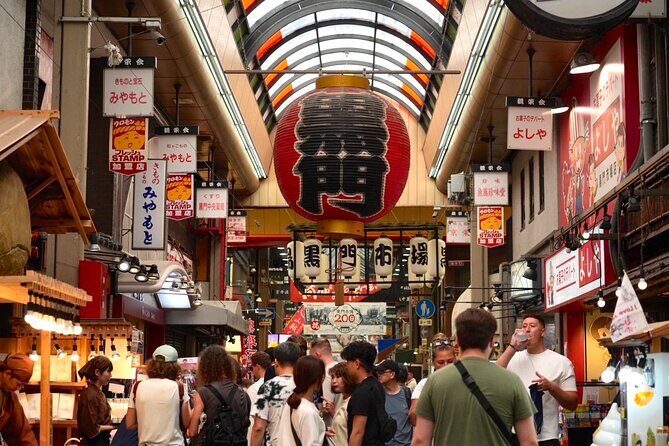
Then comes Kuromon Market, often called Osaka’s Kitchen. This stop is one of the main reasons the tour works for food lovers. You’ll see what Osaka does well: lots of quick bites, fresh ingredients, and vendors who know exactly how to move product.
You get a street food item included, plus one drink (alcoholic or non-alcoholic). That’s a nice value angle because market sampling can add up fast if you’re buying everything yourself.
What I like about this setup is that your guide can help you choose something that fits your comfort level. You’re not stuck playing guessing games with ingredients or portion size. And since your included drink is part of the package, you don’t feel nickel-and-dimed while you’re standing over a counter holding chopsticks and deciding.
One practical tip: come with a light appetite. Even though the tour is only about four hours, the market stop is high-impact. Plan for it to be your most filling moment.
You can also read our reviews of more tours and experiences in Osaka
Nipponbashi Denden Town: anime, gaming, and electronics without the confusion
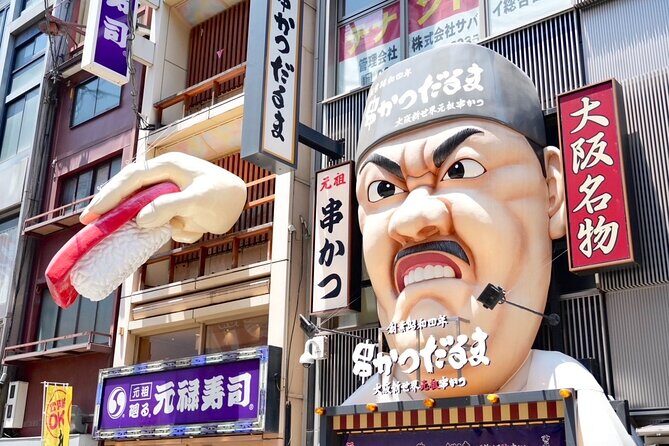
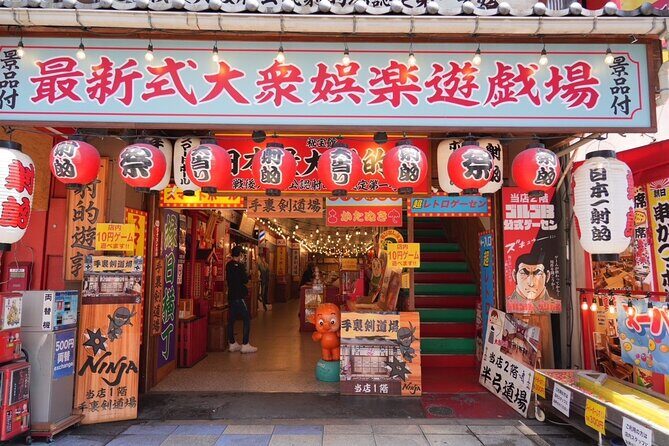
Next you’ll head to Nipponbashi Denden Town, a favorite for people who love anime culture, gaming, and electronics. This district is a lot easier to enjoy with a guide because the layout can feel like a maze of narrow lanes and specialty shops.
This stop is about 20 minutes, so it’s not meant for deep shopping binges. It’s meant to help you:
- find the main streets and store clusters you’ll want to return to later, and
- understand what the area is known for beyond the first storefront you see.
If you’re a fan of Japanese pop culture, this is a strong contrast to the more traditional feel of Osaka Castle grounds and temple alleys. You go from heritage to fandom quickly, which makes the tour feel like a real snapshot of the city.
Sennichimae Doguyasuji: kitchenware street for chef tools and gadgets
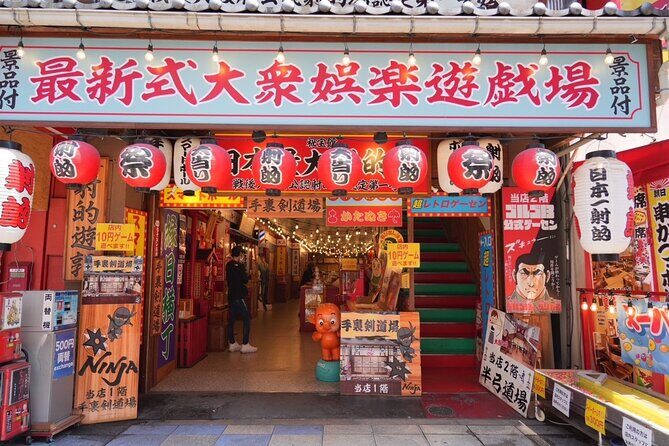
After Denden, you’ll walk through Sennichimae Doguyasuji Shopping Street, the culinary-oriented shopping lane packed with kitchenware and gear. This is a fun stop because it’s practical in a way tourists often skip.
Even if you don’t plan to buy anything huge, it’s interesting to browse:
- chef tools
- cooking gadgets
- kitchen-related oddities that make you think, I could use that at home
It’s also short—around 15 minutes—so you get the vibe without getting trapped in a long shopping detour.
Hozen-ji Temple: a quiet, mossy pause in the middle of Osaka noise
Then the tour slows down a bit at Hozen-ji Temple. This is where the day feels more human. You get traditional stone paths and the calm that comes from being in a smaller, enclosed-feeling pocket of the city.
The standout here is the moss-covered statue of Fudo Myo-o. The temple is famous for that specific visual, but what you’ll actually enjoy is the contrast: earlier you were thinking about food counters and store signage; now you’re seeing cobblestone alleys and a place that feels made for quiet.
It’s about 15 minutes, which is perfect. You get the moment without losing the thread of the day.
Dotonbori canal finale: Ebisu Bridge, Glico sign, and photo-ready Osaka
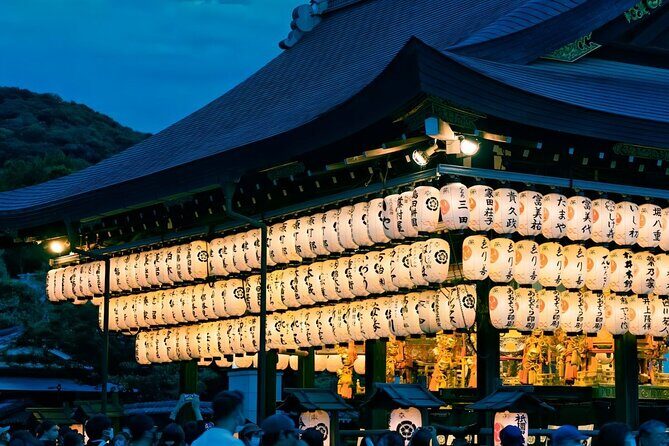
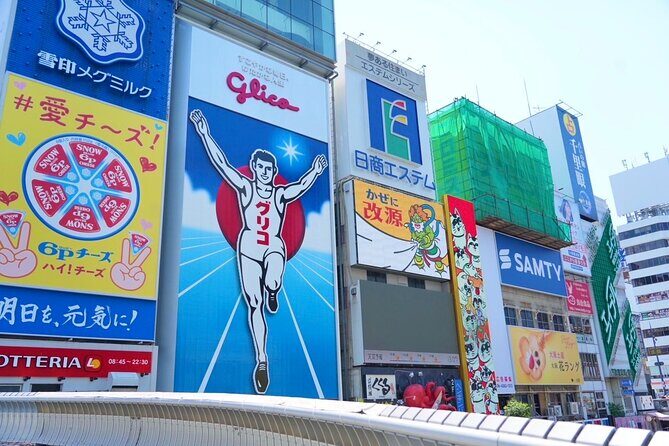
Your last stop is Dotonbori Tsuribori, centered on Ebisu Bridge with the iconic Glico running man sign. This is one of Osaka’s signature landmarks, and it lands well at the end of the tour because it helps you wrap the city in a single frame.
From here, you’ll get views over the Dotonbori canal area. It’s the kind of spot where you can look back and realize you’ve covered a lot in just four hours: castle grounds, old-neighborhood streets, a major food market, anime shopping lanes, a temple pause, and then a neon-bright canal scene.
Your guide ends the tour right in front of the Glico sign, so you’re not left wandering around trying to find where everyone disperses.
English-speaking guide value: pacing, stories, and real flexibility
The tour’s biggest advantage is the human part. With an English-speaking guide, you’re not just seeing places—you’re getting the “why” that makes the route stick.
The guides associated with this experience have a strong reputation for two things:
- clear explanations that make Osaka history and districts easier to understand, and
- a pace that doesn’t feel like you’re being rushed for someone else’s schedule.
You’ll also notice the guides can adapt. Some people have shared that the route was timed in a way that didn’t feel hard on their bodies, including adjustments for a recent knee injury. If you have any mobility concerns, tell your guide at the start. Small adjustments—short breaks or a slightly different walking rhythm—can make the whole tour feel more comfortable.
I also like that the guide helps with food choice. Market food is fun, but only if you’re picking something you’ll actually enjoy. Having guidance here turns “one street food item” from a random gamble into a real win.
Price and what you’re really paying for
At about $60.78 per person (with a mobile ticket), the value comes from what’s included—not just what’s covered.
Here’s what you get for that price:
- an English-speaking guide for the full walk
- one Osaka street food item
- one drink (alcoholic or non-alcoholic)
- a structured route across multiple neighborhoods in around four hours
What’s not included:
- public transport fare (listed as ¥430 per person)
- entrance tickets for attractions (and specifically, Osaka Castle admission isn’t included)
So yes, you’ll still need a small budget for transit. But your guide route helps you avoid wasting time, and you’re paying for that guidance plus the food and drink.
If you’re the kind of traveler who hates planning—who just wants to wake up, follow a route, and stop thinking—this price starts to look very reasonable.
Getting around: trains happen, so bring the right transit mindset
Even though it’s a walking tour, the neighborhoods are separate enough that you may use transit during the day. A common tip from people who’ve done this route is to have an IC card ready (SUICA/ICOCA style) or an all-day train pass, because you’ll be moving between areas.
Also, plan your shoe choice like it’s a full morning of walking. You’ll go from Osaka Castle Park to Shinsekai, then through market streets and pop-culture districts before ending in Dotonbori. Comfortable walking shoes aren’t optional. You don’t want sore feet while you’re trying to enjoy food, photos, and browsing.
Who this tour is best for (and who should tweak expectations)
This tour is a strong fit if you:
- want a quick Osaka overview without building a route yourself
- care about both food and district variety (castle + markets + anime + temple)
- like small groups and clearer context from an English guide
- want to end in Dotonbori, ready for your next meal or night plans
It may be less perfect if you:
- plan your whole day around going inside Osaka Castle (since admission isn’t included)
- want a lot of free time to shop for electronics or kitchenware (those stops are short by design)
- hate any transit segments and only want pure walking
If your goal is the castle tower interior, you can still book this. Just add the inside visit as an extra step, rather than expecting it from the tour.
Should you book this Osaka early-morning tour?
Yes, I’d book it if you want an efficient, guided introduction to Osaka that mixes landmark viewpoints with real neighborhood flavor. The included street food item and drink make the morning feel like more than sightseeing, and the small group size keeps it from feeling chaotic.
Just go in knowing the trade-off: you’ll experience Osaka Castle from the grounds, not via included entry tickets. If that matches your priorities, this is a great way to start (and you’ll end in the right place to keep your day going).
FAQ
FAQ
How long is the Osaka early morning tour?
The tour runs about 4 hours (approx.).
What time does the tour start?
The start time is 9:30 am.
Where do I meet the guide?
You meet at Starbucks Coffee – Osaka Castle Park, near Ōsakajō, JO-TERRACE OSAKA.
Where does the tour end?
The tour ends in Dotonbori, in front of the Glico sign. If needed, the guide can assist you heading to Namba Station.
Is an English-speaking guide included?
Yes. The tour includes an English-speaking guide.
What food and drinks are included?
You get one Osaka street food item and one drink (alcoholic or non-alcoholic).
Are entrance tickets included for Osaka Castle or other stops?
No. Entrance tickets are not included. Osaka Castle specifically lists admission ticket not included. Other stops listed are free.
Is public transportation included in the price?
No. Public transportation fare is ¥430 per person and is not included.
What is the group size limit?
The tour has a maximum of 8 travelers.
Can I cancel and get a refund?
Yes. Free cancellation is available up to 24 hours before the experience’s start time for a full refund.