REVIEW · OSAKA
Nara Early Morning Tour (Osaka Departure Option)
Book on Viator →Operated by GuideMe Japan · Bookable on Viator
Quiet temples beat the crowds. This early-morning Nara walk is built for great photos and a calmer feel, hitting the big sights before the afternoon stampede. I love that you get a small-group guided experience (up to 8 people), and I also like that the plan is over by before noon, so you’re not stuck all day.
One thing to keep in mind: it’s a walking tour using public transportation, with about 10,000 steps, and you’ll return on your own from Nara (the Osaka-to-Nara transport is included, but the way back isn’t). If you’re the type who hates walking or dislikes planning onward transportation, this one may feel like too much.
In This Review
- Key highlights you’ll feel fast
- Why Starting Nara Before the Afternoon Crowds Matters
- Osaka Meeting Point: A Simple Start With Real Time-Saving
- Kofuku-ji Temple: The Five-Storied Pagoda Comes First
- Kasuga Grand Shrine Lanterns: What Makes This Stop Memorable
- Nara Park and the Deer: Sweet, Sacred, and Surprisingly Photo-Friendly
- Todaiji Temple and the Great Buddha: Budget the 800 Yen
- Walking 10,000 Steps: How to Make the Tour Feel Comfortable
- Your Guide Makes It Worth Paying Attention
- Finishing at Kintetsu Nara Station Before Noon
- Value Check: What You Really Get for $87.96
- Who This Nara Morning Tour Suits Best
- Should You Book This Early Nara Tour From Osaka?
- FAQ
- How long is the Nara Early Morning Tour from Osaka?
- Where do I meet, and where does the tour end?
- What’s included in the tour price, and what costs extra?
- Is transportation private, or do we use public transit?
- How many people are in a group?
- About how much walking should I expect?
- What main places does the tour visit in Nara?
- Does the tour end early enough to make other plans?
- What’s the cancellation policy for a full refund?
Key highlights you’ll feel fast
- Start early for photos at Kofuku-ji, Kasuga Shrine, Nara Park, and Todaiji before the worst crowd surge
- Small group size (max 8) keeps the pacing easier than big bus tours
- Guide-led clarity with English-speaking hosts, including guides like Koh, Lin, and Soichiro in prior departures
- Lanterns at Kasuga Grand Shrine with about 3,000 stone and bronze lanterns
- Most admissions are handled or free (Kofuku-ji and Nara Park are free; Todaiji is 800 yen)
Why Starting Nara Before the Afternoon Crowds Matters
Nara is beautiful, but the afternoon can get crowded in a hurry. The whole point of this Osaka departure is timing: you reach the main spots while the light is gentler and the paths are easier to walk.
That early schedule changes how the temples feel. Instead of squeezing past people, you can actually stop, look up, and take photos without playing bumper cars.
I also like the structure for first-timers. You get a clear “greatest hits” loop—temples, a major shrine, deer time, then the Great Buddha—so you’re not guessing what’s worth your energy.
The other practical win: the tour wraps up before noon. You’ll still have time to wander more of Nara on your own, or even pivot into Osaka or Kyoto later.
You can also read our reviews of more tours and experiences in Osaka

Osaka Meeting Point: A Simple Start With Real Time-Saving
The meeting point is the Osaka Tourist Information Center, at Osaka Station’s central concourse (JR大阪駅中央コンコース). Getting started from a major hub is convenient, especially if you’re already near Umeda.
You’ll also use a mobile ticket. That’s one less thing to juggle before you’re walking, and it helps the day feel smooth from the first minute.
This is not a “private vehicle” tour. You’ll travel via public transportation as part of the plan, and that affects pacing. In practice, it means you’ll want to show up on time and be ready to move when the group moves.
One more thing I’d treat seriously: latecomers won’t get a refund. So I’d rather you arrive a bit early, take a breath, and confirm you’re in the right place than gamble with the clock.
Kofuku-ji Temple: The Five-Storied Pagoda Comes First
Your day begins at Kofuku-ji Temple, tied to the capital era in 710. That early connection matters because it sets the theme of the whole morning: this isn’t just pretty scenery, it’s Japan’s older temple world in one concentrated route.
The big draw here is the five-storied pagoda. It’s described as the second tallest wooden pagoda in Japan, which makes it a “look up and take it in” kind of stop. If you like architectural views, this is one of the best early targets.
Admission at Kofuku-ji is listed as free, which is nice when you’re trying to manage costs. And because this is early in the tour, you’re more likely to get photos without needing to fight for a clear angle.
Practical tip: give yourself a moment before you start shooting. You want your brain to switch from “commute mode” to “temple mode,” so you don’t rush past details just to get the perfect picture.
Kasuga Grand Shrine Lanterns: What Makes This Stop Memorable
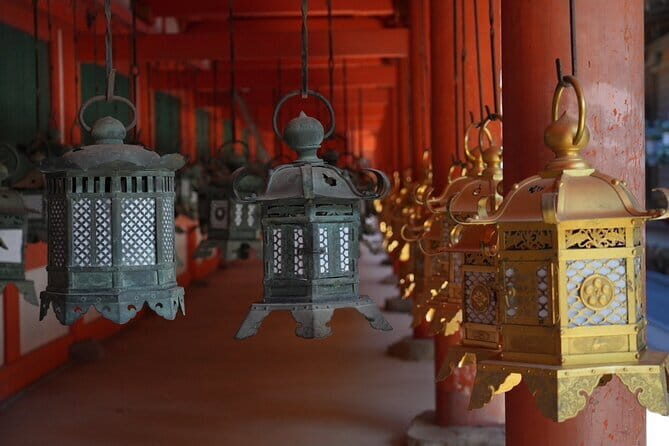
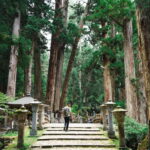
Next comes Kasuga Grand Shrine, famous for its lantern collection. The shrine is known for lanterns donated by worshippers, with about 3,000 stone and bronze lanterns.
That number helps you understand why this stop feels special. It’s not just one dramatic object—it’s a whole atmosphere created by repetition. Early timing helps here because the shrine paths can tighten up when crowds arrive.
Admission is listed as included, so you don’t need to plan for an extra ticket purchase at this point. That keeps the day’s cost predictable, especially compared with many tours where every stop charges separately.
If you’re the type who loves “small details,” Kasuga is the kind of place where you notice more as you slow down. The lanterns aren’t just decoration; they connect visitors to long-running traditions and local devotion.
Nara Park and the Deer: Sweet, Sacred, and Surprisingly Photo-Friendly
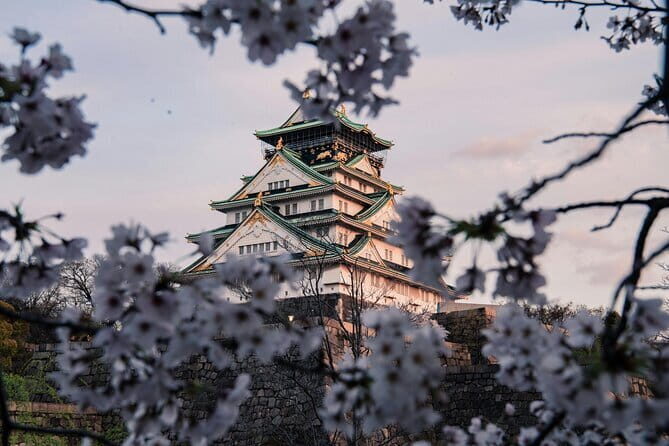
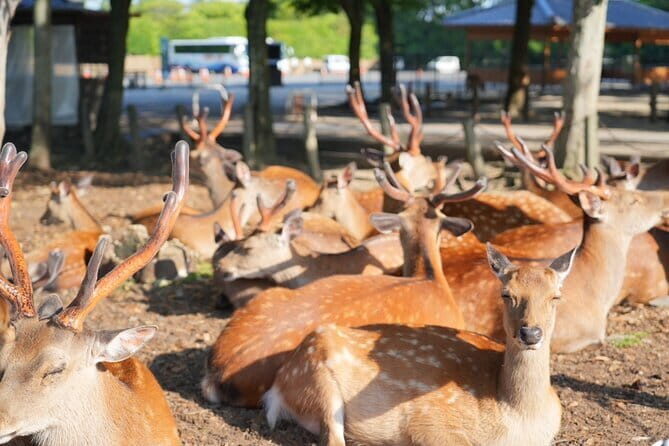
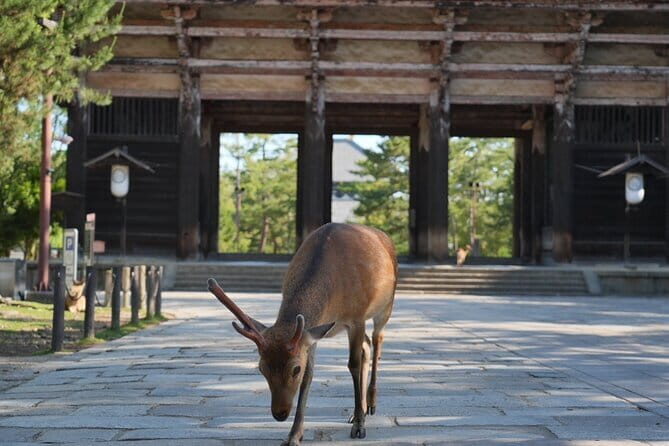
Then you hit Nara Park, home to thousands of wild deer. These deer are described as sacred in local tradition, linked to a story about one of the gods from Kasuga Shrine riding the deer to Nara.
Yes, they’re cute. But what makes this stop work on a tour is timing and pacing. When you come early, you’re more likely to watch deer without the constant churn that happens later.
Admission is listed as free, which helps the “value per stop.” It’s also an easy way to take a breather between temple-heavy sections. Your guide’s job here is useful: you’re not just “watching deer,” you’re also learning how the deer tie into the wider Kasuga/Nara story.
Practical advice: wear comfortable shoes and keep your eyes on the ground as well as up at the deer. Nara Park is a real public space, so slipping on uneven paths would be the last thing you want after a few kilometers of walking.




Todaiji Temple and the Great Buddha: Budget the 800 Yen

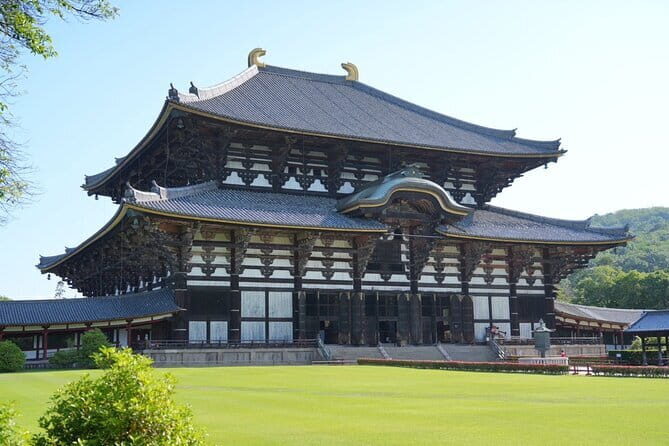
The final major stop is Todai-ji Temple, best known for its Great Buddha statue. It’s described as the biggest Buddha statue in Japan, and that alone makes Todai-ji a must-see if you only have one concentrated morning in Nara.
Another highlight is the scale of the architecture. The information notes that the man hall was, until recently, the world’s largest wooden building. Even if you’re not a building-nerd, the size lands in a physical way when you’re standing there.
Here’s the one cost you should plan for: Todaiji admission is listed as 800 yen and not included in the tour price. That means your total day cost is still reasonable, but you’ll want to have cash ready for this one ticket.
Because this is still early, you’re likely to get a calmer experience at the Great Buddha compared to later crowds. That matters because Todai-ji is the kind of place where you want time to step back, look, and then look again from another angle.
Walking 10,000 Steps: How to Make the Tour Feel Comfortable

This is a walking tour, and the estimate is about 10,000 steps. That’s not a “hobble around” day, but it’s also not an extreme hike if you’re reasonably active.
The tour is described as requiring moderate physical fitness. So I’d treat this as a “good walking day” rather than a casual stroll.
A smart way to handle a day like this is to keep your pace steady. Don’t sprint at each new stop. Instead, treat the morning like one continuous loop: short photo moments, then move, then pause again.
Also remember that transportation is public transit rather than a private car. That means you’ll have stairs, station walking, and time waiting, all folded into the total feel of the day.
If you go with the mindset that you’ll be on your feet for hours, you’ll enjoy the sights more. When you try to “save your legs” by rushing less, you actually get a better experience and less stress.
Your Guide Makes It Worth Paying Attention
You’re getting an English-speaking guide, and the difference shows most in how you move between places. It’s one thing to read about temples; it’s another to have someone connect the sights into a clear story as you walk.
Guides named in prior departures include Koh, Lin, and Soichiro. The common thread is that they explain what you’re looking at and keep things practical—especially helpful for people who are new to Japan.
There’s also an advantage to a small group. One departure was described as almost like a private tour when only a family joined, and the guide helped with return instructions so nobody felt stranded in Nara.
Even if you’re not on a near-private day, a group capped at 8 usually gives you a better chance to ask questions and get advice that matches your pace.
If you like tours where you learn what matters without getting dragged into long speeches, this morning format tends to fit.
Finishing at Kintetsu Nara Station Before Noon
The tour ends at Kintetsu Nara Station. That’s a useful detail because it affects how you plan your afternoon—especially if you want to go elsewhere the same day.
The tour description makes one thing clear: the fee for the way back is not included. The Osaka-to-Nara transportation fee is included, but your return plan is yours to manage.
The timing is the other big plus. Because the tour ends before noon, you’re free to explore more of Nara on your own, or make a day trip to Osaka or Kyoto afterward.
So think of this as a “morning mission.” You’ll get the core Nara hits with a guide, then you choose what you want next without being locked into a full-day itinerary.
Value Check: What You Really Get for $87.96
At $87.96 per person, the value is in the mix: guide time, early crowd timing, and included transportation from Osaka to Nara. For many visitors, that’s the hardest part to organize cleanly on your first trip.
You also get admissions that are partly handled. Kofuku-ji and Nara Park are free. Kasuga Grand Shrine is listed as included. Todaiji is the one extra ticket you pay separately: 800 yen.
So while the base price is not “cheap,” it’s not just paying for a walk. You’re paying for someone to lead you through the best set of sights at a time that makes the experience easier.
The small group limit (up to 8) is also part of the value. Bigger tours often mean slower pacing and more time lost waiting for the group. A smaller group usually means you spend more time seeing and less time regrouping.
And the mobile ticket reduces hassle. Small convenience adds up when you’re starting early.
Who This Nara Morning Tour Suits Best
This tour is a strong match if you want to maximize Nara in limited time. The early start, the major sights in one loop, and the before-noon finish are built for people who hate wasting vacation hours.
It’s also a good fit if you’d rather have someone guide you between Kofuku-ji, Kasuga Grand Shrine, Nara Park, and Todai-ji so you don’t spend your morning guessing.
I’d be cautious if you don’t like walking around 10,000 steps or you’re hoping for a car-based tour with minimal movement. Since there’s no private vehicle and you must return on your own from Nara, you’ll want to feel comfortable managing transit.
Should You Book This Early Nara Tour From Osaka?
Book it if you want the best chance at a calmer Nara experience, with guided context and a finish that still leaves your afternoon open. The early crowd avoidance is the big advantage, and the small-group feel makes the morning more enjoyable.
Skip it if you’re hoping for low walking, a fully vehicle-based schedule, or an itinerary that takes you all day long. This one is designed as a morning hit, not a full-day stay.
If you’re okay paying the 800 yen for Todaiji admission and handling your own return from Kintetsu Nara Station, it’s a solid way to see the core Nara highlights without losing the day to crowds.
FAQ
How long is the Nara Early Morning Tour from Osaka?
It runs about 4 hours 30 minutes.
Where do I meet, and where does the tour end?
You start at the Osaka Tourist Information Center at Osaka Station’s central concourse (JR大阪駅中央コンコース). The tour ends at Kintetsu Nara Station.
What’s included in the tour price, and what costs extra?
The price includes an English-speaking guide and the transportation fee from Osaka to Nara. Todaiji Temple admission is not included, and it’s listed as 800 yen.
Is transportation private, or do we use public transit?
The tour uses public transportation and does not include a private vehicle.
How many people are in a group?
The tour has up to 8 travelers.
About how much walking should I expect?
You’ll walk about 10,000 steps.
What main places does the tour visit in Nara?
You’ll visit Kofuku-ji Temple, Kasuga Grand Shrine, Nara Park, and Todai-ji Temple.
Does the tour end early enough to make other plans?
Yes. The tour concludes before noon, so you can explore more of Nara or do a day trip to Osaka or Kyoto.
What’s the cancellation policy for a full refund?
You can cancel up to 24 hours in advance for a full refund.