REVIEW · OSAKA
Osaka: Original Street Kart Experience (1 Hr)
Book on GetYourGuide →Operated by Reservation Center · Bookable on GetYourGuide
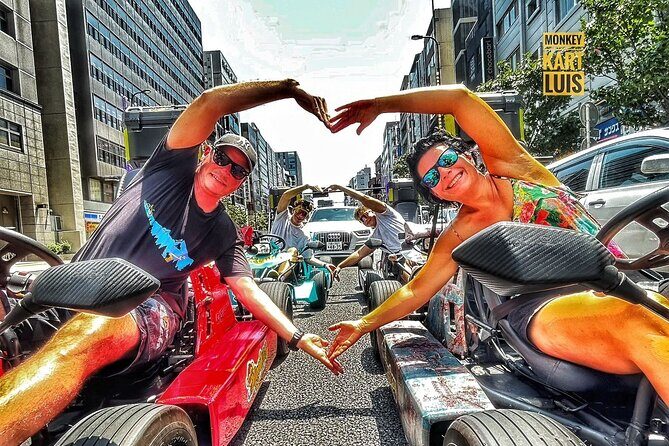
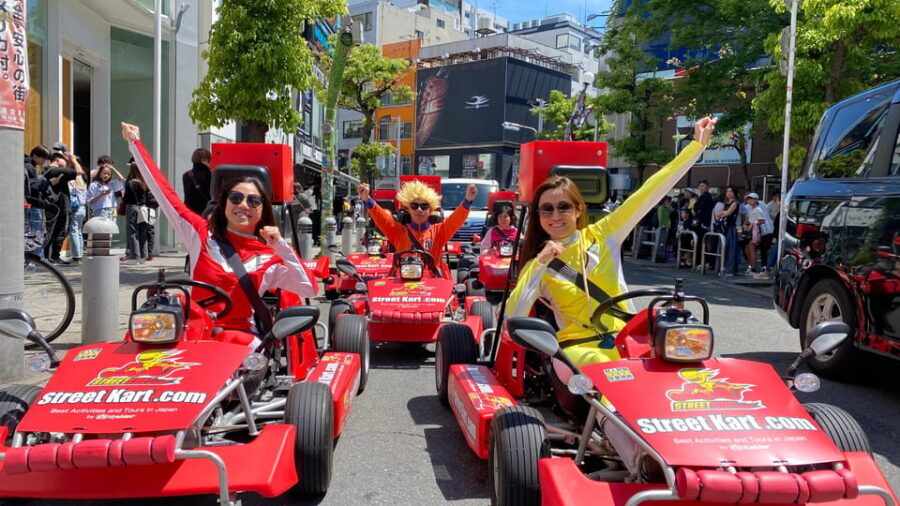
Neon Osaka gets a lot weirder in a go-kart. This original street kart experience puts you in costume and has you rolling past major districts like America-Mura and Shinsaibashi with an English guide at your side. I love how the city turns into your backdrop, plus the guides keep the ride both fun and controlled, like Arata and Arthur bringing extra energy.
What I also like is the way they handle the details: you get costumes, goggles, and a rain coat, and your guide takes lots of photos so you leave with real souvenirs, not just blurry phone shots. One possible drawback to plan for: the driving rules for foreigners in Japan are strict, so you’ll need the right IDP paperwork (physical documents), or you won’t be allowed to drive.
In This Review
- Key Highlights
- How the Street Kart Adventure Feels in Real Osaka
- What’s Included (and What You’ll Probably Want to Add)
- Entering Osaka’s Districts From a Go-Kart Window Seat
- America-Mura: Western Culture Signs, Osaka Attitude
- Shinsaibashi: Shopping District Energy, Slower Stops for Photos
- Dōtonbori: Night-Life Front Row (Go-Kart Style)
- Namba: The Entertainment Hub Connection
- The Safety Briefing That Helps You Relax Fast
- Timing, Duration, and Why 90 Minutes Works
- Your Photo Souvenir: Why It’s Worth Paying Attention
- Cost and Value: Is $45 a Fair Deal?
- The Japan Driving Paperwork You Must Handle First
- What to Wear (and Why It’s Strict)
- Who Should Book This Street Kart in Osaka
- Quick Comparison: How This Beats a Simple Sightseeing Walk
- Should You Book Street Kart in Osaka?
Key Highlights
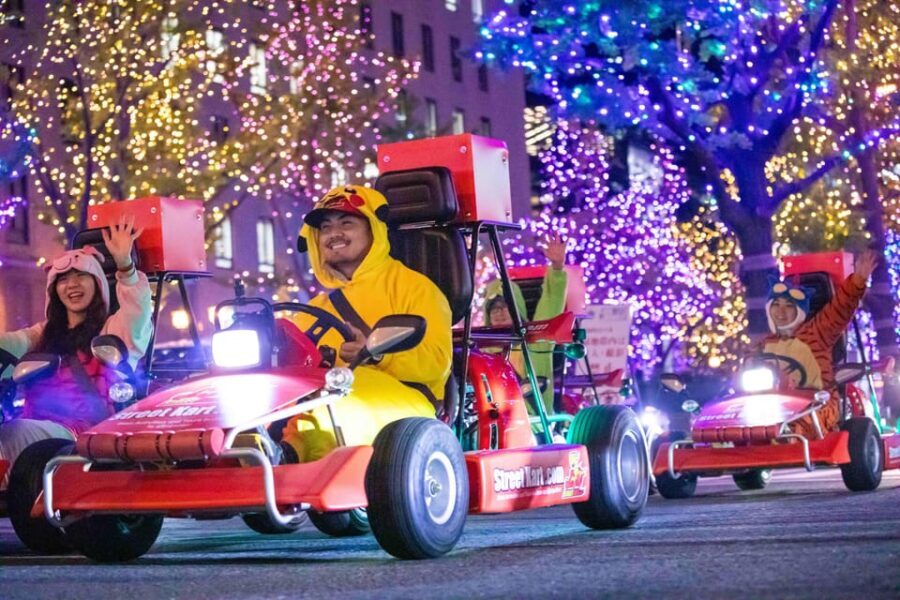
- Costume-on go-karting through iconic Osaka districts, day or night
- English-speaking guides who give clear hand-signal instructions
- Fast street time (some riders report speeds up to 40 MPH) in guided groups
- Photos included, shared after the ride so you can relive it
- Rain-ready setup with goggles, a rain coat, and safety-focused guidance
- Bring the right driving docs with a physical IDP and passport
How the Street Kart Adventure Feels in Real Osaka
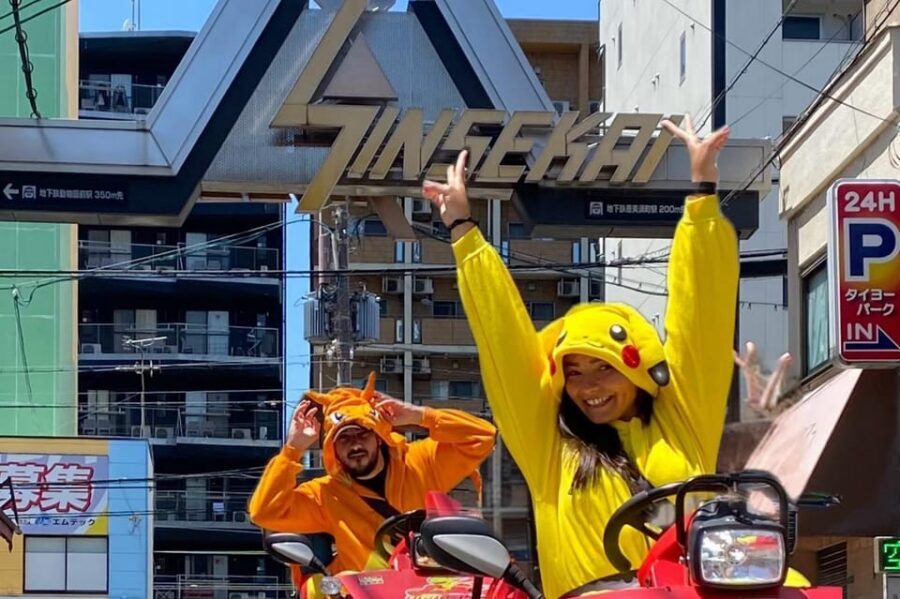
The first thing you’ll notice is the vibe: you’re not in a theme-park lane. You’re in actual Osaka, rolling past shops, signs, and nighttime neon while people watch. Several riders talk about locals waving like they’re seeing celebrities come home, and that tracks with what this concept is built for—turn street life into your personal mini show.
The package is simple and fun. You suit up in a costume with wacky accessories, then meet your guide and learn the rules. The cart itself is built for this kind of guided group driving, and the ride is paced so you get movement and photo moments, not just one long blur of traffic.
From the reviews, a few guides pop up again and again. People mention Arata, Arthur, Ginga, Jin, Ray, Vivienne, Isabelle, Miyu, and others. Regardless of who you get, the consistent theme is that the guides focus on comfort at the start, then gradually build confidence—especially if you’re nervous before moving into busier streets or faster sections.
You can also read our reviews of more tours and experiences in Osaka.

What’s Included (and What You’ll Probably Want to Add)
Street Kart’s included items cover the basics you’d otherwise figure out on your own. You get:
- A go-kart
- Gasoline
- English-speaking guide
- Costumes
- A photo souvenir
- Rain coat
- Goggles
Optional extras come up if you want to record your own angle. Action cameras are not included, and there are separate fees for renting the action camera and for getting a way to save the video (micro-SD and camera mount). If you’re thinking of bringing your own camera, keep in mind you still won’t be using an included action setup unless you pay those add-ons.
A practical note: helmets aren’t listed as included in the activity details you provided. One rider specifically flagged that no helmets were provided. That doesn’t automatically mean it’s unsafe—this is a guided, controlled street operation—but it does mean you should mentally prepare for that reality and follow every instruction like it matters. Because it does.
Entering Osaka’s Districts From a Go-Kart Window Seat
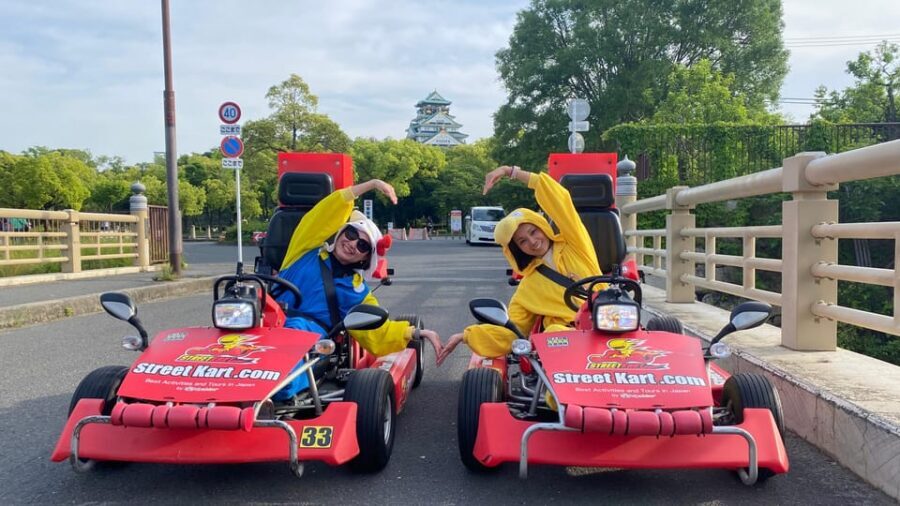
This tour is built around Osaka’s most recognizable neighborhoods, and the value is how those areas look from street level while you’re driving, not just walking.
America-Mura: Western Culture Signs, Osaka Attitude
America-Mura is a strong opener because it’s visual. Think Western-style street energy mixed into Japan’s city rhythm. You’ll spot the quirky signs and facades that make Osaka feel like Osaka, and the cart makes it feel faster—like the neighborhood is moving with you.
The “costume + street signs” combo matters here. People noticed the attention from passersby, and this district is the kind of place where that attention actually fits the mood. If you like the idea of photos where you don’t look like you’re trying too hard, this is a good start.
Shinsaibashi: Shopping District Energy, Slower Stops for Photos
Shinsaibashi is a big shopping area. On foot, it’s crowded and always moving. In a cart, it’s different—you’re part of the street flow but still distinct, which means you’ll likely get those wave-and-smile moments that make people remember the ride.
You also tend to get more natural pause points for photos because you’ll hit intersections and traffic-light rhythm. Some reviews mention spending time waiting at lights. That’s not a deal-breaker, but it is something to expect: city driving has city pacing, and the downtime can actually help for picture moments.



Dōtonbori: Night-Life Front Row (Go-Kart Style)
Dōtonbori is where Osaka’s night life vibe shows up loudest. Even if you’ve seen photos of the area, watching it roll past while you’re steering is a different experience. This is also where “drive through the mecca of night-life” makes sense in a practical way: you’ll feel like you’re in the middle of the action, not just on the edge.
The guide’s role gets more important here. Guided group driving means you’ll follow hand signals and keep your lane discipline, usually in single file. Riders mention hand signals were easy to follow, which is exactly what you want when streets get busy and you’re still learning the cart’s rhythm.
Namba: The Entertainment Hub Connection
Namba ties the whole route together. It’s the central hub vibe, where you feel that Osaka is always awake even when it’s late. In a cart, it becomes a quick-moving way to connect multiple “must-see” areas without spending your whole evening in a long line of walking.
If you’re doing Osaka at night and you want photos with lights in the background, Namba is the kind of stop that gives you that effect. Several reviews recommend going in the evening for brighter city lights, and this route’s districts line up well with that advice.
The Safety Briefing That Helps You Relax Fast
A go-kart on public streets can sound intimidating. The good news from the reviews is that the guides don’t just throw you into traffic and hope for the best. They focus on readiness first.
You’ll get an instruction briefing, and guides reportedly check that you feel comfortable before heading out. Some riders were nervous initially, and the guides took time to settle them, then used clear cues to keep everyone in line.
Driving style in this setup is guided and structured. Reviews mention single file driving, plus hand signals from the guide. That means you’re not navigating alone like you would on a rental scooter. You’re following a system.
Speed is a recurring highlight. One rider said the experience included speeds up to 40 MPH, and another talked about the highway feeling—so yes, you can get that adrenaline hit. But it’s still controlled: you’re not rocketing around randomly. You’re moving as a group with safety rules.
One rider also wished for a more functional brake light, and another mentioned using the e-brake to avoid collisions with the cart ahead. Those are small “future improvement” notes, not reasons to skip. Still, they remind you to stay attentive and leave yourself space. This is street driving, and you’re responsible for smooth following.
Timing, Duration, and Why 90 Minutes Works
The activity runs about 90 minutes. Your actual driving time is often close to an hour, with time before and after for dressing, briefing, and photos.
This timing matters because it makes the experience feel like a highlight, not a chore. You’re not stuck for half a day, and you still get the full payoff: costume, multiple districts, a proper guided flow, and a photo souvenir set.
In the evening, the experience becomes especially fun because the route connects neon areas while you’re still fresh. Several riders call out night-time as the best time for visuals.
Your Photo Souvenir: Why It’s Worth Paying Attention
Photos are included, and guides take lots of them during the ride. That’s a huge part of the value because you’re wearing costume gear and driving through busy, photo-friendly areas. A normal vacation photo won’t capture the same energy.
Many reviews mention the guides taking tons of pictures and sharing them afterward. Some even mentioned printed photos included for bringing home. Whether it’s digital sharing or something printed, the point is the same: you’re not just getting one “good shot.” You’re likely to get a set you can actually use.
If you’re someone who thinks go-karting doesn’t translate well to photos, this tour is the exception. The costume helps your silhouette stand out, and the Osaka streets give you consistent lighting and signage behind you.
Cost and Value: Is $45 a Fair Deal?
At $45 per person, this isn’t “cheap entertainment.” But it’s also not trying to be a big luxury show. The value comes from what’s bundled.
You’re paying for:
- a guided street ride (not self-directed),
- an English-speaking guide,
- costumes and gear (goggles, rain coat),
- and photo souvenirs,
- plus gasoline and a kart.
If you priced those items separately, it’d likely add up fast—especially the guide time and the route access you get. Also, the experience isn’t just driving in place. You’re moving through key Osaka districts, which is exactly where street-karting earns its keep.
One more value factor: social fun. Solo riders can meet people from all over the world, and groups can turn it into a shared memory. Several reviews describe small groups, including just two people, which suggests you can sometimes get a more personal feel.
The Japan Driving Paperwork You Must Handle First
This is the big practical checkpoint, and it’s non-negotiable.
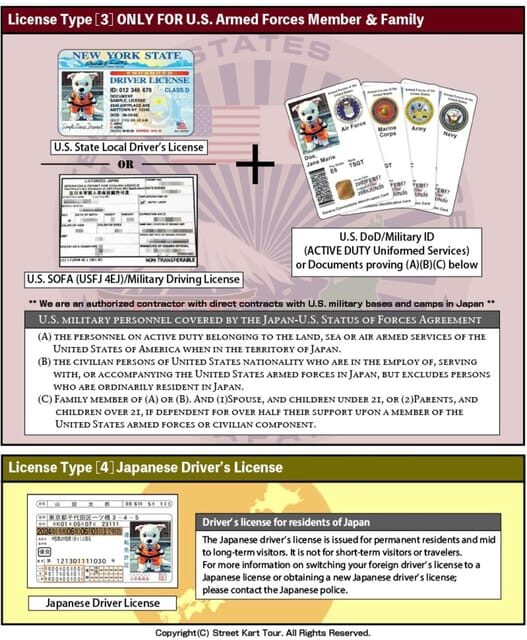
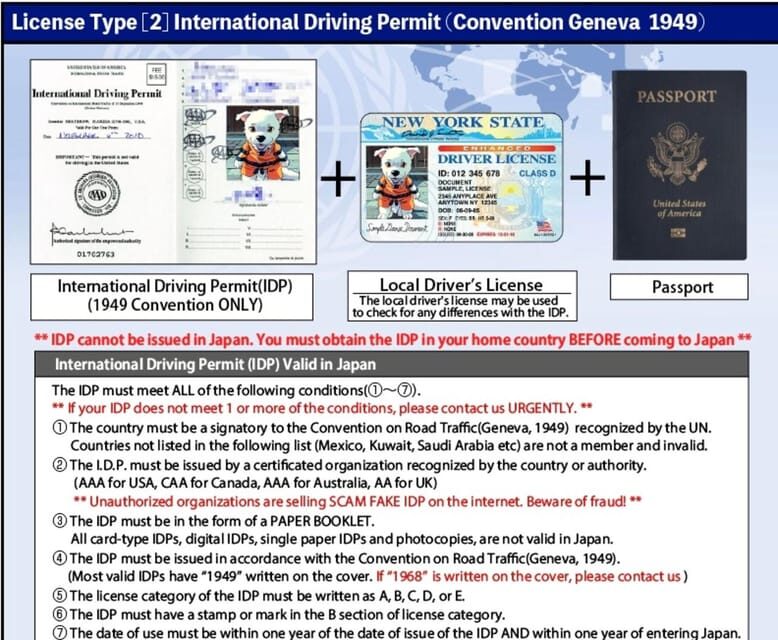
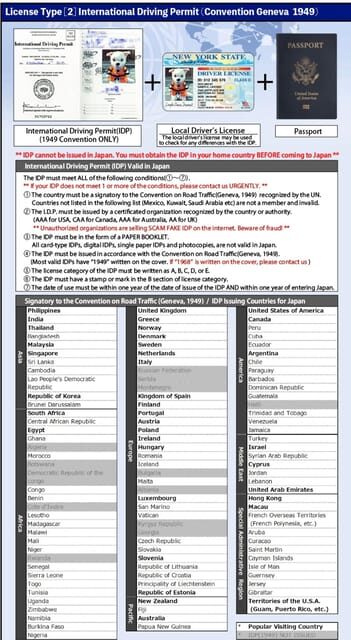
All participants need special documents to drive in Japan. For most countries, you need an International Driving Permit (IDP) in the booklet format compliant with the 1949 Geneva Convention. You also must have the physical IDP—valid ones can only be issued by the country that issued your domestic license, and they cannot be obtained online while traveling.
There’s also a special rule for some licensing countries:
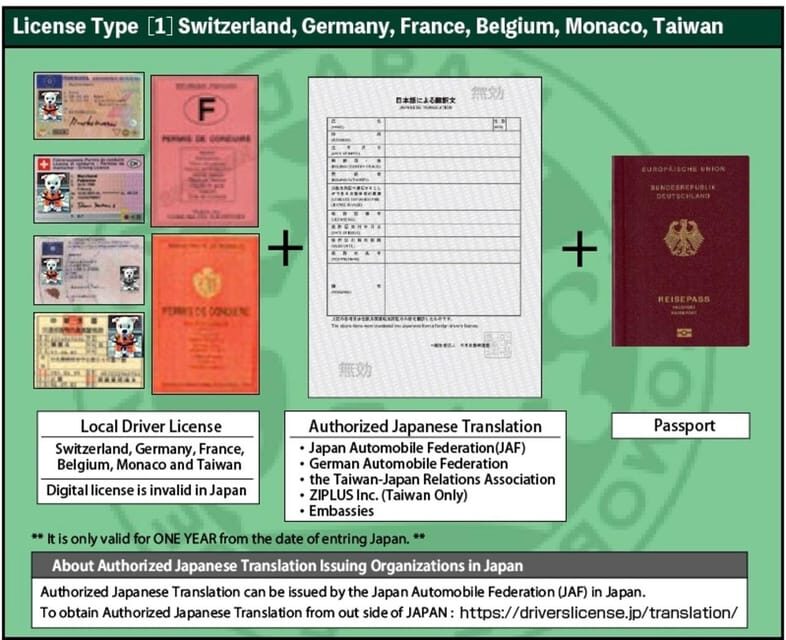
- If your license is issued in Switzerland, Germany, France, Taiwan, Belgium, or Monaco, you need a Japanese translation of your license from the Japan Automobile Federation (JAF), not an IDP.
- If your license is from countries not covered by the 1949 Geneva Convention (examples include China, Indonesia, Mexico, Qatar, Saudi Arabia), you’re not permitted to drive.
And yes, you must carry both:
- your physical IDP (or physical domestic license plus official translation, when that applies)
- and your physical passport
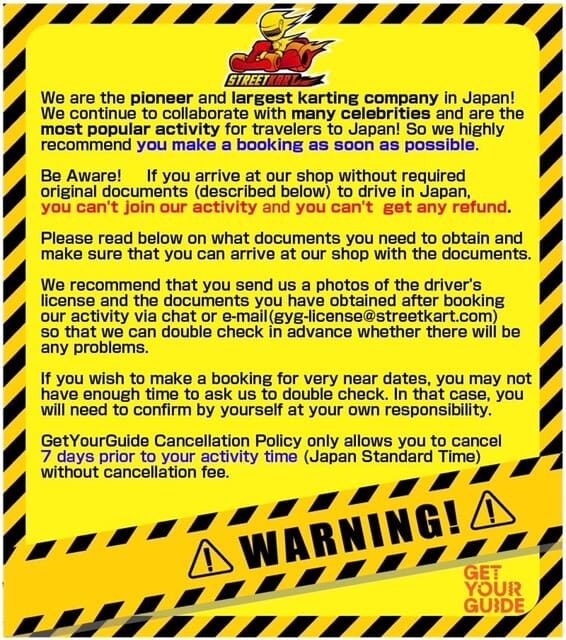
If you forget the paperwork, you’re not just risking a delay. You may be turned away from driving. So I strongly suggest sorting this well before you ever land in Japan.
What to Wear (and Why It’s Strict)
Your outfit affects whether you can drive. You cannot wear:
- high-heeled shoes
- sandals or flip flops
- slippers
- alcohol or drugs while participating
Even if you don’t care about rules, this tour does. The cart setup and driving motion need secure foot coverage. If you’re traveling light, pack closed-toe shoes that won’t slip on the cart foot area.
If you’re dealing with comfort limits, it matters too. The activity isn’t suitable for:
- pregnant women
- people with back problems
- people with mobility impairments
- wheelchair users
- children under 18
- hearing-impaired people
Also, one review notes tall people may find the steering wheel cramped because of the setup between the knees. If you’re very tall, consider that before you book so you don’t end the ride with an awkward posture.
Who Should Book This Street Kart in Osaka
This works best if you want a high-energy, “only-in-this-place” Osaka activity. You’ll probably love it if you:
- like street scenes and neon at night
- enjoy costumes and feeling silly on purpose
- want a guided experience instead of DIY scooter driving
- care about getting photos without doing a whole photo session
It may not fit if you:
- hate the idea of paperwork for driving (the IDP rules are strict)
- have mobility or back concerns
- need special accessibility accommodations
- can’t follow hand-signal style instructions in a moving street environment
Quick Comparison: How This Beats a Simple Sightseeing Walk
Walking through Osaka is great for slow looking. This tour is different: you get movement, speed, and district variety in a short time window.
You also get a different kind of memory. Instead of a set of street photos where you’re just standing there, you get footage-style energy in still photos—costumes, street signs, and motion cues.
And you get a guide who keeps everyone aligned, which reduces the mental load. You can focus on the fun, not on traffic decisions.
Should You Book Street Kart in Osaka?
If you’re curious and you can meet the driving document requirements, I’d book it. The $45 price feels fair when you factor in the guide, the costumes, the gear, the photo souvenir, and the fact you’re driving through several of Osaka’s top districts instead of just one area.
Skip it if the IDP paperwork stresses you out, or if you’re in the “not suitable” group for comfort and mobility. Also, if you’re extremely sensitive to physical discomfort from cramped driving positions, plan ahead.
For everyone else? This is one of the rare Osaka activities where you can feel like a local street character for an hour, while the city stays right there in your peripheral vision. And the photos make it easy to prove you actually did it.