REVIEW · OSAKA
Enjoy artistic TEMPURA Cooking Class
Book on Viator →Operated by Sakura Cook · Bookable on Viator
Tempura magic starts with a humble broth. This small-group class in Osaka walks you through making dashi from scratch and then battering and frying six tempura types you’ll eat right away. I also like that you get recipes to take home, so the skills don’t vanish the moment you hop on the next train.
The only real drawback is time pressure: the whole thing runs about 2 hours, so if you want super-slow, hands-off practice, this may feel a bit fast. Still, the group stays capped at eight people, so you’re not swallowed by a crowd.
In This Review
- Quick hits you’ll actually use
- Osaka tempura starts with dashi, not batter
- Inside the 2-hour class setup (and what the small group really means)
- Meeting point in Nishi Ward: how to not waste time
- Making dashi: the base that turns tempura into a full Japanese meal
- Chopping prep: vegetables, knives, and the shrimp that changes everything
- The six tempura types you’ll master (and why there are multiple)
- Eating what you make: the best kind of test
- Instructor energy matters more than you think
- Price and value: what $70.79 buys you in real life
- Who this class is perfect for (and who should skip it)
- Tips to get the best results from a tempura class
- Should you book Sakura Cook’s tempura and dashi class?
- FAQ
- How long is the tempura cooking class?
- How many people are in the group?
- What will I cook during the class?
- Do I eat what I cook?
- Is there a lunch or dinner option?
- What’s the meeting point address?
- Do I get recipes to take home?
- Is there free cancellation?
Quick hits you’ll actually use
- Dashi first, so you understand the flavor base before you fry anything
- Six tempura types: 4 vegetable + 2 seafood, including one big shrimp
- No leftovers: you eat what you make, plus steamed rice and chilled tofu
- Small group of up to 8 for real coaching, not just watching from the sidelines
- Recipes provided so you can recreate your tempura later at home
Osaka tempura starts with dashi, not batter
Tempura gets most of the attention, but I love that this class starts the other way around. You begin with dashi, the Japanese soup stock that shows up in bowls, sauces, and home cooking across the country. Making it first helps you taste how the whole meal fits together, not just the crunch.
For you, the payoff is simple: once you know what dashi should taste like, you’ll understand why Japanese kitchens obsess over balance. Then when you move on to battering and frying, you’re not working blind—you’re learning within a bigger flavor system.
And since the class is run by Sakura Cook, you can expect the lesson to stay practical and cook-focused rather than turning into a sightseeing lecture.
You can also read our reviews of more cooking classes in Osaka

Inside the 2-hour class setup (and what the small group really means)
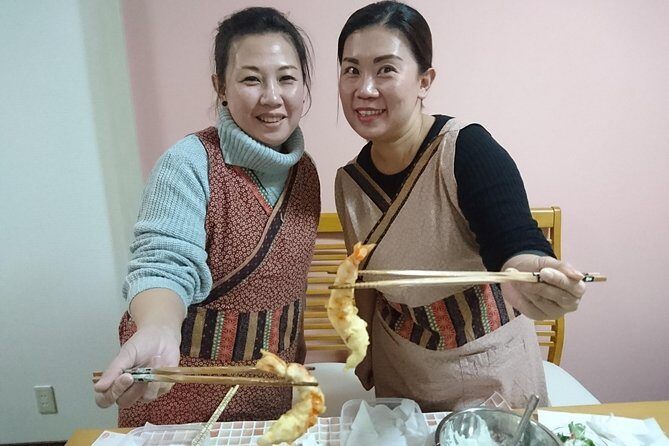
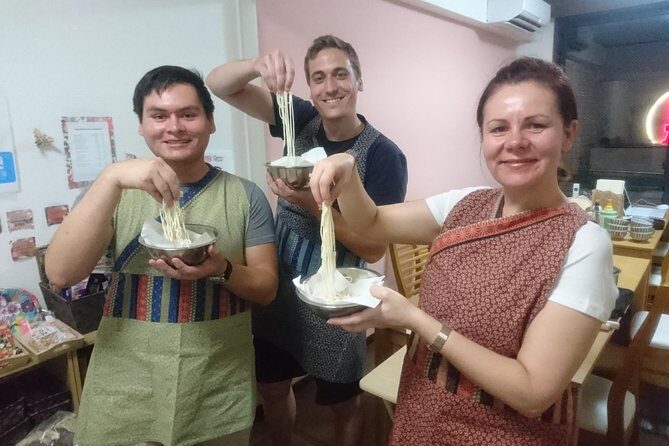
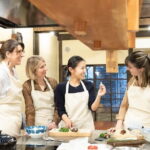
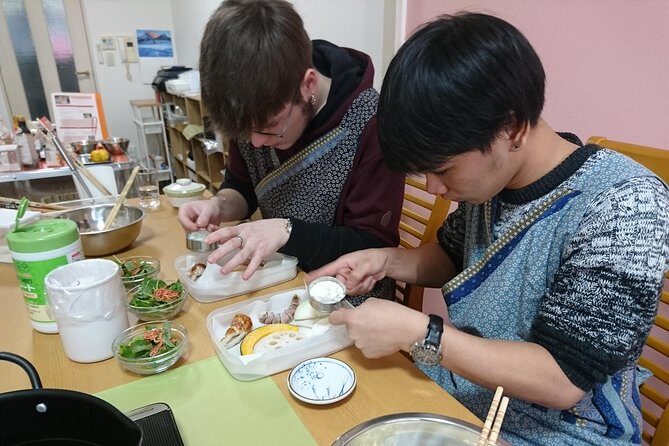
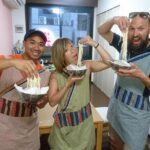
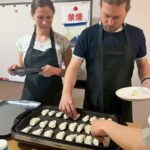
This is an active cooking session, not a sit-and-smile show. You’ll wear an apron at the start, and you’ll have your own tools for prep—kitchen knives and chopping boards are provided for each participant. That matters because tempura depends on timing, and good preparation keeps your frying smooth.
The class lasts about 2 hours, and it has a choice of lunch or dinner. If you’re planning Osaka like most people do—morning sights, afternoon wandering, evening food—this slotting flexibility is handy.
The group max is eight, which is the difference between quick corrections and getting lost. With that size, you’re more likely to get direct feedback on cutting, battering, and frying technique.
Meeting point in Nishi Ward: how to not waste time
You’ll meet at 1-chōme-17-20 Kitahorie, Nishi Ward, Osaka, 550-0014, Japan. The location is near public transportation, so you should be able to line it up with your day without too much detour.
My practical advice: check your route the day before and aim to arrive a little early. Cooking classes are short by nature, and you don’t want to start chopping with rushed hands.
Also note that the class ends back at the meeting point, so you won’t need to figure out how to get home in the middle of your meal.
Making dashi: the base that turns tempura into a full Japanese meal
At the beginning, you’ll make traditional Japanese broth: dashi. Your instructor guides you step by step, including tips for making a savory stock and keeping the soup looking and tasting right.
Here’s why that part is more valuable than it sounds. Dashi isn’t just “background flavor.” It’s a staple you’ll recognize when you eat Japanese food later—udon, simmered dishes, dipping broths, and more. Learning the process (even at a beginner level) gives you a reference point for what good Japanese flavor should feel like.
In class, you’re also learning the rhythm of cooking: start with the base, taste and adjust, then build outward. That order is one reason this kind of lesson sticks better than jumping straight into frying.
Chopping prep: vegetables, knives, and the shrimp that changes everything
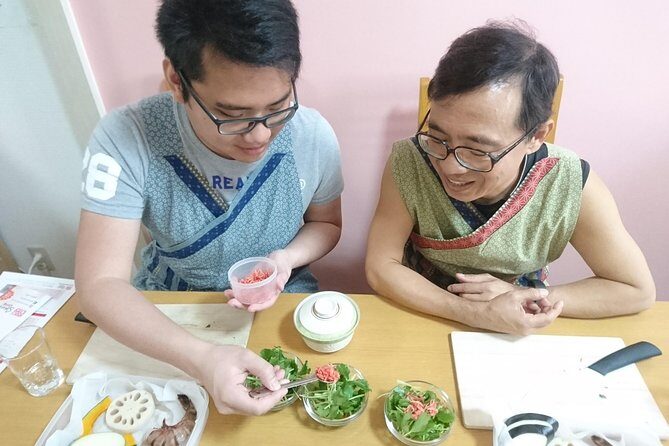
After dashi, you shift into ingredient prep. You’ll have knives and cutting boards ready at your station, and you’ll work on the components for the tempura varieties.
You’ll make four vegetable tempura plus two seafood tempura. One seafood option is a big shrimp, and that single ingredient usually determines how careful you need to be. Shrimp can be forgiving, but only if you handle prep and frying with attention.
This is where the “art” part of tempura shows up. Tempura batter and frying aren’t just about crunch. They’re about texture control and moisture balance—especially with seafood, where rubbery results are the enemy.
If you want your food to look as good as it tastes, pay attention during prep. Your cuts and battering thickness affect both cooking speed and the final crunch.
You can also read our reviews of more tours and experiences in Osaka


The six tempura types you’ll master (and why there are multiple)
The class is built around learning six different types of tempura, not just cooking one thing well. That variety matters because it teaches you how ingredients behave differently:
- Vegetables often need consistent batter coverage so they fry evenly and don’t end up greasy.
- Seafood needs careful timing and temperature control to protect tenderness.
You’ll be guided through the process for each type, and then you’ll get to eat everything you prepare. That’s a big advantage over many classes where you cook, eat a small portion, and rush out. Here, you get the full “do it, eat it, learn from it” loop.
Also, there’s real structure to the lesson. You’re not only frying. You’re also prepping and building the meal foundation through dashi.
Eating what you make: the best kind of test
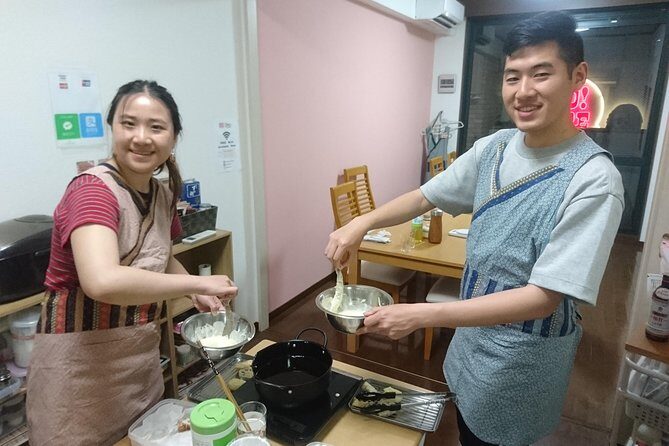
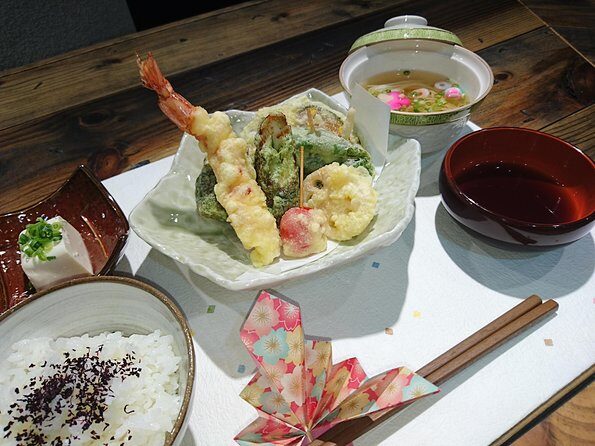
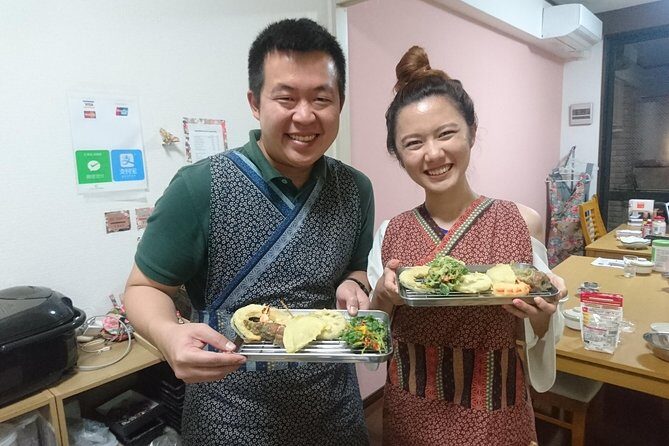
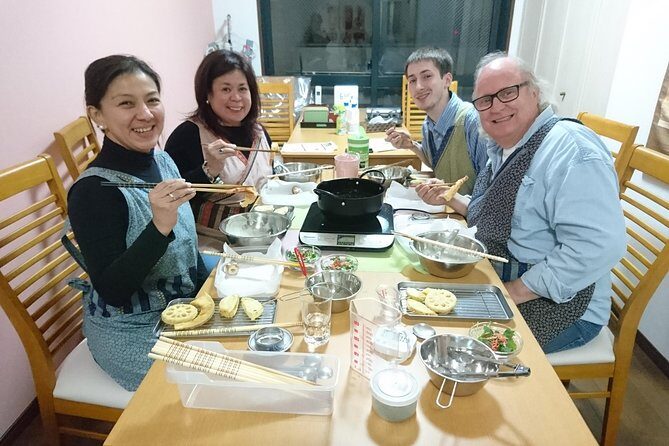
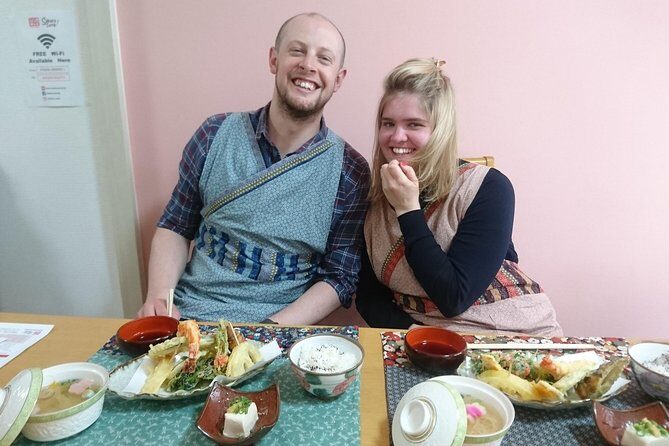
At the end, you’ll plate your tempura with chopsticks and share the meal with your instructor’s guidance. The class experience is built around a simple, satisfying ending: you eat everything you prepared.
Your meal includes steamed rice and chilled tofu, served alongside your tempura. That combination is smart for learning. Rice gives you a neutral base to notice batter crispness and flavor clarity. Chilled tofu cools your palate, so you can compare the different tempura types instead of getting overwhelmed by only one texture.
If you’re wondering whether this turns into a “demo then snack” style class: it doesn’t. The class is designed around cooking six items, tasting them, and taking recipes home.
Instructor energy matters more than you think
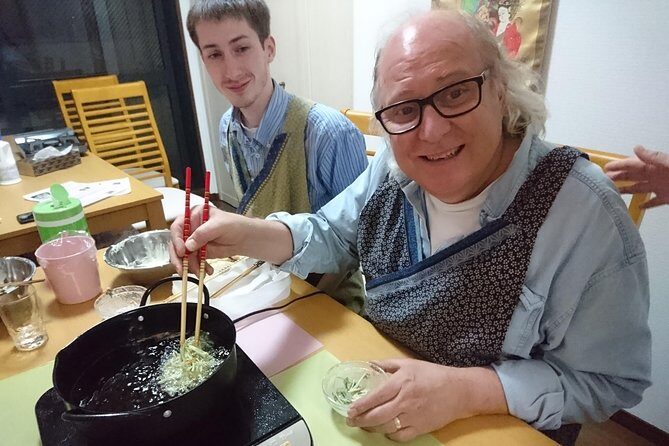
One of the strongest points from the experience’s feedback is the teaching style. The instructor is described as courteous and joyful, and that tone isn’t just nice—it keeps you calm while you work with hot oil and follow steps closely.
When you’re learning something hands-on, especially frying, nerves can mess with timing. A friendly, upbeat instructor helps you focus on the next step instead of worrying you’ll mess it up.
So if you tend to be a little self-conscious in group classes, this is the kind of energy that can make it feel manageable.
Price and value: what $70.79 buys you in real life
At $70.79 per person for about 2 hours, this class isn’t trying to be the cheapest meal in Osaka. The value comes from what’s included:
- You make six tempura types plus dashi
- You eat everything you prepare
- Tools and ingredients are part of the session
- You receive recipes to take home
If you only compare it to paying for tempura in a restaurant, you might think, Why pay extra? But the class is more like buying time with a coach, learning technique you can reuse, and leaving with a home-cooking reference.
You’re also paying for the small group size. With a max of eight, you’re more likely to get corrections that translate into better tempura back home.
One more practical angle: on average, this is booked about 56 days in advance, so it’s wise to plan ahead if your dates are fixed.
Who this class is perfect for (and who should skip it)
This is a great fit if you:
- Want a hands-on Osaka food experience that goes beyond eating
- Like learning staples like dashi, not only “fancy fried stuff”
- Prefer smaller groups where you get coaching and not just a front-row seat
- Want a meal you can actually replicate later thanks to recipes
You might skip it if you:
- Have almost no interest in cooking technique
- Get stressed by hot-oil tasks and want a mostly observational class
- Are short on time and need something that’s much longer or much shorter
It’s also a solid option for couples and solo travelers. Small group format means you’re not stuck in a tour herd, but you still get the social energy of a shared kitchen experience.
Tips to get the best results from a tempura class
You’ll learn the right steps in class, but your choices still matter. A few practical moves help:
- Arrive early enough to settle. Rushing makes chopping and battering harder.
- Watch thickness. In tempura, small differences show up fast in frying results.
- Taste as you go. Even without fancy lab equipment, you’ll learn what good looks like by tasting.
- Take notes during dashi and prep. The broth process is easy to forget if you don’t anchor it with your senses.
And after class, don’t just tuck the recipes away. Try making one vegetable tempura at home first. It’s the easiest way to connect what you did in the kitchen with what you’re eating later.
Should you book Sakura Cook’s tempura and dashi class?
I’d book this class if you want a real cooking experience in Osaka, not just a meal. The combination of dashi + six tempura types, the fact that you eat everything you prepare, and the promise of take-home recipes makes it a strong learning-value choice.
It also checks the boxes that make short cooking sessions enjoyable: small group size (up to eight), step-by-step coaching, and a clear end-to-end meal. If your schedule allows and you can plan ahead—since it books around 56 days on average—this is a satisfying way to spend a couple of hours in Osaka.
FAQ
How long is the tempura cooking class?
The class runs for about 2 hours.
How many people are in the group?
The experience is limited to a maximum of 8 travelers.
What will I cook during the class?
You’ll learn to make dashi soup stock and prepare six types of tempura: 4 vegetable tempura and 2 seafood tempura, including one big shrimp.
Do I eat what I cook?
Yes. You’ll eat everything you prepare in the class, along with steamed rice and chilled tofu.
Is there a lunch or dinner option?
Yes, you can choose either a lunch or dinner experience to fit your schedule.
What’s the meeting point address?
The meeting point is 1-chōme-17-20 Kitahorie, Nishi Ward, Osaka, 550-0014, Japan.
Do I get recipes to take home?
Yes. The tutor provides recipes to take home, so you can keep practicing after the class.
Is there free cancellation?
Yes. You can cancel for a full refund up to 24 hours before the experience’s start time.