REVIEW · OSAKA
Osaka: Cooking Class Ramen & Gyoza Course in Nanba
Book on GetYourGuide →Operated by 株式会社XLSWORLD · Bookable on GetYourGuide
Ramen feels easier after real hands-on practice. In Nanba, this Osaka ramen and gyoza cooking class turns you from diner into cook, with a structured session where you’ll actually make the dishes step by step. I like that the team keeps things friendly and practical, with English (and Japanese) instruction as you chop, mix, and build flavor with pro chefs.
I also love the payoff: you’ll eat what you made during a tasting hour, and you get take-home recipes so you can recreate it later. The main consideration is logistics: it’s not a hotel pickup situation, and the meeting spot in an apartment building can feel tucked-away, so plan to arrive with a little extra time.
In This Review
- Key things that make this Osaka ramen class worth your time
- What you’re really learning: ramen and gyoza, not just watching
- Getting started right: the 30-minute orientation and prep flow
- Cooking time (1.5 hours): ramen noodles and gyoza technique in the same session
- Making ramen that tastes like ramen, not just noodles
- Gyoza: folding skills you can repeat
- The best part of the class: the 1-hour tasting with drinks
- Why the small group (up to 8) feels different than big classes
- Who’s teaching: English-and-Japanese coaching you can actually follow
- Dietary fit: vegetarian and vegan accommodations you should ask about
- Where it is in Nanba: Dear Court Semba, Room 303
- Price and value: $70 for 2 hours of real cooking + drinks + recipes
- What to expect on the night itself (timing, energy level, and how it feels)
- Who should book this Osaka ramen and gyoza class
- Should you book this Osaka ramen and gyoza cooking class?
- FAQ
- How long is the Osaka ramen and gyoza cooking class?
- What dishes will I make in this class?
- Is this class a small group?
- Are drinks included?
- What’s included in the price?
- Do I need to bring any ingredients or cooking tools?
- Where is the meeting point, and how do I enter?
- Is the instruction available in English?
- Can the class accommodate vegetarian or vegan diets?
Key things that make this Osaka ramen class worth your time
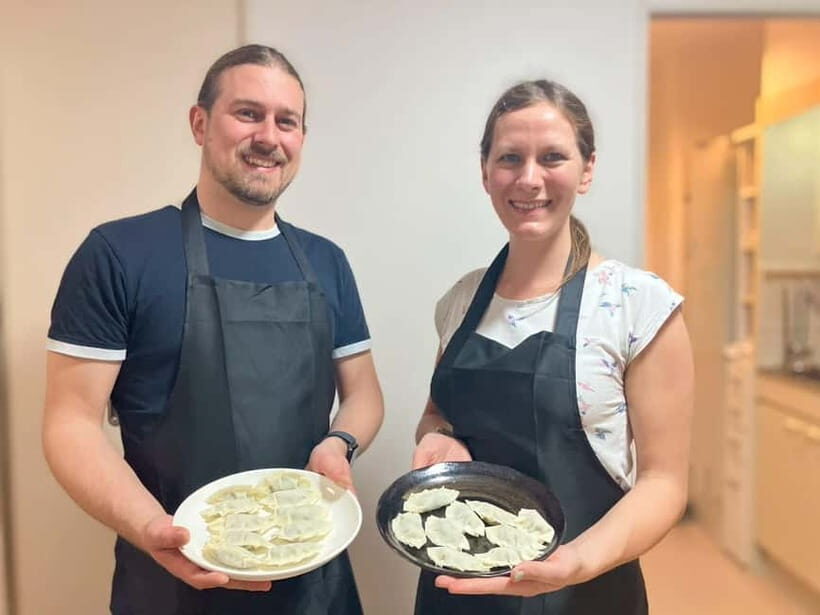
- You cook ramen and gyoza yourself, including the tricky parts like noodle prep and dumpling technique
- Small group size (up to 8) makes it easier to ask questions and get real coaching
- Tasting hour with drinks includes sake, beer, and soft drinks alongside your finished dishes
- English-and-Japanese instruction helps beginners follow along confidently
- Recipe cards to take home help you repeat the meal even after you leave Osaka
What you’re really learning: ramen and gyoza, not just watching
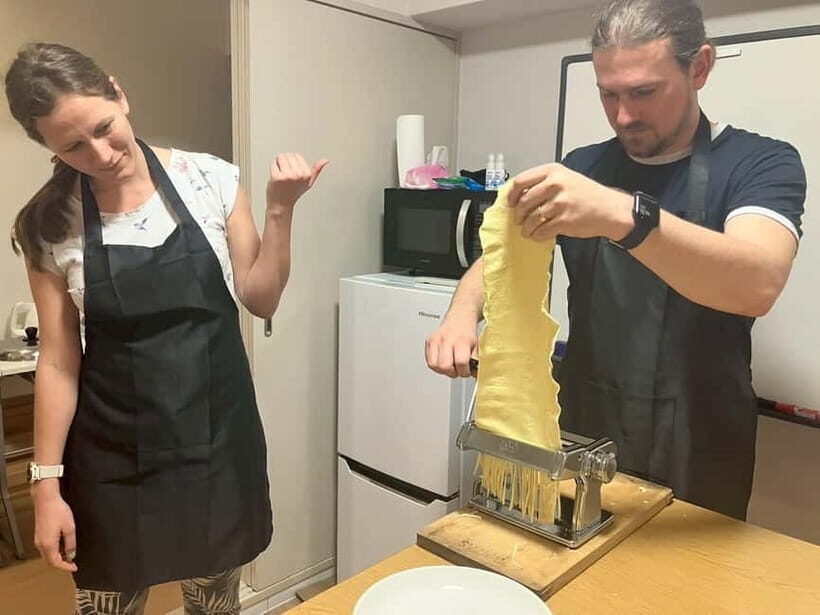
This isn’t the kind of cooking class where you stand back and watch. The core value is that you leave with skills for two Osaka staples: ramen and gyoza.
On the ramen side, you’re working with fresh noodle-making steps and learning how the process connects to the finished bowl. On the gyoza side, the focus is on hands-on dumpling technique. Multiple instructors are named in past sessions, including Nana and Yuriko, and other teams like Ryota and Saya, plus Keiichi with Mimi and Yuma. That matters because you’re not just copying one person’s style—you’re learning a method you can actually use.
And because this is a small-group setup, you’ll usually get clearer guidance when you get stuck. That’s the difference between a fun meal and a skill-building night.
You can also read our reviews of more cooking classes in Osaka

Getting started right: the 30-minute orientation and prep flow
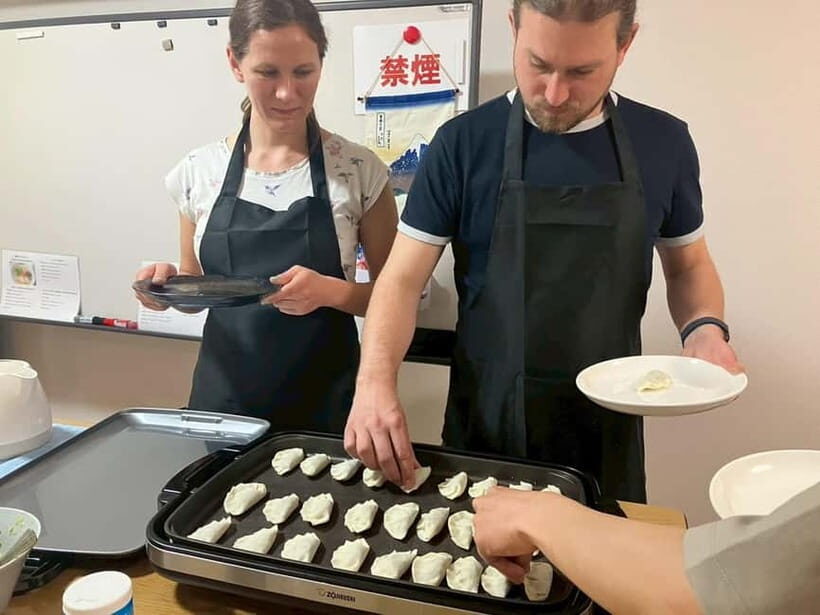
The class starts with a 30-minute orientation and preparation session. This is where you get your footing: what you’ll be making, how the kitchen works, and what each person’s role can look like.
You’ll do practical prep tasks before the cooking takes over—things like chopping vegetables and getting ingredients ready. Past participants highlight how hands-on it feels early, including time spent prepping and working with ramen components. One review specifically calls out making flour for the ramen and getting into the details early, which tells me the orientation is meant to prevent guesswork later.
For you, this timing is smart. Two hours goes fast once the meal starts coming together, so the prep phase helps you keep up instead of freezing when the chef moves to the next step.
Cooking time (1.5 hours): ramen noodles and gyoza technique in the same session
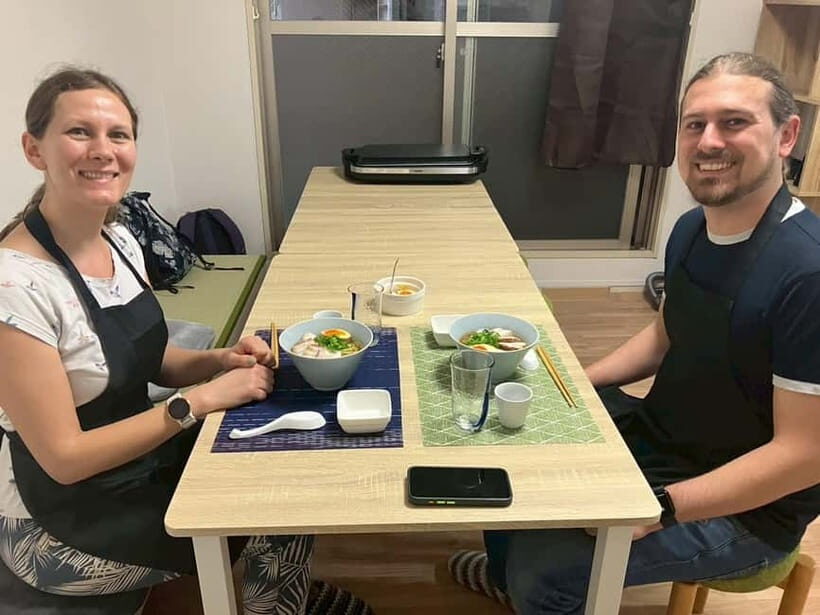
After orientation, you get 1.5 hours of hands-on cooking. This is the heart of the experience.
Making ramen that tastes like ramen, not just noodles
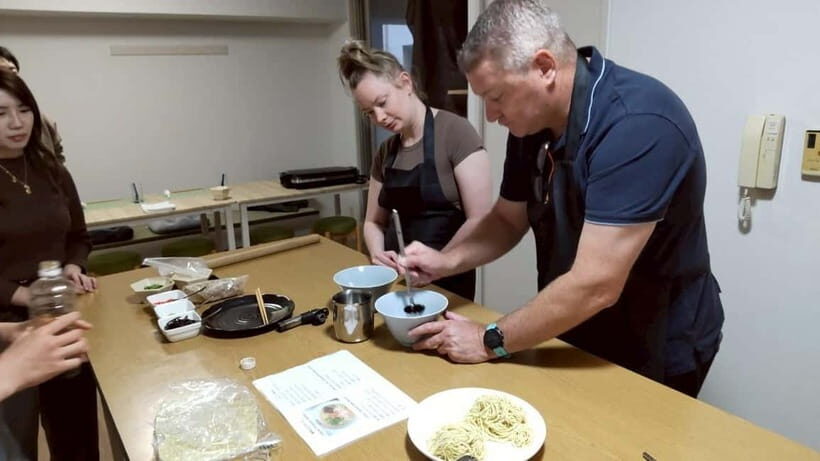
You’ll be involved in making ramen with guidance from the washoku professionals. Several past guests mention getting to make the noodles from scratch and working on the flour side of the process. That’s a big deal because ramen isn’t just “boil noodles.” The texture matters, and the process you’re taught affects the final bite.
In plain terms: if you can handle the noodle steps here, you’re far more likely to re-create the same experience back home. That’s why the class is worth the time even if you already know how to cook.
Gyoza: folding skills you can repeat
The gyoza portion is often the most memorable, mainly because it’s a craft. Reviews call out the intricate gyoza making and folding, with instructors showing the right method and then helping you practice.
If you’ve eaten good gyoza in Japan, you know the “perfect fold” isn’t just pretty. It helps seal the dumpling and supports the texture you want when it cooks. The coaches named in reviews—like Keiichi and Mimi, and Nana and Yuriko—are repeatedly praised for patience and clarity, which is exactly what you need for a technique-heavy task.
A nice bonus for your confidence: you’ll get recipe cards at the end, so even if your first folding attempt is messy, you’ll know how to get back to the correct method next time.
You can also read our reviews of more tours and experiences in Osaka




The best part of the class: the 1-hour tasting with drinks
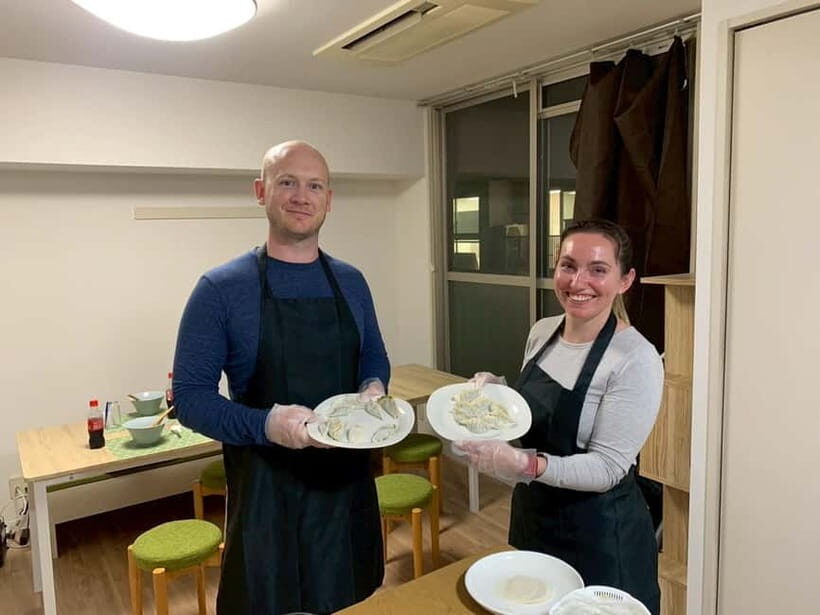
Once your ramen and gyoza are ready, you shift from cooking mode to eating mode during a 1-hour tasting session.
This tasting isn’t an afterthought. It’s where everything clicks. You’ll taste your own bowl of ramen and your own gyoza, which is the easiest way to understand what you did right—and what you might tweak next time.
Also included are drinks: sake, beer, and soft drinks. In a few reviews, guests mention this as part of the fun evening vibe, like the feeling of a casual dinner shared with people you just met. That’s one of the strengths of doing this in a small group kitchen: you tend to talk while you eat, instead of rushing out after the cooking part is done.
Why the small group (up to 8) feels different than big classes
With a limited group size of 8 participants, the class can actually move at a human pace. You’re not lost in a crowd. You’re more likely to get quick feedback—especially if you’re a beginner.
I also think the small group format helps the instructors manage timing. When ramen noodles and gyoza both need attention, it helps if everyone can follow along without waiting forever for the next step.
If you’re traveling solo, this is a comfortable way to meet others. Many guests describe the vibe as feeling like cooking with friends, not sitting in a formal workshop. That’s exactly what you want for a class that’s both educational and enjoyable.
Who’s teaching: English-and-Japanese coaching you can actually follow
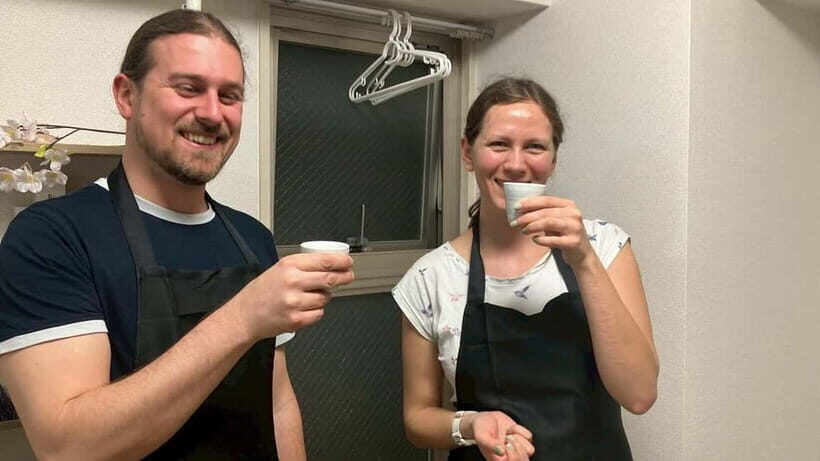
Instruction language is English and Japanese, and the class is designed to be beginner-friendly.
In the reviews provided, instructors are frequently praised for clear guidance and patience. Names that come up again and again include Ryota, Keiichi, Mimi, Yuma, Nana, Yuriko, and Saya. That’s a strong sign you’re dealing with a team that can handle different learners, from teens to adults.
What matters for you is the teaching style: a good class doesn’t just explain what to do. It also explains why. When chefs point out small details—like technique for dumpling folding or noodle handling—you can adjust on the spot instead of hoping for the best.
Dietary fit: vegetarian and vegan accommodations you should ask about
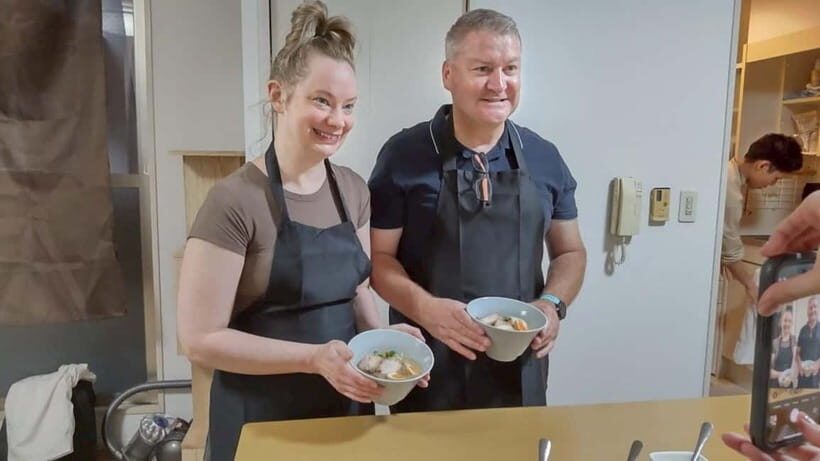
One reason this class stands out is how some sessions have handled diet needs. Reviews mention accommodations for vegan and vegetarian requirements.
So if you eat vegetarian or vegan, you should feel comfortable reaching out during booking or before you arrive. Don’t assume a standard substitution will be automatic for every session, but the fact that some hosts have accommodated these requests is a good signal that they can work with you.
Where it is in Nanba: Dear Court Semba, Room 303
The meeting point is Dear Court Semba 303, located at 4-chōme-3-1 Bakurōmachi, Chuo Ward, Osaka 541-0059.
No hotel pickup is included, so you’ll want to reach the area on your own. When you arrive, use the entry instructions carefully:
- Look for the doorbell panel at the entrance
- Press 303, then the Call 呼 button
- After the door opens, take the stairs or elevator to Room 303 on the 3rd floor
One practical warning from past participants: the building can feel tucked away, so allow extra minutes to locate it. If you’re arriving later in the evening, give yourself buffer time to avoid stress. Once you’re inside, the class part usually feels smooth.
Price and value: $70 for 2 hours of real cooking + drinks + recipes
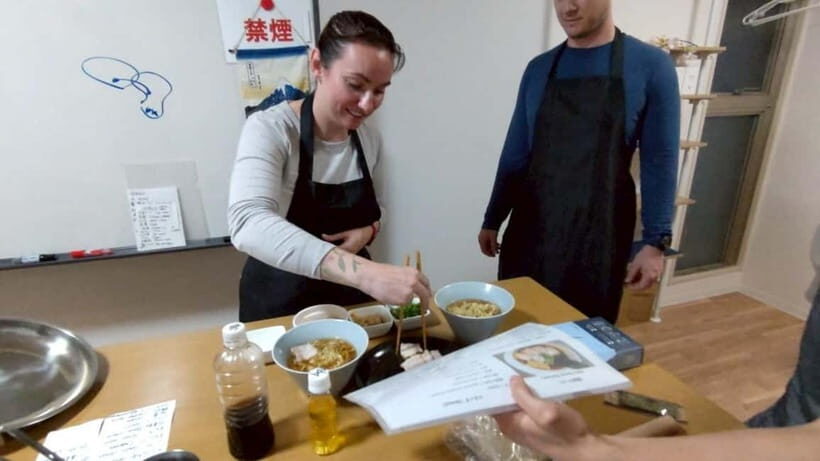
At $70 per person for a 2-hour experience, you’re paying for more than a meal. You’re paying for guided skill-building with:
- all ingredients and tools
- expert coaching from washoku professionals
- 1.5 hours of hands-on cooking
- 1-hour tasting with sake, beer, and soft drinks
- recipes to take home
Here’s the value logic I’d use if I were deciding from scratch. If you just want to eat ramen and gyoza, Osaka offers plenty of choices. This class is worth it because it changes the outcome. You’re learning noodle and dumpling technique, then eating the result, then leaving with recipes so the meal doesn’t end when the night does.
Also, the group size (up to 8) supports the value. In bigger classes, you can feel like a spectator. Here, the structure makes it more likely you’ll actually get enough attention to learn what matters.
What to expect on the night itself (timing, energy level, and how it feels)
Plan for an active evening. You’ll move through prep, cooking, and then a shared tasting. It’s not silent or stiff. Multiple reviews describe the tone as welcoming and fun, with instructors helping everyone participate.
If you’re worried you’ll feel awkward because your cooking skills are rusty, don’t. The class is described as suitable for beginners and food enthusiasts, and the teaching teams are repeatedly praised for making instructions easy to follow.
It also helps that you get to talk while cooking and eating. Several guests mention feeling like they cooked with friends rather than attending a typical class. If you enjoy meeting people from different countries over dinner, this format fits well.
Who should book this Osaka ramen and gyoza class
This is a strong fit if you:
- want a hands-on Osaka ramen experience, not just a food tasting
- enjoy cooking and want a method you can repeat later
- like small-group activities where you can ask questions
- want a fun night in Nanba that ends with the meal you made
It’s also a good pick for couples and families. Past sessions include groups with teens, and guests describe it as a shared outing with everyone able to participate.
If you hate group cooking (some people do), this might feel like a lot. But the format is built for participation, so it’s best if you’re open to chopping, mixing, folding, and learning together.
Should you book this Osaka ramen and gyoza cooking class?
Book it if you want a real skill night in Osaka—especially if you care about getting the ramen and gyoza technique right. The class’s value comes from the full package: you cook, you taste, you get drinks, and you take home recipes.
Skip it only if you’re looking for a purely passive experience or you really don’t want to find the building on your own. Because there’s no pickup, you’ll need to show up ready to navigate to Dear Court Semba and Room 303.
If you’re in Osaka and want one memorable, practical food experience, this is the kind you’ll still be making back home.
FAQ
How long is the Osaka ramen and gyoza cooking class?
The experience lasts 2 hours total, including a 30-minute orientation and preparation session, 1.5 hours of hands-on cooking, and a 1-hour tasting session.
What dishes will I make in this class?
You’ll make ramen and gyoza with guidance from the instructors.
Is this class a small group?
Yes. It’s limited to a small group of 8 participants.
Are drinks included?
Yes. During the 1-hour tasting session, drinks such as sake, beer, and soft drinks are included.
What’s included in the price?
The class includes all ingredients and tools, expert guidance, the orientation and cooking time, the tasting session with drinks, and recipes to take home.
Do I need to bring any ingredients or cooking tools?
No. The class provides all ingredients and tools you need for cooking.
Where is the meeting point, and how do I enter?
The meeting point is Dear Court Semba 303. Press 303 and the Call 呼 button at the entrance, then go to Room 303 on the 3rd floor by stairs or elevator.
Is the instruction available in English?
Yes. Instruction is available in English and Japanese, and it’s suitable for beginners.
Can the class accommodate vegetarian or vegan diets?
Some past participants report that the hosts were able to accommodate vegan requirements (and vegetarian needs as well). It’s a good idea to mention your dietary needs when you book.