REVIEW · OSAKA
Immerse in Judo Martial Arts Class from Japan
Book on Viator →Operated by Daishin Judo Club · Bookable on Viator
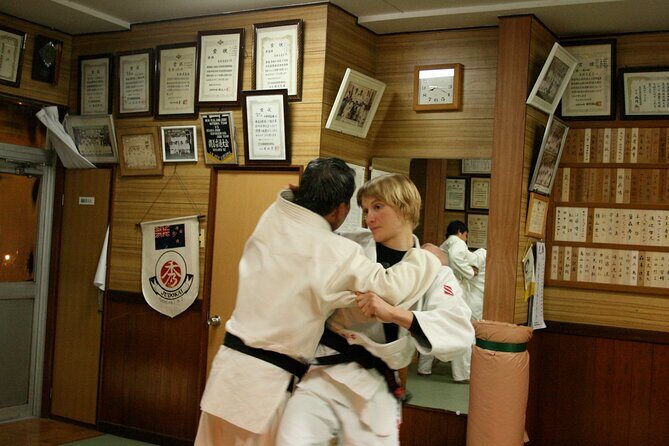
Real judo starts on the tatami. At Daishin Judo Club, you train under sensei Akihiro Matsuura (8th dan) and learn how judo works in a real dojo setting, not a demo show. I also like that the class is set up so both first-timers and experienced judoka can get something useful from the same session.
You’ll work on basics like posture, movement, grappling, and ukemi (break-falling). If you already know judo, you’ll shift toward throwing (nage-waza) and ground technique (ne-waza) and you can ask questions about how the art developed and why the etiquette matters.
The one drawback to plan for: judo is physical. Even beginners should expect close contact on the mat and to practice break-falls, so it’s not a good choice if you want something strictly light or purely observational.
In This Review
- Key Highlights You’ll Notice Fast
- Daishin Judo Club in Tennoji: A Real Osaka Mat
- Your 1.5-Hour Session: What You’ll Do on the Mat
- If You’re New to Judo: Posture, Ukemi, and Basic Throws
- For Judoka With Experience: Nage-waza, Ne-waza, and Randori
- Etiquette and Self-Discipline You’ll Actually Feel
- The Instructor and Group Dynamic That Make It Worth Paying For
- Price and Value: Why This $97.55 Can Make Sense
- Logistics That Help You Show Up Confident
- Who Should Book This Judo Class (and Who Might Skip)
- Should You Book This Osaka Judo Class?
- FAQ
- Where is the meeting point for the judo class?
- How long is the experience?
- Do I need prior judo experience?
- Who teaches, and what languages are used?
- How large is the group?
- Are service animals allowed?
Key Highlights You’ll Notice Fast
- Sensei Akihiro Matsuura (8th dan) with decades of teaching at a dojo founded in 1976
- Small group size (max 6) for real coaching, not just a quick intro
- Clear beginner track: posture, grappling basics, ukemi, and basic throws
- Advanced track: nage-waza, ne-waza, and question time with the instructor
- Randori can happen and it’s often described as intense but enjoyable
- Instructor speaks Japanese, English, and Korean, so you won’t feel stuck
Daishin Judo Club in Tennoji: A Real Osaka Mat
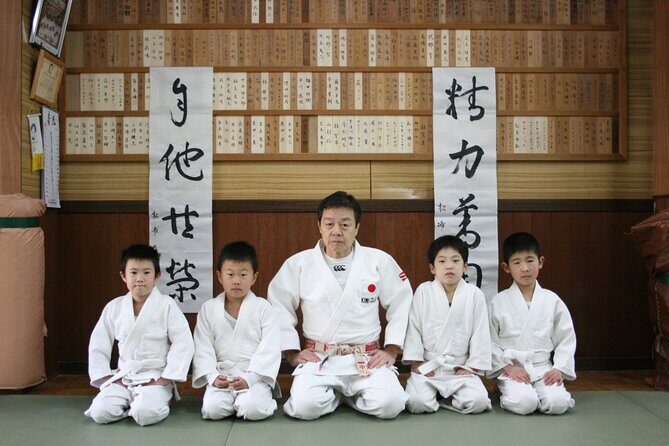
This class takes place at Daishin Judo Club, inside a traditional dojo environment used for training, not a “tour performance.” The address points you to the Daishin Judo Orthopedic Clinic area in Tennoji Ward (10-22 Funahashichō, Osaka, 543-0024). It’s convenient because it’s near public transportation, which matters in a city where you’ll likely hop between neighborhoods.
What makes this feel authentic is the leadership and continuity. The dojo dates back to 1976, and the instructor, Akihiro Matsuura, is an 8th dan with nearly 50 years of judo teaching experience. That kind of long-term setup usually means the class follows a structured training flow—warm-up, skill drills, then harder practice—rather than a random mix of stunts.
Also, the group stays small (up to six). That changes the vibe fast. You get more correction when you’re learning posture and break-falls, and it’s easier to ask questions without feeling like you’re holding up a big group.
You can also read our reviews of more tours and experiences in Osaka


Your 1.5-Hour Session: What You’ll Do on the Mat
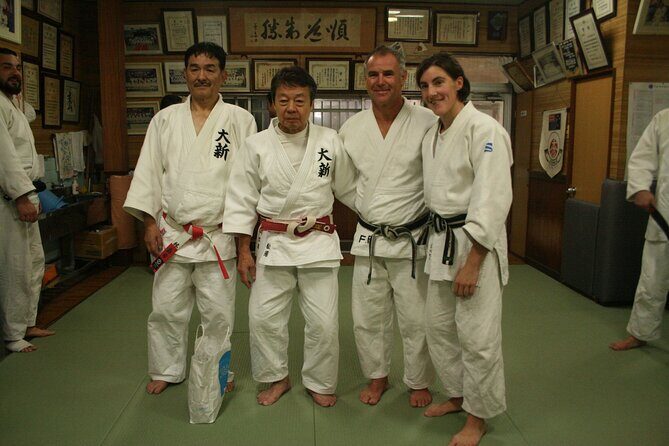
The class runs about 1 hour 30 minutes, starting and ending back at the meeting point. You’ll use a mobile ticket, and you should plan to arrive early enough to find the exact spot comfortably—especially if the entrance area looks like a clinic rather than a stand-alone sports hall.
Inside the dojo, you can expect a training rhythm built around these themes:
- learning how to take grips and move without panicking
- practicing ukemi (break-falling) so throws feel safer and more controlled
- drilling basic throwing forms (for beginners)
- transitioning to more technique work (nage-waza and ne-waza) if you already have judo experience
Because the instructor can speak Japanese, English, and Korean, you’re not forced to guess. Even if you know a little Japanese, the real help is that the instructor can switch to the language that keeps you following instructions clearly. That matters for safety when you’re practicing fall mechanics and grappling positions.
If You’re New to Judo: Posture, Ukemi, and Basic Throws
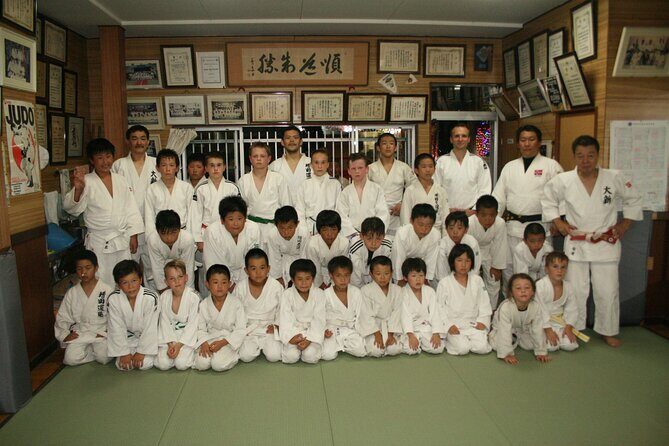
If this is your first time with judo, the session is designed to keep you progressing without requiring prior knowledge. You’ll start with basics like posture and how to move on the mat. It’s not about looking athletic for the camera—it’s about building a stable base so your balance stays under you when someone applies pressure.
Then comes ukemi, the break-falling technique. This is one of the most important skills in judo because it changes your relationship with being thrown. Instead of treating falls like a surprise, you learn a controlled way to land. In a good dojo, that reduces fear and helps you relax enough to learn technique.
After that, beginners work through grappling fundamentals and some basic throwing forms. The goal isn’t to master a throw in one session. It’s to leave with understanding: how balance works, how grips create leverage, and what it feels like when technique starts to click.
One practical tip: go into this ready to be a little uncomfortable. The first few minutes can feel awkward because your body is doing new patterns—especially when you’re learning how to fall correctly. Once you trust the basics, the rest becomes easier.
For Judoka With Experience: Nage-waza, Ne-waza, and Randori
If you already train judo, you’ll get moved beyond pure fundamentals into technique-focused practice. The class can cover:
- Throwing technique (nage-waza)
- Ground technique (ne-waza)
You can also ask questions about judo’s history and how training principles developed. That’s useful because it turns the physical work into something more meaningful. You’re not only memorizing moves—you’re learning how the art thinks.
One training element you might encounter is randori. In the feedback from past participants, randori is mentioned as intense but enjoyable. That lines up with what you’d expect in a dojo with real judoka: after drills, you test skills under resistance and pressure. If you’re experienced, you’ll likely appreciate that you’re not just doing slow-motion instruction.
If you’re experienced but out of practice, this might still be challenging. Take it as a chance to refresh fundamentals like balance and transitions. Those skills matter even when you’re working advanced techniques.
Etiquette and Self-Discipline You’ll Actually Feel
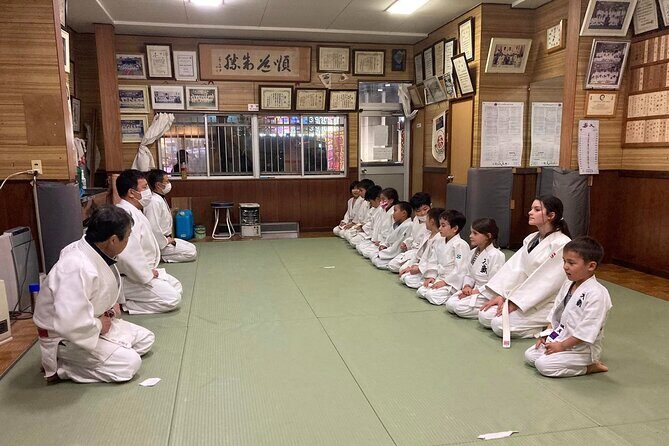
Judo isn’t only a system of throws—it’s a training culture. This class emphasizes the “why” behind the movement: respect, discipline, and self-defense through practice.
You’ll feel etiquette in the way the session runs: attention to posture, mindful control in grappling, and mutual respect between training partners. When instructors teach newcomers, they often do it through patient correction and consistent rules about how to train safely. That’s where you see the cultural side of judo: humility in learning, seriousness in technique, and responsibility for your partner’s wellbeing.
The self-defense aspect is less about turning this into a street-fight lesson and more about control. Judo teaches leverage, balance, and timing—skills that help you manage conflict with calm structure. Even if you only take one class, you’ll likely leave understanding how those principles work in motion.




The Instructor and Group Dynamic That Make It Worth Paying For
This is the kind of experience where the coach matters. Akihiro Matsuura has a long teaching record, and that usually shows up in the details: how instructions are broken down, how corrections are delivered, and how training stays organized.
It also helps that the instructor can speak English and Korean (and Japanese, of course). In a martial arts class, language isn’t just convenience—it’s clarity. When you understand what to do and why, you can focus on movement instead of translating.
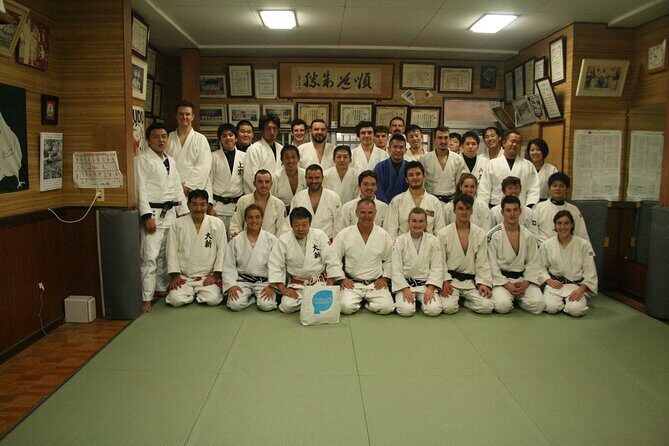
And the small group size changes the social atmosphere. Feedback on the dojo highlights that the instructor and other athletes are friendly, respectful, and willing to teach. In other words, this isn’t a “you’re here to be graded” environment. It’s more like you’re joining practice and learning how the dojo community works.
Price and Value: Why This $97.55 Can Make Sense
At $97.55 per person for about 1 hour 30 minutes, this isn’t a bargain-basement activity. But it can be good value if you care about real instruction and not just a quick try.
Here’s why the price can work:
- You’re paying for coaching from an 8th dan instructor with decades of experience.
- You’re in a max of six-person group, which usually means more direct feedback.
- You get structured training elements that matter for both beginners (ukemi, grappling basics, throws) and experienced judoka (nage-waza, ne-waza).
Also, it’s booked around 30 days in advance on average, which suggests there’s demand for this specific style of dojo-led class. If you wait until the last minute, you might struggle to find a slot that fits your schedule.
If you want a souvenir photo and a quick story, this might not feel “touristy” enough. If you want to bring home a skill, confidence, and a real window into Japanese training culture, it’s a strong buy.
Logistics That Help You Show Up Confident
The main practical points are straightforward, but a few details will make your visit smoother:
- Start location: Daishinjudo Orthopedic Clinic area, Funahashichō, Tennoji Ward. Use the exact address when you navigate.
- End location: back where you start. Plan no complicated travel right after.
- Near public transit: you can take trains/subways and walk the last stretch. Still, check your route the day you go.
- Mobile ticket: keep it accessible on your phone.
- Service animals allowed: if you need one, you can bring it.
What to bring isn’t fully specified in the information provided, so follow the instructor’s directions once you arrive. The most useful mindset is simple: wear something comfortable for training, and be ready to learn fall technique carefully.
If you have any injuries or concerns, tell the instructor before you start. Martial arts training depends on safety and communication, and being upfront helps you train the way you should.
Who Should Book This Judo Class (and Who Might Skip)
I’d book this if you fit one of these profiles:
- You want an authentic Japanese activity that’s active, structured, and not staged
- You’re a beginner who’s willing to practice ukemi and get comfortable on the mat
- You already do judo and want technique work plus randori pressure (where appropriate)
- You like training with smaller groups and getting coaching, not just watching
You might skip it if you:
- want a sit-and-watch cultural experience
- avoid physical contact or practicing falls
- have restrictions that make mat training difficult
Also, if you’re short on time in Osaka but still want something memorable, the 1.5-hour length is a good fit.
One more thing: there’s free cancellation if you cancel up to 24 hours in advance for a full refund. So you can book with less stress while you finalize your schedule.
Should You Book This Osaka Judo Class?
Yes—if you want real training culture and you’re okay getting hands-on. The combination that makes this stand out is simple: a small group, an experienced instructor (Akihiro Matsuura, 8th dan), and a class that adjusts for beginners versus experienced judoka. You’ll learn meaningful basics like posture and ukemi, and if you’re ready for more, you can work nage-waza, ne-waza, and possibly randori.
If you’re the type who enjoys respectful discipline and you don’t mind moving hard, this is a smart use of your time in Osaka.
FAQ
Where is the meeting point for the judo class?
The class meets at Daishinjudo Orthopedic Clinic, 10-22 Funahashichō, Tennoji Ward, Osaka, 543-0024, Japan.
How long is the experience?
The judo training session is approximately 1 hour 30 minutes.
Do I need prior judo experience?
No. If it’s your first time, you’ll practice basic posture and movements, learn ukemi (break falling), and do basic throwing forms. If you already have experience, you can work on throwing (nage-waza) and ground techniques (ne-waza).
Who teaches, and what languages are used?
The instructor is Akihiro Matsuura, an eighth dan black belt. He can speak Japanese, English, and Korean.
How large is the group?
The experience has a maximum of 6 travelers.
Are service animals allowed?
Yes, service animals are allowed.