REVIEW · OSAKA
Osaka Harbor and Guided Sightseeing Ride
Book on GetYourGuide →Operated by Road Bike Rental Japan · Bookable on GetYourGuide
If you like your sightseeing on two wheels, this is it. This Osaka Harbor cycling tour strings together old neighborhoods, river paths, and harbor views in one efficient ride.
I particularly love how the route keeps you off busy roads at the start, gliding along the river cycle paths. And the big payoff is the climb to Namihaya Bridge, where you get a rare 360-degree sweep of Osaka’s bay.
The main consideration is effort: it’s a real workout with about 42km (26 miles) of road cycling, including a big climb, so it’s best for intermediate riders who can stay in the saddle.
In This Review
- Key things you’ll notice on this Osaka Harbor cycling route
- From Kema Sakuranomiya to the Yodo River: start easy, then build
- Osaka by bike on calmer rivers: Sugihara Johoku Bridge and the “you can see everything” feeling
- Umeda views, Universal-area edges, and two mini-ferry rides that change your perspective
- 9 Borden coffee stop and fueling before the Namihaya Bridge challenge
- Namihaya Bridge to Kitamura Minami Park: big effort, then smaller surprises
- Nishinari and Shinsekai: gritty streets, arcade energy, and Tsutenkaku’s old spirit
- Shitennoji and Osaka Castle grounds: temple calm followed by a moat-and-wall ride
- Price and value: what $77 buys you on a 270-minute bike day
- Who this Osaka Harbor cycling tour suits best (and who should think twice)
- Should you book this cycling tour of Osaka Harbor?
- FAQ
- How long is the Osaka Harbor cycling tour?
- Where do we meet, and when should I arrive?
- What’s included in the price?
- Do I need to be an experienced cyclist?
- Is this tour suitable for people who can’t ride a bike or have health concerns?
- Are there any rules about food or drinks?
- What languages are the guide and tour offered in?
Key things you’ll notice on this Osaka Harbor cycling route
- River-path starts that feel calmer: you ease into road-bike riding using riverside lanes with little traffic stress.
- Island-hopping via Osaka’s rivers and mini-ferries: you switch sides of the water and keep the day moving.
- Namihaya Bridge as the visual reward: one hard rise, then a wide harbor panorama.
- Old-to-new Osaka contrasts on the same day: Nishinari shopping arcades, Shinsekai, and then major landmarks.
- Castle grounds by bike, not just from the outside: you cycle through the moat-and-wall area for a different angle.
- Small group pacing: limited to 6 participants, so you can actually ride together instead of getting stretched out.
From Kema Sakuranomiya to the Yodo River: start easy, then build
The tour kicks off near Kema Sakuranomiya Park, along the Oo River. If you’re worried about riding a road bike in a new country, this is a smart setup: the early stretches use riverside cycle paths where the traffic feels far more manageable than you might expect in a major city.
You’ll ride up toward the Kema lock gate on the Yodo River area, which helps orient you fast. This part matters because it’s not just distance—it’s training for the day’s rhythm. You get time to get comfortable with the bike, your posture, and the cadence before the route starts stacking up sights.
Practical tip: plan to arrive about 15 minutes early. The meeting point is 1 minute north of Sakuranomiya Station (West Exit), and that buffer is what gives you enough time for bike and gear setup without rushing.
You can also read our reviews of more guided tours in Osaka

Osaka by bike on calmer rivers: Sugihara Johoku Bridge and the “you can see everything” feeling
After a warm-up along the Yodo River (including a stretch of about 5 kilometers), you cross to the north side. Then you’re treated to river-and-city views from Sugihara Johoku Bridge, where you can take in Osaka from above and across the water.
This is one of the best moments for photos, but it’s also one of the best moments for understanding the city’s layout. Osaka’s rivers don’t just run through the background—they shape how neighborhoods connect. When you’re riding alongside the water, you notice patterns you miss when you’re stuck on streets.
One thing to keep in mind: the Yodo River cycle path can run far beyond this tour. The upside for you is confidence—you’re riding on something that actually connects places. The downside is that some sections can feel more utilitarian than scenic, depending on your expectations. If you’re chasing constant “wow” scenery, you’ll want to balance that with the fact that Osaka’s best views are often around the crossings and bridges.
Umeda views, Universal-area edges, and two mini-ferry rides that change your perspective
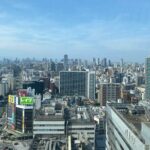
As you move back along the north side of the Yodo River, the skyline begins to show itself more clearly. There’s a panoramic look toward Umeda, and a specific landmark you’ll likely recognize quickly: the Umeda Sky Building.
From there, the route weaves over toward the Universal Studios area. Before you board the first mini-ferry, you get a helpful visual moment from the Tempozan side, with views of the giant Ferris wheel and the Osaka Aquarium area. Even if you don’t know exactly what you’re looking at yet, you start building a mental map of how the bay district fits into central Osaka.
Then come the ferry hops. You’ll board two mini-ferries during the day, using them as moving links across Osaka’s river network. From a cyclist’s perspective, that’s great: it breaks up effort and gives your legs a chance to reset while still feeling like part of the sightseeing. It’s also fun in a low-key way—less formal than a bus tour, more local than a taxi detour.
9 Borden coffee stop and fueling before the Namihaya Bridge challenge
You’ll have a pre-ride coffee included, and later there’s a quick coffee-and-cookie break at 9 Borden. This isn’t luxury; it’s timing. Because you’re heading into the hardest climb after this pause, you want a small boost, not a heavy meal.
The tour doesn’t pretend the Namihaya Bridge part will be easy. The climb is described as the hardest of the day, and your reward is equally specific: a wonderful 360-degree view over Osaka’s harbor.
What I like about this structure is the honesty. You’re not sold as a casual stroll. You’re given the effort—and then you get the view to justify it.
Namihaya Bridge to Kitamura Minami Park: big effort, then smaller surprises
Crossing the Namihaya Bridge is the day’s “earn it” moment. Once you’re over the top, you walk up Chitose Bridge and then roll down into Kitamura Minami Park.
The park portion adds a human touch that keeps the tour from feeling like only landmarks and engineering. There are kid’s artwork items along the way, which gives you a small cultural snapshot—like you’ve stepped into a local rhythm rather than only passing through major sights.
After the park, you head to the second mini-ferry, crossing the Kizu River. This ferry-and-ride pattern is one of the tour’s signatures: Osaka’s water makes the city feel split into “islands,” and you keep switching your angle on the skyline.



Nishinari and Shinsekai: gritty streets, arcade energy, and Tsutenkaku’s old spirit
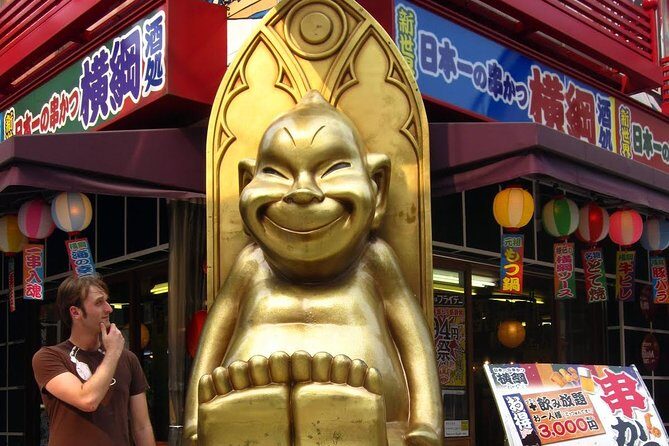
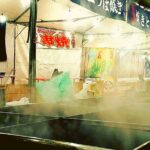
Once you’re across the second ferry, the route pushes toward Tsutenkaku Tower via gritty streets and shopping arcades in Nishinari.
This is the contrast part that makes Osaka feel like Osaka. You’re not only seeing “pretty” sections—you’re seeing everyday street commerce, neighborhood texture, and the kind of signs and storefronts that don’t show up in postcard versions of the city.
Then comes Tsutenkaku and Shinsekai. The tower and surrounding area connect you to a post-war economic boom atmosphere, and the neighborhood carries a more older, local feel than the glossy districts. It’s the kind of stop that makes your ride story feel real, because it’s not just one landmark—it’s a whole zone.
If your style is “walk fast through museums but love street scenes,” Shinsekai is one of the best uses of cycling. You can cover distance without flattening the neighborhood into a quick photo stop.
Shitennoji and Osaka Castle grounds: temple calm followed by a moat-and-wall ride
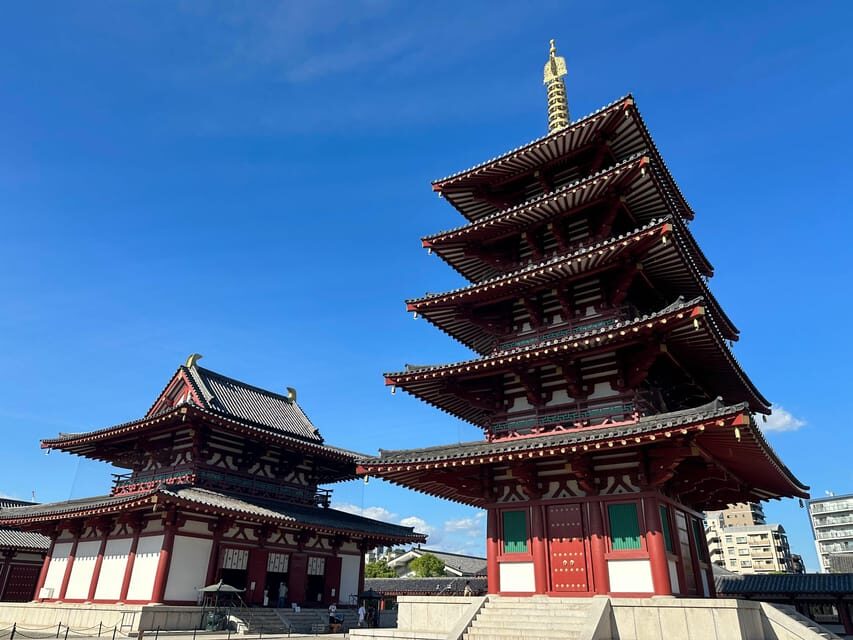
Next up is Shitennoji, including its five-story pagoda and ponds with turtles. Even if you’re not a temple superfan, this is a calming pause after the busier street sections. It’s also a nice change of pace for your legs if you’ve been pedaling hard.
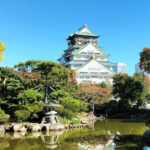
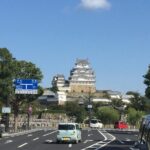
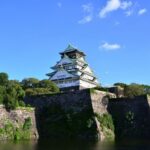
Then you roll north toward Osaka Castle. The tour’s finish route includes cycling through the castle grounds, with the impressive walls and surrounding moats as your backdrop. Cycling in this kind of space changes the viewpoint. Instead of looking at the castle from one spot, you move through the area at a pace that lets you take it in from multiple angles.
Finally, you return along the Oo River back to the starting HQ area. That last stretch helps you close the loop: you’re back on the river again, with the day’s neighborhoods and views now stacked in your memory rather than still happening.
Price and value: what $77 buys you on a 270-minute bike day
At $77 per person for about 270 minutes, this tour is basically paying for three things: a guided route, road-bike setup, and the time-saving structure that ties together multiple districts efficiently.
You also get use of a road bike and helmet, plus pre-ride coffee. No hotel pickup is included, so you’re using your own logistics to get to the meeting point, but the payoff is that the tour itself stays focused. With the small group size (up to 6), you’re not stuck waiting for a crowd or trying to re-group at every stop.
In practical value terms, you’re getting:
- around 42km of cycling (with ferry crossings and a mix of walking/rolling sections),
- major landmarks like Umeda and Osaka Castle,
- and the less “tour-only” texture of Nishinari and Shinsekai.
If you’re the type who wants to see more than one Osaka district without doing it the slow way, this is a strong deal for the effort level.
Who this Osaka Harbor cycling tour suits best (and who should think twice)
This is aimed at people who can ride confidently and handle a road-bike distance. It’s marked as suitable for intermediate cyclists, with about 26 miles of road cycling and at least one significant climb.
It’s not suitable for pregnant women, people with heart problems, or anyone who can’t ride a bike. Also, it’s not a BYO-mood party: alcohol and drugs are not allowed.
If you love:
- river-side cycling,
- bridge views and skyline angles,
- and neighborhoods that feel lived-in,
then you’ll likely enjoy the way the day flows from calmer paths into more character-heavy districts.
If you’re highly sensitive to riding through industrial-feeling segments, there’s a chance you’ll find some stretches less exciting than others. One rider found parts of the industrial riding offered less to see, even though the bridge and overall structure remained worthwhile. Your best approach is to treat those sections like travel time between the real picture moments.
Should you book this cycling tour of Osaka Harbor?
Yes—if you want a concentrated day that mixes authentic neighborhoods, water crossings, and standout views, this is a smart choice. The Namihaya Bridge panorama and the variety of districts (Umeda, Nishinari/Shinsekai, Shitennoji, Osaka Castle) are exactly the kind of “all-in-one” sightseeing win that’s hard to replicate on your own unless you’re very comfortable navigating and planning a multi-part route.
Think twice if you’re aiming for an easy, mostly flat day. This tour includes 42km and a big climb, so it’s better suited for riders who enjoy the effort. If that sounds like your kind of day, book it, show up early for setup, and bring the mindset that the best views come after the work.
FAQ
How long is the Osaka Harbor cycling tour?
The duration is 270 minutes, so plan on a half-day ride with stops and cycling breaks built in.
Where do we meet, and when should I arrive?
Meet 1 minute north of Sakuranomiya Station (West Exit). Arrive 15 minutes before the start time for bike and gear setup.
What’s included in the price?
Included are pre-ride coffee, use of a road bike and helmet, and a local guide.
Do I need to be an experienced cyclist?
The tour features 26 miles (42km) of road cycling and is suitable for intermediate cyclists.
Is this tour suitable for people who can’t ride a bike or have health concerns?
No. It’s not suitable for people who can’t ride a bike, and it’s also not suitable for pregnant women or people with heart problems.
Are there any rules about food or drinks?
Alcohol and drugs are not allowed.
What languages are the guide and tour offered in?
The live guide speaks English and Japanese.