REVIEW · OSAKA
Urban Canvas: Osaka Street Art Bike Tour
Book on Viator →Operated by In Kansai Experiences · Bookable on Viator
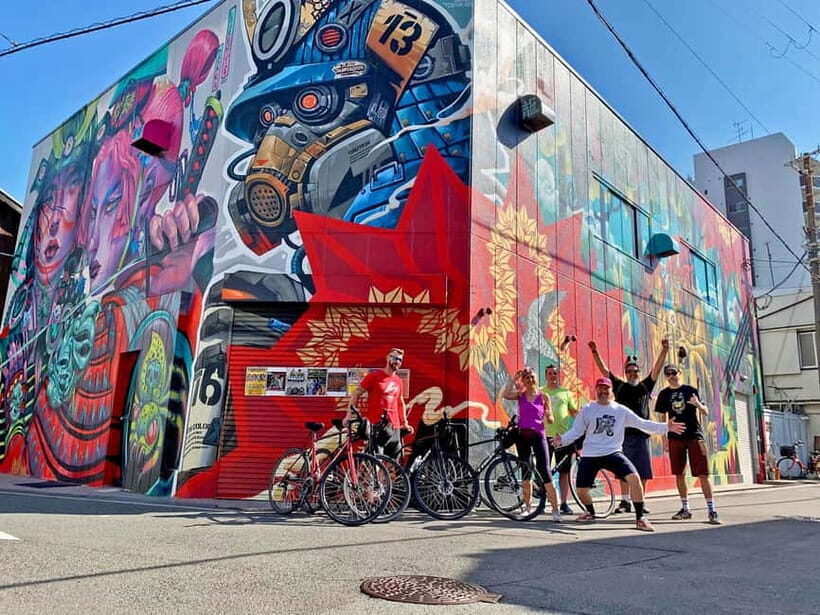
Street art + city bikes is a winning combo. This Osaka tour blends local commentary with real neighborhood riding, not a quick photo loop of the same sights. You bike through backstreets, bridge and river views, and art-heavy areas around Tenma and Juso, then you pause often for coffee, snacks, and food.
I especially like that the bicycle is included, so you don’t waste time hunting rentals or figuring out gear. I also like the stop rhythm: you get breaks built in, and the itinerary includes food stops like craft coffee and a slice of locally made pizza.
One thing to consider: this ride asks for moderate physical fitness. If you’re not comfortable cycling for a few hours with city traffic around, you may feel more tired than excited.
In This Review
- Key things you’ll notice on this Osaka street-art bike tour
- Why Tenma, Juso, and Nakazaki-cho work so well for street art
- Meeting point, timing, and the ride you’re signing up for
- Stop 1: Osaka’s urban maze—train lines, rivers, bridges, and skyline
- Stop 2: Tenma backstreets with craft coffee and local food ideas
- Stop 3: Nakazaki-cho boutiques, galleries, and a 100-year pizza stop
- Stop 4: Jusohonmachi and the street-art center energy near the river
- The guide and group size: why this feels safe and personal
- Pace, cycling level, and what to wear
- Included snacks and coffee: food that matches the tour
- Price and value: what $89.17 buys you in Osaka
- Who this tour suits best
- Should you book Urban Canvas: Osaka Street Art Bike Tour?
- FAQ
- Does the tour include the bicycle?
- How long is the Osaka Street Art Bike Tour?
- Where does the tour start and what time is it?
- Is there a mobile ticket?
- What food and drinks are included?
- Is alcohol included?
- How many people are in the group?
- What happens if the weather is bad?
Key things you’ll notice on this Osaka street-art bike tour
- Bike rental is handled for you: use of the bicycle is included, starting and ending at the same meeting point.
- Stops are spaced out for recovery: shorter cycling stretches, plus snack and coffee breaks.
- Tenma and Juso steer the tour off the usual track: less tourist flow, more local street-level Osaka.
- Street art is the main subject, not a side quest: you’ll spend meaningful time in areas tied to Osaka’s street-art scene.
- Food stops feel woven into the neighborhoods: craft coffee in a hip stand and pizza in an older building.
- Small group size supports safety and conversation: up to 8 people keeps the pace more manageable.
Why Tenma, Juso, and Nakazaki-cho work so well for street art
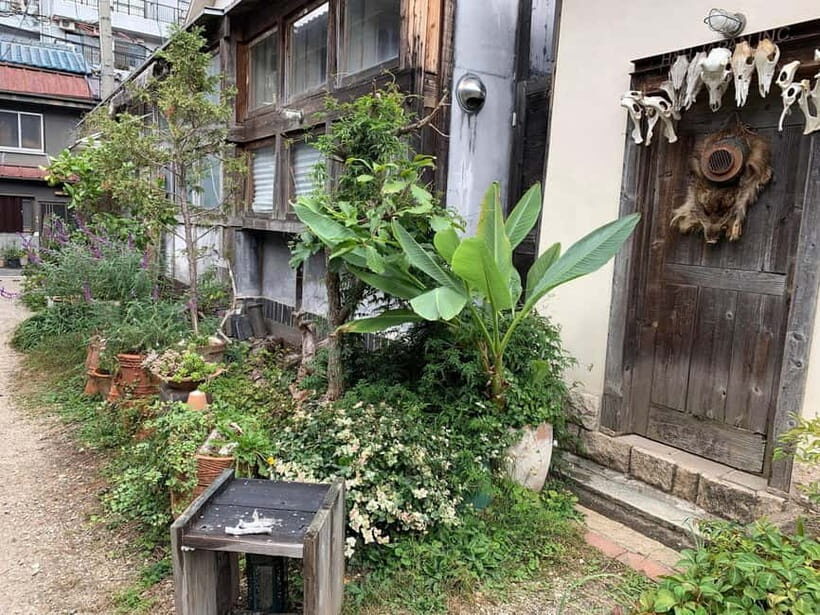
Osaka has a reputation you can’t ignore: trains, river edges, neon, and big-city energy. But if you only stick to the famous sights, you miss the daily texture where art shows up—in alley walls, under bridges, on facades, and on the kind of corners locals actually hang around.
That’s why this route makes sense. It focuses on Tenma and Juso, plus Nakazaki-cho, where you get the blend of street art, small shops, and older neighborhood character. The tour also uses a “ride and explain” format. You’re not just stopping for pictures. You’re hearing context from a local guide who helps you read what you’re seeing—how graffiti, murals, and urban design fit into the area’s day-to-day life.
You can also read our reviews of more cycling tours in Osaka
Meeting point, timing, and the ride you’re signing up for
The tour starts at 11:00 am at Cycle Osaka, 1-chōme-10-7 Tenma, Kita Ward, Osaka 530-0043. It ends back at the meeting point, so you don’t have to worry about getting stranded far from transit after the ride.
You’ll use a mobile ticket, and the meeting point is near public transportation. That matters in Osaka, where it’s easy to waste time if you’re walking long distances just to start a tour. Plan to arrive a little early so you can get settled before you start pedaling.
This experience runs about 3 to 4 hours, with multiple stops: one longer stretch, several shorter breaks, and a longer block later in the itinerary. It’s built for people with moderate fitness who can handle city riding at an easy-to-intermediate pace.
Stop 1: Osaka’s urban maze—train lines, rivers, bridges, and skyline
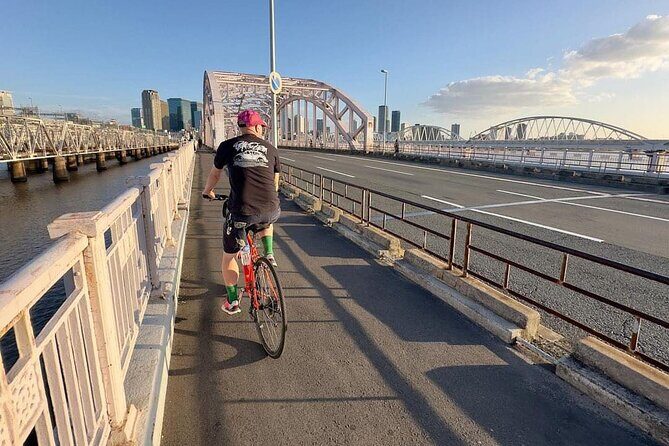
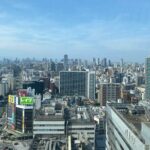
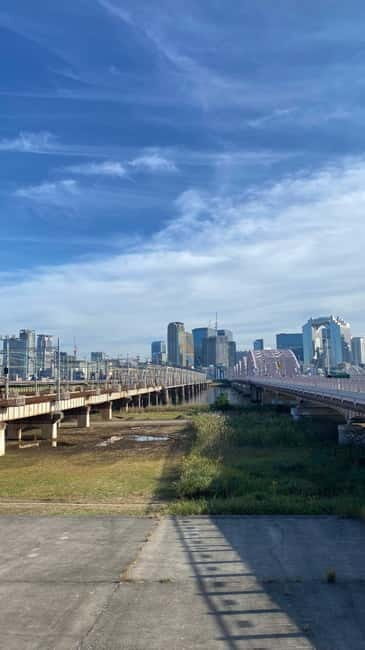
Your first hour sets the tone. You pedal through an urban maze shaped by train lines, rivers, and bridges, with graffiti and street art appearing along the way. Osaka’s modern skyline is part of the view, but the focus stays on the “in-between” spaces where the city feels lived in.
What makes this opening strong is the commentary. You’ll get guidance from a local resident, including insights into underground, everyday Osaka life. That kind of framing helps later, because when you see a wall of art or a narrow alley shop, it’s easier to understand why it’s there and what the neighborhood might value.
Also, this is a useful warm-up. You’re moving, but you’re not immediately thrown into the most art-dense parts. You get bearings fast—then you go deeper.
Stop 2: Tenma backstreets with craft coffee and local food ideas
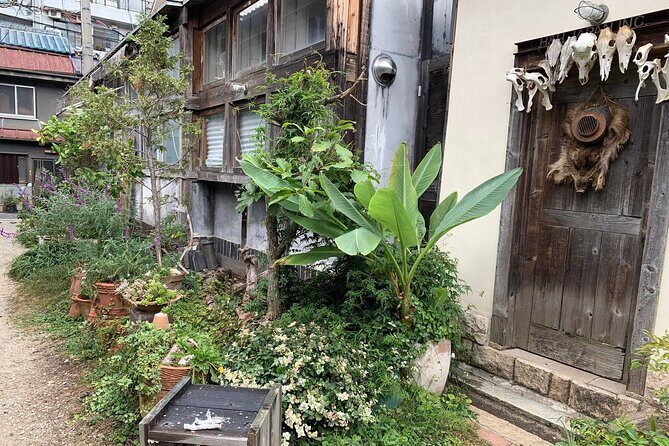
After the initial ride, you move into Tenma, and the pacing shifts into “short cycle, short pause.” The stop is about 20 minutes, which is just enough time to reset without killing the momentum.
Tenma’s value here is practical. You’re not only seeing backstreets—you’re also collecting recommendations. The stop includes a craft coffee break at a hip local stand, which gives you a sense of what to try later in the neighborhood when the tour ends.
If you like neighborhoods where daily life feels close to the pavement—quiet enough to hear yourself think, but interesting enough to keep you watching—this stop does the job.
Stop 3: Nakazaki-cho boutiques, galleries, and a 100-year pizza stop
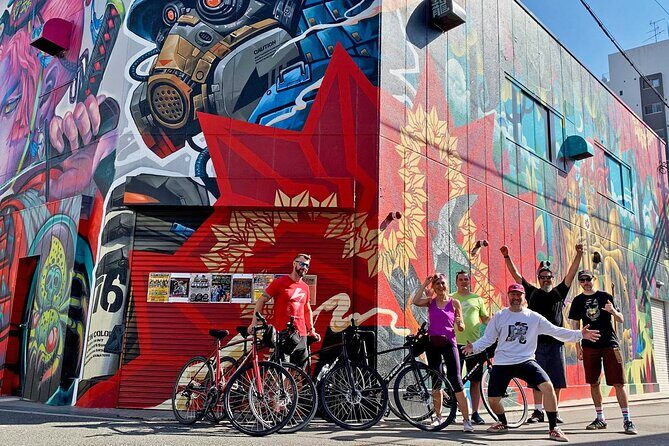
From the grittier vibe of nearby areas, you head into Nakazaki-cho, a more hipster-leaning enclave of boutiques and galleries. Another 20-minute break keeps things moving while giving you time to browse and take in the feel of the block.
Then comes one of the most memorable parts: a locally made slice of pizza served in a building about 100 years old. Food on a street-art tour can be random or touristy, but this one feels tied to place—older architecture plus everyday food.
Even if you’re not a big pizza person, it’s a smart stop because it anchors the neighborhood in something tangible. You’re not only consuming images; you’re consuming Osaka.
You can also read our reviews of more tours and experiences in Osaka
Stop 4: Jusohonmachi and the street-art center energy near the river
This is the longest section, about 1 hour 30 minutes, and it’s where the tour leans hardest into street art. The area around Jusohonmachi is described as one of the centers of street art in Osaka. It also sits over the river from the main city—meaning the tour gets you into a part of Osaka that’s less on most visitor maps.
You’ll ride over the mighty Yodo River and into Juso, with time focused on the neighborhood’s art and urban atmosphere. The idea is simple: see the architecture and then look at the walls with a guide who can explain what you’re seeing.
This is also where the guide’s role matters most. Good street art tours teach you how to notice. You start paying attention to layers—style, placement, scale, and what a piece says in relation to its surroundings.
If your goal is to leave with a deeper understanding of Osaka’s street-art culture (instead of just a few photos), this section is the heart of the ride.
The guide and group size: why this feels safe and personal
One reason this tour earns strong ratings is that it’s not huge. The group max is 8 travelers, which makes it easier for the guide to manage the flow on bikes. You’re not constantly stopping to wait for strangers, and the guide can keep the pace at a level where you can actually listen.
Communication is also a big part of why this works. The guide is described as excellent and really informative, and one guide name that comes up is Eric. When your guide is both careful with safety and strong on context, you get the best of both worlds: you feel taken care of and you come away understanding more than art locations.
Practical tip for you: if you’re the kind of person who asks questions when you’re curious, small groups are your friend. You’ll likely get more direct answers during stops.
Pace, cycling level, and what to wear
The tour calls for moderate physical fitness, so think “comfortable cycling” rather than “athletic spin class.” Most of the time, you’re riding between short blocks and then recharging during stops for coffee and snacks.
Here’s the practical truth: Osaka streets can be busy, and your bike is your focus. Wear shoes you can walk in, keep a light layer handy for weather changes, and don’t plan to show up in dressy or restrictive clothing.
Also, because the tour depends on good weather, it’s smart to watch the forecast closely the week you’re going. If it’s canceled due to poor conditions, you’ll either be offered another date or a full refund.
Included snacks and coffee: food that matches the tour
This tour includes coffee and/or tea and snacks, plus the bicycle. That’s already a big part of the value, because guided tours often nickel-and-dime food. Here, the breaks aren’t just for show—they’re part of how the tour keeps you energized for riding and walking.
Alcohol is handled differently. Alcoholic beverages aren’t included, and they’re only available for ages 20 and up. So if you’re traveling as a mixed-age group (or you just want caffeine and street snacks), you can plan around the non-alcohol focus.
Price and value: what $89.17 buys you in Osaka
At $89.17 per person, this isn’t the cheapest thing you can do in Osaka. But it’s also not overpriced when you break down the components you receive:
- Bike use is included, so you avoid rental hassle and time.
- You get coffee/tea and snacks during planned stops.
- You’re paying for local guidance and context, which is the key ingredient that turns street art into more than decoration.
- The group is small, max 8, which typically means less waiting and more real conversation.
If you were going to bike anyway, you might still pay similar money once you add the bike rental, a guide, and a couple of planned food stops. Where this tour clearly wins is time and focus: it puts you in the right neighborhoods without you having to map out street art hotspots on your own.
Who this tour suits best
This works best if you want Osaka beyond the postcard checklist. It’s a great match for people who:
- like street art as a cultural signal, not just wall photos
- enjoy neighborhoods like Tenma and Juso where daily life shows through
- prefer guided pacing with planned breaks for coffee and snacks
- want a small-group bike experience without the burden of arranging rentals
It may be less ideal if you’re strongly averse to cycling, or if you’re only in Osaka for a short time and want a simpler, mostly walking-based plan.
Should you book Urban Canvas: Osaka Street Art Bike Tour?
Book it if you want the street-art Osaka you only catch when you leave the main tourist loop—and you want a guide who helps you read the city as you ride. The included bike plus coffee/snacks and the small group size make it feel practical, not just trendy.
Skip (or consider another option) if cycling for a few hours feels stressful, or if you’re trying to minimize time outdoors when weather might be iffy. Osaka street riding is fun, but the tour does require decent conditions.
If you’re choosing between “see art” and “understand the neighborhood,” this one tilts toward understanding—while still keeping it light, snacky, and very much on a bike.
FAQ
Does the tour include the bicycle?
Yes. Use of bicycle is included with the experience, so you do not need to rent one separately.
How long is the Osaka Street Art Bike Tour?
The duration is 3 to 4 hours (approx.), with multiple stops along the route.
Where does the tour start and what time is it?
It starts at Cycle Osaka, 1-chōme-10-7 Tenma, Kita Ward, Osaka 530-0043, Japan, with a start time of 11:00 am. It ends back at the meeting point.
Is there a mobile ticket?
Yes. The tour features a mobile ticket.
What food and drinks are included?
The tour includes coffee and/or tea and snacks. Pizza is part of the itinerary at the Nakazaki stop.
Is alcohol included?
No. Alcoholic beverages are not included, though alcohol is only available for ages 20 and up.
How many people are in the group?
The tour has a maximum of 8 travelers, which helps keep it manageable and easier to ride together.
What happens if the weather is bad?
The experience requires good weather. If it’s canceled due to poor weather, you’ll be offered another date or a full refund.