REVIEW · OSAKA
Making Soba noodles at Temple
Book on Viator →Operated by 善-zen- · Bookable on Viator
Noodles, taught in temple calm. This is a short, private soba-making lesson set inside a historic temple where you also get to see the main hall and Buddha statue. What I like most is the quiet focus on the craft and the fact that the class feels genuinely personal with Hiro guiding you. One thing to consider: the soba is buckwheat-based, so buckwheat allergies can be a deal-breaker.
Price-wise, at $68.29 per person for about 2 hours, it’s not the cheapest meal you can buy in Osaka. But you’re paying for hands-on instruction, the temple setting, and a small-team atmosphere rather than a mass-produced food tour. The experience also runs on a mobile ticket, and it’s weather-dependent, so I’d plan a little flexibility if your trip dates are tight.
You’ll learn how Japanese soba is made from buckwheat flour, shape the noodles, and then sample what you made right after. And because it’s in a temple environment, the whole thing has a calmer pace than cooking classes in busier parts of the city.
In This Review
- Key points to know before you go
- A Temple Classroom for Soba Making in Osaka’s Tennoji Area
- What You’ll Make: Buckwheat Soba, Then Eat It on the Spot
- Hiro’s Private Lesson Style and How the 2-Hour Session Flows
- Temple Time: Main Hall and Buddha Statue Visits
- Price and Value: Is $68.29 Worth It?
- Practical Tips: Tickets, Weather, and What to Plan Around
- Who This Soba-Making-at-Temple Experience Is Best For
- Should You Book This Soba-Making-at-Temple Experience?
- FAQ
- How long is the soba-making experience?
- Where does the experience start?
- Is this tour private?
- What’s included in the price?
- Is private transportation included?
- Do I get a mobile ticket?
- Is buckwheat safe for everyone?
- What happens if the weather is bad?
- Can I get a full refund if I cancel?
Key points to know before you go
- Private temple setting in Tennoji (Osaka): calm, small-group feel, not a crowded workshop.
- Hiro’s hands-on guidance: a teacher who takes time and helps you get it right.
- You eat what you make: the soba noodles are sampled after the class.
- Temple sights included: you’ll also visit the main hall and a Buddha statue.
- Buckwheat is central: this is not a fit for people with buckwheat allergies.
- Runs only when weather works: if conditions are poor, you’ll be offered a different date or a refund.
A Temple Classroom for Soba Making in Osaka’s Tennoji Area
This experience happens in Osaka, in the Tennoji Ward area, starting at 1-chōme-3-68 Shitaderamachi. The big “why” here is the setting. You’re not learning noodles in a busy kitchen surrounded by distractions. You’re doing it in a historic temple atmosphere that naturally slows things down.
That matters more than you might think. Soba-making has a rhythm: mix, form, cut, and handle noodles carefully so they turn out well. A calmer room makes it easier to pay attention to what your guide is showing you. It also makes the whole experience feel more like learning a tradition than checking a box on a food list.
Another practical upside: it’s described as near public transportation, so you’re not stuck planning a long taxi ride or arranging private transport just to get there. Private transportation isn’t included, so you’ll want to rely on trains/subway/buses or plan your own taxi.
You can also read our reviews of more tours and experiences in Osaka.


What You’ll Make: Buckwheat Soba, Then Eat It on the Spot
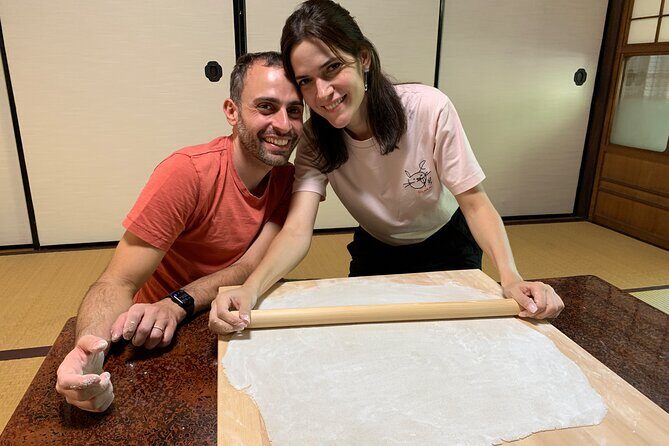
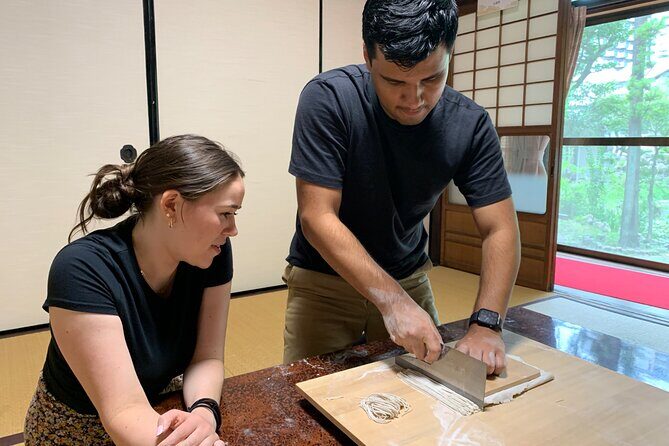
The core activity is making soba noodles using buckwheat flour (buckwheat is the base). Then you get to sample the soba you made during the experience.
A simple way to think about the experience is: you get a short, hands-on crash course in the noodle-making process, and then you eat the results in the same overall session. That’s a real value add. Plenty of food tours show you how something is made, but you don’t always get to taste your own handiwork. Here, you do.
One key caution: buckwheat can trigger allergies. The experience specifically notes that some people may not be able to eat it due to allergies, and it flags “people with allergy to buckwheat.” If you have a known buckwheat allergy, treat this as a hard stop.
Also, the experience includes snacks soba noodles. That phrasing suggests you’re eating your soba as a part of the session rather than getting a full multi-course meal. So if you’re hungry later, you may want to plan a simple dinner afterward.
Hiro’s Private Lesson Style and How the 2-Hour Session Flows
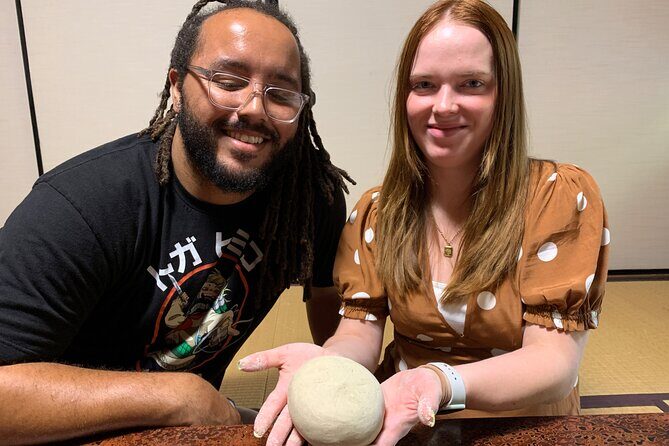
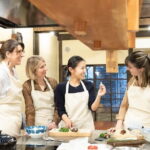
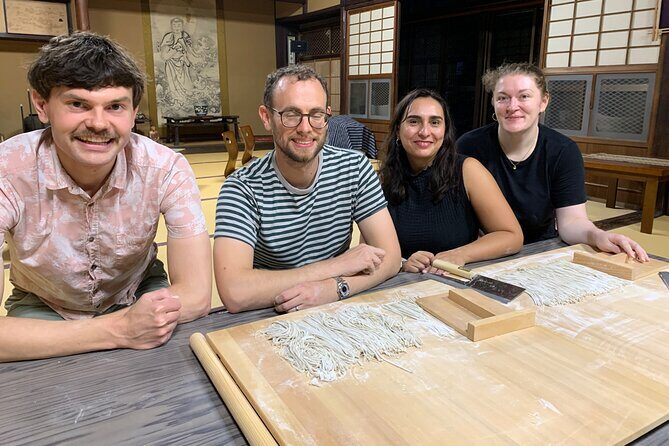
This is a private tour/activity, meaning only your group participates. That changes the whole energy of the class. With a smaller setting, your questions don’t get lost in the shuffle, and your guide can adjust the pace.
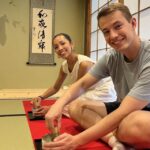
Your guide is Hiro, and that name comes up in the most enthusiastic ways. People liked Hiro’s teaching and described the class as peaceful and serene. In one account, the group basically felt like they had a private lesson. They also mentioned Hiro taking lots of photos and airdropping them at the end, which is a small detail but a nice one if you want trip memories without doing extra work.
Timing-wise, plan for about 2 hours. In that window, you’ll be doing both instruction and temple visits. The flow usually goes like this: you arrive at the meeting point area, get into the classroom space, learn the soba-making steps, and then you sample what you made. After that, you’ll also spend time at the temple main hall and Buddha statue.
If you like structured experiences where you’re not wondering what happens next, this format is a good fit. It’s also ideal if you’re traveling with family or mixed ages, since the activity doesn’t run all day.
Temple Time: Main Hall and Buddha Statue Visits
The soba-making is the headline, but the temple visits are the other reason this experience feels different from a standard cooking class.
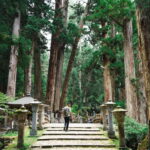
You can expect a stop at the main hall and time with a Buddha statue. Even if you’ve seen temples before in Japan, I like that this program pairs hands-on food culture with a calm pause to look around. You’re not rushing past sights to get to the next thing. You’re shifting gears from learning a skill to noticing the place itself.
This pairing works particularly well if your travel style is about small, authentic moments. Soba is a food tradition, but temple spaces are also part of how Japanese culture organizes calm and respect. In a short time, you get both food and atmosphere.
One potential drawback: if you’re only in Osaka for a very tight schedule and don’t care about temple visits, you might feel like you’re paying for more than the noodle class. But if you do enjoy quiet cultural stops, the temple component adds meaning to the whole experience.
Price and Value: Is $68.29 Worth It?
Let’s be blunt: $68.29 per person is more than buying soba at a casual restaurant in Osaka. So you’re not paying just for noodles. You’re paying for:
- A private, small-team format
- Hands-on instruction on making soba
- The chance to taste what you made
- Temple visits to the main hall and Buddha statue
- A guide who supports the class closely (Hiro’s name shows up again and again for being an excellent teacher)
Another value signal is how far in advance it’s booked. On average, this is booked 47 days in advance. That doesn’t guarantee anything, but it usually means the experience has limited openings and people want it.
My practical take: if you want an interactive food moment that still feels calm and cultural, it’s good value. If your goal is simply to eat soba cheaply, it won’t compete with everyday restaurants. But if you want to bring home a skill and a memory that feels specific to Japan, it’s priced in a way that fits a personal experience.
Practical Tips: Tickets, Weather, and What to Plan Around
A few details can help your day go smoothly.
- Mobile ticket: You’ll have a mobile ticket, which is convenient if you already plan to use your phone for transit and bookings. Make sure you can access it offline or have signal where you’re meeting.
- Meeting point: The experience starts at 1-chōme-3-68 Shitaderamachi, Tennoji Ward, Osaka, 543-0076 and ends back at the meeting point.
- Weather matters: The experience notes it requires good weather. If it’s canceled due to poor weather, you’ll be offered a different date or a full refund. If you’re visiting in a rain-prone window, consider leaving room in your schedule so you can accept a reschedule.
- No private transportation: You’ll need your own way to get there. Since it’s near public transportation, that’s probably easy, but it’s still something to plan.
- If dates don’t work: There’s a note that if there isn’t an open date/time you want, you can contact the provider. That’s useful if your schedule is rigid.
If you’re sensitive to food ingredients, double-check the buckwheat situation before booking. And if you’re traveling with kids, keep in mind this is a calm, respectful temple setting. That’s often a plus, but it can mean a slightly more structured experience than a loud cooking studio.
Who This Soba-Making-at-Temple Experience Is Best For
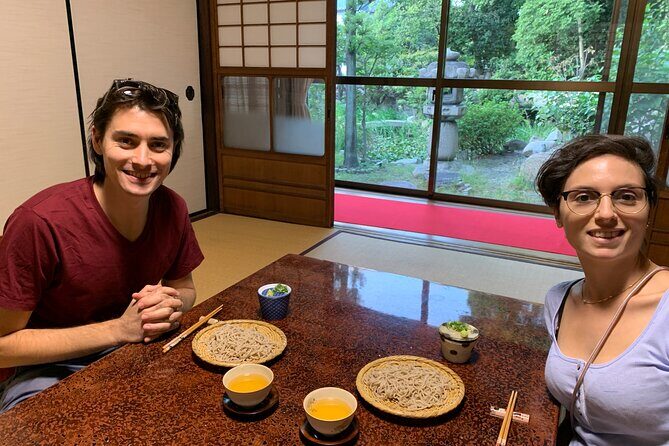
This is a great fit for people who want more than eating. I think you’ll enjoy it if you like:
- Hands-on cooking where you actually make the dish
- A quiet pace and a temple environment
- Learning from a guide who helps you through the steps (Hiro is the name that comes up most)
- A cultural stop that isn’t just photo sightseeing
It can also be a strong choice for families because the format is straightforward: you’re in one place, you’re guided, and you’re eating what you made. It’s not a hike, it’s not a long travel day, and it stays focused.
If your travel style is more about big group thrills or nightlife energy, you might find the calm tempo less exciting. And if you have a buckwheat allergy, you should skip it.
Should You Book This Soba-Making-at-Temple Experience?
Book it if you want a memorable Osaka experience that mixes food craft with real cultural calm. The private format, the chance to eat your own soba, the inclusion of the main hall and Buddha statue, and Hiro’s teaching style (plus the photo-sharing detail) all point to a thoughtful, personal session rather than a rushed tour.
Skip it (or at least reconsider immediately) if buckwheat is a problem for anyone in your group, since the experience is built around buckwheat soba. Also, if your schedule can’t bend at all, keep in mind it requires good weather.
One smart move: since it’s often booked around 47 days in advance, try not to wait until the last week of your trip. If your ideal time isn’t available, the provider notes you can contact them.
FAQ
How long is the soba-making experience?
It lasts about 2 hours.
Where does the experience start?
The meeting point is 1-chōme-3-68 Shitaderamachi, Tennoji Ward, Osaka, 543-0076, Japan.
Is this tour private?
Yes. It’s described as a private tour/activity, with only your group participating.
What’s included in the price?
The listed inclusion is snacks soba noodles.
Is private transportation included?
No. Private transportation is not included.
Do I get a mobile ticket?
Yes. The experience includes a mobile ticket.
Is buckwheat safe for everyone?
Not necessarily. The experience notes that buckwheat is made from buckwheat flour and some people may not be able to eat it due to allergies.
What happens if the weather is bad?
The experience requires good weather. If it’s canceled due to poor weather, you’ll be offered a different date or a full refund.
Can I get a full refund if I cancel?
Yes. It offers free cancellation up to 24 hours in advance for a full refund. If you cancel less than 24 hours before the start time, the amount paid is not refunded.