REVIEW · OSAKA
Osaka E-Bike Tour with a Local Guide
Book on Viator →Operated by When in Japan · Bookable on Viator
Three hours. One electric bike. Osaka. I love the local-history storytelling from guides like Ko or Sukuna, and I love the low-traffic route that keeps the ride calm enough to actually enjoy the sights.
Osaka is fun, but this tour has a couple real-world limits: there is no storage for luggage, and you must be tall enough and fit enough for about 17–18 km of pedaling (even with e-assist). If you’re traveling with a lot of bags, you’ll want to plan your day carefully.
What makes this route click is the mix: anime energy at Nipponbashi Denden Town, temple time at Shitennoji and Namba Yasaka Shrine, plus Osaka Castle and park breaks. You also get plenty of sightseeing outside, with a guide who chooses streets for safety instead of leaving you to guess the best way around.
In This Review
- Quick hits before you ride
- First, the vibe: a local-guided Osaka highlights ride in 3 hours
- Price and what you really get for $59.56 per person
- Getting started at LAWSON Nipponbashi-Nishi (and what to bring)
- The “can I ride?” checklist
- Stop 1: Nipponbashi Denden Town’s anime streets and weird-cool shopping
- Stop 2: Shitennoji—Buddhism you can actually relate to today
- Stop 3: Osaka Castle park riding—and cherry-blossom season energy
- Stop 4: Nakanoshima Park rose-garden break (yes, you get a breather)
- Stop 5: America Mura for the hip and casual side of Kansai
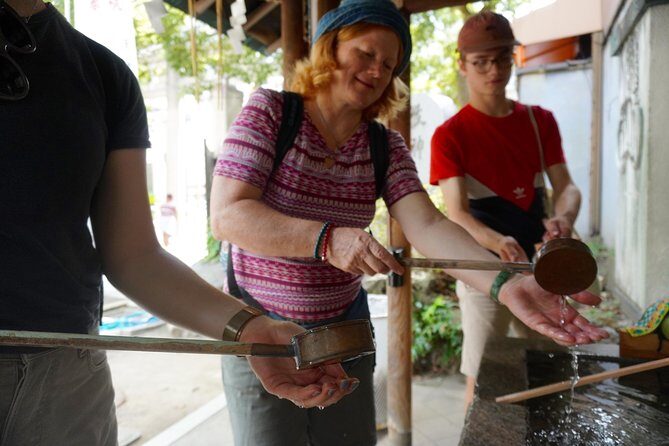
- Stop 6: Namba Yasaka Shrine and the Shinto lesson wrap-up
- How the e-bike riding feels in real Osaka traffic
- What makes the guide part worth it (Ko, Sukuna, and the local perspective)
- Who this Osaka E-Bike Tour is best for
- When it might not be your best match
- Should you book this Osaka e-bike tour?
- FAQ
- How long is the Osaka e-bike tour?
- What is the price per person?
- What is included in the tour?
- Are entrance fees included for the stops?
- Where does the tour start and end?
- How big is the group?
- Is there luggage storage?
- What are the height and fitness requirements?
- Do I need a physical ticket?
- What if the weather is bad?
- What is the cancellation window for a full refund?
Quick hits before you ride
- Small-group feel with a cap that’s listed as up to eight, and sessions noted as max five travelers
- Low-traffic routing so you spend less time wrestling directions and more time looking around
- Helmet + e-bike included, so you’re not renting on the fly
- Stop mix that works: classic Osaka (Osaka Castle), religion/culture (Shitennoji, Namba Yasaka Shrine), and modern city style (America Mura)
- Free entry at each stop on the scheduled highlights, so you’re not doing math all day
- Photo-friendly pacing—guides are reported to help you keep the group together and grab pics at scenic spots
First, the vibe: a local-guided Osaka highlights ride in 3 hours
This Osaka E-Bike Tour is the kind of plan that helps you get bearings fast. Instead of picking your route hop-by-hop, you follow a guide who knows the terrain, chooses safer streets, and keeps the group moving. The e-bike matters here. Osaka has plenty of sights close together, but “close” can still mean annoying detours or high-stress intersections when you’re on foot.
You’ll cover about 17–18 km over roughly 3 hours, with more time at stops than you’d think. That pacing is a big part of the value: it’s not just riding through Osaka like a blur. You stop often, walk briefly at key places, and get context on what you’re seeing.
Group size is also a quiet advantage. The tour is described as limited—small enough that it stays manageable, with a listed maximum of five travelers in some sessions and eight in the broader description. Either way, you’re not stuck near the back of a huge pack, and your guide can actually keep an eye on everyone.
You can also read our reviews of more cycling tours in Osaka

Price and what you really get for $59.56 per person
At $59.56 for about 3 hours, this isn’t a “cheap and cheerful” bargain—but it does price like an organized experience with real support. What you’re paying for is:
- A local guide who explains neighborhoods and culture from the street level
- A pre-planned route built around safer riding and efficient sightseeing
- Bike + helmet included, so you don’t need to solve rental logistics
- Multiple named stops across different Osaka personalities (temples, castle park area, shopping streets, shrine grounds)
The “good deal” part is that the stops are timed and the entry is listed as free for the scheduled highlights. So you’re paying for the coordination and guidance, not a long list of extra admissions.
If you’re only in Osaka for a short window—half a day, or even a full day but want an easy start—this tends to be a smart way to turn sightseeing into a route with a storyline. You’re also less likely to waste time backtracking because you missed a turn.
Getting started at LAWSON Nipponbashi-Nishi (and what to bring)
You meet at LAWSON Nihombashinishi 1 Chome Store, 1-chōme-3-19 Nipponbashinishi, Naniwa Ward. The tour ends back at the same meeting point, so it’s simple to plug into a broader day.
One practical thing to flag: there is no storage for luggage. That means you’ll want a compact bag—something you can keep with you comfortably while riding. If you’re traveling with suitcases or heavy shopping bags, you’ll feel it here. On an e-bike tour, you need to keep your setup stable and predictable.
The tour is also weather-dependent. It’s listed as requiring good weather, and if it’s canceled for poor weather you’ll be offered another date or a full refund.
The “can I ride?” checklist
To safely ride the e-bike, you need:
- Height over 140 cm
- Physical fitness for 17–18 km of riding
That does not mean you need to be a cyclist. E-bikes reduce the strain. But you still need endurance for the time on the bike and the basic rhythm of riding in city conditions.
Stop 1: Nipponbashi Denden Town’s anime streets and weird-cool shopping
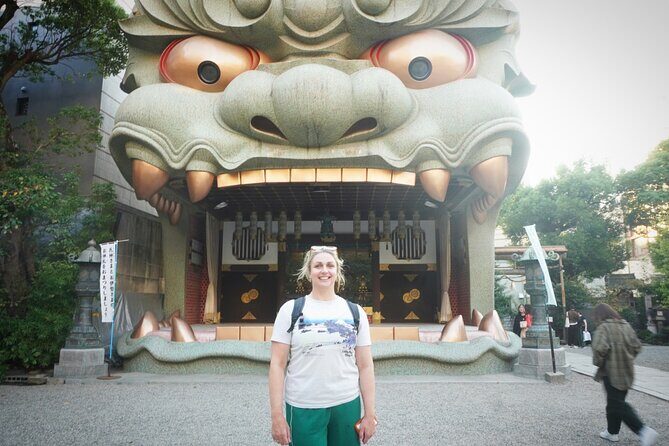
Your first stop is Nipponbashi Denden Town, where the mood shifts right away into Osaka’s pop-culture lane. You’ll walk around an anime-focused neighborhood and browse the kind of stores where your expectations change every few steps.
This is a great early stop because it does two things:
- It gives you a mental warm-up. You’re not trying to understand a new city while also negotiating the first big landmark.
- It’s visual. You can look, point, and snack on curiosity even if you’re not a hardcore fan of any one theme.
It’s scheduled for about 15 minutes and admission is listed as free. Because it’s short, you’ll want to treat this as a quick browse and photo moments, not a deep shopping mission.
You can also read our reviews of more guided tours in Osaka



Stop 2: Shitennoji—Buddhism you can actually relate to today
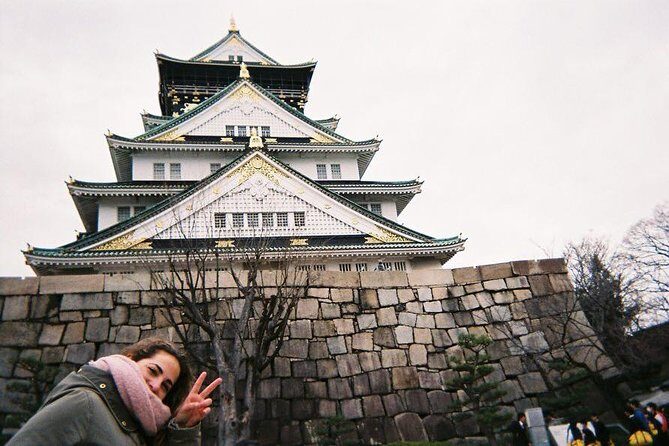
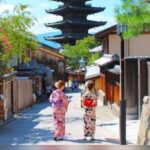
Next is Shitennoji for about 30 minutes. This stop focuses on Japanese Buddhism in the context of modern life in Japan. That framing is useful. It helps you see the temple as more than a pretty backdrop.
What I like about this timing: after the fast, character-heavy energy of Nipponbashi, Shitennoji gives you a reset. You get a slower pace, space to look closely, and a guide’s explanation that ties the site to how people live today.
Admission is listed as free, and you’re walking and observing. The main “value” here is not ticking a box—it’s learning the why behind what you’re seeing.
Stop 3: Osaka Castle park riding—and cherry-blossom season energy
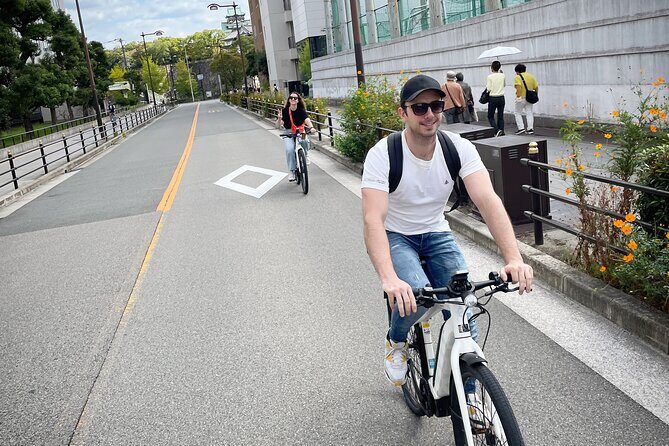
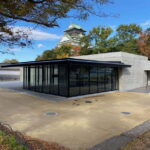
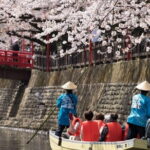
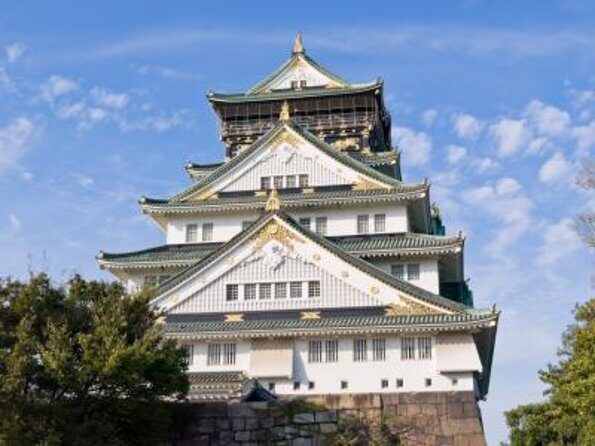
Then you reach Osaka Castle with about 30 minutes. The description emphasizes the big park around the castle and the cherry blossoms. Even if you’re not there at peak blossom time, the castle area works as a scenic anchor for the whole tour because it’s instantly recognizable and open.
On an e-bike, the ride through the park area feels different than approaching on foot. You can take in the scale faster, and you’ll get angles that are harder to get when you’re walking.
The drawback to note is simple: this is a very popular area when seasonal crowds hit. The guide’s job is to manage the group and choose safer ways to move through the area, but you should still expect “sightseeing atmosphere” when you arrive.
Still, if Osaka Castle is on your list, this is one of the best ways to see it without turning your day into a walking-only slog.
Stop 4: Nakanoshima Park rose-garden break (yes, you get a breather)

After the big landmark, you’ll shift to calm: Nakanoshima Park. The tour gives you about 30 minutes and a pause in the rose garden area for a picnic-style break.
This stop is small on paper and big in practice. It’s the mental pause that makes the rest of the ride easier. You’re not sprinting between sights. You’re restoring energy, resetting your legs, and getting a break from city noise.
This is also where you can absorb the city’s geography. Nakanoshima is an island setting, and it helps you feel how Osaka’s waterways and parks shape the city.
Admission is listed as free here too, so you’re just paying time and attention.
Stop 5: America Mura for the hip and casual side of Kansai
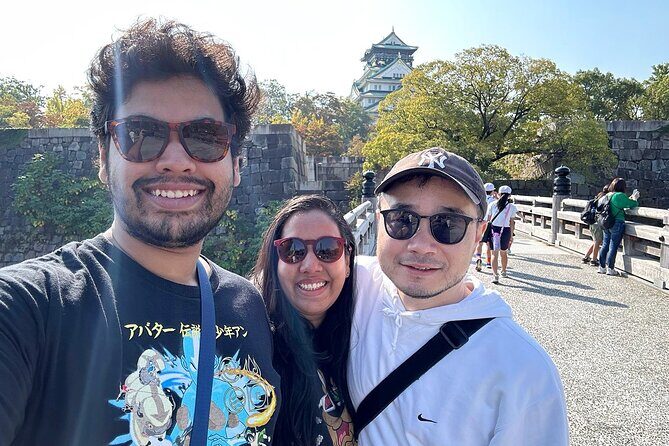
Next comes America Mura for about 30 minutes. This is the shopping-and-street-style district that people mention when they talk about Osaka’s more casual, youth-forward vibe. The tour frame is simple: stop and browse.
I like this segment because it balances the temple-and-castle energy with what Osaka feels like day-to-day for a lot of people. It’s not just “famous postcard Osaka.” It’s Osaka as a place where people actually spend time.
Two practical notes:
- Because it’s shopping streets, you’ll want to keep an eye on your bag and bike setup while stopping.
- If crowds bother you, pick a clear moment in the flow to take photos and check storefronts quickly.
The stop is scheduled and admission is listed as free, which keeps the time focused on walking/browsing.
Stop 6: Namba Yasaka Shrine and the Shinto lesson wrap-up
Your last stop is Namba Yasaka Shrine for about 30 minutes. The tour aims to show Shinto in Japan and gives you a final chance to review and share what you saw.
This ending works well. You start with anime and pop-culture browsing, move through major sacred sites, and then finish with Shinto at a shrine setting. It gives the day a “circle” feel: you’re seeing what Osaka is visually, historically, and spiritually.
Admission is listed as free, and you’ll do the typical shrine walking and explanation portion. The guide’s ability to connect the site to modern life is a recurring theme in the tour approach.
How the e-bike riding feels in real Osaka traffic
The tour’s biggest promise is safety and comfort: your guide selects the safest route with as little traffic as possible. That’s not just marketing language. City riding can be stressful anywhere, and Osaka is no exception.
What you should expect:
- You’ll ride on a mix of streets, including less-busy back routes to keep things smoother.
- You’ll still be sharing space with pedestrians and cyclists, especially near busy shopping and shrine areas.
- Your guide will keep the group together and watch positioning.
In the reviews, guides like Ko and Sukuna are repeatedly praised for being attentive to safety and group spacing. That matters because it turns an e-bike tour from “fun but chaotic” into “fun and controlled.”
One consideration: the tour is for people who are physically fit enough for 17–18 km. Even with e-assist, you’ll feel the riding time. If you’re nursing an injury or you’re not comfortable riding at all, you may want to choose a walking tour instead.
What makes the guide part worth it (Ko, Sukuna, and the local perspective)
This is not an audio-guide route. You’re led by a local who explains what you’re seeing in a way that feels like you’re getting the city from the inside.
Guides mentioned in the experience include Ko and Sukuna, and the common thread is strong communication and a sense of humor. You’ll get practical context while you ride—why a neighborhood looks the way it does, how the religious sites fit into daily life, and what to notice as you pass streets.
That local storytelling is one of the most praised parts of the tour. If you’re the type who likes to understand what you’re looking at (not just where to stand for a photo), this is a big win.
Who this Osaka E-Bike Tour is best for
I’d aim this at you if:
- You have limited time and want to hit major highlights plus local neighborhoods
- You want an outdoor sightseeing plan that moves faster than walking
- You like guided context, not just landmark hopping
- You can ride an e-bike for long enough to cover about 17–18 km
It’s also a good fit as an orientation tour. After a ride like this, you often understand where things are and how areas connect, so the rest of your Osaka day gets easier.
When it might not be your best match
This tour is easy to love, but it won’t suit everyone.
Skip or think twice if:
- You have lots of luggage (there is no storage)
- You’re short on fitness for sustained riding time
- You’re very anxious about road conditions and sharing space with pedestrians and other cyclists
Also, because the tour depends on good weather, plan for the possibility of rescheduling if conditions aren’t ideal.
Should you book this Osaka e-bike tour?
Yes, if you want a fast, well-paced way to see Osaka with a local guide, strong safety-minded routing, and a stop list that mixes classic landmarks with modern neighborhoods. The e-bike turns “getting around” into part of the fun, and the guided explanations help the city feel less like a checklist.
If you hate carrying bags, or you’re not confident riding for about 17–18 km, look for a different format. But for most first-timers who want a thoughtful, active intro to Osaka, this is one of the better ways to spend a half day.
FAQ
How long is the Osaka e-bike tour?
The tour is listed at about 3 hours.
What is the price per person?
The price is $59.56 per person.
What is included in the tour?
The tour includes use of the bicycle and a helmet.
Are entrance fees included for the stops?
Admission ticket is listed as free for each scheduled stop.
Where does the tour start and end?
The tour starts at LAWSON Nihombashinishi 1 Chome Store and ends back at the meeting point.
How big is the group?
The tour is described as limited to keep it small, with a maximum of eight people listed in the overview and a maximum of five travelers listed in the additional info.
Is there luggage storage?
No. There is no storage for luggage.
What are the height and fitness requirements?
You must be over 140 cm tall to ride the e-bike. You also need to be physically fit enough to ride about 17–18 km.
Do I need a physical ticket?
You can use a mobile ticket.
What if the weather is bad?
The experience requires good weather. If it’s canceled due to poor weather, you’ll be offered a different date or a full refund.
What is the cancellation window for a full refund?
You can cancel up to 24 hours in advance for a full refund. Canceling less than 24 hours before the start time is not refunded.