REVIEW · OSAKA
Samurai Armor & Sword experience with phot near Osaka Castle
Book on GetYourGuide →Operated by 株式会社武士の誉れ · Bookable on GetYourGuide
Osaka Castle is big and loud; this is hands-on and quiet. In Bushi no Homare (Samurai Honor), you’ll change into samurai clothing, bow to the dojo shrine, learn sword manners and basic iai moves, then try cutting with a real Samurai sword while a certified instructor keeps things focused and safe. I especially loved the way they explain why samurai handled their swords a certain way, and how the armor-and-sword look turns your photos into something more than a souvenir. One consideration: you need to be ready for structured training—this isn’t a casual photo stop, and the class is not suitable for everyone (age limits apply).
You’ll spend about 90 minutes in a private group format, with English-speaking staff (and Japanese listed as an instructor language). It’s built for people who want authenticity, not just a performance—plus it’s one of the very few places near Osaka Castle where you can actually wear the gear and practice the basics.
If you’re coming from Osaka Castle, plan your timing so you can arrive early for changing and instructions. This experience works best when you’re comfortable following directions and taking your time with the basics.
In This Review
- Key highlights you’ll remember
- Where Samurai Honor sits (and why it fits an Osaka Castle day)
- The 90-minute rhythm: costume, dojo bow, then technique
- Samurai manners aren’t fluff: they change how you move
- Iai basics: batto, chiburui, and nottō
- Trying the real Samurai sword cutting (the moment it becomes unforgettable)
- Armor and helmet: how the look changes your posture
- Practical value: is $106 worth it near Osaka Castle?
- Timing, meeting point, and what to bring so you’re not rushed
- Who this is a great fit for (and who should skip it)
- Should you book Samurai Armor & Sword near Osaka Castle?
- FAQ
- Where is the meeting point near Osaka Castle?
- How long is the Samurai Armor and Sword experience?
- What time should I arrive before the start?
- What should I bring?
- Is the class private?
- Do you practice with a real Samurai sword?
- Can I request a language other than English?
- Is transportation or hotel pickup included?
- Who is it not suitable for?
- Is there free cancellation?
Key highlights you’ll remember
- Real sword cutting practice guided by a certified instructor, not just a demo
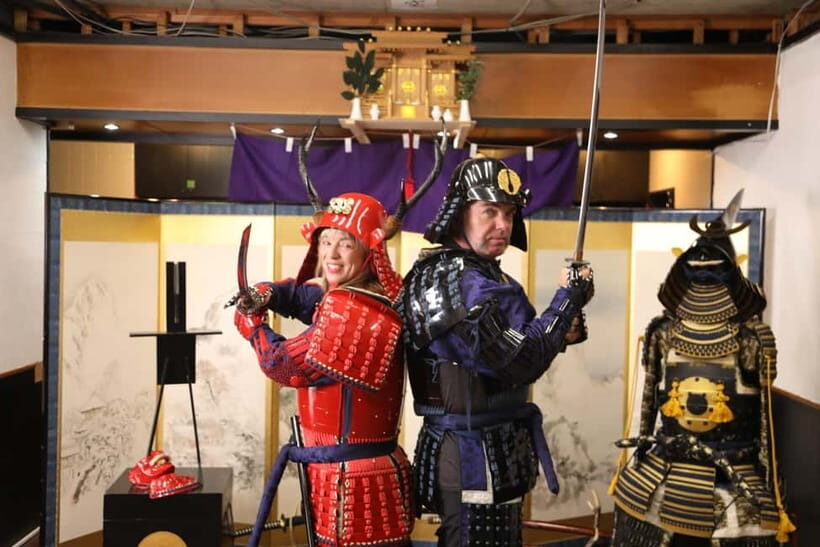
- Wear samurai armor indoors, including helmet, for the full battle-ready look
- Dojo etiquette: bowing to a shrine and structured manners before any technique
- Iai fundamentals with clear steps like batto, chiburui, and nottō
- Commemoration photos taken during the session and sent by email
- Tight 90-minute flow that turns curiosity into hands-on muscle memory
Where Samurai Honor sits (and why it fits an Osaka Castle day)
This experience is in Osaka City, at Excellence Takayama 1F: 2-3-19 Shiginonishi, Joto-ku, Osaka-shi, Osaka 536-0014. The main program name you’ll see is Bushi no Homare (Samurai Honor), run by 株式会社武士の誉れ.
For navigation, use Google Maps rather than Apple Maps—the provided note says Apple Maps has the wrong address. The meeting point is also very easy to spot: look for a wooden sign that reads Honor of the Samurai. It’s described as a rack in front of the store with pamphlets, and there may be kimonos and hakama hanging nearby, which makes it even easier to identify.
Why this matters: Osaka Castle is an obvious “must,” but it can also be a lot of walking, crowds, and photo time. This class gives you a different kind of Osaka memory—the kind you can feel in your hands.
You can also read our reviews of more tours and experiences in Osaka.



The 90-minute rhythm: costume, dojo bow, then technique
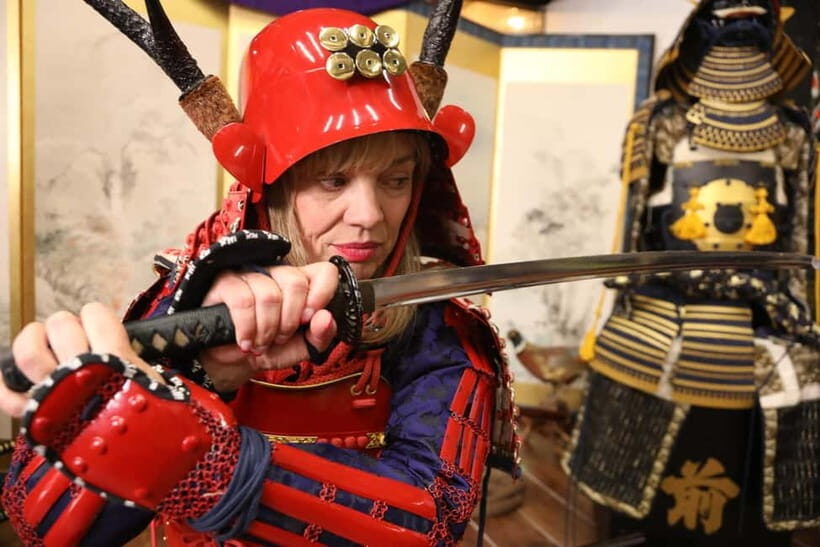
Your session starts with preparation. They’ll guide you through changing into samurai-style clothing (described as a dogi and hakama). Once you’re in the outfit, you move into the training space and the tone becomes ceremonial right away.
The first formal moment is the bow before the shrine. You’re told the class begins and ends with this bow, based on the idea of training with the power of an ancient god of war. That might sound poetic, but it’s actually practical: it slows you down, gets you watching the instructor, and makes the whole thing feel like structured martial training rather than a theme-park skit.
Then comes explanations of swords and Samurai manners. You’ll get context for how samurai viewed responsibility and self-respect tied to carrying a deadly weapon. This isn’t just storytelling. The lesson connects directly to how you handle a blade and how you move in space.
If you like experiences that feel respectful and grounded, this flow will click. If you’re the type who wants to skip explanations and rush to the fun part, you’ll still have to follow the order—because they build technique from basics.
Samurai manners aren’t fluff: they change how you move
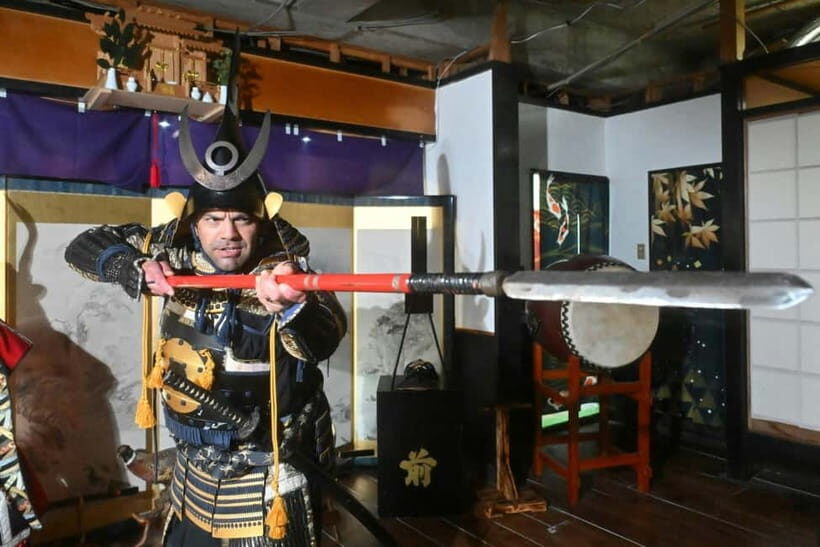
A big part of what you learn here is the mindset behind the sword. The class explains that samurai boys learned early with wooden swords and later wore serious swords when they reached a certain age. The key takeaway you’re given is responsibility: carrying a blade isn’t treated like an accessory; it’s treated like duty.
You also learn a very specific idea about living with the sword close to you. Even in peaceful times, they didn’t part from their swords—sleeping in a way that allowed drawing quickly if needed. That becomes your practical cue: readiness.
One of the most interesting movement details is the way samurai walked. You practice walking with the sword belt and learn how the sword should be positioned at the waist with the blade side facing up. They also describe walking on the left side of the road so the sheaths don’t come into contact with each other. On top of that, the class connects this behavior to keeping the koiguchi cut and ready to draw at any time.
You might not remember every technical term later, but you’ll probably remember the logic: sword handling is about position, space, and timing, not just swinging a weapon around.
Iai basics: batto, chiburui, and nottō

Before you go near any cutting, the session works through iai practice using a practice sword. The lesson steps are clearly laid out:
- Swinging from the stance
- Battou: pulling the sword out of the scabbard with the purpose of a cut
- Chiburui: the symbolic action of removing blood from the blade after a cut
- Nottō: returning the sword to its sheath
I like this sequence because it teaches the whole “cycle,” not just the moment of drawing. A lot of people think fencing is all about motion. Here you learn that real control is also about the pause and the reset—where your hands go next and how you bring the blade back safely.
The instructor also stresses technique quality. When you swing correctly, you may hear a “hi-nari” sound from the sword. That’s the kind of little sensory feedback that helps you understand what “good” feels like without needing a technical background.
In a private group setting, you’re more likely to get hands-on correction. That’s one reason this feels better than watching a video or doing a generic “sword demo.”
Trying the real Samurai sword cutting (the moment it becomes unforgettable)
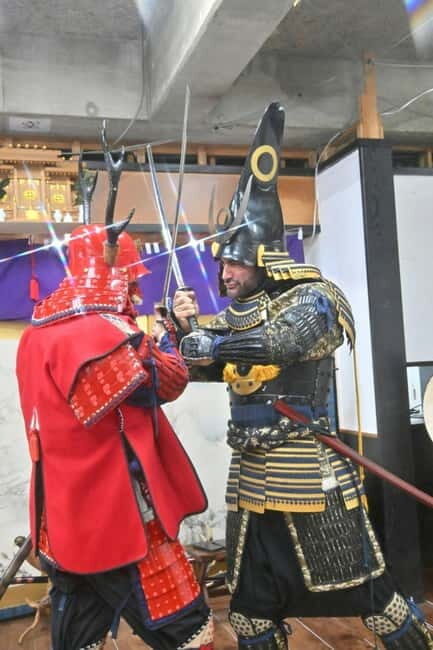
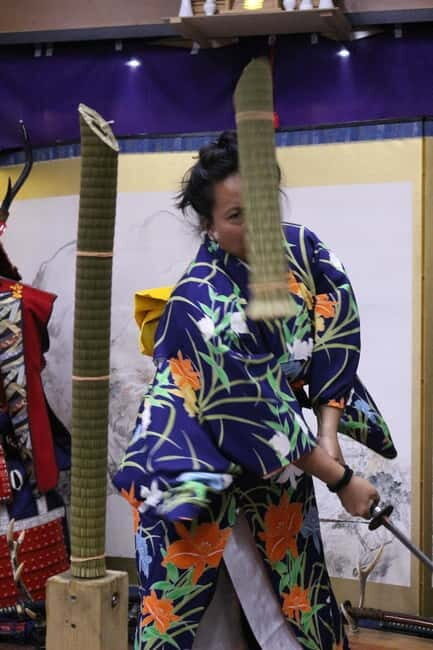
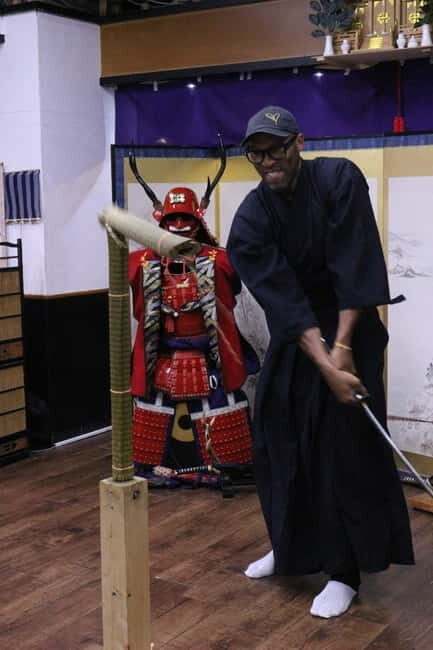
The highlight you came for is the cutting practice with a real Samurai sword, described as “world’s best cutting performance” and framed as something you try your hand at directly.
A few important points from how the training is presented:
- You don’t jump straight to cutting. You’re taught basics and stances first.
- The cutting is presented as part of disciplined practice tied to Bushido, not as an adrenaline stunt.
- You’re working with an instructor who is a certified professional instructor and also includes English-speaking staff.
Safety is clearly part of the structure, and the training-style flow is what makes “real sword cutting” feel grounded rather than reckless.
If you’ve seen other sword experiences that only let you hold a blade for a photo, this will feel different. Here, you’re actually learning a sequence—stand, draw, cut, and the follow-through actions—then testing that in cutting practice.
And even if your technique isn’t perfect (it won’t be on attempt one), you’ll still leave with something valuable: the understanding that control beats strength.





Armor and helmet: how the look changes your posture
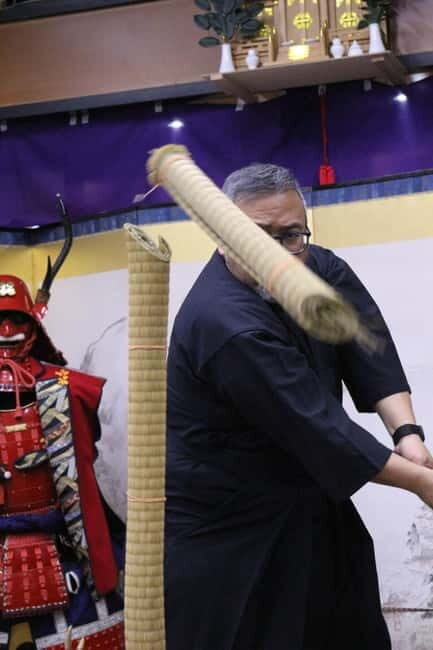
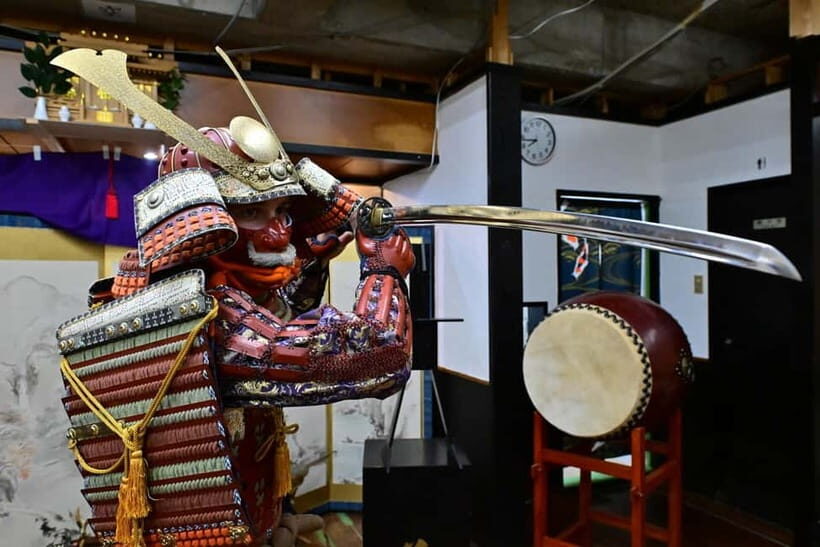
Wearing Samurai armor is a visual thrill, but it’s also physical. You wear the armor indoors, including the helmet, and they take a commemorative photo with you in full samurai style.
What surprised me (in a good way) is how quickly armor changes your body language. The training parts teach you a disciplined posture and stance, and then the armor makes that stance feel more “official.” You stop moving like a tourist and start moving like someone practicing a role.
The photo part matters too. They take a photo during the experience, and the data is sent to a designated email address afterward. That means you can focus on learning and training without worrying about filming every second.
This is also one of the few samurai experiences near Osaka Castle where you don’t just watch armor from the outside—you wear it.
Practical value: is $106 worth it near Osaka Castle?
At $106 per person for 90 minutes, this isn’t a budget activity. But for a hands-on martial arts-style experience, it’s priced more like training than entertainment.
Here’s what you’re really paying for:
- The cost of real equipment and instruction, including the certified instructor and English-speaking support
- The structure that walks you through basics first (iai practice sword) and then lets you try cutting with a real Samurai sword
- The “full character” component: you wear samurai clothing and armor indoors, plus you get a photo afterward
Compare that to typical Osaka Castle-area options where you pay for a show or a guided walk. You’ll see and hear plenty around the castle. This is different because you do the work: posture, draw, cut, and the etiquette around the sword.
If you’re the type who values authenticity and direct instruction, this price starts to feel reasonable fast.
Timing, meeting point, and what to bring so you’re not rushed
Plan to arrive early. The instruction is to arrive 30 minutes before your reserved experience time for changing and instructions. That matters because you’ll be switching into the provided samurai clothing and you’ll want a calm start.
What to bring is simple: a t-shirt. That’s the only item explicitly listed, so follow that and don’t overpack.
Also pay attention to what’s not allowed: no food, alcohol, or drugs. Pets and baby strollers aren’t allowed either (assistance dogs are allowed). The experience also notes it’s not for party groups like bachelor and bachelorette groups.
One more practical note: pickup and drop-off at your train station or hotel are not included, so you’ll need to handle getting there on your own.
Who this is a great fit for (and who should skip it)
This experience is listed as private group, with English/Japanese language support. It suits people who:
- Want more than photos and want real instruction
- Enjoy structured learning with etiquette and basics
- Like the idea of wearing armor and doing iai fundamentals
It is not suitable for:
- Children under 10
- People with altitude sickness
- People over 80
- Babies under 1 year
If you’re unsure, these limits are the easiest way to make a fast decision without guessing.
Should you book Samurai Armor & Sword near Osaka Castle?
Book it if you want an Osaka Castle day to include something tactile and disciplined: samurai clothing, dojo etiquette, iai basics, and the chance to try cutting with a real sword—then cap it with armor photos. The class is short enough (90 minutes) to fit into a busy itinerary, and the private-group setup helps you get clearer instruction.
Skip it if you want something casual, if you’re traveling with anyone who falls outside the age/health limits, or if the idea of following a structured training flow feels stressful. Also, if you can’t get to the meeting point on your own, you’ll want a different activity since transport isn’t included.
FAQ
Where is the meeting point near Osaka Castle?
You meet at a wooden sign rack that reads Honor of the Samurai. It’s described as a clear landmark in front of the store, with pamphlets and sometimes kimonos and hakama hanging nearby.
How long is the Samurai Armor and Sword experience?
It lasts 90 minutes.
What time should I arrive before the start?
Arrive 30 minutes before your reserved time so you have time for instructions and changing clothes.
What should I bring?
Bring a t-shirt. That’s the only item listed.
Is the class private?
Yes, it’s listed as a private group experience.
Do you practice with a real Samurai sword?
You practice iai basics with a practice sword, and you also try cutting with a real Samurai sword.
Can I request a language other than English?
English is the default. Other languages are possible by inquiry, but staff availability is limited and they can’t guarantee it.
Is transportation or hotel pickup included?
No. Pick up and drop off at train stations or hotels, and transportation, are not included.
Who is it not suitable for?
It is not suitable for children under 10, people with altitude sickness, people over 80, and babies under 1 year.
Is there free cancellation?
Yes. Free cancellation is offered up to 24 hours in advance for a full refund.