REVIEW · OSAKA
Osaka/Kyoto: Arashiyama, Fushimi Inari & Nara Park Day Trip
Book on Viator →Operated by F Trip · Bookable on Viator
Red torii, deer, and bamboo.
This Osaka-based day trip strings together Kyoto’s Fushimi Inari with Arashiyama’s bamboo and Kyoto’s quieter shrines and temples, then finishes at Nara Park for the deer experience. It’s a tight route with real walking time, but the guide helps you make sense of it all so you’re not just stamp-collecting sights. Arashiyama isn’t just pretty scenery here; you get a structured way to see it without wasting hours getting oriented.
I like two things a lot. First, you get serious free time at each anchor spot, not a rush-by: about 1 hour 10 minutes at the Senbon Torii, 1 hour at Nara Park, and roughly 50 minutes in the Bamboo Forest area. Second, the day is guided, with people like Amy and Laura being praised for clear updates and practical help that keeps everyone synced during transfers.
One thing to consider: this is a walking day. The itinerary builds in multiple stops with short-ish segments, and you’ll cover ground between areas. If your legs need frequent breaks, bring a slower pace plan and comfortable shoes (people consistently stress that for this tour).
In This Review
- Quick highlights to look for
- The 9-Hour Plan That Makes Kyoto and Nara Feel Doable
- Fushimi Inari Senbon Torii: Where Your Day Starts in Red
- Nara Park Deer Time: Fun, Cute, and Surprisingly Practical
- Arashiyama: Bamboo Grove Plus the Right Supporting Stops
- Tenryu-ji Temple Ticket: A Small Extra Cost for a Big Name
- Nakanoshima and Kimono Forest: Two Stops That Add Surprise and Color
- Getting Around, Timing, and How Much Walking to Expect
- Price and Value: Why $57 Can Work (If You Want a Packed Day)
- Who This Osaka–Kyoto–Nara Day Trip Suits Best
- Should You Book This Tour?
- FAQ
- How much does the Osaka/Kyoto Arashiyama, Fushimi Inari & Nara Park day trip cost?
- How long is the tour?
- What is included in the price?
- Are any entrance tickets included?
- What are the main stops during the day?
- Is free cancellation available?
Quick highlights to look for
- Fushimi Inari Senbon Torii timing: about 1 hour 10 minutes to actually wander the red gates
- Nara Park deer time: around 1 hour in the deer-and-temple zone
- Arashiyama Bamboo Forest focus: roughly 50 minutes in the bamboo grove promenade area
- UNESCO Tenryu-ji Temple stop: guided visit time, but the ticket is extra (500 yen)
- Kimono Forest is a specific, weirdly cool stop: 600 clear acrylic cylinders, each about 2 meters tall
- Small-group feel: maximum 45 travelers, with an air-conditioned vehicle
The 9-Hour Plan That Makes Kyoto and Nara Feel Doable
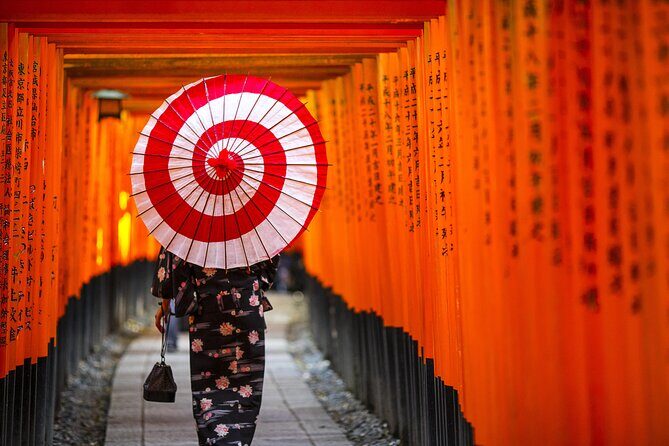
If you have just one day and you want three headline hits—Fushimi Inari, Arashiyama, and Nara Park—this tour gives you a practical route. You’re not trying to cram everything by train and transfers with a self-made plan. Instead, you ride together in an air-conditioned vehicle with a guide, then you get focused blocks of time at each major sight.
The key word here is structure. The day is built around an easy-to-understand flow: Kyoto’s red torii gates, then Nara’s deer park, then back into Kyoto for Arashiyama’s bamboo area plus several nearby cultural stops. Even if you don’t hit every last photo angle, the schedule makes sure you’re not stuck waiting around with nothing to do.
The other big value is how much is free. Several stops in the itinerary list admission as free (Senbon Torii, Nara Park, Arashiyama area, Bamboo Forest promenade area, Nonomiya Shrine, Arashiyama Park Nakanoshima area, and Arashiyama Kimono Forest). The one notable paid exception is Tenryu-ji Temple, which has a 500 yen ticket not included in the tour price.
You can also read our reviews of more tours and experiences in Osaka
Fushimi Inari Senbon Torii: Where Your Day Starts in Red
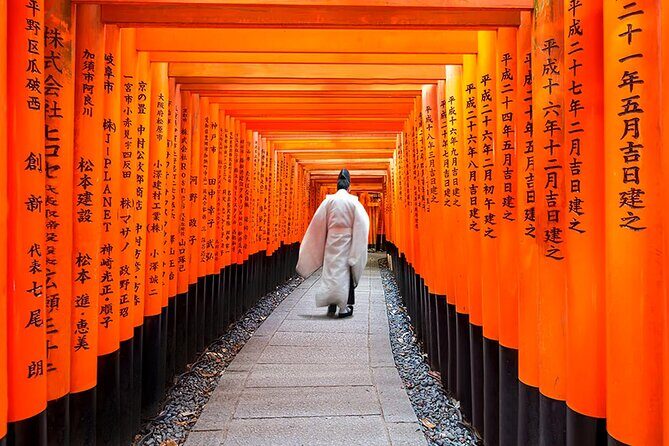
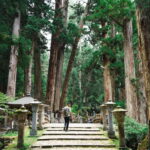
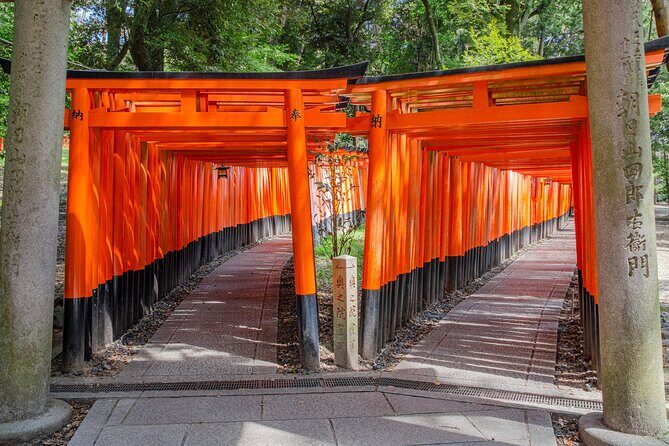
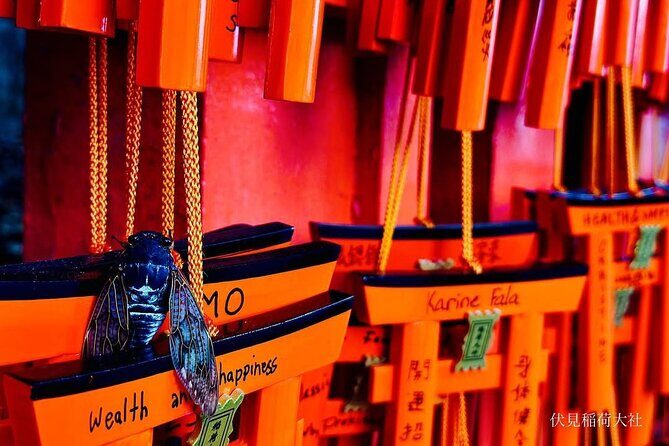
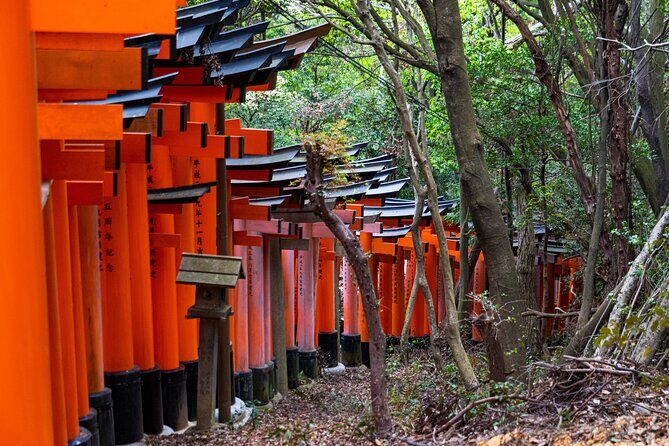
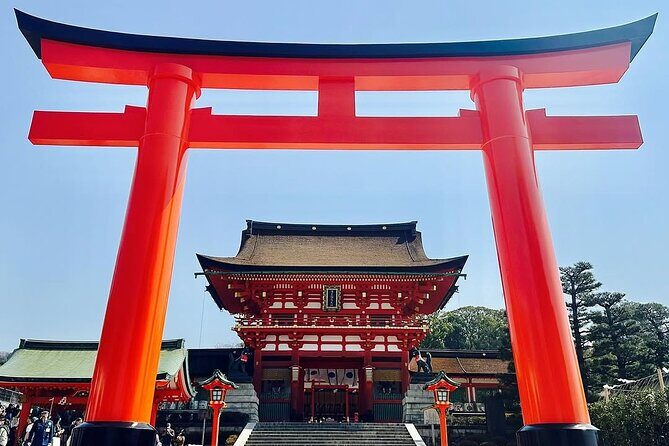
You’ll start with Senbon Torii, the famous thousand—or really tens of thousands—of vermilion torii gates at Fushimi Inari Taisha. This is the head shrine of Inari, the Shinto god associated with rice, so the place is not only scenic; it’s religious and deeply tied to Japanese practice.
What I like about giving you about 1 hour 10 minutes here is that it’s long enough to do more than a quick look. You can stroll into the gate paths, slow down, and let the repetition of the torii gates do its work. The physical rhythm matters. Every time you step under another gate, the whole place feels different than a single landmark photo.
Practical tip: this area is all about walking on uneven shrine paths and steps. If you want comfort, wear shoes that you’d wear for a city hike, not delicate sneakers. Also, go at a pace where you can stop without stressing you’re falling behind—because the whole point is wandering, not just checking the box.
Nara Park Deer Time: Fun, Cute, and Surprisingly Practical
Nara Park is famous for two things: the deer and the temple area. The deer are friendly in the sense that they’ll come close, and they’re known for bowing in hopes of a treat. That makes this stop feel playful right away, even if you’re not a big animal person.
This tour gives you about 1 hour here, which is enough to enjoy the deer without turning it into a full afternoon circus. You can watch interactions, step back and give animals space, and still have time to glance at the surrounding temple setting. The park is described as large (about 660 hectares), so you’ll appreciate having a guide-managed plan instead of trying to roam randomly.
The main consideration is simple: keep your expectations realistic. You’ll likely be close to deer whether you want perfect control of the situation or not. If you’re traveling with kids, it can be a highlight. If you’re traveling with someone who dislikes animals up close, it may help to agree on a plan in advance—like where you’ll stand, how long you’ll stay, and when you’ll move on.
Arashiyama: Bamboo Grove Plus the Right Supporting Stops
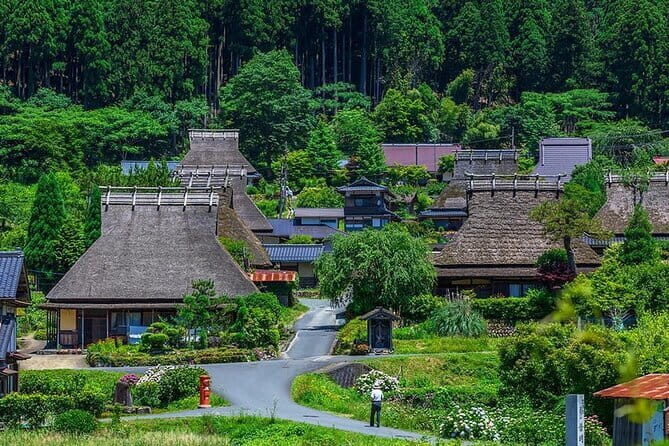
Arashiyama is one of Kyoto’s signature areas, known for natural beauty and historic sites. Here, the tour doesn’t just drop you at the Bamboo Forest and call it done. It pairs the bamboo experience with nearby cultural anchors so the day feels like Kyoto, not just a theme park lane.
You’ll get a brief orientation stop in the Arashiyama area (around 10 minutes), then the main attraction: the Arashiyama Bamboo Forest area. You’re allocated about 50 minutes there, which is long enough to walk the promenade, find your own pace, and enjoy the layered light and crowd flow. Bamboo may sound like a single photo spot, but the atmosphere changes as you move. The walkway becomes a slow-moving corridor—so time matters.
After bamboo, you move to Nonomiya Shrine for about 20 minutes. This shrine is notable for its distinctive black torii gate, which is a nice contrast to the red torii experience you started with in Kyoto. If you want a day that links sights thematically, this stop quietly helps you feel the contrast between different shrine aesthetics.
Then you’ll continue to Arashiyama’s Tenryu-ji Temple area. Tenryu-ji is UNESCO World Heritage-listed and described as the top among Kyoto’s five great Zen temples. Even with a relatively short scheduled time (about 20 minutes), a UNESCO site changes how you look at a space. The guide can help you focus on what you should notice first, so you don’t miss the meaning while you’re busy taking photos.
Tenryu-ji Temple Ticket: A Small Extra Cost for a Big Name
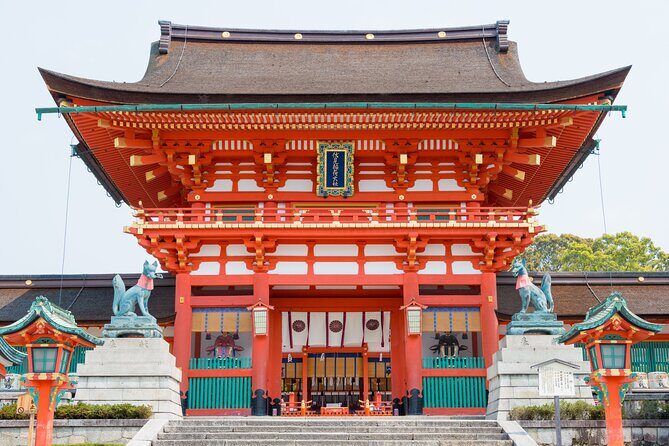
Tenryu-ji Temple is included as a scheduled stop, but the ticket is not included. The tour notes a Tenryu-ji ticket price of 500 yen. In other words, you’ll be paying a modest extra amount to enter the temple grounds.
Is it worth it? If you like Zen gardens or historic temple architecture, this is the kind of place where a short visit still feels satisfying because it’s a recognized UNESCO site. Also, you’re not paying an inflated fee on top of a tour that already handles the transportation and guidance—you’re just covering the entry cost for one major temple stop.
Timing matters here too. With about 20 minutes scheduled, you should have a quick priority list:
- Look first for the key temple features you came for
- Then spend a few minutes at the viewpoint spots
- Don’t get stuck reading every sign if your group schedule is tight





Nakanoshima and Kimono Forest: Two Stops That Add Surprise and Color
Two smaller Arashiyama stops help keep the day from feeling like one long line of temples and bamboo.
First is Arashiyama Park Nakanoshima area (about 30 minutes). This is known for seasonal beauty—especially cherry blossoms in spring and autumn colors. Even if you’re not visiting during those seasons, it’s still useful because the stop gives you a calmer pace after the bamboo crowds. Think of it as a chance to reset.
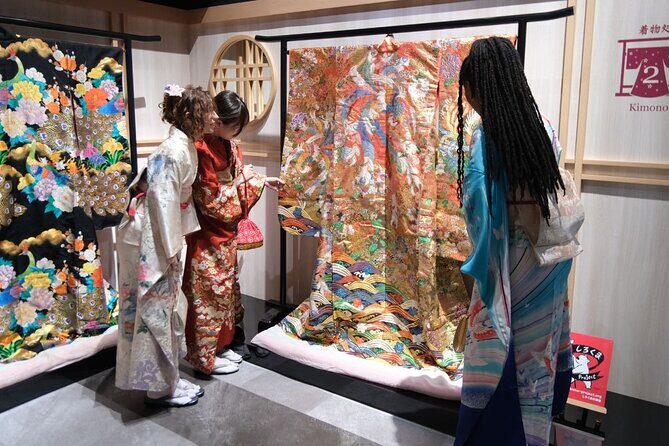
Then there’s Arashiyama Kimono Forest, which is unusual in the best way. Instead of fabric-on-a-display scenario, it’s a textile art installation made from 600 clear acrylic cylinders, each standing about 2 meters tall, decorated with colorful kimono patterns. The effect is modern and playful, which balances the earlier shrine and temple focus.
This is a great stop for photos, but it’s also good for breathing room. You don’t need to stand in one place and wait for the perfect light. You can walk around and see how the patterns repeat and shift as your angle changes.
Getting Around, Timing, and How Much Walking to Expect

This is a day trip, about 9 hours total, running from Osaka (or Kyoto, depending on the specific departure) with an air-conditioned vehicle. The vehicle is included, the guide is included, and you’ll receive a mobile ticket.
The itinerary’s stop-by-stop time blocks look short on paper, but the trick is how much you can do in each one when you’re not figuring out transport and meeting points. Still, I’d plan for real walking:
- Kyoto shrine areas involve steps and uneven ground
- Bamboo forest promenade walking adds up
- Arashiyama to nearby sites includes transfer time and short walks between spots
That’s why the advice to wear comfortable shoes shows up again and again. Do yourself a favor: choose footwear that’s easy for repeated stop-and-go walking, not one-time sightseeing shoes.
Another timing note: you’ll be switching locations multiple times. That’s the nature of a day trip that hits three big areas. The guide’s job is to keep everyone aware of where to meet next and when. In the past, guides like Steven and Frederick have been praised for keeping instructions clear and for using humor to keep the mood light during rides.
Price and Value: Why $57 Can Work (If You Want a Packed Day)
At $57 per person, this tour can feel like a steal or a calculated tradeoff, depending on what you’re trying to accomplish.
Here’s the value math in plain terms:
- You pay for transportation (air-conditioned vehicle) plus a guide
- Many major stops are free to enter (as listed for most itinerary points)
- You only have one clear extra paid element noted: Tenryu-ji ticket at 500 yen
- Lunch is not included, so you’ll still pay for your own food
So the main question isn’t just whether $57 is cheap. It’s whether you want your day to be managed. If you’re the kind of traveler who enjoys spending time planning transit, this might feel like you could do it yourself. But if you want to reduce decision fatigue—especially in a first trip to Kansai—this tour’s bundled structure is the point.
Also, group size maxes at 45 travelers. That matters. It’s not a giant coach mob where you can’t hear instructions. The guide still has a chance to move the group smoothly.
Who This Osaka–Kyoto–Nara Day Trip Suits Best
This works best if you fit one of these profiles:
- You have one day and want to cover the big three: Fushimi Inari, Arashiyama, Nara Park
- You prefer having a guide handle logistics while you enjoy wandering on your own during allotted time
- You like a mix of religion, nature, and modern art (torii gates, deer park, bamboo forest, then Kimono Forest)
It’s also a good choice if you’re traveling solo or with friends who want independence inside a guided framework. The day gives you time to explore each location instead of staying glued to the guide for every minute.
If you’re someone who hates walking or wants slow museum-style pacing, you might find this packed. In that case, consider selecting fewer areas on your own so you can linger longer.
Should You Book This Tour?
I’d book it if you want an organized one-day hit list across Kyoto and Nara without turning your day into a transit spreadsheet. The free admissions for most stops, the included guide and air-conditioned vehicle, and the presence of specific anchors (Senbon Torii, Bamboo Forest, Tenryu-ji, Nara deer, Kimono Forest) make it a solid value for the time you get.
I’d hesitate if your priority is deep, unhurried temple time. With several stops scheduled for shorter blocks, you’ll be choosing what to focus on. Bring good shoes, plan on walking, and treat it like a well-run sampler platter that may send you back to one area later for a slower second visit.
FAQ
How much does the Osaka/Kyoto Arashiyama, Fushimi Inari & Nara Park day trip cost?
It costs $57.00 per person.
How long is the tour?
The duration is listed as about 9 hours.
What is included in the price?
The price includes an air-conditioned vehicle and a guide. You also receive a mobile ticket.
Are any entrance tickets included?
Many stops are listed as free admission. Tenryu-ji Temple is not included, and the tour notes a 500 yen ticket cost.
What are the main stops during the day?
The day includes Senbon Torii (Fushimi Inari Taisha), Nara Park, Arashiyama, Arashiyama Bamboo Forest, Nonomiya Shrine, Tenryu-ji Temple, Arashiyama Park Nakanoshima area, and Arashiyama Kimono Forest.
Is free cancellation available?
Yes. You can cancel for a full refund up to 24 hours in advance of the experience’s start time. Cancellation within 24 hours isn’t refunded.