REVIEW · OSAKA
Eat Like a Japanese with a Local Guide
Book on Viator →Operated by Foodprint Tours · Bookable on Viator
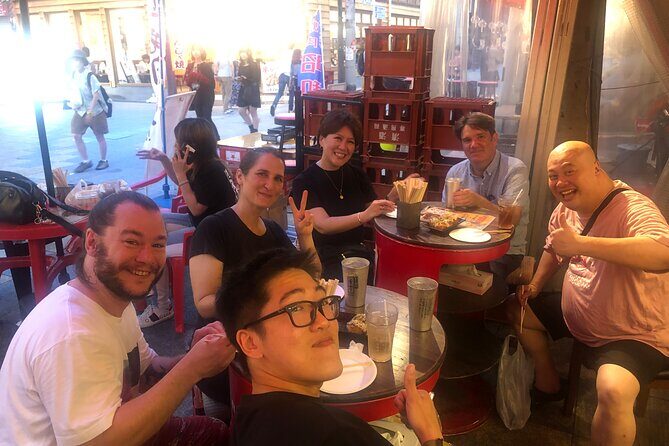
Dotonbori night tastes like a power-up. This 2.5-hour food stroll takes you through Dotonbori and nearby sights, then drops you into the order-at-a-counter rhythm of Osaka snacks with an English/Spanish guide. You’ll also get the classic photo moment with the Glico Running Man sign, which lights up the whole district after dark.
I like the small group size (max 10 people), because the guide can actually keep things moving. I also like the smart mix of savory hits and sweet stops, from takoyaki and okonomiyaki to purin, matcha tart, and Japanese cotton cheesecake.
Possible drawback: Osaka street-food lines are real, and if your group hits peak demand, you can end up waiting longer than you’d like at a couple stops. If you’re the type who hates queues, build in extra patience.
In This Review
- Key points to know before you go
- Why Dotonbori fits an Eat Like a Japanese food tour
- Price and what $89.47 buys you in Osaka
- From Kani Doraku to the neon loop: how the timing feels
- Takohachi Dotonbori: crispy takoyaki with gooey octopus center
- Mattari-Purin: caramel custard purin, Japan’s easy sweet reset
- 551 Horai Ebisubashi: nikuman and that steamed-bun comfort
- Honke Ootako: okonomiyaki on the griddle
- DEARBROS karaage: crispy chicken, lemon, and repeatable crunch
- Lord Stow’s matcha tart and Rikuro’s cotton cheesecake
- Yakisoba at Dotonbori and the Glico Running Man photo stop
- Who this tour is best for
- Should you book this Osaka food guide?
- FAQ
- What foods will I eat on this Osaka tour?
- How long is the tour and where does it start?
- What’s included in the $89.47 price?
- Is there a vegetarian or vegan option?
- How big is the group?
- Will I need cash or a paper ticket?
Key points to know before you go
- 2.5 hours focused on eating, with a stop-to-stop flow that keeps you from wandering hungry
- Max 10 people, so you get more guide attention than big group tours
- English/Spanish guides, with one review specifically naming Esteban
- No vegetarian/vegan options, so plan your expectations around meat and seafood
- Savory-to-sweet pacing: takoyaki and karaage followed by purin, matcha, and cheesecake
- Dotonbori neon + food: you’re sightseeing while you’re snacking, including the Glico Running Man sign
Why Dotonbori fits an Eat Like a Japanese food tour
Osaka’s Dotonbori is basically a giant food sign. You get neon, crowds, and the kind of street energy that makes even a short walk feel like part of the meal.
This tour works because it targets the foods Dotonbori is known for, instead of spreading you across random neighborhoods. You also get the landmark stop at the Glico Running Man sign, so your photos match the flavors you just ate.
One more practical point: the area is easy to navigate on foot, and the tour is near public transportation. That means you won’t spend the day fighting transit just to get to dinner.
You can also read our reviews of more tours and experiences in Osaka

Price and what $89.47 buys you in Osaka
At $89.47 per person for about 2 hours 30 minutes, you’re paying for the guide plus a sequence of scheduled tastings. The tour includes lunch and snacks, and it also lists guide time (English/Spanish) and gratuities as included, which can make the final cost feel more predictable than “pay as you go.”
It also says you’ll use a mobile ticket, and it notes group discounts. Those details matter less if you’re traveling solo, but they can improve value if you’re splitting a booking with friends.
How to think about value: this price is fair if you want convenience and variety. If you’re the type who enjoys fully independent street wandering and ordering your own, you might spend less, but you’ll also lose the guided sequencing that helps you hit the classics efficiently.
From Kani Doraku to the neon loop: how the timing feels
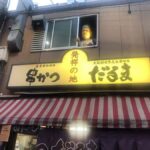
You start at Kani Doraku Dotonbori Main Branch and end back at the same meeting point. That matters because it avoids the common food-tour problem where you finish somewhere inconvenient and have to backtrack.
The schedule is built as quick tasting stops (many around 15–20 minutes). Expect to move often enough to keep energy up, but not so much that you feel like you’re just walking between meals.
Also note this tour is described as having a maximum of 10 people. In practice, that usually means the guide can adjust pacing if a restaurant is backed up—though, as with all street-food areas, lines can still happen.
Takohachi Dotonbori: crispy takoyaki with gooey octopus center
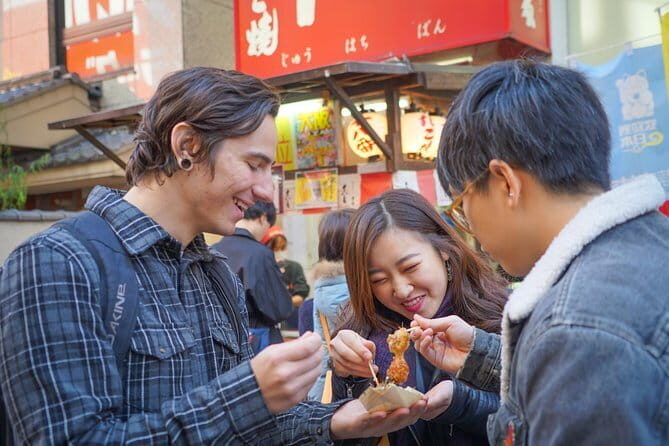
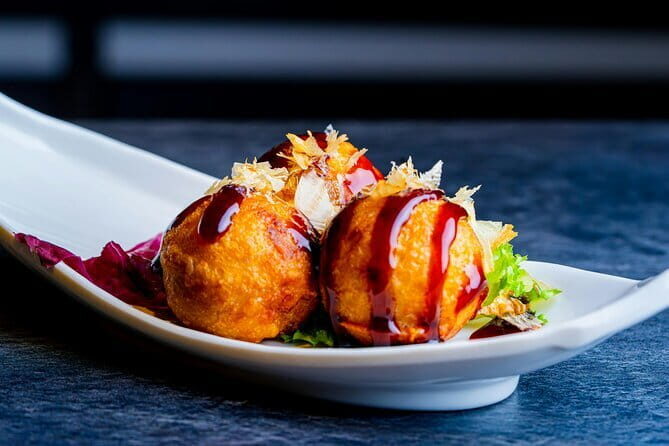
Your takoyaki stop is at Takohachi Dotonbori Main Store. Takoyaki are small, round batter balls made with diced octopus, tempura scraps, pickled ginger, and green onions, cooked in a special griddle pan.
The best part is the texture contrast: crisp outside, soft and gooey inside. They’re typically served hot with takoyaki sauce (sweet and tangy like a Worcester-style vibe), Japanese mayonnaise, bonito flakes, and dried seaweed.
What to watch for: takoyaki are usually served fast because the grill moves constantly. If you want to slow down and really enjoy the flavor, take a second before your first bite to let the heat settle just a little—then you’ll get more flavor instead of just burn-speed excitement.
Mattari-Purin: caramel custard purin, Japan’s easy sweet reset

Next up is Mattari-Purin Dotombori, where you’ll try purin. Purin is a caramel custard dessert, similar in spirit to crème caramel or caramel flan, made with eggs, milk, sugar, and vanilla.
The hallmark is the amber layer of caramel on top and the gentle water-bath cooking that gives a silky, melt-in-your-mouth texture. It’s sweet, but not heavy the way some Western-style custard desserts can be.
Why this stop is smart in the tour: after savory street foods, purin acts like a palate reset. You get a light dessert moment without feeling like you’ve been shoved into a sugar coma.
You can also read our reviews of more guided tours in Osaka




551 Horai Ebisubashi: nikuman and that steamed-bun comfort

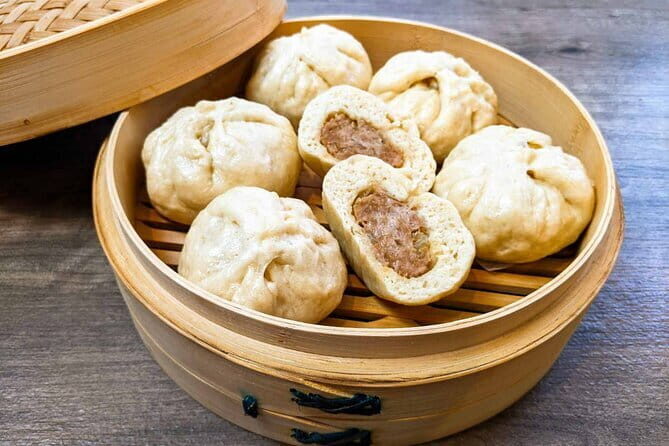
At 551 Horai Ebisubashi Honten, you’ll taste nikuman, a steamed pork bun. The dough is soft and slightly sweet, which sets up a great contrast with the savory filling of ground pork, onions, and seasonings.
Typical flavors include soy sauce, ginger, garlic, and sometimes a touch of sugar. It’s comfort food in bun form—warm, filling, and easy to eat while walking because it doesn’t demand utensils.
Consideration: nikuman is warm and steamy, which is great for colder weather and great for hunger, but it can be messy if you rush. Take a calm bite and keep it close to the wrapping until you’ve got the hang of it.
Honke Ootako: okonomiyaki on the griddle
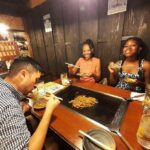
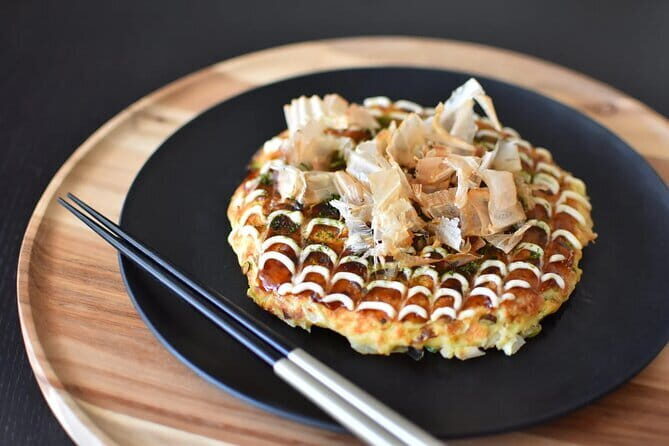
You’ll stop at Honke Ootako Dotonbori Honten for okonomiyaki. Think of it as a savory pancake made with flour, eggs, shredded cabbage, and options like pork, shrimp, or squid mixed into the batter.
Okonomiyaki gets grilled until the outside turns golden and crisp while the inside stays tender. Then it’s topped with okonomiyaki sauce, mayonnaise, dried bonito flakes, and sometimes seaweed flakes that flutter with the heat.
The takeaway: this is one of the few street foods that feels like a full meal. If you want something substantial in the middle of your snack run, this is that moment.
DEARBROS karaage: crispy chicken, lemon, and repeatable crunch
At DEARBROS (ディアブロ道頓堀千日前店), the star is karaage—bite-sized pieces of marinated chicken (often soy sauce, garlic, ginger, and sometimes sake) coated and deep-fried until golden.
The result is juicy meat with a crunchy exterior, often served with a wedge of lemon. Lemon adds a bright hit that keeps the flavor from turning flat when you’re eating multiple savory items back to back.
If you’re sensitive to salt or fried food, pace yourself here. Karaage is delicious, but it’s still fried, so you’ll want some water breaks and not chase it immediately with the next heavy item.
Lord Stow’s matcha tart and Rikuro’s cotton cheesecake
Sweet time comes in two waves.
First, Lord Stow’s Bakery (Ken’s Papa Marron) offers a Japanese matcha tart. The matcha brings a slightly bitter, earthy edge that balances creamy filling (often matcha mixed with white chocolate or cream cheese) in a buttery, crisp shell.
Later, you’ll try Rikuro’s Namba Main Branch Japanese cheesecake, often called cotton cheesecake because it’s light and airy. It uses cream cheese, eggs, sugar, and a bit of flour for a spongy, cloud-like interior with a golden top.
How I’d frame the two desserts: matcha tart is structured and tea-forward; cotton cheesecake is softer and milder. Together, they keep the sweetness interesting instead of repetitive.
Yakisoba at Dotonbori and the Glico Running Man photo stop
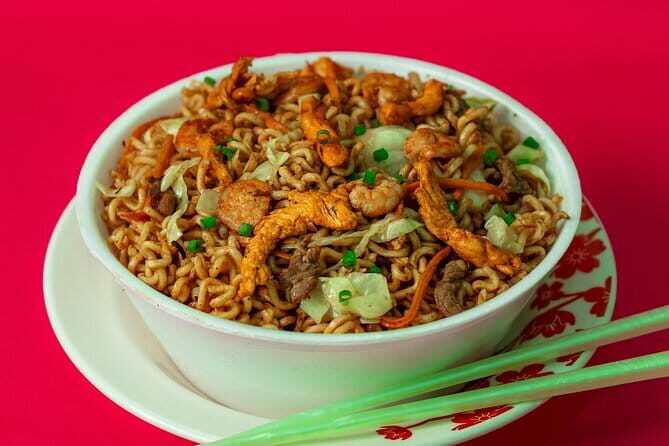
You finish with yakisoba at Takoyaki Dotonbori Kukuru Dotonbori Minami. Yakisoba are stir-fried wheat noodles cooked with cabbage and other vegetables, typically paired with pork, beef, or chicken.
They’re tossed with a savory-slightly sweet sauce made from ingredients like Worcestershire-style elements, soy sauce, and ketchup, giving you that classic umami comfort. Common toppings include pickled ginger, sesame seeds, and sometimes bonito flakes.
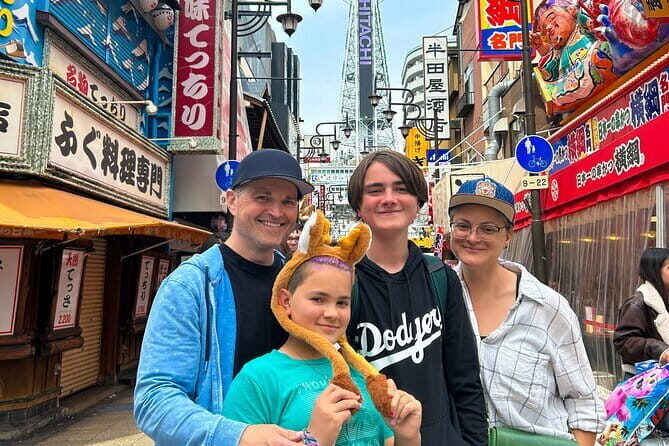
Then there’s the Dotombori Glico Sign stop. The Running Man neon billboard is an Osaka icon linked to the Glico advertising campaign, first installed in 1935. It’s near Ebisubashi Bridge and it’s a top photo spot at night when the whole street lights up.
Why this part matters: it anchors the tour visually. You’re not just eating in the dark—you’re collecting the landmark image that makes Dotonbori feel like Osaka.
Who this tour is best for
This is a strong fit if you want a guided way to try Osaka’s famous street foods without overthinking what to order. The variety across savory and sweet is especially good if you like sampling instead of committing to one big dinner.
It also suits couples and small groups thanks to the max 10 people size. And if you care about the story behind dishes, the tour includes explanations of the culture and the history tied to each stop.
Two notes to keep expectations realistic:
- There’s no vegetarian/vegan option, so plan your choices accordingly.
- Street-food areas create line risk. If timing is tight for you, add buffer before and after the tour.
Should you book this Osaka food guide?
I’d book it if your goal is straightforward: eat your way through Dotonbori’s most recognizable foods in a set, guided loop. The included lunch/snacks plus an English/Spanish guide makes the price feel more like a package than a few random bites.
Skip it or reconsider if you know you hate waiting in lines or you need strict dietary accommodations. Since karaage, nikuman, okonomiyaki toppings, and other items lean meat-forward, you’ll want to be comfortable with that.
FAQ
What foods will I eat on this Osaka tour?
You’ll try takoyaki, purin, nikuman, okonomiyaki, karaage, a matcha tart, yakisoba, and Japanese cheesecake.
How long is the tour and where does it start?
It runs about 2 hours 30 minutes and starts at Kani Doraku Dotonbori Main Branch. It ends back at the same meeting point.
What’s included in the $89.47 price?
Lunch and snacks are included, along with an English/Spanish guide and gratuities. Extra orders are not included.
Is there a vegetarian or vegan option?
No. The tour notes there are no vegetarian/vegan options.
How big is the group?
The tour has a maximum of 10 people.
Will I need cash or a paper ticket?
You’ll use a mobile ticket, and the tour is near public transportation.