REVIEW · OSAKA
Seasonal Japanese Culture Osaka Paint and Wine Experience
Book on Viator →Operated by Welcome Tokyo · Bookable on Viator
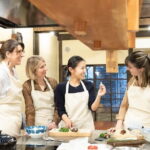
Acrylic painting with wine is a surprisingly good plan. In Shinsaibashi, this seasonal paint party turns a 3-hour afternoon into a hands-on art class with drinks and an artwork you can bring home.
I especially like that you’re not starting from scratch. You get acrylic materials plus on-the-spot coaching, and the group has a beginner introduction before everyone paints together.
One drawback to note: food isn’t included, so you’ll want to eat before you arrive (or plan to buy something nearby). If you’re very sensitive to alcohol vibes, don’t worry—non-alcoholic options are provided for minors.
In This Review
- Key things that make this experience work
- Shinsaibashi and the paint-and-drink studio vibe
- The seasonal themes: March cherry blossoms and more
- Acrylic painting instruction without the pressure
- The 3-hour flow: paint, gallery time, and finishing touches
- Two drinks, acrylic supplies, and a take-home masterpiece
- Don’t forget the food piece
- Value check: $63.93 for a guided, social, take-home art session
- Language, host style, and meeting new art friends
- Practical tips so your cherry blossoms look great
- Who should book this paint and wine session in Osaka?
- Should you book this Osaka paint and wine experience?
- FAQ
- How long is the Osaka paint and wine experience?
- What does the price include?
- Is food included?
- Where do I meet for the class?
- What time does it start?
- Are minors allowed to join if alcohol is involved?
- Do I need painting experience?
- How many people are in the group?
- What is the cancellation window for a full refund?
Key things that make this experience work
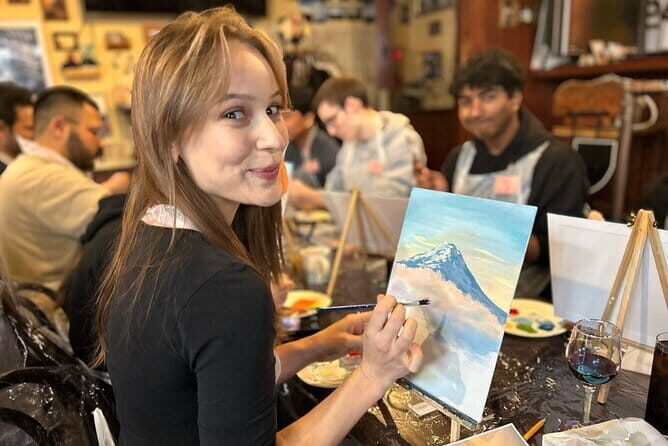
- Seasonal Japanese theme artwork, with monthly theme changes like cherry blossoms and Halloween
- Beginner-friendly start with an intro at 13:30, then group painting
- Quality art supplies provided (including aprons and gloves)
- Two drinks included (wine or soft drink), with non-alcoholic for those under 20
- Small group size, capped at 20 people for a more relaxed feel
- A take-home canvas so your afternoon has a real souvenir
Shinsaibashi and the paint-and-drink studio vibe
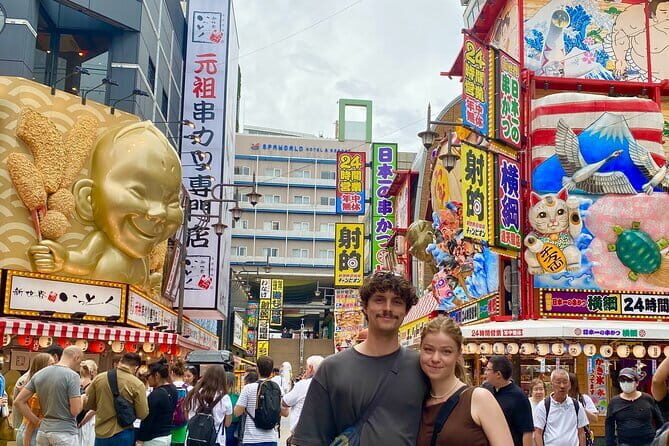
Osaka’s Shinsaibashi is busy in the normal travel sense, but this activity gives you a calmer pocket inside the city. You meet at Cafe&Bar go garage, in the Gallery Bldg. area (1-chōme-18-6 Higashishinsaibashi, Chuo Ward). It’s a straightforward, public-transport-friendly location, and the session is built around a comfortable “make something together” rhythm.
The outside of the venue may look a little industrial, but the inside experience is what matters here: people tend to feel at ease once they’re seated with supplies. That matters because the whole point is creative release, not artistic perfection.
I also like the host energy described in the feedback—people call out the instructor’s mix of friendly humor and useful guidance. If you want to talk a bit (without it turning into a lecture), this is the right setup.
You can also read our reviews of more wine tours in Osaka
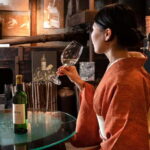
The seasonal themes: March cherry blossoms and more
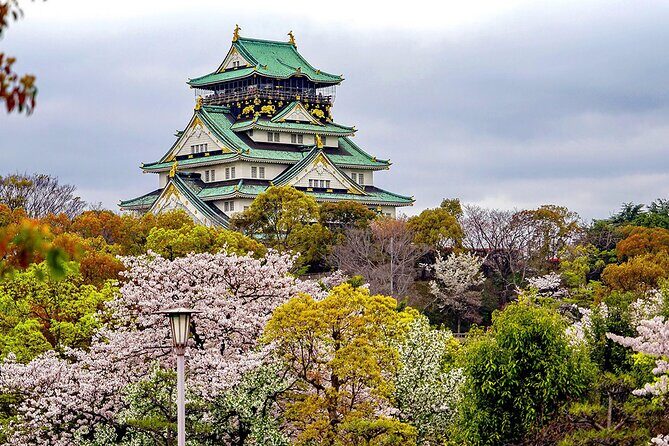
This paint party uses a theme that changes by month. In March, the seasonal artwork focus is cherry blossoms, which fits the spring mood in Japan in a way that feels personal and time-specific.
Other monthly themes listed include:
- January: Hatsumode (first shrine visit)
- February: Sky lanterns
- April: Easter
- May: Osaka
- June: Umbrella Street
- July: Fireworks
- August: Ocean
- September: Autumn in Kyoto
- October: Halloween
- November: Snow Monkeys
- December: Christmas
Why that’s valuable: you’re not just painting a generic picture. The theme gives your brain an easy starting point, and it also helps the group share ideas while you work. One month’s class can feel very different from the next, even if the basic structure stays the same.
Acrylic painting instruction without the pressure
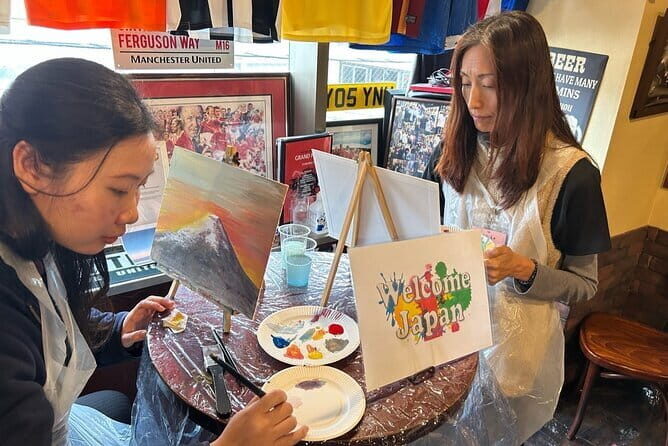
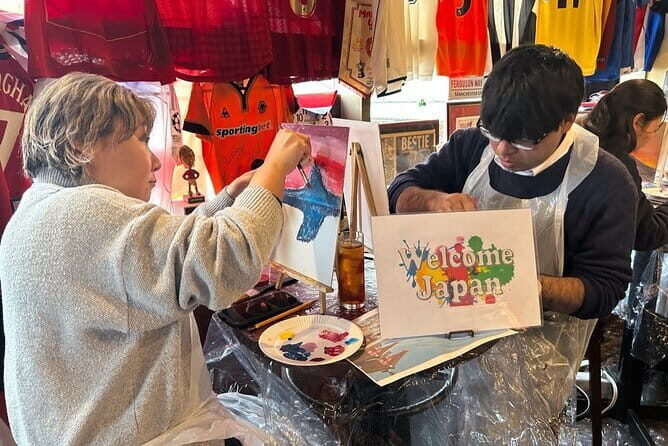
You don’t need prior painting skill. The session includes a beginner introduction at 13:30, and then everyone paints together. That first setup matters: it reduces the blank-page stress, and it helps you understand the tools before the class really moves.
Instruction also goes beyond color mixing. In feedback, the instructor is called out for giving advice on both drawing technique and painting technique. That’s a big deal if you want your result to look better fast, because small adjustments in brush direction and shape can make a painting look more intentional.
If your style is more free-form, you might enjoy the way the class supports your own interpretation around the theme. One person even noted they expected a single strict follow-along design, but found more flexibility in the approach. So if you like making it yours, this kind of class usually suits you better than a worksheet-style workshop.
The 3-hour flow: paint, gallery time, and finishing touches
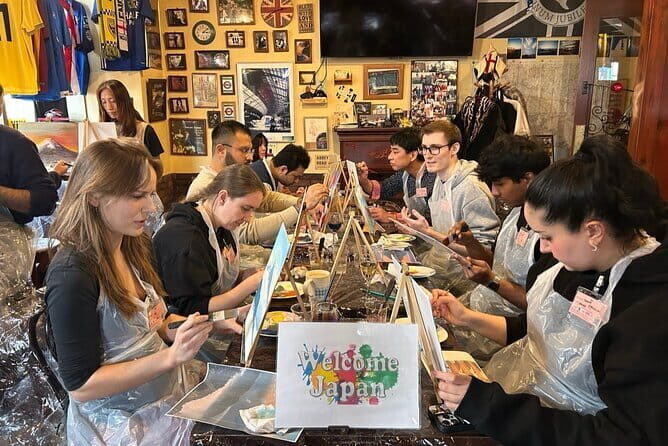
The schedule is built like this: you start with a welcome and intro, you paint in the main session, you take a small break for a gallery time, and then you return to painting before sharing finished works. The whole experience is about 3 hours and ends back at the meeting point.
Here’s what each part means for you in practical terms:
1) Start and beginner intro (around 13:30)
This is where you get oriented. You’ll have supplies in front of you, and you learn enough technique to begin painting without constantly asking the same questions. If you’re new, this is the part that saves you.
2) Main painting period with group pacing
After the intro, you start painting alongside everyone else. The pace is relaxed, but structured enough that you’ll keep moving. If you enjoy chatting while you work, the environment supports that.
3) Gallery exploration and conversation break
Midway, there’s time to explore a gallery, chat, and keep painting afterward. I like this break because it resets your eyes; it also helps you see different approaches people are using, which can boost your confidence.
4) Finish and share
At the end, you share your finished canvas. This part is short, but it gives the class closure. You’re not just leaving with paint on your hands—you leave with a real result.
Two drinks, acrylic supplies, and a take-home masterpiece
The included set is what makes the price feel fair for a casual class. You get two drinks total—wine or a soft drink depending on what you choose. For minors, non-alcoholic drinks are provided, since Japanese law prohibits alcohol for people under 20.
You also get what you need to paint. Aprons and gloves are included, and the materials are provided so you’re not shopping for brushes at the last minute. That’s one less stress point when you’re already busy with Osaka plans.
Most important: you can take your own artwork home. That’s not a throwaway souvenir. A finished canvas is something you can display and remember later—especially if you plan to travel with a little empty space in your bag.



Don’t forget the food piece
Food isn’t included. That means you’ll want to eat beforehand, especially if you’re planning to drink. If you’re the type who gets hungry fast, do yourself a favor and handle dinner earlier in the day.
Value check: $63.93 for a guided, social, take-home art session
At $63.93 per person for roughly 3 hours, this is the kind of activity that can be good value—mainly because you’re paying for more than entertainment. You’re paying for:
- structured instruction (including a beginner intro)
- quality paints and basic protective gear
- two drinks
- and a finished canvas you take home
Could you find cheaper DIY painting? Sure. But those options usually don’t include drinks, guidance, and a group setting that keeps you moving. This class gives you a full, guided experience in a set time window—useful when you’re trying to fit Osaka into a tight schedule.
It’s also limited to max 20 people, which helps the experience feel less chaotic. Smaller group classes usually mean you can get help without waiting forever.
Language, host style, and meeting new art friends
One of the standout details from the feedback is how welcoming and helpful the host feels. People mention strong English skills, which matters if you want to ask technique questions without guessing what the instructor is saying.
The host is also described as talkative and funny. That combination helps because you get social connection without losing the art focus. You can chat with international art friends while still getting practical advice when you need it.
If you’re traveling solo, this kind of small-group setting can be a relief. It’s structured enough that you don’t have to force conversation, but open enough that you can connect naturally while painting.
Practical tips so your cherry blossoms look great
Even with instructions, your comfort matters. Here are a few practical ways to get better results quickly, without overthinking it:
- Start with the theme shapes, not the tiny details. A cherry blossom scene looks right even when the background is simpler.
- Use a light touch for early layers so you can adjust later. Acrylic dries fast, so think in steps.
- Ask early if you’re stuck. The instructor is actively helping with both drawing and painting technique, and earlier questions usually save time.
- Plan your drink pace. The class includes two drinks, but you’ll still want steady hands for brushwork.
- Bring a bag for your canvas. The class provides everything you need to paint, but you’ll want a safe way to carry it home without crushing your work.
And one more thing: the experience is designed for beginners. You won’t be the only person figuring it out in real time.
Who should book this paint and wine session in Osaka?
This is a great match if you:
- want a creative activity that doesn’t require experience
- like the idea of two drinks paired with a structured, guided workshop
- want something social but not loud or exhausting
- enjoy seasonal Japan themes—especially cherry blossoms in March
You may want to skip it if you’re looking for a strictly sightseeing-focused day, because the class is mostly contained around painting, a gallery break, and finishing. Also, if you hate small group activities, the max-20 size might still feel like too much togetherness.
Should you book this Osaka paint and wine experience?
If you’re in Osaka and you want a memorable, low-stress activity with a real takeaway, I think this is a solid booking. The beginner support, the included supplies (aprons and gloves), the two included drinks, and the take-home canvas add up to a complete afternoon—not just a one-time gimmick.
Book it especially if you like the seasonal theme for your month (March’s cherry blossoms are a strong choice). Skip it only if you need food included or you prefer totally quiet activities.
FAQ
How long is the Osaka paint and wine experience?
It lasts about 3 hours.
What does the price include?
The experience includes painting instructions and supplies, two drinks (wine or soft drink), and you can take your own artwork home.
Is food included?
No, food is not included.
Where do I meet for the class?
You start at Cafe&Bar go garage, Gallery Bldg., 1-chōme-18-6 Higashishinsaibashi, Chuo Ward, Osaka, 542-0083, Japan.
What time does it start?
The start time is 1:30 pm.
Are minors allowed to join if alcohol is involved?
The tour follows Japanese law, which prohibits alcohol under age 20. Minors are provided with non-alcoholic drinks.
Do I need painting experience?
No. Beginners get an introduction, and all materials are provided.
How many people are in the group?
The group is capped at a maximum of 20 travelers.
What is the cancellation window for a full refund?
You can cancel up to 24 hours in advance for a full refund. Cancellation less than 24 hours before the start time is not refunded.