REVIEW · OSAKA
From Kyoto or Osaka: Kyoto Highlights & Nara Park Day Trip
Book on GetYourGuide →Operated by REOTRIP TECHNOLOGY LIMITED · Bookable on GetYourGuide
Ten hours can feel like a sprint.
This Kyoto-to-Nara day trip turns Fushimi Inari into an all-walk, torii-gate tunnel moment, and then ends with close-range Nara Park deer time. I like that the route stacks famous sights plus quiet temple contrast, though one drawback is that the day’s flow can be affected by traffic and crowd levels, so you’ll want to stay flexible with timing.
I also like how much the tour tries to “show you Japan,” not just tick boxes: Kiyomizu Temple and the old-street walkways, Gion’s Hanami-koji area, and a Zen pause at Kinkakuji. The tradeoff is that you’ll be on the move for most of the 10-hour schedule, and meals and entry tickets cost extra since food and admissions aren’t included.
In This Review
- Key highlights worth planning around
- Why this Kyoto-to-Nara trip works in 10 hours
- Start smart: meeting points, drop-off in Osaka, and the email you must read
- Kiyomizu Temple and the old-street walk: Kyoto atmosphere without extra planning
- Gion and Yasaka Shrine: the kimono photo option and how to use it well
- Fushimi Inari-taisha: the torii tunnel, blessings, and painted horses
- Kinkakuji Zen temple: when the day finally slows down
- Nara Park deer time: feeding, close encounters, and the Todaiji option
- Food and tickets: what’s not included and how to budget
- Guide quality and timing: how to make the day feel smooth
- Value for $69: who this tour fits best
- Should you book this Kyoto Highlights & Nara Park Day Trip?
- FAQ
- How long is the Kyoto Highlights & Nara Park Day Trip?
- Where does the tour start, and where does it end?
- Is food included in the price?
- Are attraction admissions included?
- Is there a live guide, and is it in English?
- What is the cancellation policy?
Key highlights worth planning around
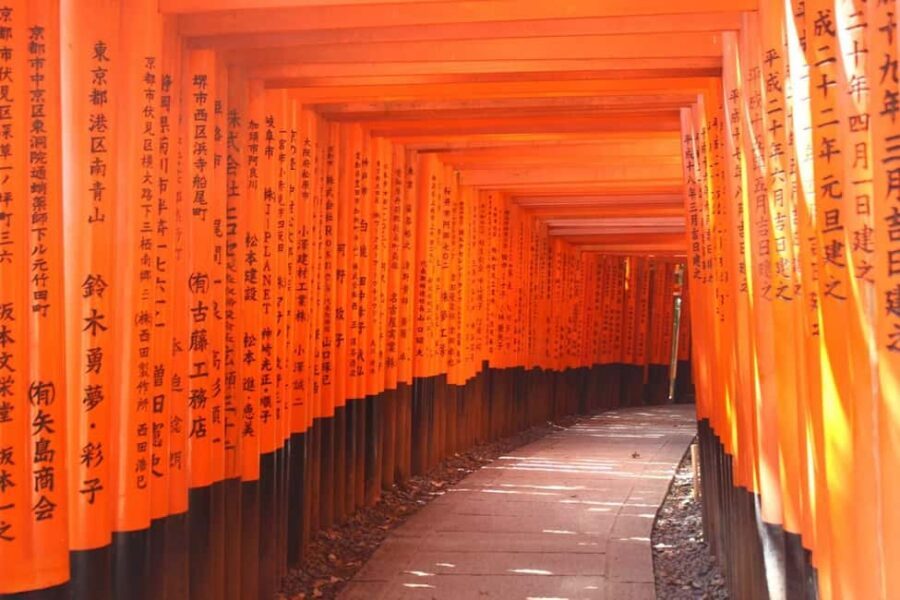
- Fushimi Inari’s torii tunnel walk: Red gates stretch in a way that feels almost maze-like, and it’s a great photo walk even if you arrive mid-day.
- Nara Park deer encounters: You can feed the deer and get close, but stay calm and follow your guide’s cues.
- Kinkakuji Zen temple contrast: After busy streets, the golden pavilion area brings a much quieter rhythm to the day.
- Kyoto old streets + Gion stroll: Ni-nen-zaka and Ishibe-koji give you that classic Kyoto pedestrian feel, then Hanami-koji brings you into the Gion vibe.
- Optional kimono photo moment near Yasaka Shrine: If this option is offered in your group, it’s a fun way to make the day feel special.
- Your guide helps you keep the day on track: One English guide named Jack stood out for being especially helpful and making the itinerary feel easier to manage.
Why this Kyoto-to-Nara trip works in 10 hours
This is the kind of day trip that makes sense if you want variety without transferring trains all day. You start in either Kyoto or Osaka, then follow a loop that hits several top Kyoto stops before finishing with Nara Park. The pacing is tight, but that’s also why it can feel efficient.
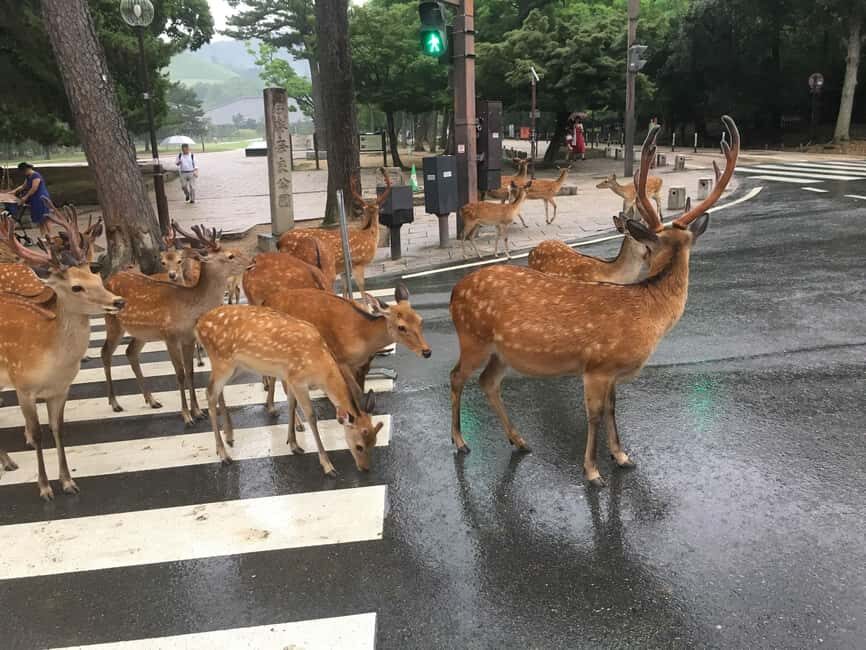
The tour also seems built for the big “wow” moments. Fushimi Inari is the headline, with those endless red torii gates forming a literal tunnel for your walk. Then Nara gives you a different kind of wow: wildlife that’s used to people, right in a park setting.
Just remember what efficiency costs: you don’t get long, slow hangs at every place. If you hate getting rushed between stops, plan to treat this as a highlights sampler.
You can also read our reviews of more tours and experiences in Osaka
Start smart: meeting points, drop-off in Osaka, and the email you must read
You’ll pick your starting point from either Kyoto or Osaka. The meeting point can vary depending on the option booked, so you should watch for the day-before email from the provider. That email is where you’ll get pickup location details, your guide contact, and the bus license plate number.
Here’s the important practical bit: the tour concludes uniformly in Osaka. That means even if you start from Kyoto, you’ll still end in Osaka at the end of the day. If you’re staying in Kyoto, that affects how you’ll get home.
If a day trip is supposed to be roundtrip but you see confusion in the fine print, this is where you protect yourself. Confirm exactly where you’ll be dropped off and what’s included in the return leg.
Kiyomizu Temple and the old-street walk: Kyoto atmosphere without extra planning
The day typically kicks off with Kiyomizu Temple and an autumn mood. The description points to fall colors on the mountain areas, which matters because it changes the feel of the whole first half. Even when you’re not there for photography, it sets a calm, scenic tone before you hit the busier pedestrian lanes.
From there, you’ll stroll Ni-nen-zaka and Ishibe-koji. These lanes are famous because they’re walkable, atmospheric, and built for slow looking—shops, stone steps, and the kind of street layout that makes Kyoto feel like Kyoto. The tour also includes Hanami-koji in Gion, which is a different flavor: elegant streets, traditional surroundings, and a more “city within a city” feel.
If you’re someone who gets overwhelmed by Kyoto’s size, this segment is a good use of time. You’re not trying to navigate on your own while tired. You’re simply walking the most well-known pedestrian zones with an organized plan.
One consideration: since food and entry tickets aren’t included, you’ll want cash or card ready for small purchases along the way.
Gion and Yasaka Shrine: the kimono photo option and how to use it well
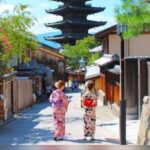
The tour mentions a chance for guests to change into kimonos and take photos connected with Yasaka Shrine. That can be a memorable add-on because it turns a normal sightseeing moment into a “this is the Kyoto look” experience.
The key is to treat the photo option as a flexible extra, not a requirement. If you want it, go for it early enough that it doesn’t throw off your energy for the rest of the day. If you’re not interested, you’ll still get the walking scenery and the shrine-area atmosphere.
Also, don’t forget that shrine visits and photo moments can mean crowds. Your guide will help you time stops, but you’ll get the best results if you’re comfortable standing in line without getting stressed.
Fushimi Inari-taisha: the torii tunnel, blessings, and painted horses
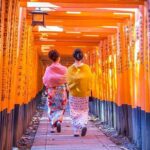
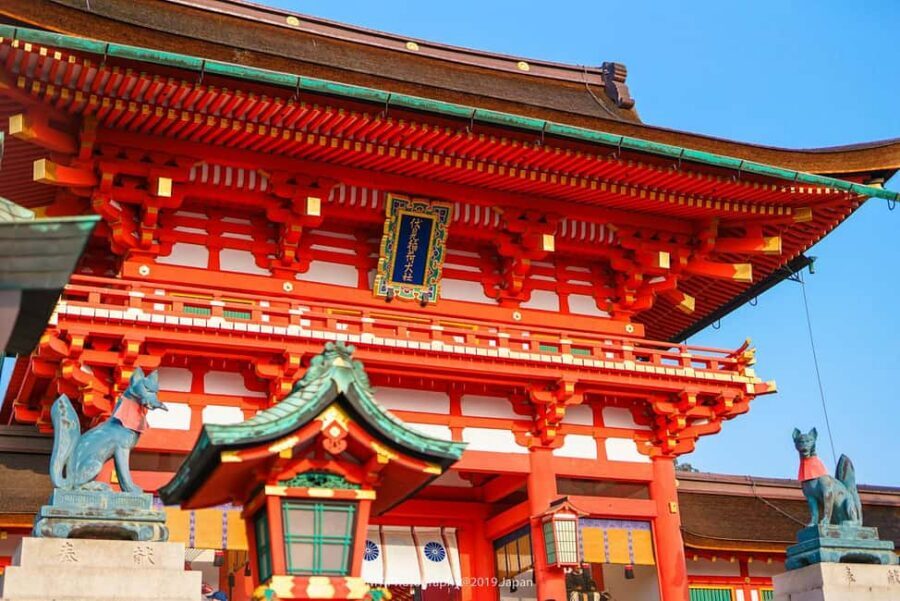
This is the center of gravity for the day. Fushimi Inari-taisha is famous for its red torii gates, and the tour’s promise of an endless tunnel walk matches what you’re likely to feel on-site: you keep going, gate after gate, and the route keeps pulling you forward.
The experience also includes practical cultural touches, like sending a blessing for luck for your family and yourself. Even if you don’t fully know the ritual language, the actions are usually straightforward to follow when you’re guided. It adds meaning to the walk so it doesn’t feel like only a photo stop.
Then there are the painted horses mentioned as unique, plus the note that you can see them being graffitied. That’s not something every visitor expects, and it adds a real-world, human layer to the shrine complex. It’s a reminder that these places aren’t just museum-style landmarks.
One thing to plan for: Fushimi Inari can get packed. If you’re the type who wants to escape crowds fast, you’ll appreciate having a guide because you can shift your pace without making your own plan from scratch.





Kinkakuji Zen temple: when the day finally slows down
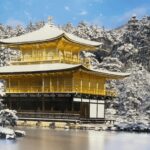
After walking torii gates and Kyoto streets, Kinkakuji is your reset button. The highlight list calls it a famed Zen temple, and that’s exactly what the stop is good for: a change in tempo and mood.
Instead of moving through pedestrian corridors, you’re watching a more serene setting and letting the day “settle.” It’s also a smart contrast to Fushimi Inari’s visual intensity and Nara Park’s animal-energy.
Because the itinerary details don’t give a specific time for Kinkakuji in the information you provided, treat it as a calm, structured stop that appears somewhere in the Kyoto portion. In other words: don’t plan to snack everything away early. Save a little energy so you can actually enjoy the quiet moment when it arrives.
Nara Park deer time: feeding, close encounters, and the Todaiji option
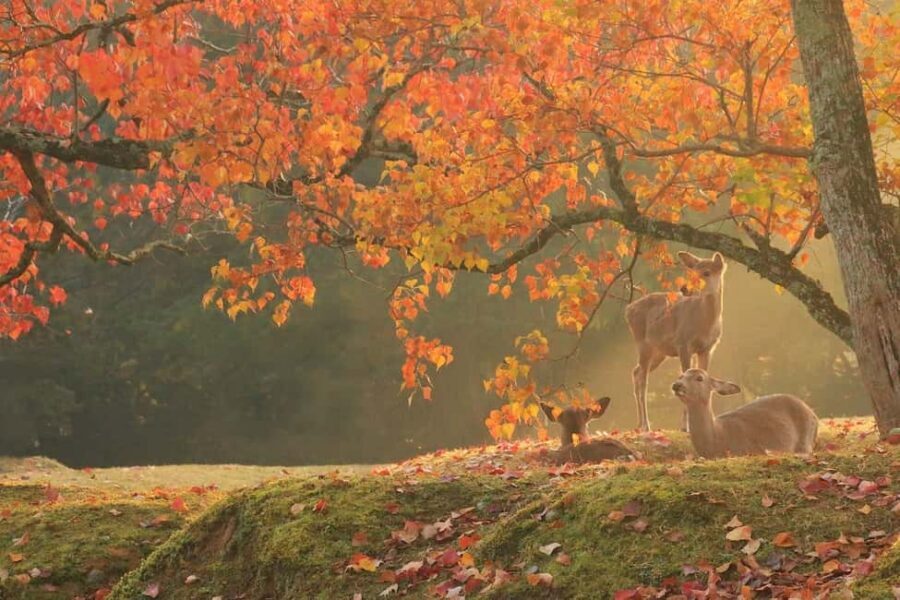
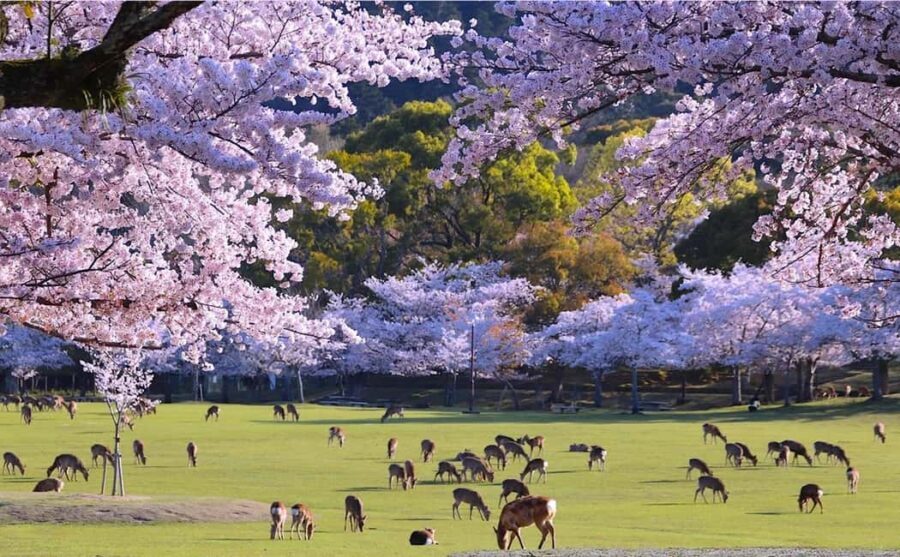
Around 3:30 p.m., the tour continues to Nara Park. That timing matters because it sets you up for a shift into evening light and fall-color scenery. The description also calls out colorful red leaves, which is often when Nara feels especially picturesque.
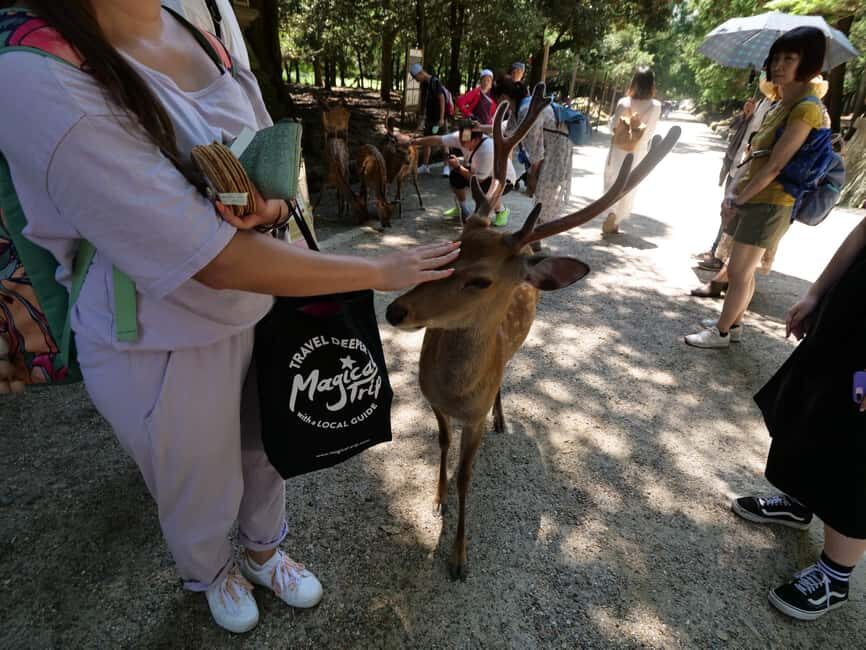
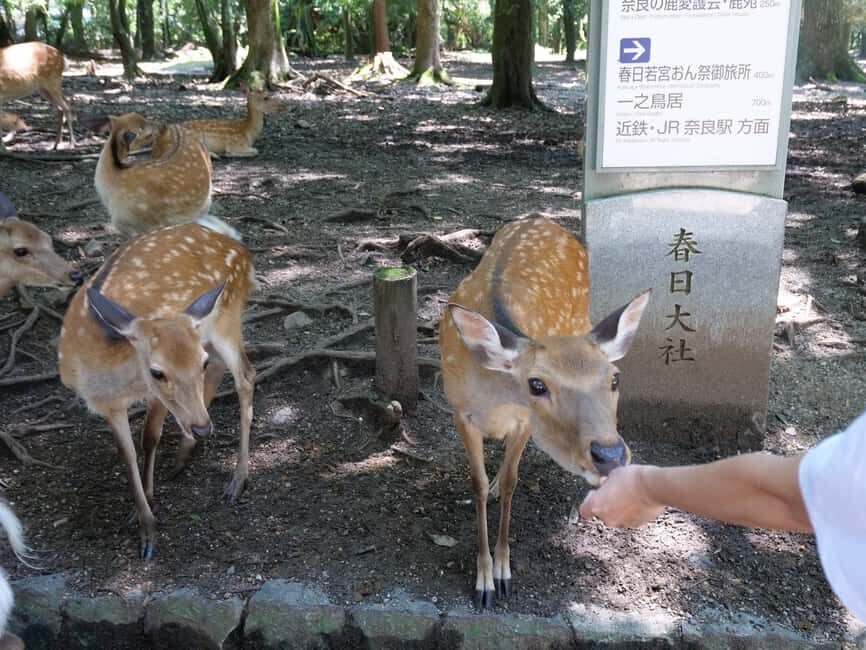
The highlight here is simple: countless freely roaming deer. You can feed them and get up close. This is one of those experiences where the guide’s rules are useful. Keep your movements steady, follow what they tell you about feeding, and don’t act like the deer are souvenirs.
You also have an optional choice to visit Todaiji Temple and learn local history and culture. Since admissions aren’t included, that option may add a ticket cost depending on what you choose. But the value is clear: Todaiji gives context to what you’re seeing in Nara, so you leave with more than just a deer story.
The negative feedback from one booking is a good reminder to think about the day’s ending logistics. The operator’s info states drop-off in Osaka, but you should still read your day-before details carefully so you’re not surprised about how the return works.
Food and tickets: what’s not included and how to budget
The price is $69 per person, but this tour is more about sightseeing structure than about paying for meals. Food and drinks aren’t included, and attraction admissions aren’t included either.
That means you should budget for:
- Lunch or snacks during the Kyoto portion (there’s a lunchtime window, but your meal cost is on you)
- Any paid entry fees if your route includes them
- Optional extras like the kimono photo moment if it’s offered in your group
On the plus side, the tour does include roundtrip transportation (with drop-off at Osaka), tolls, parking, and fuel, plus a live English guide. For $69, you’re mostly paying for transportation efficiency and guided route planning rather than museum-style access.
Guide quality and timing: how to make the day feel smooth
The tour runs for 10 hours, which is long enough to cover multiple areas but short enough that you’ll feel the pace. This is where a good guide earns their pay.
One guide named Jack was praised for being helpful and making the trip better. That kind of guide value matters because Kyoto and Nara both have crowd patterns, and your time is better spent when someone else manages the order and timing.
You should also expect the schedule to be sensitive to real-world issues. Daily traffic, weather, holidays, and crowd levels can shift plans. If delays happen due to these factors, refunds can’t be requested, so the best mindset is flexible.
If you’re prone to stress on busy travel days, pack like it’s an all-day walk: comfortable shoes, a small water plan, and a phone battery you can trust.
Value for $69: who this tour fits best
For the price, this day trip is best if you want:
- A guided highlights route from Kyoto or Osaka
- The top “must-see” experiences: torii at Fushimi Inari and deer at Nara Park
- A balance of energetic walking and a calm temple stop at Kinkakuji
It’s less ideal if you:
- Want lots of free time in each location
- Get grumpy when schedules shift because of traffic or crowds
- Prefer to explore at a very slow pace
If you’re visiting Kyoto for the first time and trying to squeeze in Nara without complicated train planning, this tour is a reasonable shortcut. It gives you a curated day where you don’t have to connect the dots between neighborhoods and temples.
Should you book this Kyoto Highlights & Nara Park Day Trip?
If you’re excited by Fushimi Inari’s torii walk, you want a high-impact Nara Park deer encounter, and you like having a guide manage timing, I think this is a solid booking. The standout value is that it strings together Kyoto’s street scenes, a Zen temple pause, and Nara’s wildlife moment in one guided package.
But book with your eyes open. Read the day-before email closely, especially for pickup details and the Osaka drop-off plan. Also, plan your budget for meals and any attraction admissions, because those are not included.
If that all sounds like your style of travel, you’ll likely come away with a full day of real Japan flavor, not just a list of stops.
FAQ
How long is the Kyoto Highlights & Nara Park Day Trip?
It runs for 10 hours.
Where does the tour start, and where does it end?
You can start from either Osaka or Kyoto, but the tour concludes in Osaka. Even if you begin in Kyoto, you’ll be dropped off in Osaka at the end of the day.
Is food included in the price?
No. Food and drinks are not included.
Are attraction admissions included?
No. Attraction admissions are not included.
Is there a live guide, and is it in English?
Yes. The tour includes a live tour guide in English.
What is the cancellation policy?
You can cancel up to 4 days in advance for a full refund.