REVIEW · OSAKA
Japanese miniature kimono made with origami in Osaka
Book on Viator →Operated by Shuminavi Inc. · Bookable on Viator
Paper magic turns into a kimono. In Osaka near Abeno Station, you’ll learn an origami kimono using an instructor’s original design, the kind you usually can’t learn anywhere else. It’s hands-on and genuinely fun, but the folds are small, so you’ll want patience.
I really like the way the class is paced: you practice once together, then you move to the real pattern at your own table. The second thing I love is that you take home a QR code with a video and a folding diagram, so you can replay the steps later.
One consideration before you go: if you’re expecting a fast craft or a hands-off demo, this won’t feel that way. You’ll be folding the whole time, and it’s best when you treat it like a mini workshop, not a quick photo stop.
In This Review
- Key highlights you’ll care about
- Finding the class near Abeno Station (Exit 7)
- What you actually make: a miniature kimono from folded paper
- How the 90 minutes work: practice fold, then your real patterned piece
- A teacher who slows down for your hands
- The take-home QR code: why that souvenir is more than a trinket
- Mini gift-making: pockets, picks, coins, and otegami
- Price and value: what $65.32 buys you in real terms
- Pair it with Osaka sights you can reach easily
- Should you book this origami kimono class?
- FAQ
- Where do we meet for the class?
- How long does the experience take?
- What is included in the price?
- Is pickup available?
- Do I get instructions I can use after the class?
- Is the activity suitable for beginners or kids?
Key highlights you’ll care about
- Your teacher’s original origami kimono design means you’re not copying a generic diagram
- Practice fold first, then move to the real patterned piece at your table
- Take-home QR video + folding diagram helps you refold it after the class
- Small details matter: pockets and a cute back-style look are part of the charm
- Extra time option to pick from up to 20 traditional works
Finding the class near Abeno Station (Exit 7)
The experience starts at the bottom of the stairs at Abeno Station, Osaka Metro Tanimachi Line, Exit 7. It’s close enough to feel easy, but you still want to show up a few minutes early—meeting at stairs is one of those spots where you don’t want to rush while scanning for the group.
The classroom building is near major sights, and it also functions like a small shopping hub with various stores inside. That’s useful because you can do light browsing before or after, especially if you’re pairing the class with a bigger Osaka day.
Pickup is offered, which can make this smoother if you’re coming from a hotel a bit farther out. Just note that traveling expenses are not included, so plan your local transit costs accordingly.
You can also read our reviews of more tours and experiences in Osaka.



What you actually make: a miniature kimono from folded paper

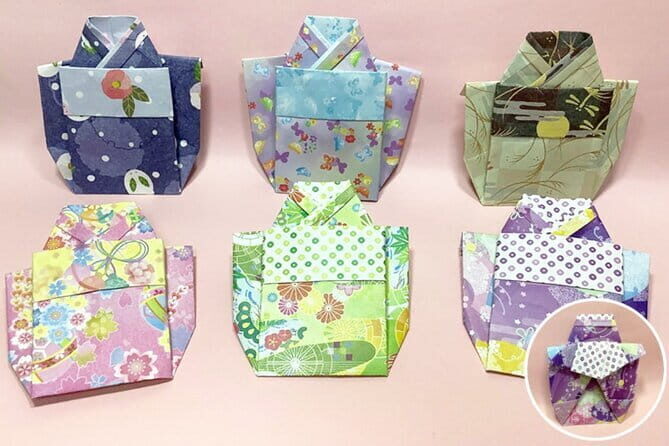
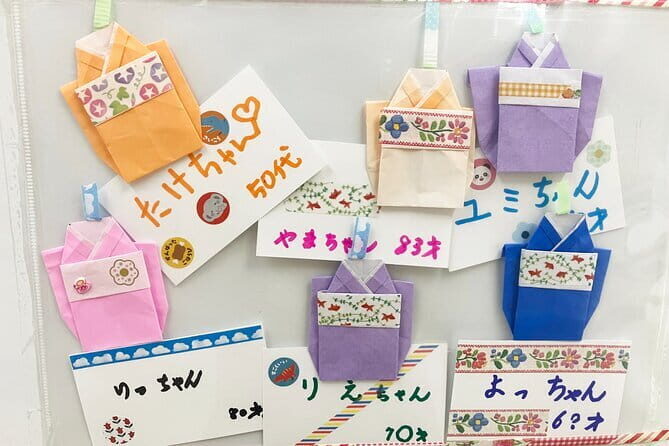
You’re not making a full-size costume. You’re creating a miniature origami kimono—a small, charming version of a traditional Japanese folk garment. The fun part is that the design is created by the instructor, so it has that personal touch that goes beyond a basic origami “kit” look.
The finished piece includes little details that make it feel more lifelike and useful as a keepsake. Some versions come with pockets designed to hold small items, and there’s also a cute back figure look that people tend to notice right away once it’s completed.
This isn’t just paper art for display. You can treat it like a tiny gift object too.
If you have extra time, the class may let you choose your favorite piece from 20 traditional works. That’s a big deal if you’re the type who wants more than one souvenir from the session.
How the 90 minutes work: practice fold, then your real patterned piece
The class is built around a clear sequence, and that structure matters because origami is usually harder when you guess.
Here’s the rhythm you can expect:
- You meet at the station stairs, then walk to the classroom together.
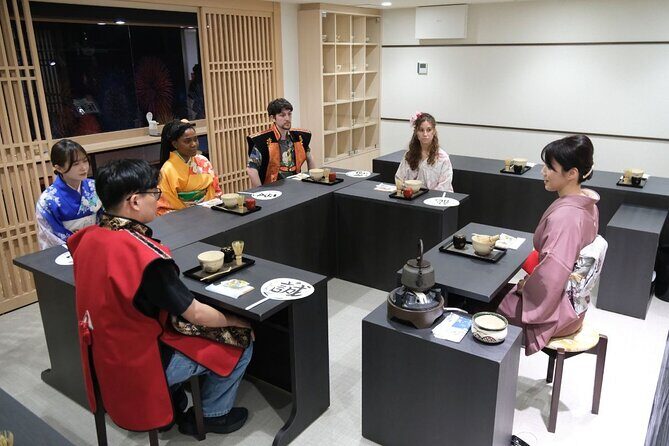
- In the room, you’ll sit at your chosen table and pick your origami paper.
- You fold once with the instructor for practice. This helps your hands understand the moves before you tackle the finished pattern.
- Then you do the real folding of the beautiful patterned origami kimono.
It’s a good setup for beginners because you aren’t thrown into a cold start. You’ll learn the logic of the fold, then you apply it to the piece that becomes your souvenir.
Also, the class supports questions as you work. In a craft like this, that’s the difference between frustration and progress.
A teacher who slows down for your hands
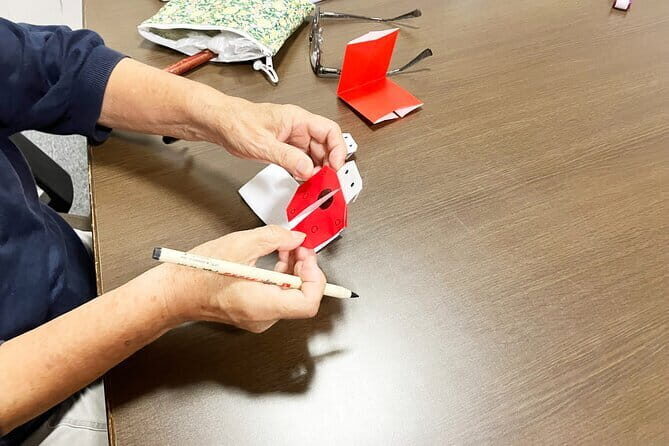
This is a hands-on class where you’ll rely on clear guidance. The teaching style here leans patient and very practical, which is exactly what you want for something small and fiddly.
People have highlighted how gently and carefully the instructor teaches, even when folding doesn’t go perfectly at first. In particular, Dr. Hiroko (as referenced in the experience) has a reputation for explaining in an easy-to-follow way and helping you get unstuck without making you feel rushed.
That patience shows up in the way the class is staged. The practice fold gives you a safety net, and the instructor can correct things in real time so you don’t end up with a final piece that won’t assemble right.
It’s also a good fit if you’re traveling with kids or if you’re brand new to origami. The experience is designed so beginners—and even small children—can enjoy it together.
The take-home QR code: why that souvenir is more than a trinket

Here’s one of the most valuable parts: you take home a QR code that links to a video and instructions for folding. You’re not relying only on your memory, which is great because most origami mistakes happen after you’ve left the classroom.
The class also provides a folding diagram, which is handy if you learn better from visuals than from watching a video once.
This is what turns your kimono from a one-time activity into an ongoing hobby moment. You can refold it later, show someone at home how it’s made, or even try different paper to see how the look changes.
If you plan to bring back something small but meaningful, this is a stronger option than a typical shop purchase because you own the process, not just the object.






Mini gift-making: pockets, picks, coins, and otegami

The kimono concept doesn’t end at decoration. The design can include pockets for holding small items, and the experience also mentions gift ideas that fit the scale.
You can make these as gifts with small additions like picks, coins, or otegami placed inside. That’s a fun Osaka twist because it’s the kind of thoughtful, lightweight gift you can actually carry through the rest of your trip without overpacking.
If you like souvenirs that feel personal, this scratches that itch. You’ll leave with something you made, plus a couple of ways to use it like a tiny present.
Price and value: what $65.32 buys you in real terms

At $65.32 per person for about 1 hour 30 minutes, you’re paying for more than paper and instructions—you’re paying for guided coaching, materials, and a finished take-home piece with refillable learning tools.
What’s included is clear: tools and materials for the activity. That matters because origami classes often hide the cost of supplies. Here, you show up and fold.
You’re also not just doing a drop-in demo. This is a private tour/activity, meaning it’s only your group. Even if your group is small, private setups usually mean the instructor can spend more time helping you get the folds right instead of rotating attention among a larger crowd.
And if you have time to choose additional designs from the set of 20 traditional works, the session can yield more than one finished kimono—making the value feel even better.
One more practical note: mobile ticketing is used. So if you like digital convenience and not digging through paperwork, you’ll likely feel at ease.
Pair it with Osaka sights you can reach easily
The location is a big plus for planning. You’re near Abeno Harukas (Osaka’s tallest building), Tsutenkaku Tower, and Tennoji Zoo. You can make the day feel full without stacking complicated transit.
A simple plan looks like this:
- Do the origami class in the early or mid part of your day.
- Use your remaining time for one major landmark close by.
- End with shopping around the station area if you want something low-effort.
Because the classroom is near transit, you can also keep your schedule flexible. If your timing runs a bit tight, you’re not stranded miles from everything.
Should you book this origami kimono class?
Book it if you want a creative Osaka activity that isn’t just sightseeing. You’ll get guided folding, a genuinely cute finished souvenir, and a QR-based learning tool you can use again at home. It’s also a great option for beginners because the class structure supports first-timers and the instruction style is patient.
Skip it if you dislike hands-on work or you’re short on time. This is a folding session, not a quick show-and-tell, and the small details are part of the charm.
If you’re looking for a memorable, giftable craft that you can carry home easily, this one makes sense.
FAQ
Where do we meet for the class?
Meet at the bottom of the stairs of Abeno Station, Exit 7.
How long does the experience take?
It’s about 1 hour 30 minutes (approx.).
What is included in the price?
Tools and materials needed for the activity are included.
Is pickup available?
Pickup is offered.
Do I get instructions I can use after the class?
Yes. You’ll receive a QR code for a video plus a folding diagram, and you can take the QR code home for later.
Is the activity suitable for beginners or kids?
Yes. Beginners and small children can enjoy the experience together, and most travelers can participate. Service animals are allowed as well.