REVIEW · OSAKA
Osaka: Learn Bushido – Trial Slashing with Samurai Sword
Book on GetYourGuide →Operated by 株式会社武士の誉れ · Bookable on GetYourGuide
Samurai sword practice in Osaka is surprisingly doable and disciplined. You dress in samurai gear, learn basic stance and iai movements, then try a real cutting test after a short intro to bushido. What I like most is the hands-on progression: you don’t just pose, you practice until the instructor says your motion is right.
The second big win is how the class is structured around etiquette and control, with bows, sword manners, and the step-by-step mechanics of pulling, cutting, and returning the blade. My one drawback to flag: it’s a real sword activity with light martial-arts intensity, so it’s not for everyone (for example, kids under 10 and anyone who can’t manage the physical demands).
In This Review
- Key Highlights You’ll Care About
- Finding Samurai Honor Near Osaka Castle (and Not Getting Lost)
- Your First 30 Minutes: Samurai Clothing Change + Safety Setup
- The Bushido Part You’ll Actually Feel: Bowing, Respect, and Sword Manners
- Sword Basics: Belt Walks and Iai Practice (Where Form Matters)
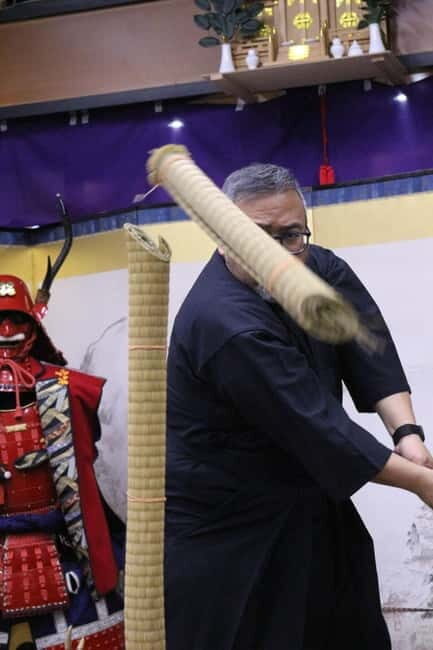
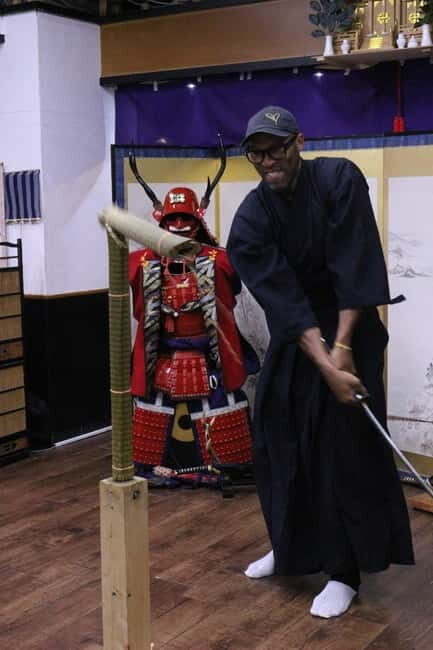
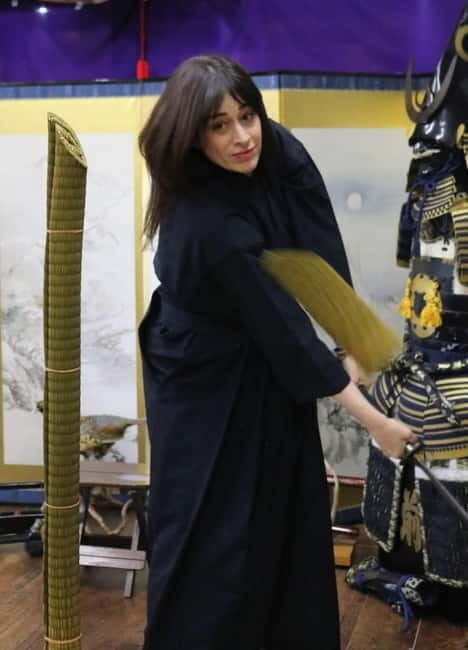
- Trial Slashing: Cutting Rolled Straw with a Real Katana
- Photos and the End-of-Class Bow: What You Walk Away With
- Price and Value: Is $92 Worth It in Osaka?
- Who Should Book This (and Who Should Skip It)
- Practical Rules You’ll Want to Know Before You Go
- Should You Book Samurai Honor for Your Osaka Trip?
- FAQ
- How long is the Osaka Learn Bushido: Trial Slashing experience?
- What is included in the price?
- What happens during the trial slashing?
- Where do I meet the group?
- Is transportation or pickup from my hotel included?
- What should I bring?
- What languages do instructors/interpreters use?
- Is this experience suitable for children?
- Is photo shooting included?
- Can I get a refund if my plans change?
Key Highlights You’ll Care About
- Costume first: you change into samurai clothing (dogi and hakama) before any sword work
- Dojo ritual: the training starts and ends with bows before a shrine setting
- Actual sword technique basics: battou (draw), nottou (sheath), and chiburui (symbolic blade care)
- Clear stance progression: upper, lower, middle, side, plus an eight-phase stance set
- Trial cutting with a real katana: you cut a rolled straw (and sometimes similar targets like tatami shown in practice stories)
- Photos included: staff help with photo shooting, and you receive the files by email
Finding Samurai Honor Near Osaka Castle (and Not Getting Lost)
This experience happens at a place called Bushi no Homare (Samurai Honor), with the meeting point being a wooden sign that reads Honor of the Samurai. The landmark is described as a rack in front of the store with activity pamphlets, and you may also spot kimonos and hakama hanging to dry.
The address given is Excellence Takayama 1F, 2-3-19 Shiginonishi, Joto-ku, Osaka-shi, Osaka 536-0014. You’ll want to rely on Google Maps, because the Apple Maps address is listed as incorrect. If you’re using transit, one practical tip from people who did the class is that it’s easy to reach from Osaka-jokoen station, across the river.
This location matters because the activity is close to where many people base themselves when visiting Osaka Castle. You get the samurai experience without needing a whole day of travel out to the countryside.
You can also read our reviews of more tours and experiences in Osaka.



Your First 30 Minutes: Samurai Clothing Change + Safety Setup
Plan to arrive 30 minutes before your reserved start time. That extra time is there for the two things that make this kind of class run smoothly: changing clothes and getting instructions before you start swinging a blade.
Included in the experience are the samurai clothing. The class also provides the gear for you to practice the sword movements, so you don’t need to bring your own costume. What you do need to bring is simple: a T-shirt.
One small but important thing: this is described as a small group limited to 4 participants, which generally means you get more direct feedback and fewer long waits. In a sword class, that difference is real.
The Bushido Part You’ll Actually Feel: Bowing, Respect, and Sword Manners
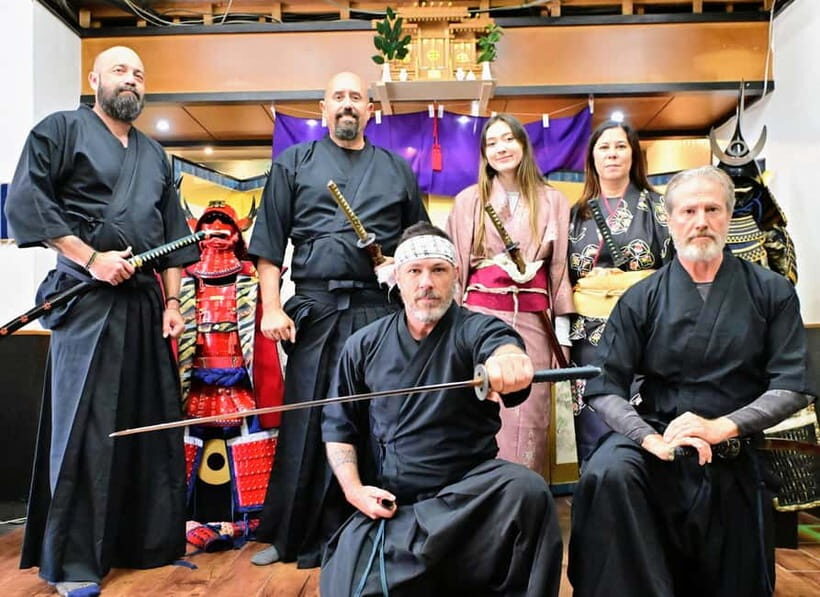
Before anyone hands you a sword, the class frames the training around bushido. You’re taught that the sword isn’t just a tool for cutting—it’s tied to discipline, courtesy, and honor, and training is meant to refine mind, technique, and body as one.
A key moment is the bowing ritual: training begins and ends with a bow before the shrine in the dojo space. If you’re thinking this will feel like a performance, the bowing part helps you understand the tone they’re going for—serious practice, even though you’re doing it as a visitor.
You also get an explanation of samurai-sword life. The instructor covers ideas like the bond between a samurai and the Japanese sword, including the mindset that a sword’s value can be more than material wealth. Whether you agree with the philosophy or not, it’s useful context because it explains why the class emphasizes control and respectful handling rather than speed.
Sword Basics: Belt Walks and Iai Practice (Where Form Matters)
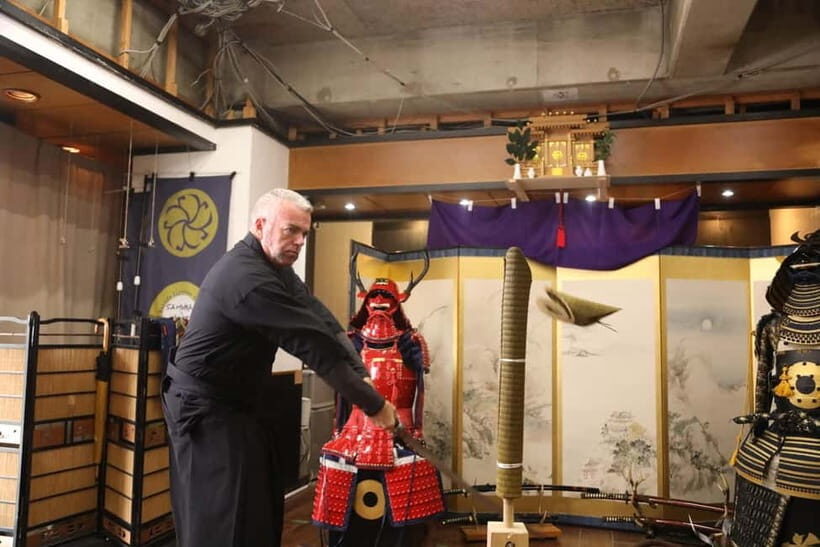
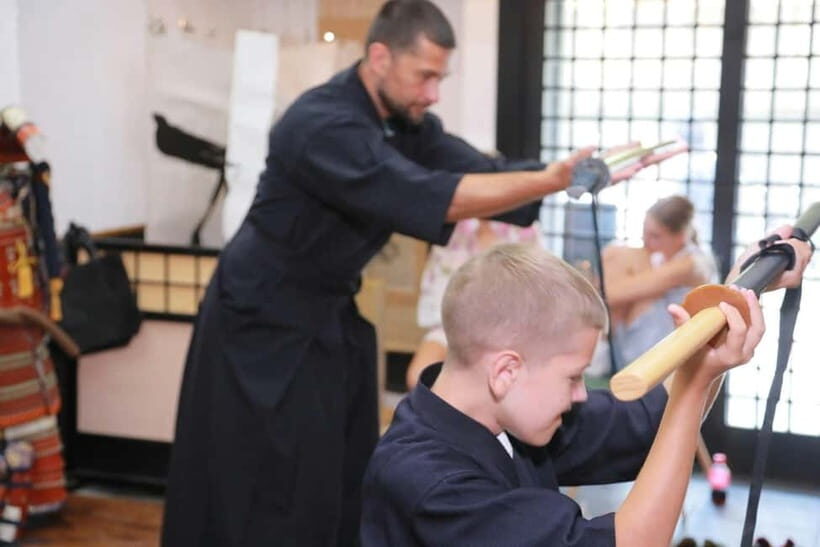
Once you’ve got your costume on, the class shifts into physical skills. You start with a walk and gestures with the sword belt, which sounds small until you realize it’s training your body to move while still respecting how the sword is carried.
Then comes the main technical block: iai practice sword work. Even if you’re a total beginner, the class is organized like a ladder. You practice the stance, then you learn a sequence of motions used in iai training.
Here are the key actions you’re taught:
- Battou: pulling the sword from the scabbard to cut
- Chiburui: a symbolic action after cutting, described as removing blood from the blade
- Nottou: returning the sword to the sheath after chiburui
You also practice the basic stances and sword swings. The information provided lists stance types like middle stance, upper stance, lower stance, and side stance, along with an eight-phase stance structure. The way this is described matters: you’re not randomly flailing your arms. You’re learning what the stance is supposed to do, then what the swing is supposed to feel like.
One more detail that’s worth knowing: you’re coached to swing using the sword’s weight rather than just forcing it with arm strength. When your swing is correct, you may hear a hi-nari sound from the blade. That’s not just cool trivia; it’s a sign you’re starting to move the sword the way they want.
Trial Slashing: Cutting Rolled Straw with a Real Katana
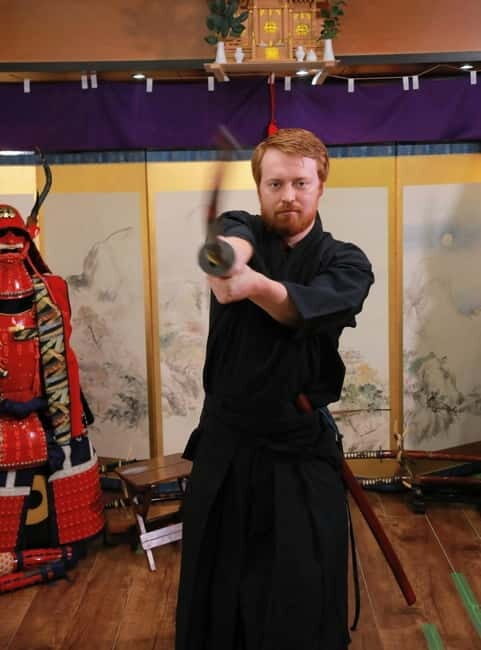
This is the moment most people come for: Trial Slashing. The class describes it as a tameshigiri-style test—cutting practice done with a real Japanese sword—framed as world-class cutting performance taught by a master swordsman.
For the specific class format here, you’ll try cutting rolled straw. That’s a great choice for beginners because it’s forgiving compared to targets that demand elite precision, yet it still gives you the real thrill of seeing a blade do what a blade is meant to do.
Just as importantly, this trial cutting doesn’t happen on day one without prep. The course walks you through fundamentals first: stance, pulling, swinging mechanics, and returning the blade. That’s why the cutting feels achievable. You’re not “watching magic,” you’re performing a practiced sequence.
Also note: one review mentions the final cutting part as something that looked like bamboo but was actually tatami mat. So while the official target is rolled straw, the class you book may involve similar practical targets in the cutting segment. The safe takeaway: you should expect a structured cutting section, not just a single demo.





Photos and the End-of-Class Bow: What You Walk Away With
Photo shooting is included. Staff will take photos during the experience and send the files to a designated email address. That matters because in a sword class, you often can’t stop to frame a shot while everyone’s waiting for you to practice.
The class also ends with a bow, returning you to the same respectful tone where it started. You leave with more than photos—you leave with a sequence of movements you understand, plus the sense that the practice has rules even for visitors.
Timing is listed as 1 hour, but in practice you may find the overall experience runs longer once you factor in changing and instruction. One person described it as close to two hours, so I’d plan your schedule with a little buffer after the start time.
Price and Value: Is $92 Worth It in Osaka?
At $92 per person, this is not a “cheap activity,” but it also isn’t trying to be. You’re paying for three things that are hard to replicate on your own:
- Real instruction from a certified professional instructor
- Hands-on sword practice with structured stances and guidance
- Trial cutting with a real katana, plus costume and photo support
The price also includes tax and tips, which is helpful because it removes some of the travel annoyance of figuring out what else you’re expected to pay on site. And because the group is capped at 4 participants, you’re more likely to get feedback instead of standing in line behind the crowd.
The other value piece: you’re doing this near Osaka Castle area. That cuts down on “time tax” compared to activities that require long transfers. If you’re already in the Osaka Castle / Osaka-jokoen zone, this is a clean add-on.
If you’re mainly looking for a cinematic sword show, you might feel the class is more about training than spectacle. But if you want a real taste of technique and etiquette, it’s very good value for your time.
Who Should Book This (and Who Should Skip It)
This experience fits best if you want a short, structured, beginner-friendly martial arts taste that includes etiquette, stances, and an actual cutting trial.
You’ll likely enjoy it if:
- you like hands-on learning and don’t mind concentrating during practice
- you want samurai culture beyond a museum-style explanation
- you want photos taken for you while you’re in costume and practicing
It may not be right if:
- you’re bringing children under 10 (not suitable)
- you have issues with physical intensity or training demands (people with altitude sickness are listed as not suitable)
- you’re dealing with age limits (people over 95 are listed as not suitable)
- you’re hoping for a long guided tour of Osaka Castle landmarks (this is practice-focused)
The small group limit also changes the feel. You won’t be lost in a huge crowd, and your instructor can correct your stance and swing.
Practical Rules You’ll Want to Know Before You Go
From the provided info, here are the constraints that affect the day:
- Not allowed: baby strollers, baby carriages, party groups, and bachelor/bachelorette groups
- Food and drinks are not allowed during the experience
- No alcohol or drugs
- You should bring a T-shirt
It’s one of those activities where being prepared helps your confidence. If you show up with the right outfit and a light mind (no snacks, no extra baggage), you spend more time learning and less time troubleshooting.
Should You Book Samurai Honor for Your Osaka Trip?
Yes, if you want a guided samurai sword experience that includes real technique practice and a trial cutting moment. For a one-hour scheduled block, the combination of costume + bushido etiquette + iai basics + real cutting + included photos is hard to beat nearby.
Skip it if you’re after purely sightseeing time or you’re not comfortable with structured physical instruction. This isn’t a hands-off cultural talk; it’s a dojo-style lesson where your posture and control matter.
If you’re planning to visit Osaka Castle anyway, this is a smart pairing: you get the historic backdrop, then you get the discipline side of the samurai story in a way you can feel in your body.
FAQ
How long is the Osaka Learn Bushido: Trial Slashing experience?
The duration is listed as 1 hour. Since it includes changing and instruction, you may want to allow extra time around your reservation.
What is included in the price?
Included are samurai clothing, a certified professional instructor, tax, tips, and photo shooting (sent to your designated email). Interpreter default language is English.
What happens during the trial slashing?
After practicing basic techniques, you try cutting rolled straw with a real Japanese sword.
Where do I meet the group?
Meet at Bushi no Homare (Samurai Honor). The landmark is a wooden sign that reads Honor of the Samurai in front of the store.
Is transportation or pickup from my hotel included?
No. It does not include pickup/drop-off at a train station or hotel, and it does not include transportation.
What should I bring?
Bring a T-shirt.
What languages do instructors/interpreters use?
The default interpreter language is English. The activity also lists Japanese. Other languages can be requested, but you need to inquire about staff schedule first.
Is this experience suitable for children?
It is not suitable for children under 10.
Is photo shooting included?
Yes. Photo shooting is included, and the data is sent to a designated email address.
Can I get a refund if my plans change?
Yes—free cancellation is listed up to 24 hours in advance for a full refund.