REVIEW · OSAKA
Katsuo-ji Temple, Arashiyama Forest, & Nara Park
Book on Viator →Operated by S.A. Tour · Bookable on Viator
Katsuo-ji to deer in one day. That’s the fun twist here: you knock out three famous spots without getting buried in transit. The day mixes temples, a classic bamboo-walk in Arashiyama, and the moment Nara Park deer wander right up to you.
I especially love the mix of planned stops and real freedom. You get dedicated time at each place to wander at your pace, not just wait in a line behind a person holding a flag. I also like that the route has guided support without suffocating your schedule, and you may even hear from different English-first guides who’ve led this trip (for example Nancy, Alex, Marco, Pohey, or Alice).
One thing to consider: this is more of a time-managed day than an in-depth lecture tour. Some guides provide lots of context, but the format still gives you plenty of self-walking time, so if you’re craving constant explanations, you may feel a bit “on your own” between meet-ups.
In This Review
- Key highlights I’d bet on
- A One-Day Osaka Plan: Katsuo-ji, Arashiyama Bamboo, Nara Deer
- Price and Value: What $91.65 Really Buys
- Getting Started in Umeda: Meeting Point and Timing Reality
- Stop 1: Katsuo-ji Temple, Daruma Dolls, and Fortune Readouts
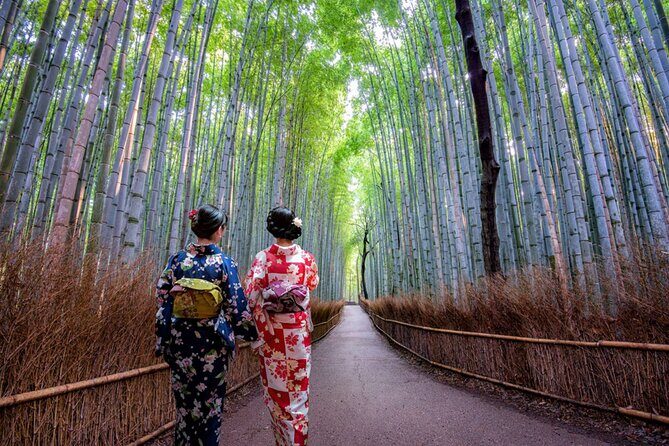
- Arashiyama Bamboo Grove: Walking Among Tall Stalks
- Nara Park: Deer That Come Close (And How to Handle It)
- Guide Style vs Self-Walking Time: What You’ll Actually Experience
- Group Size, Comfort, and How Hard the Day Hits
- Practical Tips That Make This Day Trip Feel Easier
- Who This Tour Fits Best (and Who Might Prefer DIY)
- Should You Book This Tour? My Take
- FAQ
- What’s included in the price?
- Are admission tickets required for these stops?
- How long will I spend at each location?
- Where do I meet the tour, and where does it end?
- What if the tour can’t depart due to minimum travelers or bad weather?
- Do I need to bring a paper ticket?
Key highlights I’d bet on

- Katsuo-ji Daruma dolls and fortune readouts (a specific Osaka-style temple stop, not just a generic shrine photo)
- Arashiyama Bamboo Grove walking time in a calm stretch where tall stalks frame your photos
- Nara Park deer encounters with deer that approach when you’re in the right areas
- Free admission at all three stops keeps the day’s cost focused on transport
- Small-to-medium group flow (max 45) plus a fixed schedule from Umeda so you’re not juggling trains
A One-Day Osaka Plan: Katsuo-ji, Arashiyama Bamboo, Nara Deer
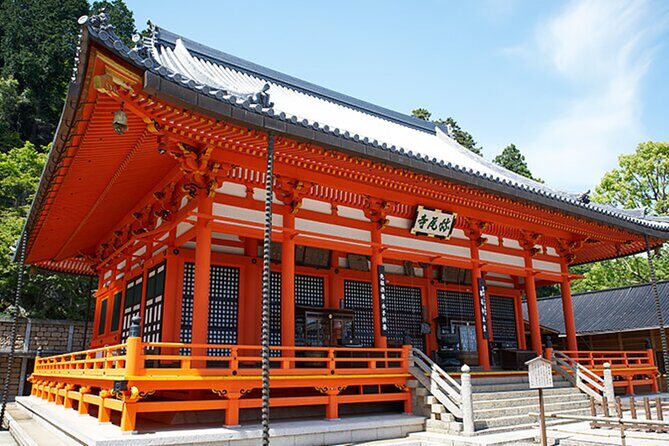
If you only have one full day around Osaka and want Kyoto’s Arashiyama feel plus Nara’s deer chaos, this route makes sense. It’s built as a loop from Umeda with an air-conditioned vehicle, so you’re saving energy while still hitting headline-worthy scenery.
What you’re really buying is time. These three places can each take real planning to do efficiently. Here, the order is straightforward: temple first, then Arashiyama bamboo, then Nara Park. The vibe stays varied—spiritual at Katsuo-ji, quiet-and-awe at Arashiyama, and lively (and a little funny) in Nara as deer roam close.
And yes, it’s a long day. The total duration is listed at about 11 hours, so plan for comfortable shoes and a snack strategy.
You can also read our reviews of more tours and experiences in Osaka.


Price and Value: What $91.65 Really Buys
At $91.65 per person, the price can look high until you break it down. The big value is that you’re paying mainly for round-trip traffic plus the vehicle and the human support to keep you synced.
Here’s what’s included:
- Air-conditioned vehicle
- Driver/guide tip
- Round-trip traffic
Here’s what’s not included:
- meals and beverages
- personal spending
Admission is listed as free at each stop. That means you’re not getting nickel-and-dimed with entrance fees—your spending is mostly on food, water, and whatever extras you choose at the temples or in the parks.
So the value equation is simple: if you’d otherwise spend a lot of time coordinating transport, this can be a win. If you’re the type who loves taking trains, arriving early, and doing slow detours, DIY could be cheaper. But DIY also costs mental energy.
Getting Started in Umeda: Meeting Point and Timing Reality
Your meet-up point is 2 Chome-2 Umeda, Kita Ward, Osaka, 530-0001. It’s marked as near public transportation, which matters because Umeda is a major hub and you can usually reach it without a taxi.
The tour uses a mobile ticket, so have it ready on your phone. That’s one less thing to worry about when you’re moving through a busy station area.
The day runs long enough that timing can make or break your experience. You’ll want to keep your expectations simple: you’ll do three highlights, and you’ll likely spend more time walking than sitting. The format gives you set durations at each stop, so build in buffer for getting photos, finding restrooms, and getting your bearings fast.
Stop 1: Katsuo-ji Temple, Daruma Dolls, and Fortune Readouts
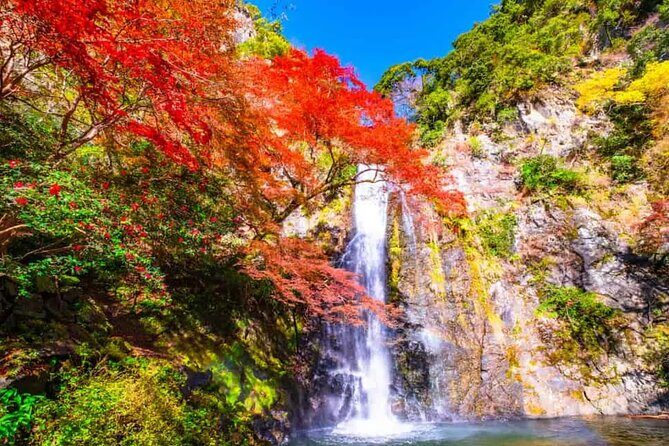
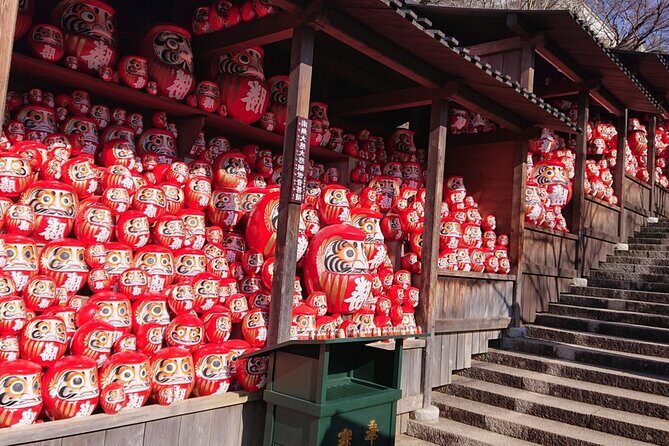
Katsuo-ji Temple is one of Osaka’s most popular stops on this route, and it’s not hard to see why. It’s known for its thousands of Daruma dolls, plus a fortune-reading element.
If you like temple energy that feels a bit playful, Katsuo-ji delivers. Daruma isn’t just decoration here—it’s tied to the idea of wishes and perseverance, and the temple’s fortune readouts give the experience a hands-on feel. Even if you don’t read Japanese, you’ll be able to follow what’s happening around you because the theme is clear and the displays are visually loud.
Time on site is listed at 2 hours, and that’s plenty. You can:
- browse the Daruma displays at your pace
- pause for photos without rushing through the whole place
- do the fortune reading if you want that extra moment of meaning
Possible drawback: with any famous temple, crowds can swell. Two hours helps you avoid the pressure of feeling like you must “beat the clock” every minute.
Arashiyama Bamboo Grove: Walking Among Tall Stalks
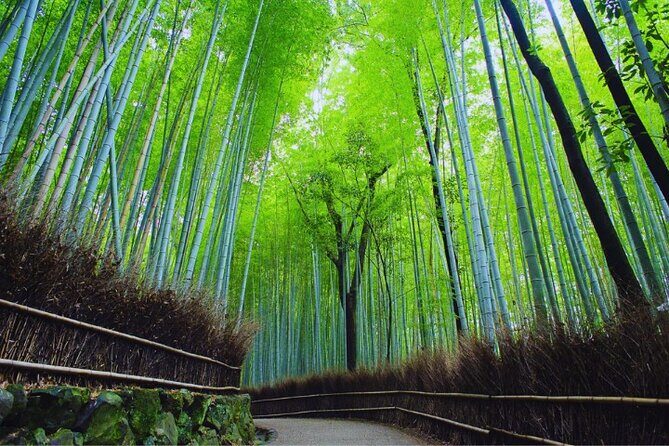
Next up is Arashiyama Bamboo, with a focus on the Bamboo Grove experience. This is the part where your day shifts from “temple details” to “quiet scenery.”
The Bamboo Grove is described as having towering bamboo stalks that create a serene, peaceful atmosphere. That description matches what you’re likely to feel when you’re there: even with other people around, the vertical rhythm of the bamboo makes it feel calmer than a typical city street.
Your allotted time is about 1 hour 30 minutes. That’s short enough that you’ll want a simple plan:
- get your photos early (before your legs tire)
- take a slow walk and let your eyes follow the stalks and light
- don’t overthink detours unless you’ve researched where you want to end up
Practical note: bamboo areas can be slippery or uneven in spots, so wear shoes with grip. And bring a small layer if you’re sensitive to temperature swings—Japan can shift quickly, especially with morning-to-afternoon sun.






Nara Park: Deer That Come Close (And How to Handle It)
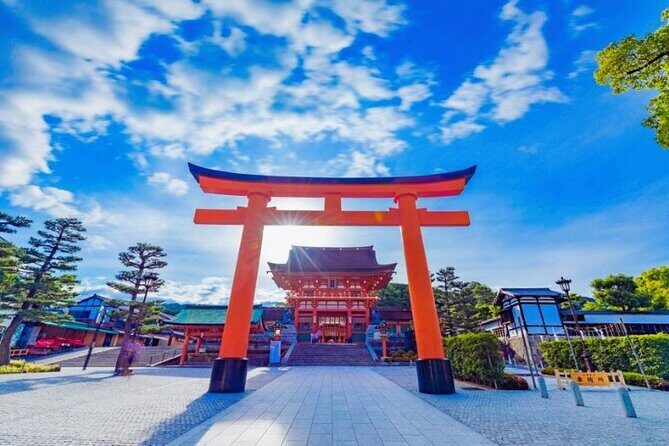
Nara Park is the heart of the “wow, I’m here” feeling. The park is famous for hundreds of tame deer that roam freely and often approach visitors in search of food.
This stop is listed at 2 hours, which is important because the deer moments take time. You can’t just walk past the deer and expect it to feel special. You’ll likely want to slow down, watch how they move, and decide how interactive you want to be.
What makes this place memorable is the feeling that you’re in the deer’s space—not the other way around. It’s playful, but it also means you should keep your behavior calm. If you’re holding food, keep it secure and be mindful of your hands and pockets.
Also, the deer are a big visual magnet, so expect photos and spontaneous pauses. Two hours gives you enough room to enjoy it without feeling rushed back to the pickup point.
Guide Style vs Self-Walking Time: What You’ll Actually Experience
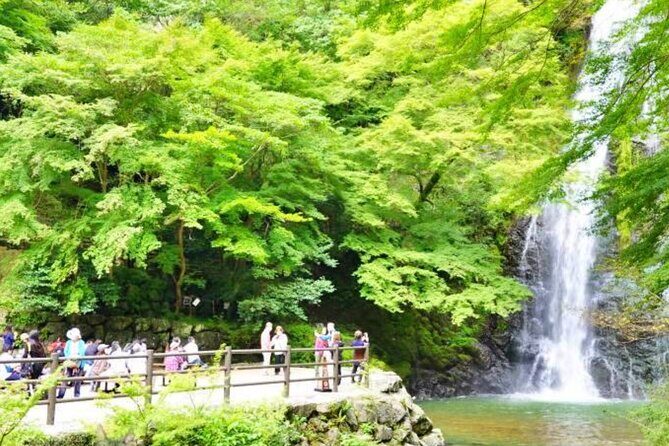
One of the most common reactions to this kind of day trip is the balance between guidance and freedom. The tour is set up as a vehicle ride between major stops, with you spending real time on your own at each site during the allotted windows.
In practice, that means:
- the guide helps coordinate the day and keep meet-up times clear
- you get time to roam where you want
- you may get more or less background depending on the guide and group language mix
You’ll see this in the range of guide experiences shared for this route. Some guides have been described as very attentive and helpful, and some have emphasized humor and keeping the group comfortable. Others focused more on logistics than storytelling. Your takeaway: if you want deep, continuous cultural explanations, you may want to supplement this day with a guided option that’s more lecture-style.
If you’re the type who enjoys exploring and learning by looking—temples, statues, inscriptions, the physical feel of a place—this format works well.
Group Size, Comfort, and How Hard the Day Hits
The group minimum is 8 travelers for the tour to depart, with cancellation or a change if the minimum isn’t met (you should be told 4 days in advance). The group maximum is 45 people.
Why you should care: larger groups move slower, especially at the meet points. Still, a max of 45 is big enough to feel busy sometimes, but not so big that it becomes chaos.
Comfort-wise, the vehicle is described as air-conditioned, which helps on travel days. The tour runs about 11 hours, so think of this as a “seat time plus walking time” day, not a slow sightseeing stroll.
Practical Tips That Make This Day Trip Feel Easier
Here’s how I’d prepare so you get more enjoyment and less stress:
- Wear comfortable shoes for temple floors and bamboo-area walking.
- Use your snack plan early. Meals and beverages aren’t included, and you don’t want to waste one of your stop windows searching for food.
- Keep your phone charged. You’re using a mobile ticket, and you’ll want maps and photos without panic.
- Take breaks at the transitions. The bus rides are your reset moments—use them.
- Double-check any add-ons at booking. One theme in the feedback is that some people got surprised by an extra kimono-related experience that cost additional yen. If you see multiple options during checkout, confirm exactly what’s included for your selection before paying.
Who This Tour Fits Best (and Who Might Prefer DIY)
This day trip is a great match if you want:
- a fast, structured way to see Osaka-area big names without train planning
- free admission at the stops so your budget stays under control
- the freedom to roam and not be stuck behind a slow-moving group pace
It’s also a good option if your Japanese is limited and you prefer someone else handling the big transport connections.
You might prefer a different approach if:
- you’re craving constant, detailed explanations all day long
- you want a lot of time in only one place (like spending half a day in Arashiyama or longer in Nara)
- you’re sensitive to the idea that some parts may feel more like organized drop-offs than guided storytelling
Should You Book This Tour? My Take
I’d book it if you want a single-day sampler that hits Katsuo-ji (Daruma and fortune), Arashiyama Bamboo Grove, and Nara Park deer with minimal logistics stress. The price feels fair when you remember admission is listed as free at each stop and you’re paying for the round-trip transport from Umeda.
I would hesitate only if you expect a highly interpretive, lecture-heavy guided tour every minute. This route works best as a paced plan with time to explore, not as a deep history course.
If your priority is “see the highlights efficiently, then enjoy the atmosphere,” this fits nicely. Just be careful at checkout about any optional experiences tied to booking choices.
FAQ
What’s included in the price?
The tour price includes an air-conditioned vehicle, the driver/guide tip, and round-trip traffic. Meals and beverages and personal spending are not included.
Are admission tickets required for these stops?
Admission tickets are listed as free for Katsuo-ji Temple, Arashiyama, and Nara Park.
How long will I spend at each location?
You’ll have about 2 hours at Katsuo-ji Temple, about 1 hour 30 minutes at the Arashiyama Bamboo Grove, and about 2 hours at Nara Park.
Where do I meet the tour, and where does it end?
You start at 2 Chome-2 Umeda, Kita Ward, Osaka, 530-0001, Japan, and the tour ends back at the same meeting point.
What if the tour can’t depart due to minimum travelers or bad weather?
The tour requires a minimum of 8 travelers to depart. If it doesn’t meet the minimum, you’ll be notified 4 days in advance and offered a different date/experience or a full refund. If canceled due to poor weather, you’ll be offered a different date or a full refund.
Do I need to bring a paper ticket?
No. The tour uses a mobile ticket, and confirmation is received at booking.