REVIEW · OSAKA
Kyoto and Nara Day Tour From Osaka with Deer Sightings
Book on Viator →Operated by QHTravel · Bookable on Viator
Seeing deer in Kyoto’s orbit sounds strange.
But this 10-hour Osaka day tour stitches Nara Park deer and Kyoto’s top shrine-and-temple stops into one easy plan. I like how you get a hands-on Nara morning, then shift gears into Kyoto’s iconic sights without spending your whole day figuring out trains.
Two parts I really enjoy here are the free-roaming shika deer at Nara Park and the torii-gate corridor at Fushimi Inari Taisha. The main consideration is timing: you’ll be on the move all day, and it’s not a slow, do-one-neighborhood-in-depth kind of outing.
In This Review
- Key points to know before you go
- A 10-hour mix of Nara deer and Kyoto’s most photographed spots
- Nara Park deer sightings: cute, chaotic, and how to handle it
- How to stay comfortable around the deer
- The main drawback at Nara
- Fushimi Inari Taisha’s torii tunnel: the best way to plan your walk
- A practical strategy for limited time
- What makes this stop worth it
- Kiyomizudera Temple: UNESCO views plus optional ticket time
- What to do with your time at Kiyomizudera
- The main consideration
- Downtown Osaka after Kyoto: Shinsaibashi-suji for food and strolling
- Budget tip for the Osaka part
- Price and value: does $69 really cover what you want?
- Who gets the best value
- Who might feel it’s not the best value
- How the day runs: timing, groups, and your expectations
- What to expect from the driver’s role
- Who this tour is best for (and who should consider another plan)
- Should you book this Kyoto and Nara day tour from Osaka?
- FAQ
- Is lunch included on this tour?
- How much are admission tickets if I want to enter Kiyomizudera and Todai-ji?
- Do I need to buy tickets for Nara Park and Fushimi Inari?
- What’s included in the price of $69 per person?
- How long is the tour?
- Where does the tour start, and what time?
- What happens if I need to cancel?
Key points to know before you go

- Nara Park deer time with actual close encounters with wild shika
- Fushimi Inari’s red torii gates and a shrine complex you explore on your own
- Kiyomizudera visit area plus optional entry if you want to go inside
- Air-conditioned vehicle and a driver service that keeps logistics simple
- Maximum group size of 45 and a mobile ticket for smoother check-in
A 10-hour mix of Nara deer and Kyoto’s most photographed spots

This is the kind of day tour that’s built for visitors who want big-name Kyoto and Nara highlights without the hassle of transfers. You start in Osaka at 8:30 am and return back to the same meeting point at the end of the day, which matters because it protects your energy for the sights.
The best part is how the day flows. You begin with the playful chaos of Nara Park, then head to Kyoto’s shrine-and-temple world where you can slow down and wander. You finish with time in downtown Osaka on Shinsaibashi-suji Shopping Street, which helps the day feel complete instead of ending abruptly after temples.
One practical note: the driver provides basic English guidance, not deep cultural explanations. That’s not a problem if you like exploring at your own pace, but it does mean you’ll want to bring a bit of curiosity (or a guidebook) for the meaning behind what you’re seeing.
You can also read our reviews of more tours and experiences in Osaka.


Nara Park deer sightings: cute, chaotic, and how to handle it
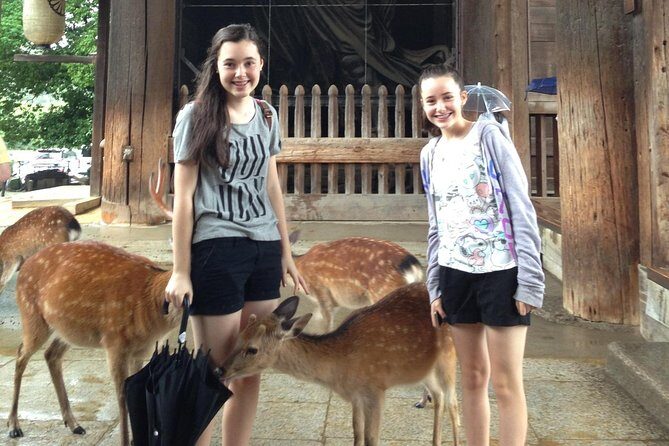
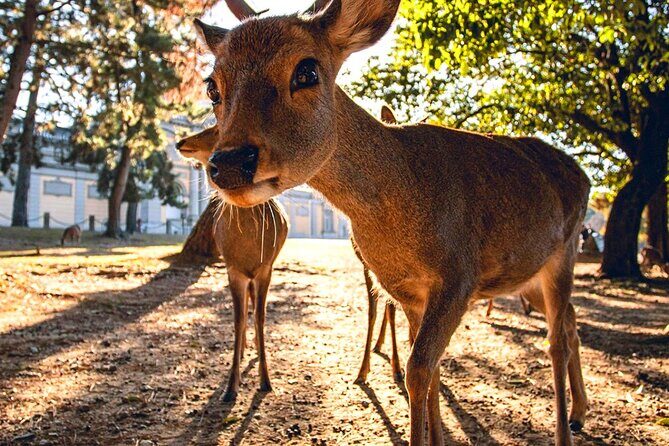
Nara Park is famous for its roaming herd of about 1,300 wild deer, and this tour gives you 1.5 hours there. The experience isn’t just “see deer from a distance.” It’s much more interactive than that because the animals roam through the park lanes and lawns like they own the place.
What I think you’ll love most is the natural vibe—deer appearing around corners, sitting calmly, and sometimes approaching people. In the reviews, deer behavior gets a lot of praise: people talk about deer being polite, nodding, and even bowing in response to treats. One parent even described a deer acknowledging their child after feeding it a deer cookie.
How to stay comfortable around the deer
You don’t need to panic, but you should be smart:
- Keep an eye on where you step. Deer move fast when they decide they’re interested.
- If you’re buying or using snacks, hold them consistently and don’t wave food around like bait.
- Give deer space once you’ve gotten your photo. The fun wears off quickly if you block paths or crowd animals.
The main drawback at Nara
The deer can make your timing unpredictable. If a deer blocks a walkway—or you get pulled into watching one—the park can swallow a few extra minutes before you know it. Build in a little flexibility so you don’t feel rushed when it’s time to move on.
Fushimi Inari Taisha’s torii tunnel: the best way to plan your walk

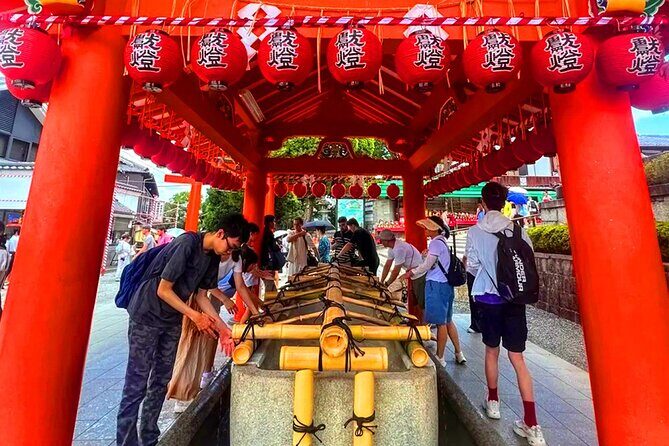
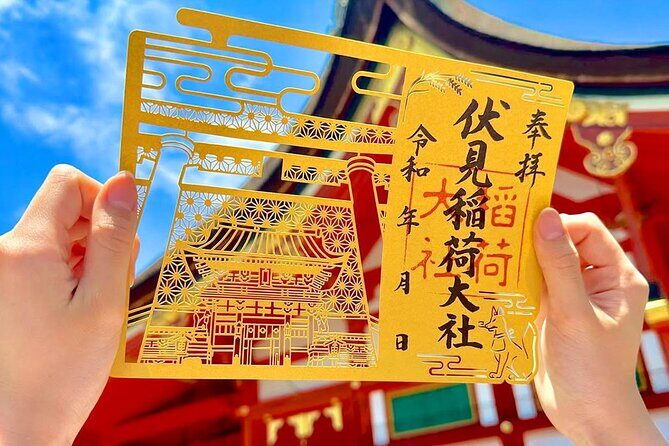
Fushimi Inari Taisha is one of those places where you understand why everyone takes photos—then you realize the real draw is the walk itself. Your time here is about 1 hour 20 minutes, and admission is free, which keeps the focus on wandering rather than ticket lines.
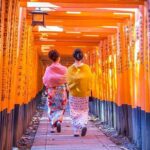
The highlight is the iconic red torii gates, strung together in long rows. The shrine complex can feel like a choose-your-own-adventure: you can stay at the most famous lower stretches for easy footpaths and photos, or keep going deeper if you’re feeling energetic.




A practical strategy for limited time
With your schedule, I’d plan your priorities like this:
- Start by walking the most photographed torii sections first so you’re guaranteed the big views.
- Then decide whether you want to push farther into quieter sections or loop back for photos and photos-only moments.
- Wear shoes you can trust. Stone steps and uneven ground are common in shrine areas.
What makes this stop worth it
Even if you’ve seen pictures, the gates don’t really “read” until you’re under them. They make the air feel different, like you’re traveling through a corridor of color. Also, because the tour is structured with set departure times, you get to enjoy the place without the mental math of train schedules.
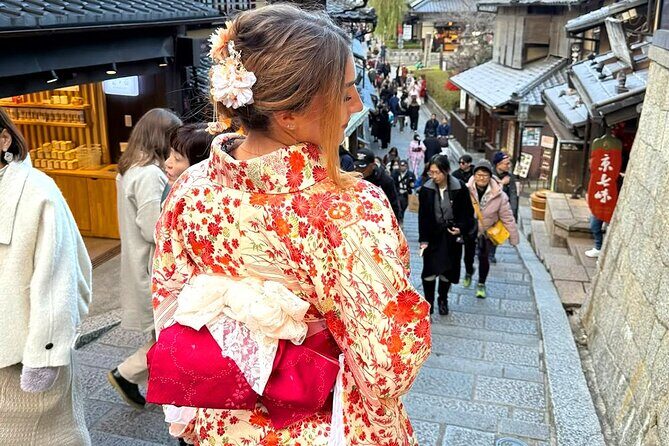
Kiyomizudera Temple: UNESCO views plus optional ticket time

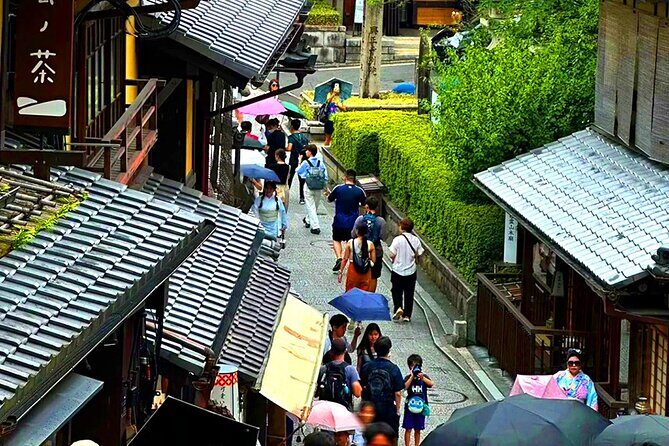
Next up is Kiyomizudera, a temple area in Kyoto’s Higashiyama district. You get about 3 hours, and while the outside areas are covered without charge, entry into key halls typically requires an on-site ticket (the tour lists ¥400 per person for entry).
This stop is the one that can give your day variety. Nara is playful and animal-focused. Fushimi Inari is scenic and shrine-walk energy. Kiyomizudera brings in steep hillside atmosphere and those classic Kyoto temple panoramas from above the main complex.
What to do with your time at Kiyomizudera
Because your tour time is generous, you can pick your pace:
- If you want the famous temple viewpoints, spend time in the main viewing areas first.
- If you’re interested in the inside experience, consider the optional ticket and use it when you’re ready to slow down.
- If crowds make you impatient, you can still get a lot of value from the outside grounds and viewpoints.
The reviews also add a useful clue: at least one group report mentions seeing the Golden Pavilion during their Kyoto portion. I can’t promise that will happen on every run, but it’s a sign that some schedules may include an extra photo opportunity depending on timing and routing.
The main consideration
Kiyomizudera is a popular name. That means you should expect crowds, especially around the most photographed spots. If you’re the type who likes quiet, aim to move earlier within your 3-hour window so you catch the calmer moments.
Downtown Osaka after Kyoto: Shinsaibashi-suji for food and strolling
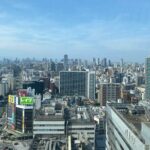
Ending your day in Osaka’s shopping zone is a smart move. Your itinerary includes time at Shinsaibashi-suji Shopping Street, a lively pedestrian street where you can reset after temple walking.
This is where you can use your time for what tours often skip: buying small snacks, browsing shops, and getting that “I’m really in Osaka” feeling. It also helps because you don’t have to rush straight back to your hotel immediately after a full day outdoors.
Budget tip for the Osaka part
Lunch isn’t included, and neither is other personal spending. Plan to grab something simple and keep it flexible. Shopping streets are great for light meals you can eat while you stroll rather than committing to a formal sit-down restaurant after you’re tired.
Price and value: does $69 really cover what you want?
The tour is listed at $69.00 per person, and that price is doing a lot of work. It covers an air-conditioned vehicle and the driver service fee, which is a big deal on a day like this where you’re crossing between Osaka, Nara, and Kyoto.
Then you have optional or extra costs:
- Kiyomizudera entry is listed as ¥400 per person if you want to go inside.
- Todai-ji entry is listed as ¥600 per person if you choose to enter there.
- Lunch and personal spending are not included.
Who gets the best value
You’ll feel the value most if you:
- Want a full-day highlights route without train transfers and route planning.
- Like self-guided time at each major sight (the driver gives basic English guidance but you’re free to explore).
- Prefer comfort with an air-conditioned ride rather than squeezing onto public transport for hours.
Who might feel it’s not the best value
If you already love using public transit and you plan to spend long hours in one place, a structured day like this can feel a bit compressed. Also, if you want deep historical explanations at every stop, the basic guidance may not satisfy you on its own.
How the day runs: timing, groups, and your expectations
This tour is scheduled for about 10 hours, with a start time of 8:30 am. It’s a mobile-ticket experience with a maximum of 45 travelers, so you’re not in a tiny private car, but it also isn’t a massive bus-and-swarm scenario.
A few things from the experience profile matter:
- Confirmation happens at booking time.
- The meeting point is Kintetsu-Nippombashi Station.
- The tour is described as near public transportation, which helps if you’re arriving from elsewhere in Osaka.
- Elders over 70 should be accompanied by a family member.
In the reviews, one theme stands out: the day feels easy because someone handles the moving parts. People mention they were picked up from their hotel, and that the driver kept the schedule smooth.
What to expect from the driver’s role
The driver provides basic English guidance and can point you the right way. But they’re not set up to provide in-depth lectures about culture or history. I’d treat the driver as your logistics coach, not a walking encyclopedia.
Who this tour is best for (and who should consider another plan)
This fits well if:
- You want Kyoto and Nara highlights in one day starting from Osaka.
- You’re traveling with kids or you’re just excited by the chance to see deer up close. The deer behavior stories—like nodding and bowing—are exactly the sort of moment that turns into a family highlight.
- You prefer freedom at each stop instead of being locked into a long guided lecture.
It might be less ideal if:
- You hate crowds or you can’t handle a day that includes multiple big-name stops.
- You want a deep, expert-led historical experience at every site.
- You’re hoping for a totally food-focused day. Lunch isn’t included, so you’ll need to plan your meals.
Should you book this Kyoto and Nara day tour from Osaka?
If you’re short on time and you want a clean hit list—Nara Park deer, Fushimi Inari torii gates, and Kiyomizudera—this tour is a very reasonable choice. The best part is the mix: a playful morning with animals, a visually unforgettable shrine walk, and a temple stop with panoramic payoff, followed by Osaka’s shopping street to wrap it up.
I’d book it if your main goal is efficiency with great photo opportunities and you’re okay exploring on your own once you arrive at each sight. I’d skip it if you want slow travel, heavy guided storytelling, or you’re trying to avoid any chance of crowds.
If you do book, wear comfortable shoes, bring a little flexibility for deer-and-photo time, and decide early whether you’ll pay for Kiyomizudera entry—because that choice affects how you spend your 3-hour block.
FAQ
Is lunch included on this tour?
No. Lunch is not included, and you’ll want to budget for food on your own during the day.
How much are admission tickets if I want to enter Kiyomizudera and Todai-ji?
The tour lists ¥400 per person for Kiyomizudera entry and ¥600 per person for Todai-ji entry. You can also visit some areas from the outside without an admission fee, but entry requires tickets if you want to go inside.
Do I need to buy tickets for Nara Park and Fushimi Inari?
Nara Park and Fushimi Inari Taisha are described as free to visit for admission on this tour.
What’s included in the price of $69 per person?
The price includes an air-conditioned vehicle and a driver service fee. Optional admissions and meals are not included.
How long is the tour?
The duration is about 10 hours.
Where does the tour start, and what time?
It starts at Kintetsu-Nippombashi Station at 8:30 am.
What happens if I need to cancel?
You can cancel for a full refund if you cancel at least 24 hours before the start time. The tour also notes it requires good weather, and if it’s canceled due to weather, you’ll be offered a different date or a full refund.
If you want, tell me your travel month and whether you plan to enter Kiyomizudera and Todai-ji, and I’ll help you set a realistic pace for the day.