REVIEW · OSAKA
Learn The Katana ‘Sword’ Technique of Samurai and Ninja
Book on Viator →Operated by Beauty of Japan · Bookable on Viator
Osaka turns serious when you step into a sword lesson. This is a hands-on class that mixes samurai and ninja training with a stage-style show. The focus stays practical: posture, how you hold the katana, and a few memorable set pieces you can actually do.
What I like most is the combo of costume + skill-building, so you don’t just watch—you practice. I also like the small group setup (up to 10) and the fact that you learn multiple katas and take part in a finale with photos. One thing to keep in mind: this is more stage-actor performance than a strict martial-arts dojo.
In This Review
- Quick hits before you go
- Osaka’s Samurai and Ninja class: the vibe and what you’re really doing
- Where it happens: Japan Tatedo Association and the logistics that matter
- Suit up for training: kimono hakama, ninja costume, or samurai armor
- The katana basics you’ll practice: holding the sword and learning the katas
- Learning the tate technique: posture, balance, and mental focus
- The show-style inspiration: three Samurai and a Ninja before you train
- Finishing strong: tate battle experience, ninja scene, and rubber shuriken
- Group size and instructors: why up to 10 people feels right
- Price and value in Osaka: is $162.59 worth it?
- Who should book this (and who should skip it)
- Quick planning tips so the experience feels smooth
- Should you book it?
- FAQ
- What’s the main focus of the class?
- How long does the experience take?
- What’s included in the price?
- Do I need transportation or hotel pickup?
- Is it okay for beginners?
- Where do I meet the group?
- Can I get a refund if plans change?
Quick hits before you go
- Katana tate technique: posture, balance, and mental focus built into the physical moves
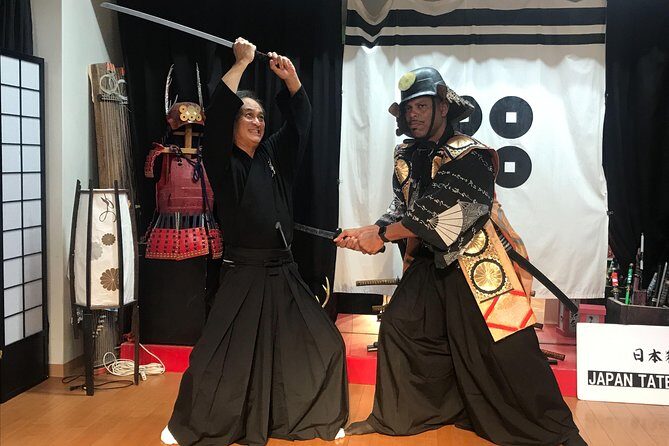
- Costume time: kimono hakama plus the option to dress as ninja, or in samurai armor
- 8 katas on the katana: you practice and take video as part of the session
- Rubber shuriken throwing: a safe, guided version of ninja star throwing
- Small group feel: a max group size of 10 keeps attention on you
- A mini warrior show: you get inspiration from three Samurai and a Ninja before training
Osaka’s Samurai and Ninja class: the vibe and what you’re really doing
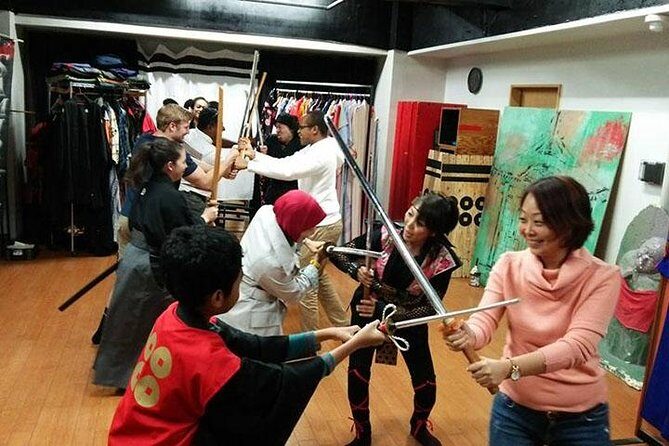
This experience in Osaka is built like a short performance with training inside it. You start with inspiration from a fighting presentation, then you quickly shift into doing the moves yourself. If you want a true-knife, full-contact martial arts workout, you might feel underwhelmed. If you want something you can enjoy, photograph, and actually remember on your Japan trip, it lands really well.
The schedule also makes sense for real travel days. You’re looking at roughly an hour of core instruction, with extra time for dressing up, group photo moments, and the finale scene. In other words, it’s not a long multi-hour commitment.
You can also read our reviews of more tours and experiences in Osaka.



Where it happens: Japan Tatedo Association and the logistics that matter
Your class meets at Imai Building, 1-chōme-1-27 Kitahorie, Nishi Ward, Osaka. It’s in an area that’s described as near public transportation, which matters because the price doesn’t include transport. Plan to arrive on your own and get there a bit early.
Two practical points I think you’ll appreciate:
- No hotel pickup or drop-off means you control your timing.
- The location is close to transit, so you don’t have to guess your route too much.
Also, bring the basics: comfortable clothes you can move in, and shoes you can take on and off easily (you’ll be changing into traditional style). The tour uses a mobile ticket, so have your phone charged and easy to access.
Suit up for training: kimono hakama, ninja costume, or samurai armor
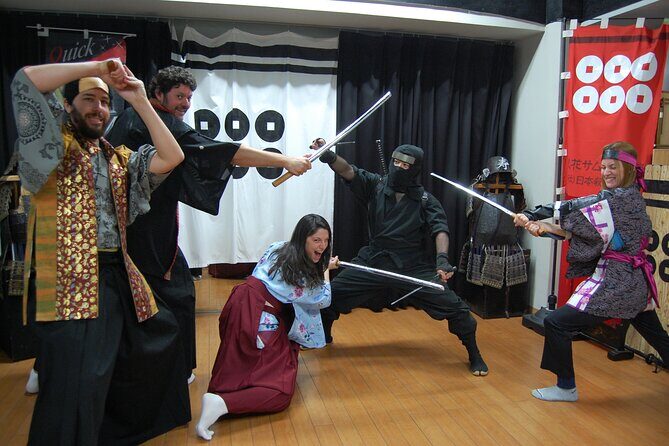
This isn’t just a sword lesson. The dressing-up piece is part of the training rhythm. First, you learn how to wear kimono hakama, which sets the body position and clothing flow so your stance feels more stable. Then you choose your look—kimono, ninja costume, or samurai armor—so the experience feels like you stepped into a role, not just a class.
Why that matters: stance and balance are easier to practice when your outfit isn’t fighting you. Hakama fabric also changes how your legs move and how you hold posture. You also get rental costume support through the included gear, so you aren’t hunting down anything in advance.
The staff includes the instructor, and that costume-and-instruction pairing is where the experience earns its fun factor.
The katana basics you’ll practice: holding the sword and learning the katas
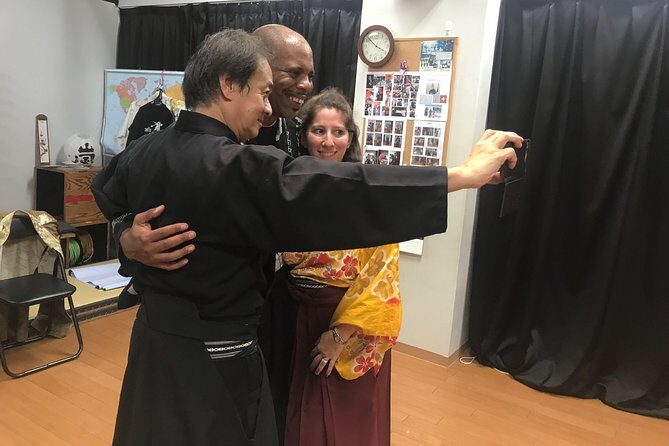
The heart of the class is the katana technique, starting with how to hold the sword properly. You’ll learn how to position your grip and control the blade during basic movement. Then the training moves into 8 katas, which is a clear way to structure progress for a short class.
You also get video as part of the session. That’s a big deal for this kind of activity because the moves happen fast and require visual feedback. Even if you don’t become a sword expert, you’ll be able to review what you did and see how your posture matched the instructor’s cues.
What to expect from the katana portion:
- You’ll start with posture and holding mechanics.
- You’ll practice a sequence of katas designed for beginners.
- You’ll get a chance to do the moves rather than only standing in the sidelines.
Learning the tate technique: posture, balance, and mental focus
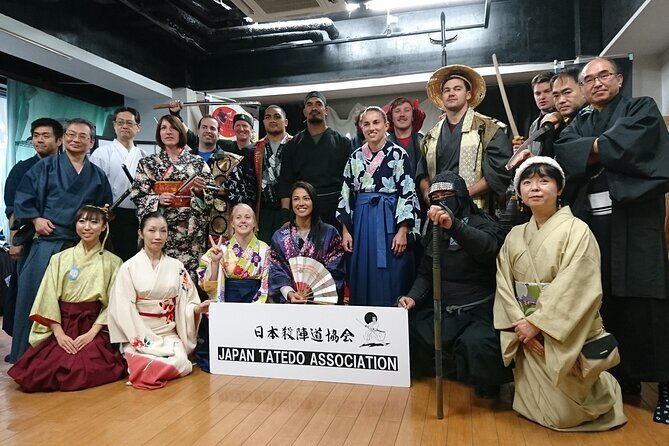
The class specifically teaches the tate sword technique. The way it’s described emphasizes that it’s not just swinging a sword. It’s about posture, balance, and mental focus—basically getting your body stable first, then using the movement that stability makes possible.
In a one-hour-style session, this is a smart focus. You can’t learn everything about Japanese sword arts in a day. But you can learn a key stance concept that makes everything else clearer: where your weight sits, how your torso aligns, and what your body does when you commit to a direction.
If you want a mental takeaway, this is it. The instructor is trying to teach you how to be steady and deliberate. That’s the theme tying the costume, posture drills, and finale scenes together.





The show-style inspiration: three Samurai and a Ninja before you train
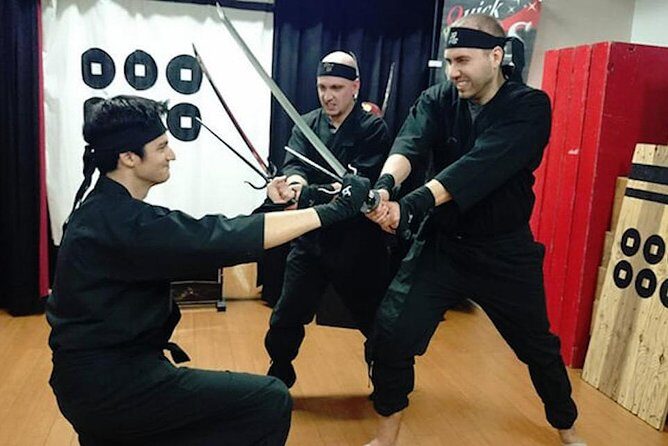
Before you start practicing, you’ll watch a fighting performance involving three Samurai and a Ninja. It’s not an empty spectacle. It’s there to give you a visual model of timing, movement, and drama—then you try to recreate the pieces in your own beginner-friendly way.
This is one reason the class feels entertaining from minute one. You can see what the techniques look like when they’re performed with confidence and rhythm. Then, when you put on armor or a ninja outfit, it stops being abstract. Your brain goes: I get it. Now I’m doing it.
Finishing strong: tate battle experience, ninja scene, and rubber shuriken
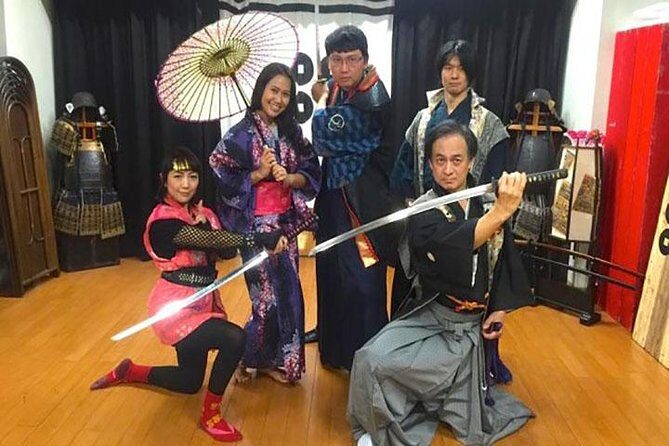
The session ends with multiple “you are in the story” moments. You do a tate battle experience and then you perform a ninja scene together as a group. That’s where the experience earns its best photos.
Then you shift to shuriken throwing with rubber stars. This is a safe, beginner-friendly version of ninja star throwing, designed for a class setting. The important detail is that you’re shown how to do it and then you get to try—rather than just being handed a prop and hoped-for magic.
What I think makes this portion valuable:
- You’re learning a technique with instant payoff.
- You get a physical challenge that doesn’t require prior martial arts experience.
- The rubber prop keeps it accessible and lower-stress than sharp-weapon versions.
If you enjoy interactive activities—acting out a scene, practicing a few moves, then throwing a prop—this is the part you’ll talk about later.
Group size and instructors: why up to 10 people feels right
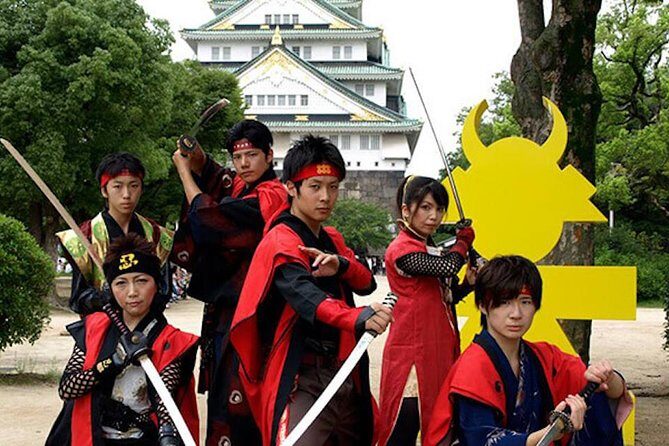
The class has a maximum of 10 participants. That smaller number matters because sword holding, stance correction, and throwing instruction are all hands-on. With fewer people, the instructor can give more direct feedback and help you avoid getting lost in the group.
The overall tone from what’s provided points to a patient teaching style. The staff is described as gracious and patient, which fits a short class where you’re learning new movements in unfamiliar clothing. Also note that the instruction is run by stage actors with a background in kendo, so the teaching is performance-forward. That’s great for an entertaining introduction, but it’s not the same as training inside a serious martial arts gym focused only on form and progression.
Price and value in Osaka: is $162.59 worth it?
At $162.59 per person, this isn’t a budget add-on. But it also isn’t only a 60-minute sword demo. The value comes from what’s included and what you leave with:
Included:
- Rental costume
- Local instructor
- Sword training with 8 katas
- Video as part of the practice
- Shuriken throwing experience with rubber stars
- Picture time
- A set-up that includes performance inspiration before your practice
If you’re paying for an experience in Osaka, the “included gear + photos + instructor-led practice + interactive finale” combo can make sense. You’re not just watching a show. You’re getting guided instruction in posture and movement, then participating in the finale.
My practical take: this is best if you value memories and the hands-on performance angle. If you only want pure technique training and don’t care about costumes or acting-style scenes, you may feel the price is more for the whole theatrical experience than for an intensive martial arts curriculum.
Who should book this (and who should skip it)
This class is a great fit if you want:
- A fun, interactive Osaka activity that feels uniquely Japanese
- To learn a real sword stance concept (tate) and practice basic katana handling
- A chance to dress up with support, then take part in scenes and photos
- Something short that still feels like a “real thing,” not a tourist craft workshop
You might want to skip or temper expectations if you want:
- A long, progression-heavy martial arts regimen
- Strict dojo training focused only on technique depth
- Serious sparring-style conditioning
This is stage-actor led with kendo background. That blend is part of the appeal, but it’s also the trade-off.
Quick planning tips so the experience feels smooth
Here’s how to set yourself up for an easy, confident class day:
- Arrive early so dressing and setup don’t feel rushed.
- Wear comfortable clothes you can move in and change around.
- Bring your phone with enough battery for the photo/video moment.
- If you hate crowds, note the group is capped at 10, which helps, but it’s still a shared experience.
- Mentally switch from watching mode to practicing mode. You’ll get the most out of the katana section when you’re willing to try.
Should you book it?
If you’re excited by the idea of learning tate sword technique, trying rubber shuriken safely, and stepping into a samurai or ninja role with photos and a group finale, I think this is a strong choice. It’s not pretending to be a full martial-arts career path. It’s an enjoyable, structured experience that teaches a few real fundamentals while giving you the kind of story you’ll actually remember.
If your dream is a serious dojo-style class with deep technique drills and long-term progression, you may want to look for a different kind of training. But for many first-timers in Osaka, this is the right balance of culture, performance, and hands-on practice.
FAQ
What’s the main focus of the class?
You’ll learn katana sword skills centered on the tate technique, plus a short set of katas and a rubber shuriken throwing experience. You’ll also take part in a ninja scene and group picture time.
How long does the experience take?
The class is described as about 60 minutes of instruction, and the overall experience is presented as roughly 90 minutes with dressing and performance moments.
What’s included in the price?
The included items are rental costume and a local instructor. The experience also includes the hands-on sword and shuriken training plus picture time.
Do I need transportation or hotel pickup?
No. Transportation to/from attractions and hotel pickup/drop-off are not included, so you’ll plan your own way to the meeting point.
Is it okay for beginners?
Most people can participate, and the practice is designed for an introduction level, including safe rubber shuriken throwing and guided katana katas.
Where do I meet the group?
The meeting point is Imai Building, 1-chōme-1-27 Kitahorie, Nishi Ward, Osaka, 550-0014, Japan. The activity ends back at the meeting point.
Can I get a refund if plans change?
You can cancel up to 6 days before the experience starts for a full refund. Shorter notice can qualify for a partial refund, and cancellations within 2 days are not refundable. Cut-off times follow local time.