REVIEW · OSAKA
Eat Osaka: Street Food Cooking in an Authentic Kitchen!
Book on Viator →Operated by Eat Osaka · Bookable on Viator
Osaka street food turns hands-on fast. You learn classic dishes in an old Japanese house kitchen, with a chef guiding you step by step.
What I like most is the small-group feel and the fact that you’re not just watching. You’re cooking from scratch with the ingredients and instructions handled for you, then eating what you made right there.
One thing to consider: this is a cooking class, not a pure food tour. Plan on active prep time for about 2 hours 30 minutes, and make sure the Higashinari meeting spot fits your Osaka route.
In This Review
- Key things that make this Osaka class worth your time
- Old Japanese house kitchen in Higashinari: the setting and logistics that actually matter
- The Osaka street-food menu you’ll cook (and why it’s a smart mix)
- Okonomiyaki and tempura: learning the Osaka pancake mindset
- Handmade udon: the skill that makes the meal feel real
- Yakitori skewers and sauce: Osaka flavor in a grab-and-go format
- Pickled cucumber and the mochi dessert: the side and sweet that balance everything
- Drinks included: welcome drinks and beer, sake, or green tea
- Your chef and small-group attention: why the teaching style matters
- Price and value: what $79.28 buys you in real terms
- Timing, meeting point, and making it fit your Osaka day
- Who this is best for, and who might not love it
- The real take-home value: you learn Osaka patterns, not just recipes
- Should you book Eat Osaka’s street food cooking class?
- FAQ
- How long is the Eat Osaka cooking class?
- Where does the class start?
- How many people are in the group?
- What kinds of dishes will I make?
- Are drinks included?
- Are ingredients and instructions included?
- Is a printed ticket required?
- When will I receive confirmation?
- What is the cancellation policy?
Key things that make this Osaka class worth your time
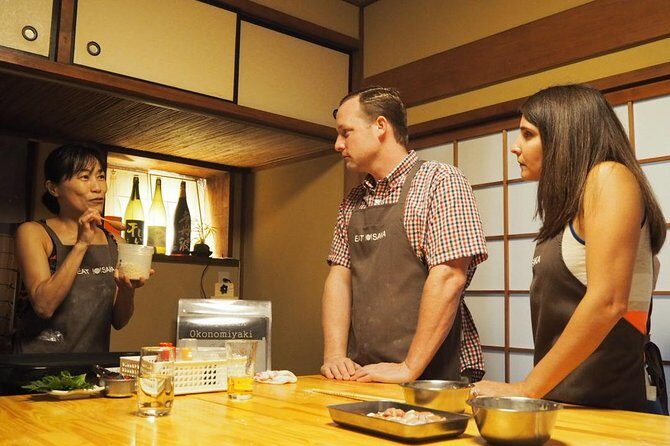
- Old Japanese house setting: a purpose-built studio in a character-filled traditional home
- You cook multiple street-food classics: okonomiyaki, handmade udon, yakitori, plus tempura, pickled cucumber, and mochi dessert
- Professional tools and guidance: you use real kitchen gear, not improvised lessons
- Small group size (max 8): easier questions, faster help, more attention
- Drinks are included: welcome drinks, then beer, sake, or green tea with your meal
Old Japanese house kitchen in Higashinari: the setting and logistics that actually matter
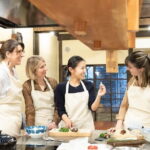
This class takes place in a cooking studio set inside an old Japanese house vibe, in Higashinari (Osaka). It’s a nice change from the usual studio classroom feel, because the space feels lived-in, like you’re borrowing a real kitchen for the afternoon.
You’ll get a mobile ticket, and confirmation comes at booking time. The start point is near public transportation, which helps if you don’t want to fight Osaka station transfers while still hungry.
With up to 8 people, the room stays manageable. That matters, because you’ll be working at stations and needing quick answers when something isn’t clicking. Bigger groups can turn into a slow shuffle. Here, help is easier to get.
You can also read our reviews of more food & drink experiences in Osaka


The Osaka street-food menu you’ll cook (and why it’s a smart mix)
The class centers on Osaka street-food comfort food, with a menu that combines savory pancakes, noodles, skewers, and fried bites, then finishes sweet. The exact dishes described include Osaka-style okonomiyaki, hand-made udon noodles, yakitori skewers with a signature sauce, plus vegetable tempura, pickled cucumber, and a sweet mochi dessert.
That spread is more valuable than a one-dish class. You’re learning different techniques: batter-based cooking for okonomiyaki, noodle-making for udon, skewers and glaze for yakitori, and frying for tempura. In practice, this gives you a wider Osaka flavor map, not just a single recipe.
And the best part for most people: you’re not stuck figuring out shopping, ingredients, or timing. The class includes what you need and the instructions to use it.
Okonomiyaki and tempura: learning the Osaka pancake mindset
Okonomiyaki is the dish Osaka claims like a signature. The class teaches you how to make an Osaka-style okonomiyaki pancake from scratch in that old kitchen setup, with guidance from the chef.
Here’s why this is a great starter dish for your brain. Okonomiyaki isn’t just a list of ingredients. It’s about layering, heat control, and getting the texture right. Even if you’re not a confident cook, you’ll get a rhythm from the instruction process.
Tempura comes in as another key street-food skill. The class includes making vegetable tempura, using professional tools with coaching. Tempura is one of those foods where technique matters more than people expect, because the difference between great and mediocre often comes down to handling and timing.
What to watch for while you cook: don’t aim for perfection on your first attempt. The real win is learning what the chef is reacting to—what they’re watching, and why they adjust.
Handmade udon: the skill that makes the meal feel real
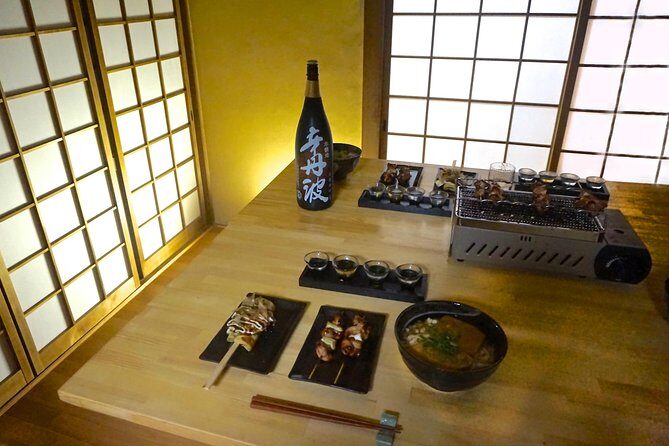
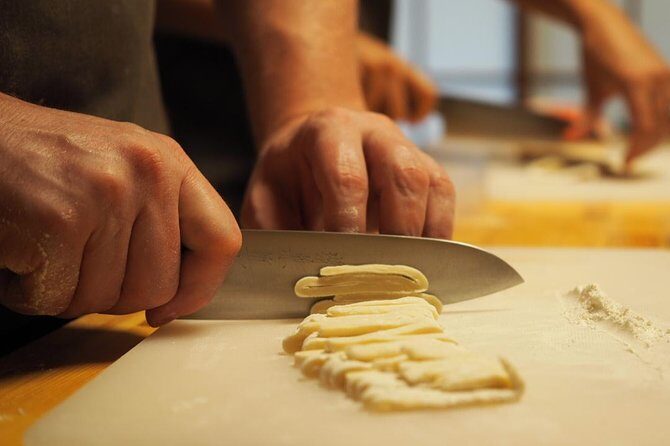
You’ll also learn the secrets of hand-made udon noodles. The class doesn’t treat udon like a store-bought shortcut. Instead, you’ll work through making your own noodles, which is a big part of why the experience feels special.
Udon is also a good confidence builder. Compared with more intimidating cuisines, udon-making is tangible—you can see dough become noodles, and you can taste the result quickly. That means your effort pays off before the class ends.
When you finish your udon, you’ll sit down and eat. This is important: it turns a cooking lesson into an actual meal. You’re not leaving with instructions for later. You get the satisfaction of tasting your own work in the same session.
Yakitori skewers and sauce: Osaka flavor in a grab-and-go format
Yakitori is another Osaka street-food classic, and the class includes preparing yakitori skewers using a signature sauce. Since skewers cook fast, you’ll likely feel the pace of a real street-food kitchen—short windows, practical guidance, and steady attention to doneness.
This part is especially useful if you want to bring Osaka flavor home. Once you understand the sauce approach and how the skewers are built and finished, you can apply the idea later even when you’re not making exactly the same items.
You can also read our reviews of more tours and experiences in Osaka



Pickled cucumber and the mochi dessert: the side and sweet that balance everything
One of the small but smart additions is pickled cucumber. Even if you mostly came for the hot street snacks, a crisp, tangy side helps cut through fried and savory flavors. It also gives you a taste of how Japanese meals balance textures and intensity.
Then you finish with a sweet mochi dessert. Dessert in a cooking class isn’t always memorable, but mochi usually is. It rounds out the menu so the class feels like a complete Osaka street-food evening, not just a couple of savory tasks and a quick finish.
Drinks included: welcome drinks and beer, sake, or green tea
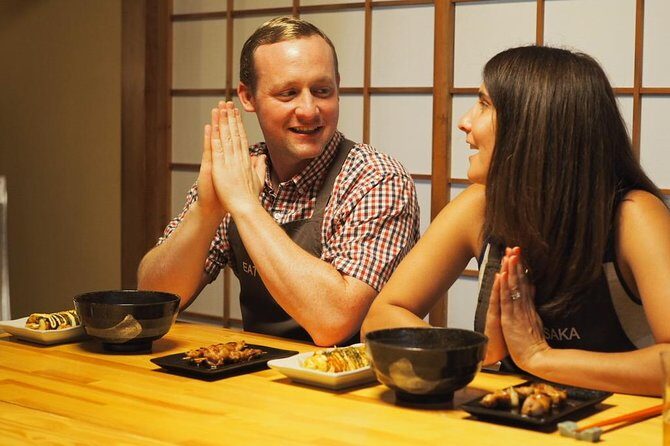
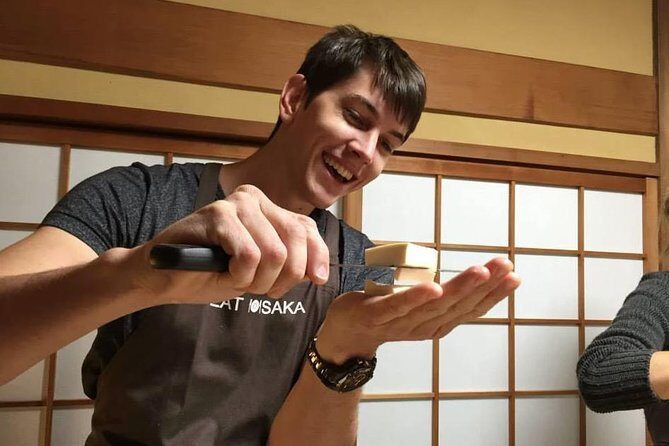
You get welcome drinks as part of the experience. After you cook, you’ll sit down and enjoy what you made, matched with beer, sake, or green tea.
This is one of the real value drivers. At many cooking classes, drinks are extra or the meal is just a formality. Here, the drinks are part of the flow, which makes the whole experience feel like sharing a meal rather than getting graded on your knife skills.
If you’re not into alcohol, green tea is an easy choice that still fits the Japanese street-food vibe.
Your chef and small-group attention: why the teaching style matters
The class is assisted by a local bilingual chef, and the teaching vibe comes up again and again in feedback. People specifically praise how guides create a welcoming space for questions, and how they explain not only what to do, but the reasoning behind steps.
You may meet guides such as Miki or Nathalie/Natalie depending on the group and schedule. Names show up in feedback linked to patient explanations and a relaxed, supportive atmosphere. Even if you’re nervous about cooking, that tone helps.
With a maximum of 8, the chef can spot what’s going wrong faster. That matters with anything batter-based or timing-based, like okonomiyaki and tempura, and it matters even more with udon because your hands and your timing both shape the result.
Price and value: what $79.28 buys you in real terms
At about $79.28 per person for around 2.5 hours, the price can feel fair or high depending on what you expect.
Here’s the value math that makes sense. You’re paying for:
- ingredients and instruction included
- professional kitchen tools
- multiple dishes in one sitting (not just a single item)
- welcome drinks
- the sit-down meal with beer, sake, or green tea
If you tried to replicate this on your own, you’d spend time buying ingredients, learning technique, and then handling cleanup without a chef to correct mistakes. You’d also miss the social part, which in this case is built into the small group size.
This is also the kind of class that can replace one meal out later. You’re essentially getting a structured cooking lesson plus a full meal and drinks in one package.
Timing, meeting point, and making it fit your Osaka day
The class starts at Eat Osaka, Higashinari, 1-chome-2-10 Higashinari, Osaka and ends back at the meeting point. It’s near public transportation, so you don’t need a car or long taxi rides.
I’d plan your day so you’re not rushing from a far-away neighborhood. Higashinari is workable, but it’s not the center of every Osaka must-see. Build in a little buffer so you arrive calm, not sprinting.
What to bring? The listing doesn’t specify anything special, but I’d still dress for a hands-on cooking experience. Also, if you have dietary needs, ask ahead. One piece of feedback mentions vegetarian accommodation, which suggests they can be flexible when possible.
Who this is best for, and who might not love it
This class is ideal if you:
- want real Osaka food skills, not just tasting
- enjoy hands-on cooking and learning technique
- like a small group setting where questions get answered
- want to leave with a meal plus a better understanding of Japanese street flavors
It may not be your best match if you want a totally relaxed food stroll. This is active cooking. You’ll be in the kitchen for most of the session, and the focus is on making the food, not sightseeing.
It’s also worth considering if you’re traveling with someone who hates cooking. In that situation, you might end up with half the group feeling stuck waiting. With only 8 spots max, the class is friendly, but it still isn’t designed as a spectator event.
The real take-home value: you learn Osaka patterns, not just recipes
The strongest part of this experience is how it teaches the logic behind the foods. Instead of memorizing steps like a checklist, you’re guided through why each dish works and how the process affects texture and flavor.
That makes your learning reusable. You’ll likely remember the feel of okonomiyaki pancake-style cooking, the satisfaction of fresh udon, and the way yakitori sauce ties everything together.
And because you get to eat what you made, the lesson sticks. You’re not guessing whether your attempt was close—you taste it, then understand what mattered.
Should you book Eat Osaka’s street food cooking class?
Book it if you want a high-satisfaction way to learn Osaka street food in just a few hours. The class hits multiple dishes—okonomiyaki, udon, yakitori, tempura, pickled cucumber, and mochi—while still staying intimate with a maximum of 8.
I’d skip it only if you’re looking for a casual tasting-only experience or you’re not comfortable with hands-on cooking for about 2.5 hours. Otherwise, this is one of the smarter ways to spend time in Osaka: you leave fed, you leave with skills, and you leave with a better sense of how Osaka flavor is built.
FAQ
How long is the Eat Osaka cooking class?
It runs for about 2 hours 30 minutes.
Where does the class start?
The meeting point is Eat Osaka in Higashinari, 1-chome-2-10 Higashinari, Osaka, Japan, and the activity ends back at the meeting point.
How many people are in the group?
The class has a maximum of 8 travelers.
What kinds of dishes will I make?
You’ll make Osaka street-food favorites including Osaka-style okonomiyaki, hand-made udon noodles, yakitori skewers, vegetable tempura, pickled cucumber, and a sweet mochi dessert.
Are drinks included?
Yes. You get welcome drinks, and after cooking you can enjoy your meal with beer, sake, or green tea.
Are ingredients and instructions included?
Yes. All ingredients and instructions are included.
Is a printed ticket required?
No. It’s a mobile ticket.
When will I receive confirmation?
Confirmation is received at the time of booking.
What is the cancellation policy?
You can cancel for free up to 24 hours in advance for a full refund. If you cancel less than 24 hours before the start time, you won’t get a refund.