REVIEW · OSAKA
Osaka/Kyoto: Arashiyama, Nara Park, Fushimi Shrine Tour
Book on GetYourGuide →Operated by Japan Holiday Travel · Bookable on GetYourGuide
Red torii and deer in one day.
This day trip strings together three big-name stops—Arashiyama, Nara Deer Park, and Fushimi Inari Taisha—with efficient travel between Osaka and Kyoto. I like that you start earlier in the day so Arashiyama feels calmer, and you still get real time on foot at each site instead of rushing every photo from the bus window.
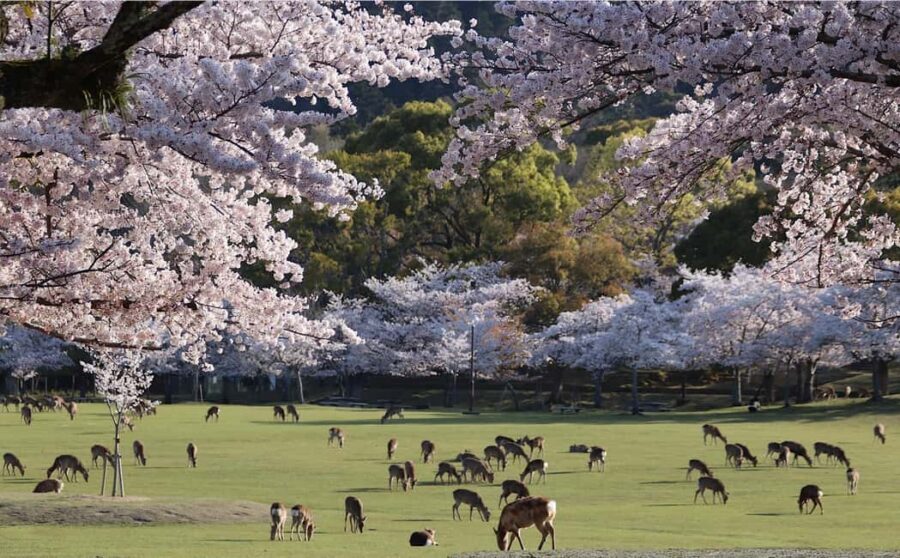
Two things I especially appreciate are the up-close deer experience in Nara (over 1,000 freely roaming deer) and the chance to walk through the tunnel of red torii at Fushimi Inari Taisha, the famous 10,000-gate approach. The only thing to watch is that this is not a deep, narration-heavy guided tour—time at sites is mostly self-guided, and the tour is mainly run in Chinese (English and Korean support depends on arrangements).
In This Review
- Key Things You’ll Actually Notice
- The Route That Makes It Worth Doing in One Day
- Starting in Osaka or Kyoto: Meeting Point Clarity Matters
- Arashiyama Morning (2 Hours): Bamboo Trails and Togetsukyo Bridge Views
- Nara Deer Park (About 80 Minutes): The Real Thing, Not a Distant Photo
- Fushimi Inari Taisha (About 1.5 Hours): Walk the 10,000 Red Torii Gates
- Time on the Bus: The Trade-Off You’re Paying For
- Guide Support and Language: Useful Onboard Help, Limited Commentary
- What’s Included (and What You Must Plan Yourself)
- Weather, Traffic, and Timing Reality Checks
- Who Should Book This Tour—and Who Might Skip It
- Price and Value: Is $51 a Fair Deal?
- Should You Book This Tour?
- FAQ
- FAQ
- How long is the tour?
- Which stops are included?
- How much time do you get at each attraction?
- Where does the tour start?
- What languages are available?
- What is included in the price?
- Are meals included?
- Is food allowed on the vehicle?
Key Things You’ll Actually Notice
- Over 1,000 deer at Nara Deer Park: you’ll be walking right alongside them, not viewing from far away
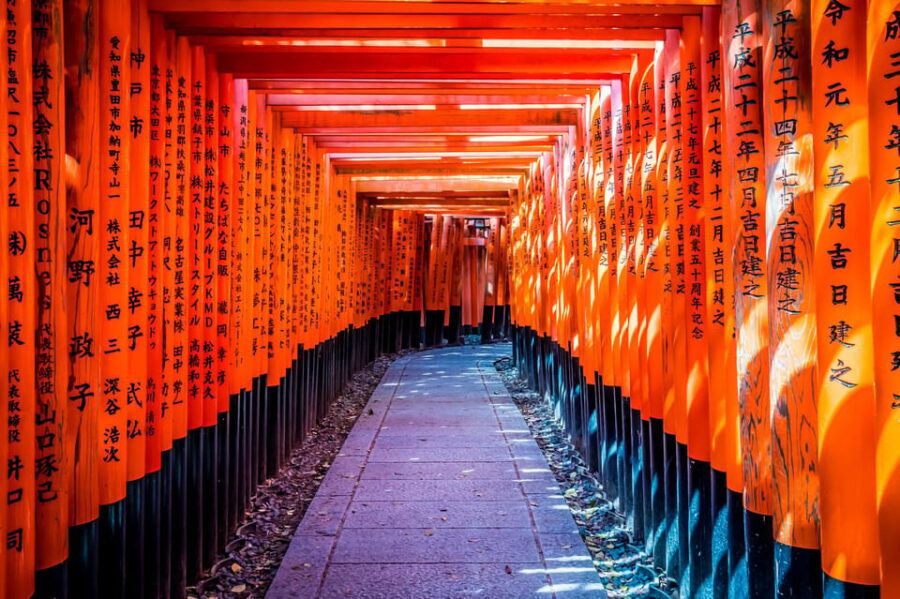
- Fushimi Inari’s red torii walk: pass through the 10,000-gate path at a pace you choose
- Arashiyama in the morning: start with cooler air and fewer people before the crowds swell
- Guides like Levi, CC, and HuaHua: when assigned, staff support is described as kind and practical
- Self-guided time blocks: great for flexibility, but you should be comfortable figuring out sights yourself
- Strong transport coverage: transport plus tolls/fees are handled, so your day runs on rails (mostly)
The Route That Makes It Worth Doing in One Day
This tour is built around a classic hit list, but it’s the order and timing that make it workable. You’re moving from Osaka and Kyoto toward Arashiyama first, then onward to Nara, and finishing at Fushimi Inari Taisha before returning to Kyoto and Osaka.
Here’s the practical rhythm you’re signing up for (with the updated timing): depart Osaka at 8:00, depart Kyoto at 9:20, arrive Arashiyama around 10:00 for about 2 hours, then head to Nara around 13:15 (about 80 minutes), continue to Fushimi Inari around 15:20 (about 1.5 hours), and return by late afternoon.
It’s not a slow travel day. But it’s a smart “greatest hits” plan if you want three iconic experiences without spending your entire trip hopping between rail transfers and taxi stops.
You can also read our reviews of more tours and experiences in Osaka.


Starting in Osaka or Kyoto: Meeting Point Clarity Matters
You get two starting options depending on where you begin, and the exact meeting point can vary by booking. The listed options are:
- Kyoto: Kyoto Station, Hachijo Exit (観光バス乗降場)
- Osaka: Dotonbori (1-chōme-1-3 Dōtonbori)
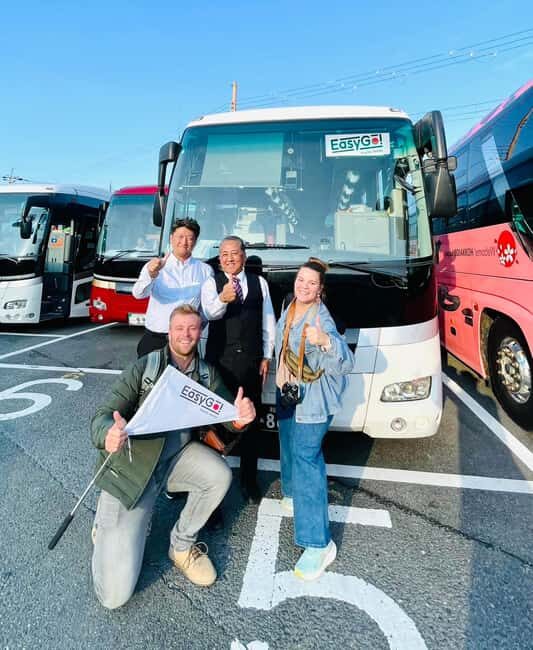
A key detail: the guide won’t contact you in advance. So don’t assume you’ll get a reminder message the night before. Go straight to the meeting area and check in with staff wearing an EASY GO vest or flag.
If you’re even slightly late, this kind of tour can feel unforgiving, because everyone is moving on a schedule. My advice is simple: build in a buffer. Arrive early enough that you can check in calmly, not while you’re scanning for your bus like it’s an escape room.
Arashiyama Morning (2 Hours): Bamboo Trails and Togetsukyo Bridge Views
Arashiyama is a strong opener. The tour starts here in the morning, when the air feels fresher and the area is often easier to move through before the bigger crush.
With about 2 hours of free time, you’re not stuck in a single checklist spot. You can focus on the classic views—especially Togetsukyo Bridge, which is mentioned as a must-do. From there, you get the kind of scenery that changes with the seasons, and it’s a great orientation moment: you’ll see how the river area and paths connect, so your later walking feels more natural.
You also get to experience Arashiyama’s greenery via bamboo forest trails. The time is self-paced, so you can:
- take it slow on the paths
- stop for photos
- switch between busier and quieter lanes if the crowd thickens
Possible drawback: 2 hours in Arashiyama can be just enough to enjoy it without running out of time for the rest of the day. If you try to pack too much into every minute, you may feel rushed. If you’re the type who wants to wander without checking the clock, consider prioritizing the bridge view and the bamboo trail over “collecting” every single side attraction.
Nara Deer Park (About 80 Minutes): The Real Thing, Not a Distant Photo
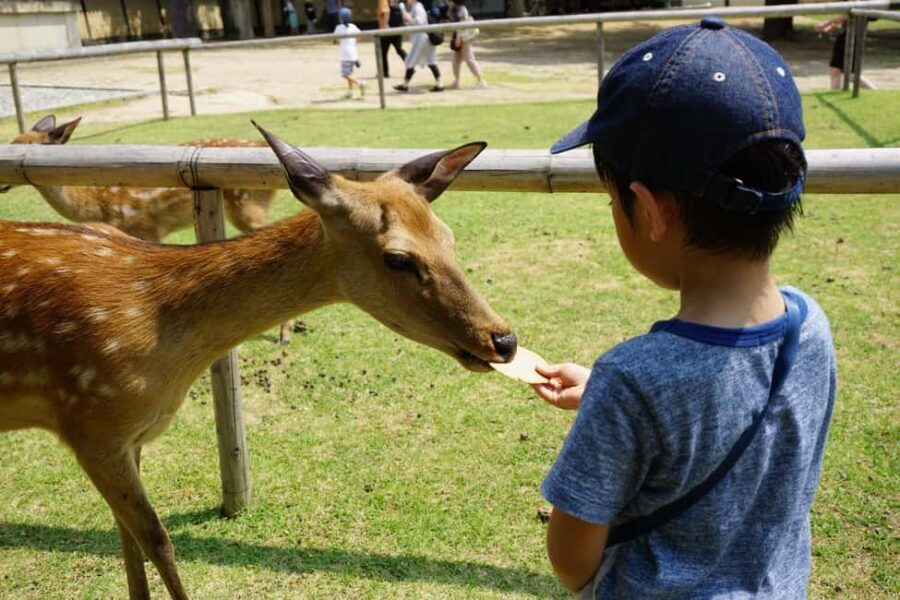
Nara Deer Park is one of the most memorable stops on this route because it’s interactive. The deer here are described as freely roaming and there are over 1,000 you can encounter up close.
What makes it special is the setting: it’s a wide green space adjacent to Kasuga Taisha Shrine, and the deer are treated as messengers of God in local tradition. The deer have a long background in the area—more than 1,300 years—and they’re recognized as a national natural monument. That context changes how you see the park: it’s not just an animal attraction, it’s part of a living cultural landscape.
How to enjoy it without stress
Because your time is about 80 minutes, you’ll want a simple plan:
- arrive ready to walk slowly and watch your footing
- keep an eye on where deer are moving so you don’t get surprised
- give yourself time for a few good photos without trying to dominate the space
Also, expect the deer to be bold. That’s part of the charm. It’s also the reason you should go in mentally prepared—this is close contact, not a zoo-style viewing distance.
Fushimi Inari Taisha (About 1.5 Hours): Walk the 10,000 Red Torii Gates
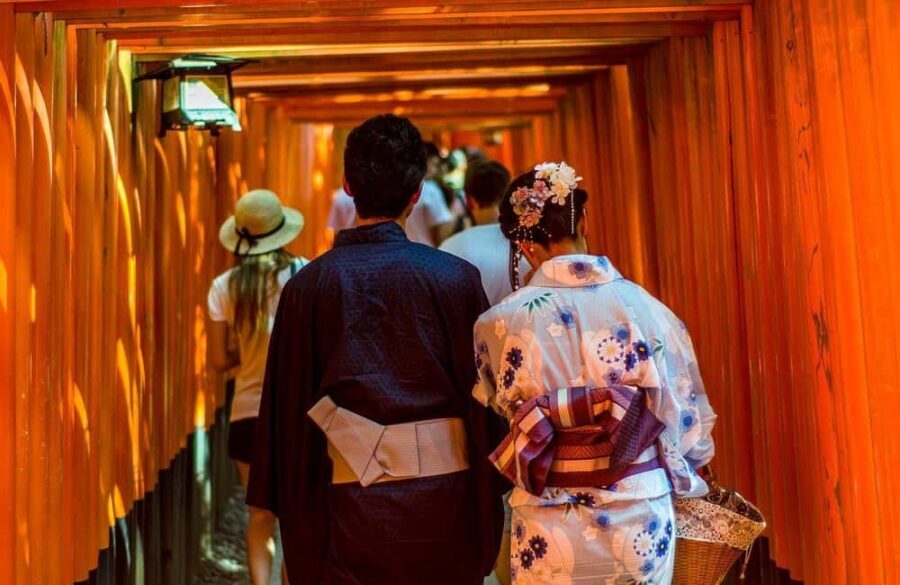
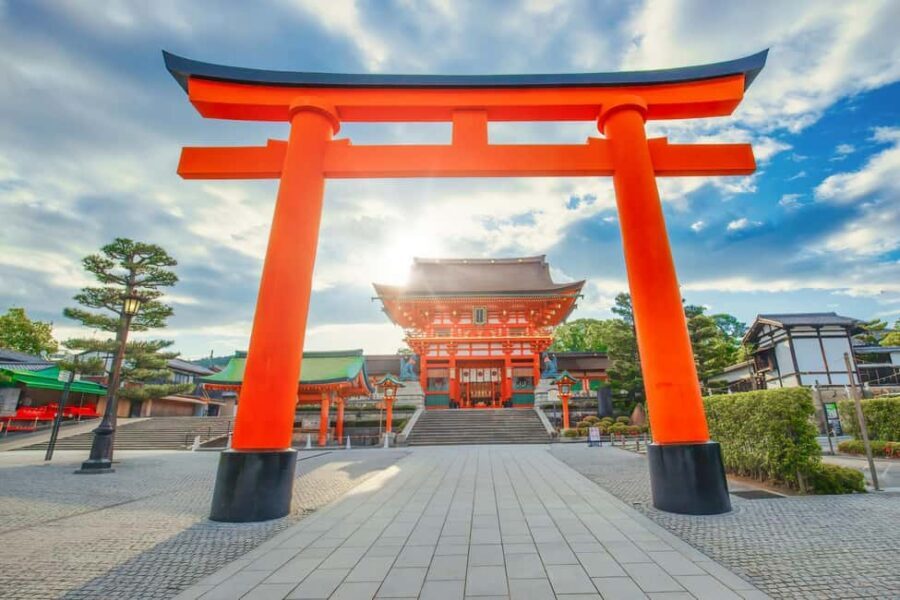
Fushimi Inari Taisha is the emotional payoff of the trip. The headline draw is the spectacular 10,000 red torii gate approach. Even if you’ve seen photos before, the sensation is different when you’re actually walking through the repeating gates and narrow path.
A few facts that make the visit feel grounded:
- It’s the headquarters of about 30,000 Inari shrines in Japan
- It was founded in 711 AD
- The entire Inariyama area is considered sacred, so the walk feels more like a pilgrimage route than a theme-park corridor
With about 1.5 hours of free time, you can choose how far up the path you want to go. If you like ticking off a “just enough” highlight, you’ll still enjoy the red torii tunnel experience. If you want deeper walking, you’ll likely want to treat this as your main stop of the day and keep your pace steady.
Practical consideration: weather can change how comfortable the walking feels, and traffic or crowds can shift exact arrival times. If the day runs tight, don’t panic—focus on the gates you reach comfortably rather than chasing the farthest point for the sake of it.





Time on the Bus: The Trade-Off You’re Paying For
This is a 10-hour day that combines multiple major regions. You’re paying for convenience: transport is handled, plus tolls, parking, and fuel are included. That matters when you’re doing Kyoto-to-Nara-to-Kyoto style logistics in one day.
Still, you’re not magically traveling in zero-time. The schedule includes bus/coach segments, and there’s time to move between stops. One of the most honest ways to judge this tour is to ask yourself: do you want to spend your limited days in Japan walking at sites, or do you want to spend mental energy figuring out transfers and route timing?
This tour is built for people who want less friction and more “arrive, walk, see, repeat.” If you’re the type who loves DIY and enjoys transit planning, you might consider doing these areas separately by public transport. The upside here is that the tour reduces the stress of coordinating multiple legs while still delivering the biggest icons.
Guide Support and Language: Useful Onboard Help, Limited Commentary
The tour includes a guide, with languages listed as Chinese, English, Japanese, and Korean. The important line is that the tour is mainly conducted in Chinese. English and Korean support may be available upon request, but it isn’t guaranteed.
Also note how guidance is provided:
- In small groups, the driver may also serve as a guide
- Onboard commentary is described as basic, not a long lecture through each stop
On days when the guide experience is strong, it can make a big difference. Some names that show up with positive feedback include Levi, CC, and HuaHua—described as kind, helpful, and effective at pointing you in the right direction.
My takeaway for you: treat the tour guide as your navigation helper, not your sole source of background knowledge. Bring a little curiosity, use maps, and you’ll get more out of the time at each site.
What’s Included (and What You Must Plan Yourself)
The included value is very clear. You get:
- a speaking guide (language depends on arrangements)
- transport
- toll fees, parking fees, and fuel fees
What’s not included:
- meals and beverages
- personal expenses
One small rule that helps avoid misunderstandings: no food is allowed in the vehicle. So you’ll want to plan snacks either before boarding or for after you arrive at each stop.
Because meals aren’t included, it’s smart to think ahead about where you’ll eat during your free time windows. With only 80 minutes in Nara and 1.5 hours at Fushimi Inari, your “lunch plan” should be quick, not a whole sit-down event.
Weather, Traffic, and Timing Reality Checks
Japan days don’t always run like clockwork. The tour notes that:
- traffic congestion or poor weather may change the itinerary
- the tour may arrive early or finish earlier depending on closures or visiting hours
- visiting time at each site can vary depending on traffic and participant numbers
This is normal for a day trip across multiple cities. The best mindset is flexibility: treat the schedule as a guide, not a promise. If you keep your priorities straight—bridge view, bamboo trail, deer park, red torii walk—you’ll still leave with a satisfying day.
Who Should Book This Tour—and Who Might Skip It
This tour fits you if:
- you want a one-day plan that hits three heavyweights: Arashiyama, Nara, and Fushimi Inari
- you like self-guided exploring after a bit of setup
- you’d rather pay for organized transport than coordinate it yourself
- you’re okay with mostly free time and minimal commentary at each stop
You might want a different plan if:
- you prefer tours with continuous guided storytelling (this is more of a guided-to-start day)
- you’re very sensitive to timing and hate the idea of a bus leaving on schedule
- you want long, slow stays at each place without compressing them into one day
Also, the tour is listed as wheelchair accessible, which is a plus if you need that level of routing support.
Price and Value: Is $51 a Fair Deal?
At $51 per person for a 10-hour day, the value depends on what you’d otherwise spend to connect these places. The price includes transport plus costs like tolls and parking, and you also get guide support onboard.
The main cost you control is food and personal spending. But as long as you’re comfortable bringing snacks or grabbing meals during the site windows, this can be a cost-effective way to cover ground without building a whole DIY routing plan.
If you’re traveling with someone who likes planning and another person who likes spontaneity, this is often a good compromise: the transport is organized, and you still get self-paced time where you can slow down.
Should You Book This Tour?
Book it if you want maximum “Japan icons” with minimum logistics work. The route covers a lot, and the combination works well: Arashiyama in the morning, deer time in Nara, then the torii-walk payoff at Fushimi Inari.
I’d book with extra care if you’re the type who needs lots of spoken history during walks. This tour gives you time and access, plus basic onboard commentary and language support that’s mainly Chinese. If you can handle self-guided exploration (and you show up early for check-in at the EASY GO meeting staff), you’ll get a fun, efficient day.
FAQ
FAQ
How long is the tour?
The tour duration is listed as 10 hours.
Which stops are included?
The tour includes Arashiyama, Nara Park (with Nara Deer Park), and Fushimi Inari Taisha.
How much time do you get at each attraction?
Arashiyama is about 2 hours. Nara Park is about 80 minutes. Fushimi Inari Taisha is about 1.5 hours.
Where does the tour start?
You can start from either Kyoto Station (Hachijo Exit, bus stop area) or Dotonbori (1-chōme-1-3 Dōtonbori), depending on your booked option.
What languages are available?
The tour languages listed are Chinese, English, Japanese, and Korean. The tour is mainly conducted in Chinese, and English/Korean support may be available on request, but it’s not guaranteed.
What is included in the price?
Transport, toll fees, parking fees, fuel fees, and a speaking guide are included.
Are meals included?
No. Meals and beverages are not included.
Is food allowed on the vehicle?
No, food in the vehicle is not allowed.