REVIEW · OSAKA
Osaka: Mind & Spirit Balance Temple Reiki Healing
Book on GetYourGuide →Operated by japanese massage 唯一無二 -the one&only- · Bookable on GetYourGuide
A temple session that feels like a reset. This Osaka Reiki experience blends non-contact healing with a guided matcha tea ceremony inside a peaceful temple setting.
I also like the way it layers your calm: you start with ritual, then move into bodywork, then finish with tea so the whole 2 hours feels like one connected unwind. One heads-up: the tea ceremony portion may be shared with other guests, even though the Reiki and treatments are done as individual sessions.
In This Review
- Key Points You Should Know Before Going
- A 2-Hour Reiki and Tea Reset in Osaka
- Arriving in a Yukata and Stepping Into Temple Ritual
- Meditation with Bell and Kneaded Incense
- Foot Bath, Scrub Massage, and Essential-Oil Full-Body Work
- Reiki Healing That’s Non-Contact and Built for Relaxation
- Matcha Tea Ceremony with Wagashi (and the Cultural Context)
- The Keepsake Touch: Photos in Your Yukata
- Price and Value: Why $161 Can Make Sense for 2 Hours
- Who This Osaka Experience Fits Best
- Should You Book This Osaka Mind & Spirit Session?
- FAQ
- How long is the Osaka Reiki and temple experience?
- What’s included besides Reiki?
- Is the Reiki session non-contact?
- Is the tea ceremony private?
- Do I get photos or anything to take home?
- What’s the cancellation and payment flexibility?
Key Points You Should Know Before Going
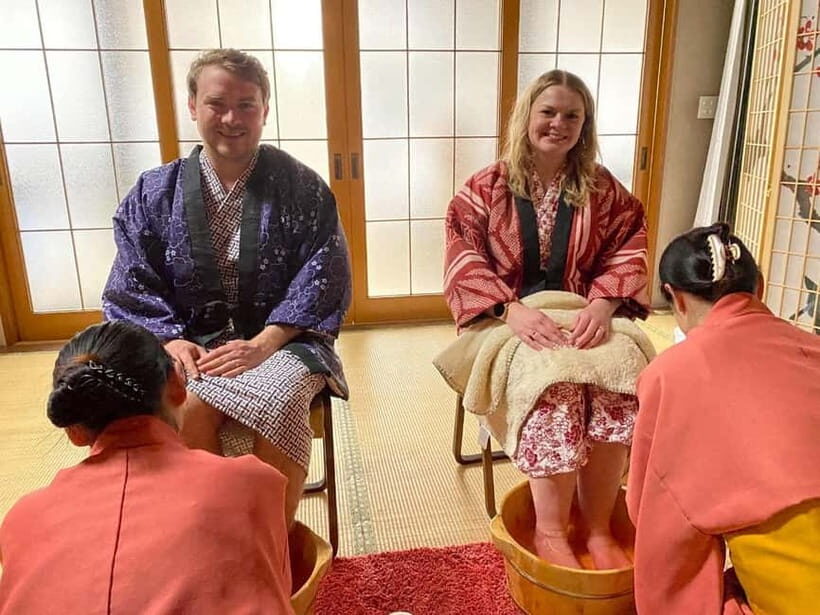
- Small group (up to 3 participants) keeps the pace relaxed and personal
- Non-contact Reiki focuses on deep relaxation and emotional balance
- Foot bath + scrub massage, then essential-oil full-body massage for layered tension relief
- Tea ceremony with wagashi includes cultural and historical explanation, not just sipping
- Yukata dressing + complimentary smartphone photos give you an easy keepsake
A 2-Hour Reiki and Tea Reset in Osaka
If you’re tired of hopping between sights, this is the kind of Osaka activity that slows you down on purpose. You’ll spend 2 hours in a small temple experience called Mind & Spirit Balance, where the goal is stress relief first, then a calmer head and body.
What makes it interesting is the mix. You’re not only getting a massage. You’re also doing temple rituals (incense and meditation), then Reiki, then a traditional tea ceremony with wagashi. That sequence matters, because each part helps you settle further instead of jumping straight to the bodywork and calling it a day.
You can also read our reviews of more tours and experiences in Osaka.


Arriving in a Yukata and Stepping Into Temple Ritual
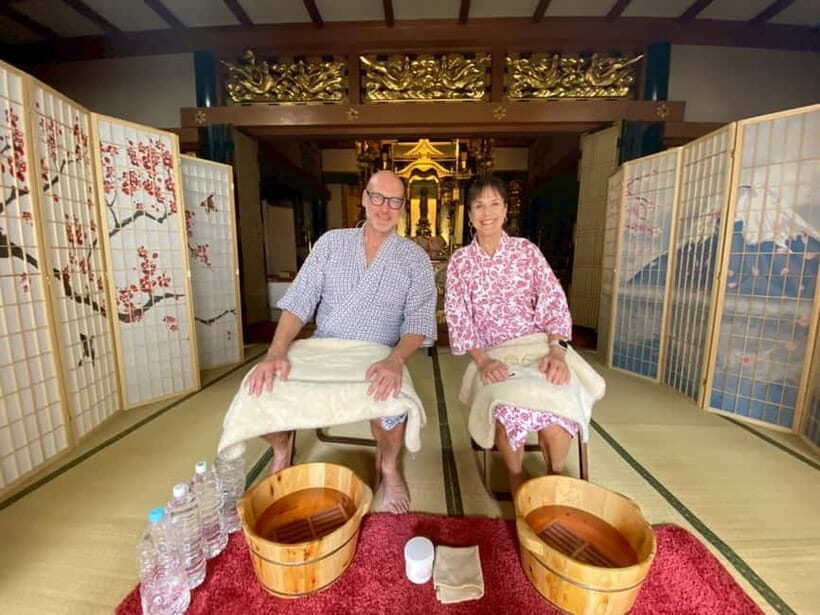
You’ll begin with a welcome drink, then change into a yukata. It’s a small thing, but it’s also part of the “switch” that makes this feel different from a spa appointment. Clothes like this nudge you to move more slowly and stay present.
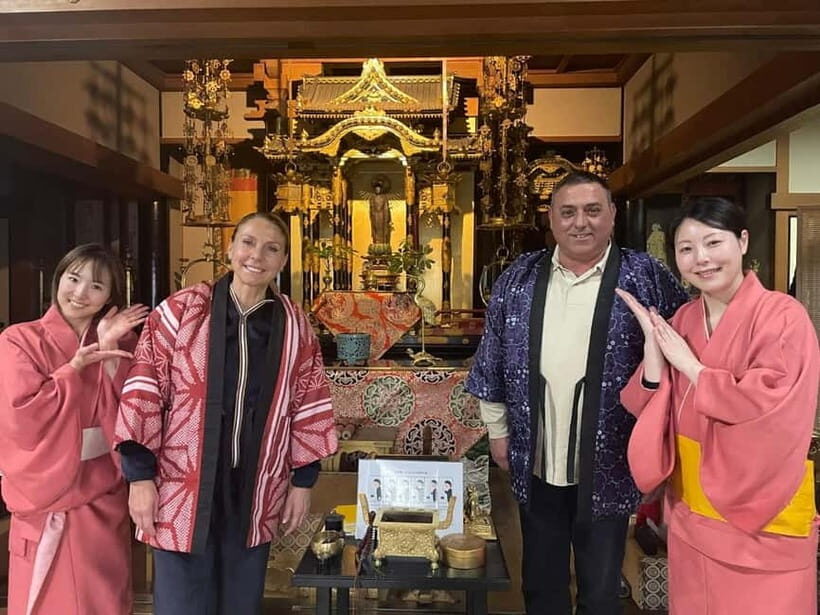
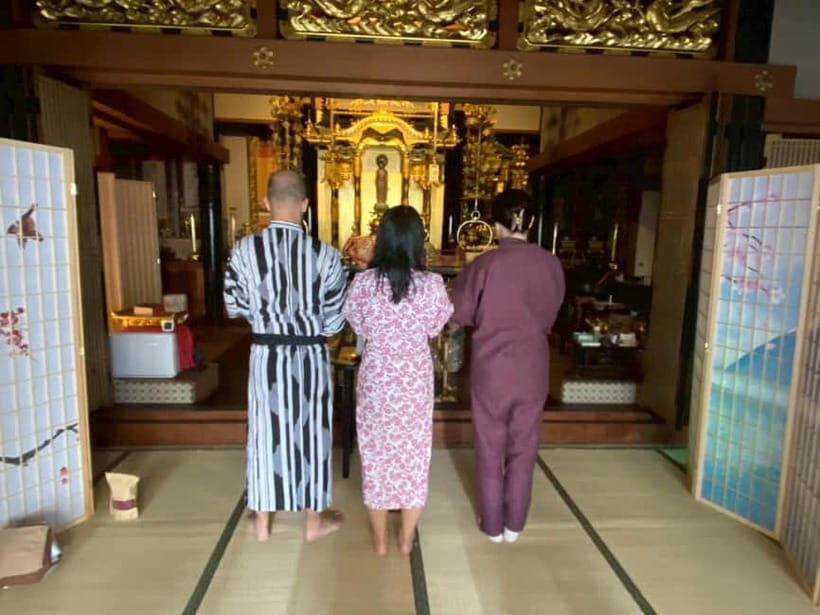
From there, you’ll visit the temple and take part in an incense offering. You also get an introduction to the temple’s history and Japanese worship culture. That’s not extra fluff. It turns what could be a tourist stop into a real context lesson, so you understand what you’re doing and why incense and rituals matter in daily spiritual life.
One practical note: the meeting location is easy to mix up on maps. For the smoothest arrival, search Japanese Massage -the one&only- on Google Maps. If you can’t find it, search the restaurant Tossa de coracao—the provider is right next to it.
Meditation with Bell and Kneaded Incense
After the incense offering, the session continues with meditation using a bell and kneaded incense. This part is designed to guide your attention. You’re not expected to be a meditation expert. You’re simply given a structure and sound cue (the bell) plus the ritual scent element from the incense.
In plain terms, this is the “bridge” between the temple setting and the healing portion. By the time you’re doing Reiki and massage, your body already has a reason to soften and your mind has a reason to stop sprinting.
If you’re traveling with a lot of mental noise—late trains, crowded streets, too many decisions—this segment is the most useful reset lever.
Foot Bath, Scrub Massage, and Essential-Oil Full-Body Work
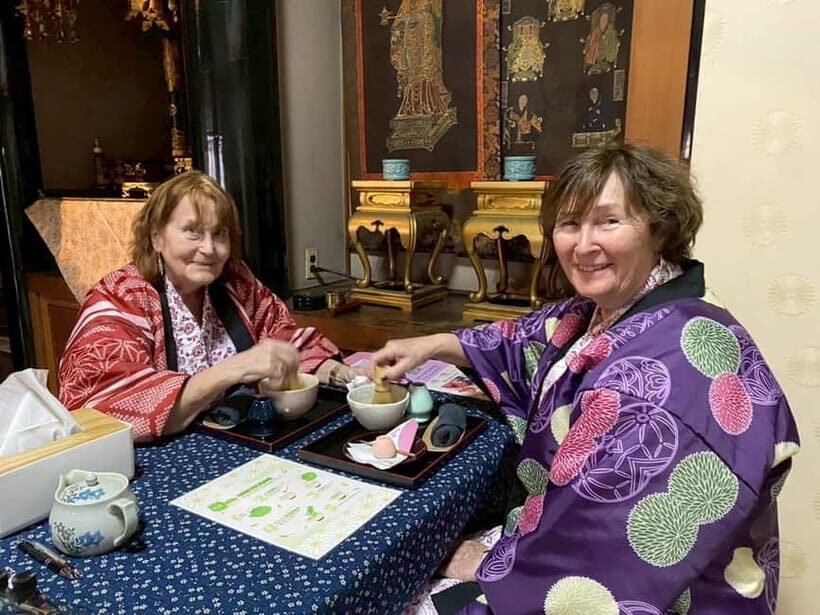
Next comes the bodywork, and it starts at the feet. You’ll relax with a foot bath, followed by a scrub massage. That order is smart for two reasons: it warms up your lower body and it reduces that heavy “I walked all day” feeling. Your feet and legs take the first hit from city travel, so it makes sense to treat them first.
Then you move into a full-body oil massage with essential oils. This is where you feel the difference most if you carry tension in your shoulders, back, or hips. The combination of foot soaking, scrub, and essential-oil massage gives you a clear progression—from gentle to deeper—without suddenly going from zero to intense.
Also, this is one place where the small group setup helps. With limited participants (up to 3), the rhythm stays calmer, and you’re not waiting around while a room runs like a production line. Guides you might encounter, including Arisa or Naomi, are known for keeping the session professional and soothing, which matters when you’re trusting someone with relaxation and comfort.
Reiki Healing That’s Non-Contact and Built for Relaxation
Then you get the Reiki healing for deep relaxation. Reiki here is described as a non-contact Japanese energy healing method aimed at promoting deep relaxation and emotional balance.
What you should expect, practically, is a session focused on calming your nervous system and helping you feel steadier. Reiki isn’t about soreness or a “stretch result.” The goal is harmony—mind and spirit together—so it tends to work best when you approach it as a quiet, receptive experience.
If you’re skeptical, consider this: the rest of the session prepares you for stillness. You’ve done incense and meditation first. Then your body gets warmed and soothed with massage. When Reiki arrives, you’re already in the right headspace for it to land, even if you don’t come in looking for spiritual effects.
If you do connect with it, that’s where the session can feel genuinely uplifting. People often leave this kind of Reiki + ritual flow feeling recharged and peaceful, not just physically relaxed.



Matcha Tea Ceremony with Wagashi (and the Cultural Context)
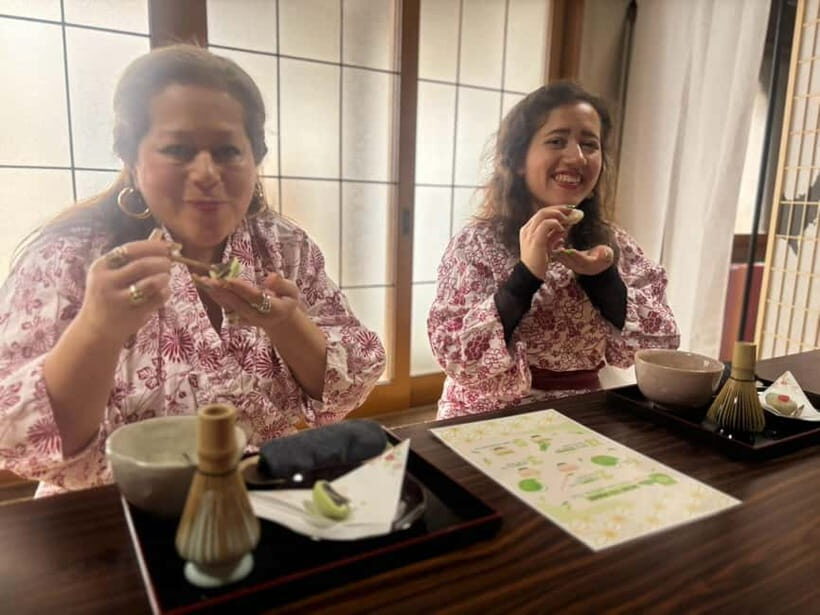
You’ll finish with a traditional Japanese tea ceremony with matcha and wagashi (Japanese sweets). The standout is that it comes with a cultural and historical explanation, so you’re not just following steps blindly.
Tea ceremony is often treated like a performance for visitors. Here, it’s framed as part of how people slow down and pay attention. And after Reiki and massage, you’re more likely to notice the details: the pace, the care, the moment-to-moment calm.
One consideration to plan around: the tea ceremony experience may be shared with other guests. Your overall session is still set up as a small group, but this particular segment can overlap. If you want truly private tea ceremony time, you’ll need to contact the provider.
Also, the tea portion may be the easiest part to share without losing value. Even shared, you’ll still get the explanation and the ritual flow. It’s not the kind of activity where you need a private room to enjoy it.
The Keepsake Touch: Photos in Your Yukata
You also get complimentary smartphone photos of your experience in the temple, and you’ll be wearing the yukata. This is a practical add-on. You don’t have to figure out camera angles while changing clothes, and you don’t have to worry about losing your “one good photo” slot to bad timing.
Think of it as a simple way to preserve the memory without turning the experience into a filming marathon.
Price and Value: Why $161 Can Make Sense for 2 Hours
At $161 per person for 2 hours, you’re not just buying a massage. You’re paying for a full package: temple rituals, Reiki healing, a foot bath with scrub, essential-oil full-body massage, and a guided tea ceremony with wagashi—plus the yukata and photo keepsake.
For many people, the value comes from the combination. A typical massage alone doesn’t usually include incense/temple context, meditation bells, and a guided tea ceremony. The price looks more reasonable when you think of it as wellness plus cultural experience, delivered by a live guide in a small group.
Where you might decide it’s not the right fit is if you only want one thing—like massage only—or if you strongly prefer fully private segments. The tea ceremony sharing option is the main limitation mentioned for privacy.
Who This Osaka Experience Fits Best
This is a great choice if you want one activity that’s calm, culturally grounded, and not just another photo stop. It’s especially suited for you if:
- you’re carrying stress from travel and want deep relaxation
- you’re curious about Reiki (and like that it’s non-contact)
- you want a Japanese cultural ritual that includes explanations
- you prefer a small group feel (up to 3 participants)
It may be less ideal if you need every minute to be strictly private, because the tea ceremony can be shared. It also won’t feel right if you hate structured rituals, incense, or guided meditation cues—this is an experience with a flow and a purpose.
Should You Book This Osaka Mind & Spirit Session?
I’d book it if your ideal Osaka day includes quiet wellness and ritual—Reiki, massage, and tea—done in a temple setting with a small group. The strongest reasons to choose it are the layered relaxation (feet to full body) and the way the tea ceremony adds meaning after the healing.
Don’t book it only for the massage if you’re not interested in the spiritual/ritual side at all. And if privacy matters most to you, message ahead so you can ask for options around the tea ceremony being shared.
If you want a 2-hour reset that feels like Japan, not just another service, this one is worth your time.
FAQ
How long is the Osaka Reiki and temple experience?
It lasts about 2 hours (120 minutes).
What’s included besides Reiki?
You’ll also get a welcome drink, change into a yukata, an incense/temple visit with introduction to temple history and worship culture, meditation with a bell and kneaded incense, a foot bath and scrub massage, an essential-oil full-body massage, and a traditional tea ceremony with wagashi.
Is the Reiki session non-contact?
Yes. Reiki is described as a non-contact Japanese energy healing method focused on deep relaxation and emotional balance.
Is the tea ceremony private?
The tea ceremony experience may be shared with other guests. Your Reiki and treatments are described as individual treatments, and the group size is limited to up to 3 participants.
Do I get photos or anything to take home?
Yes. You get complimentary smartphone photos of your experience in the temple.
What’s the cancellation and payment flexibility?
You get free cancellation up to 24 hours in advance for a full refund. There’s also reserve now and pay later, so you can book without paying immediately.