REVIEW · OSAKA
Traditional Japanese Music show & Experience Tour in Osaka
Book on Viator →Operated by Harmony in Japan Tour · Bookable on Viator
Hogaku in Osaka, hands-on. This small-group Traditional Japanese Music show packs live instruments and a real chance to play along, all in about an hour. You’ll hear the sound-world up close, then put your hands on traditional instruments for a guided experience. It’s a simple, rewarding way to see how Japanese music feels when it’s not just background noise.
I like two things a lot. First, the concert segment puts instruments like shamisen and wadaiko in the foreground, so you can actually hear differences in tone and style. Second, you get professional musicians and time to ask questions, plus photos where you can hold the instruments like a souvenir. One possible drawback: the program can vary by day, so the exact instrument mix and pieces may not be identical on Wednesday vs. Friday.
In This Review
- Key Highlights You’ll Care About
- How This 60-Minute Osaka Music Session Really Works
- The Concert Portion: Hearing Shamisen, Koto, and Wadaiko Up Close
- The Hands-On Segment: Trying Traditional Instruments Yourself
- The Photo Time: A Souvenir That Doesn’t Feel Forced
- Price and Value: What You’re Paying For (And Why It’s Reasonable)
- Small Group Size: Why Max 7 Changes the Feel
- Where You Meet in Osaka (And How to Plan Your Timing)
- Who This Traditional Japanese Music Experience Fits Best
- Should You Book This Osaka Shamisen, Koto, and Wadaiko Session?
- FAQ
- How long is the Traditional Japanese Music show and experience in Osaka?
- What instruments can I expect to see and try?
- Is this a small group activity?
- Where do I meet for the tour?
- Is transportation included?
- What is the cancellation window for a full refund?
Key Highlights You’ll Care About
- Live hogaku concert with traditional instruments performed up close
- Try-playing section where you handle and play instruments yourself
- Shamisen, koto, wadaiko, and more depending on the day
- Question time with professional musicians
- 10 minutes for photos holding instruments and posing with performers
- Max 7 participants for a more personal vibe
How This 60-Minute Osaka Music Session Really Works
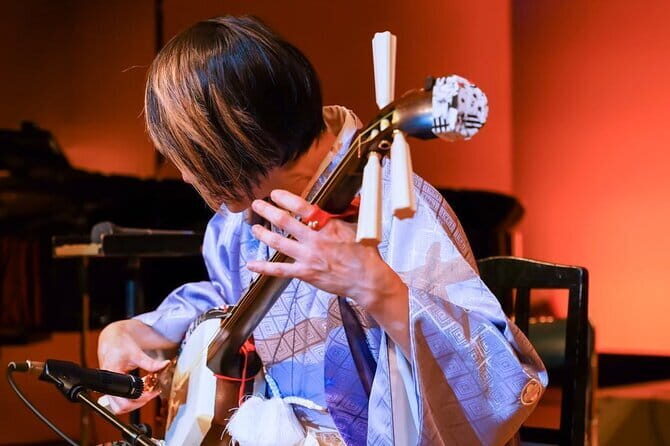
This experience is built like a tight, focused mini-course. Total time is about 60 minutes, split into three clear blocks: 25 minutes of concert, 25 minutes of instrument try-out, then 10 minutes for photos with the instruments and performers. That structure matters. It keeps the day from feeling like a long wait around a demo, and it gives you a real payoff at the end.
In Osaka, the show runs at 11:00 on Wednesday and 18:30 on Friday. If you’re trying to fit something cultural between sightseeing, this timing is handy. It also means you can plan around dinner or late-afternoon plans on Friday without it dragging on.
You should also know this is a small group capped at 7 travelers and requires a minimum of 2 participants. That combination tends to make the musicians more “in the room” with you instead of performing at a distance. You’re there to listen, then participate. The whole thing ends right back at the meeting point.
You can also read our reviews of more tours and experiences in Osaka

The Concert Portion: Hearing Shamisen, Koto, and Wadaiko Up Close
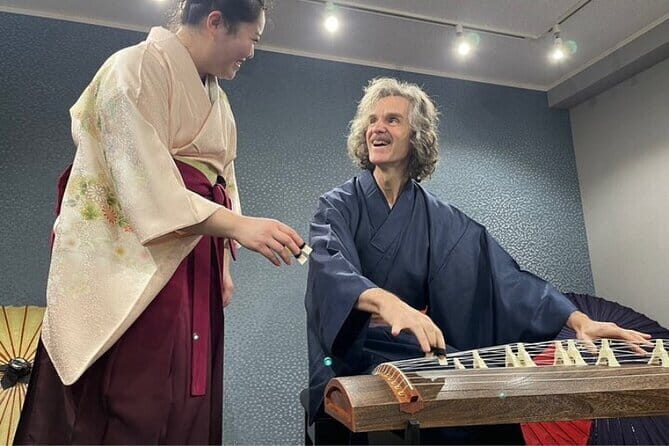
The first half is an authentic music concert, roughly 25 minutes. Even if you don’t read music or know the names of every style, you’ll still get a lot out of this. Traditional Japanese instruments aren’t just “pretty sounds.” They have specific timbres, attack, and rhythm patterns. When performed live in front of you, those details land faster than they do through recordings.
You’ll hear a variety of traditional instruments. The experience specifically mentions shamisen (Japanese lute), koto (Japanese harp), wadaiko (Japanese drum), and more. The day’s exact lineup can shift, but the goal stays the same: you get a close-up look at hogaku—traditional Japanese music—and how multiple instruments work together.
One underrated part here: you can ask questions. That’s a big difference from passive shows where you’re stuck watching and guessing. If you’re curious about how a shamisen phrase differs from a drum rhythm, or how a koto part fits, you’ll have a chance to clarify. It’s the kind of conversation that turns the concert from entertainment into understanding.
If you’re hoping for a museum-level lecture, you might find the concert is more about sound and basic context than deep theory. But that’s also the reason it stays short and enjoyable.
The Hands-On Segment: Trying Traditional Instruments Yourself
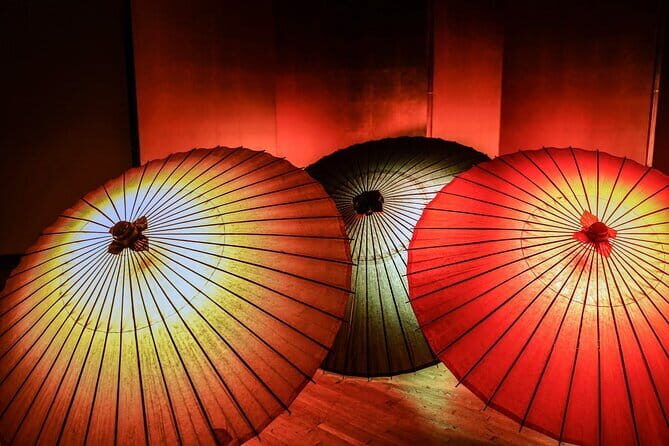
Then comes the best part for most people: another 25 minutes where you try playing. The experience includes the instrument for you to use during your time at the session. It’s not just a “touch and pose” moment. You actually get to play.
The instruments mentioned include shamisen, koto, and wadaiko, plus additional traditional instruments depending on the day. That’s a huge value point. You’re not paying to stand next to one instrument. You get a chance to experience how very different instruments feel under your hands—string tension on a lute-like instrument, plucked or set patterns on the koto, and the physical presence of drums.
The experience also explicitly says you can ask questions and make requests. That matters because it changes your try-out from a scripted performance into something guided by real musicians. If you want a quick explanation of what you’re doing, you can ask.
Practical note: this is a short try-out block. You won’t become a master. But you’ll get what you came for—real contact with the sound-making process and a story you’ll actually remember.
The Photo Time: A Souvenir That Doesn’t Feel Forced
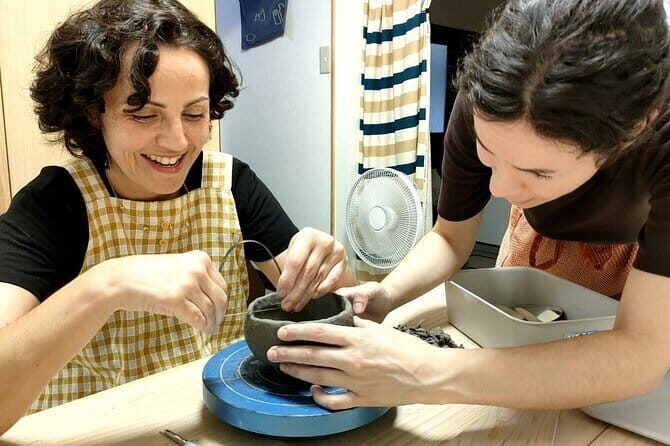
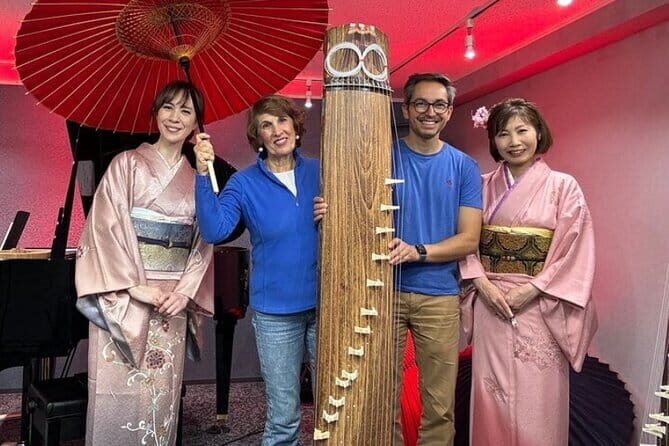
After you’ve listened and tried, you get about 10 minutes for photos. The idea is straightforward: take pictures with the instruments and performers, and you’ll be able to hold traditional instruments as part of the photo set.
This segment is worth doing because it captures the moment when you’re no longer just observing. You’re part of it. The instruments are often the hardest thing to explain later, and photos help you make sense of the experience quickly when you’re back home.
One thing to keep in mind: 10 minutes goes fast. If photos are your priority, I’d treat this as your “get set” moment—decide quickly what you want and be ready to step into position when the group is moving.
Price and Value: What You’re Paying For (And Why It’s Reasonable)

At $46.12 per person, this could look like a “small” activity price. But the value comes from what’s included and what’s actually happening in the time you pay for.
You’re paying for:
- A live performance by professional musicians
- A hands-on instrument experience (the instrument is included)
- Time to ask questions
- Photo time holding instruments
You’re not paying for private transportation, and the schedule is short. That means the cost isn’t inflated by a long day or a vehicle. Instead, the money goes into performers and into giving you actual participation time.
Also, small group sizes help the value. With a maximum of 7 travelers, the experience can stay interactive in a way that larger shows often can’t. You’re more likely to get answers to questions, and the try-out portion doesn’t feel like you’re being shuffled past too quickly.
If your goal is sound + hands-on learning without a major time commitment, the price feels aligned with the experience you get.




Small Group Size: Why Max 7 Changes the Feel
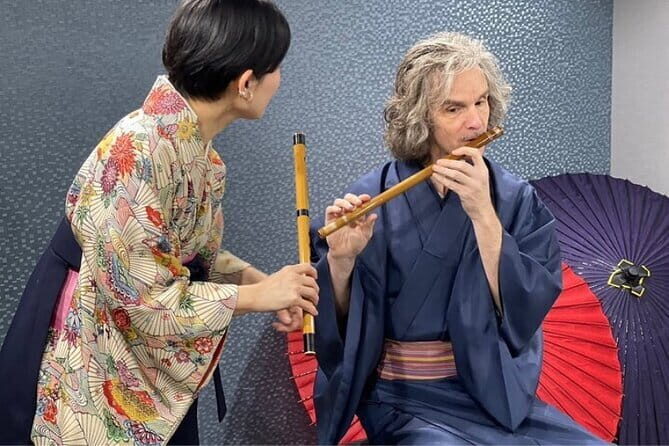
Group size isn’t just a number here. It affects how the musicians can interact with you during questions and try-playing.
With a maximum of 7 travelers and a minimum of 2, you should expect a format where the performers can adapt to the group. That can mean more attention during the try-out section and a better chance to ask questions without feeling rushed. It also tends to keep the room atmosphere calmer and more personal.
Another benefit: if you’re traveling solo, you’ll likely get grouped with a small mix rather than sitting among a large crowd. The experience also says most travelers can participate, which suggests the activity is approachable for beginners. You don’t need to arrive knowing how to play any instrument to benefit from the session.
The only “watch this” is the day-to-day variation. Since the concert content changes depending on the day, you might get a slightly different instrument mix or sequence if you go on Wednesday vs. Friday.
Where You Meet in Osaka (And How to Plan Your Timing)
The meeting point is at: アルファ 心斎橋3-chōme-5-27 Minamisenba, Chuo Ward, Osaka, 542-0081, Japan. The activity ends back at the meeting point, so you don’t need to build in extra transit time at the end.
The experience notes it’s near public transportation. That’s practical in Osaka, where moving between neighborhoods is common and quick. Since private transportation is not included, you’ll want to plan your own route to arrive a bit early.
A helpful mindset: treat this like a music appointment. You’re going to be ready to listen and then move into the instrument try-out when prompted. Being on time keeps the session running smoothly for everyone.
Who This Traditional Japanese Music Experience Fits Best

This tour fits best if you want real instruments and real interaction in a short window.
You’ll likely enjoy it if:
- You love live music and want to hear instruments with clarity up close
- You’re curious about hogaku and want a simple way to understand it
- You want to ask questions instead of just watching
- You like experiences where you can do something, not just observe
It also works well for small groups and couples. The format is structured, short, and photo-friendly. If you’re on a cultural trip and want a break from shrine or museum mode, this gives you a different kind of “local Osaka” memory.
If you’re traveling with a service animal, the experience says service animals are allowed, which is a good detail to confirm before booking.
Should You Book This Osaka Shamisen, Koto, and Wadaiko Session?
If you want a high-touch, short traditional music experience in Osaka, I think this is a solid yes.
Book it if your priorities are:
- Live performance plus hands-on playing in the same hour
- A small group format (max 7), so you can ask questions
- Getting photos holding the instruments as a real souvenir
Skip or reconsider if:
- You need a longer, deeper lesson plan (this runs about an hour)
- You’re picky about seeing a specific instrument lineup every time, since the content varies by day
One final tip: pick the day based on your schedule, not your assumptions about the instrument list. The day-to-day variation is part of the charm—traditional music isn’t meant to be identical every performance.
FAQ
How long is the Traditional Japanese Music show and experience in Osaka?
The experience lasts about 60 minutes total: 25 minutes for a concert, 25 minutes to try playing traditional instruments, and 10 minutes for photos.
What instruments can I expect to see and try?
The experience includes traditional instruments such as shamisen, koto, and wadaiko, plus other instruments depending on the day.
Is this a small group activity?
Yes. The activity has a maximum of 7 travelers, and it requires a minimum of 2 participants to run.
Where do I meet for the tour?
The meeting point is アルファ 心斎橋3-chōme-5-27 Minamisenba, Chuo Ward, Osaka, 542-0081, Japan, and the activity ends back at the same location.
Is transportation included?
No. Private transportation is not included, though the meeting area is near public transportation.
What is the cancellation window for a full refund?
Free cancellation is available. You can cancel up to 24 hours in advance of the experience for a full refund (based on local time). If you cancel within 24 hours, you won’t get a refund.