REVIEW · OSAKA
90 min Shared Handmade Udon Experience
Book on Viator →Operated by Udonzin Beat · Bookable on Viator
Udon by your own two feet. In Osaka, this 90-minute class teaches Sanuki-style udon-making and ends with you eating what you make in a chef-cooked broth of kombu, shiitake, and katsuobushi.
I love the hands-on kneading element (yes, you’ll use your feet), and that the restaurant has been Michelin-listed from 2018 to 2023. I also like that you get more than lunch: you leave with a home recipe and the instructor takes free photos during class.
One caution: the session needs a minimum of two participants and you can be grouped with others, so it’s not the kind of activity where you’ll get total privacy. Also, this isn’t a good fit if you have a wheat allergy.
In This Review
- Key things I think you’ll enjoy
- Sanuki Udon Explained: Why Feet-Crushed Dough Changes Everything
- Inside the 90 Minutes at Udonzin Beat (Udon-Making Flow)
- The Broth Is the Main Character: Kombu, Shiitake, Bonito in One Bowl
- Your Udon Tasting, Hot or Cold
- What’s Included vs What Costs Extra (And Whether It’s Worth $52.85)
- Vegetarian-Friendly, But Tell Them Up Front
- Who This Class Fits Best (And Who Might Prefer Something Else)
- How to Prepare: Clothes, Timing, and Easy Practical Tips
- Should You Book This Osaka Udon Class?
- FAQ
- How long is the udon-making experience?
- Where does the experience meet and where does it end?
- What is the price per person?
- What’s included in the class?
- Are alcoholic drinks included?
- Is there a vegetarian option?
- Can I join if I’m traveling alone?
- Is it okay for kids?
- Is it suitable for wheat allergies?
- Should You book?
Key things I think you’ll enjoy
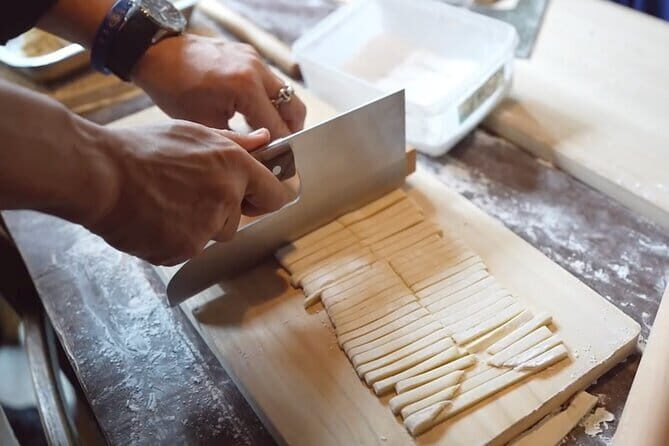
- Feet-kneaded Sanuki dough: you’ll learn the texture-building method that makes this style different
- Michelin-listed restaurant setting: a real, established spot for a hands-on food class
- Additive-free broth basics: kombu, shiitake, and bonito stock come together in your bowl
- Eat your udon immediately: the chef cooks your noodles and serves them right after class
- Free photos by the instructor: you get a visual souvenir without interrupting the flow
- Small-group feel: capped at 20 people, so it stays personal enough to ask questions
Sanuki Udon Explained: Why Feet-Crushed Dough Changes Everything
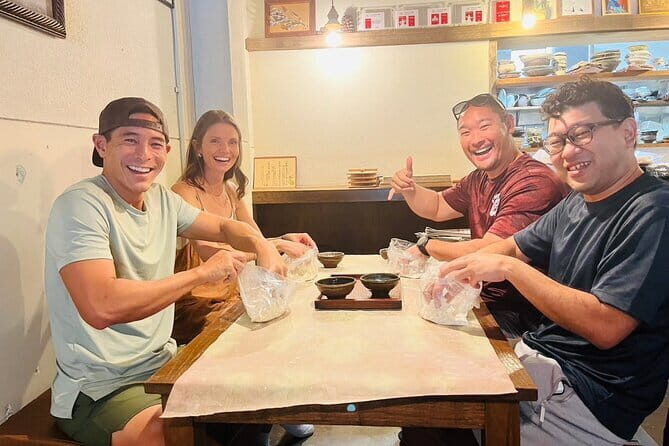
Osaka has plenty of great food experiences, but udon-making hits a different nerve. This class focuses on Sanuki udon, a style known for noodles that feel firm and soft at the same time. The key difference is how the dough is handled.
In this lesson, the dough is kneaded with your feet. That sounds silly until you realize the goal: you’re building a smoother, springier dough texture than most store-bought versions. It’s also a fun way to learn with your whole body—kids usually think it’s hilarious, and adults often get surprisingly serious about doing it right.
The class is taught by local instructors (I’ve seen Keiko and Nozomi named as hosts), so you get real guidance rather than a one-size-fits-all cooking video. That matters because udon dough is one of those things where small changes in kneading make a real difference later.
You can also read our reviews of more tours and experiences in Osaka.



Inside the 90 Minutes at Udonzin Beat (Udon-Making Flow)
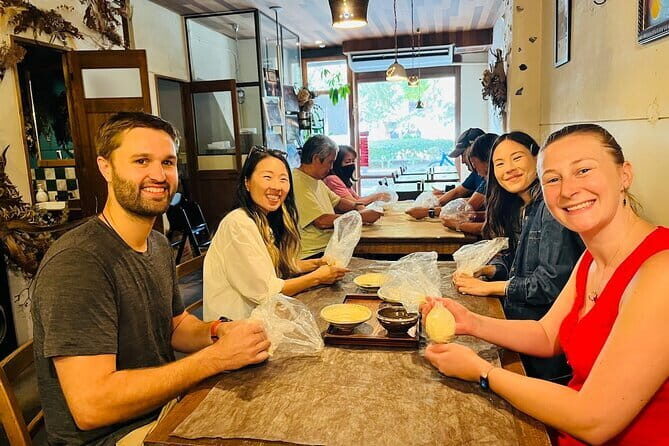
You’ll meet at UDONZIN美糸1-chōme-16-17 Shinmachi, Nishi Ward, Osaka, and the experience ends back there. Timing is tight on purpose: you’re expected to arrive on schedule so the restaurant can move you in and then resume service for regular customers after.
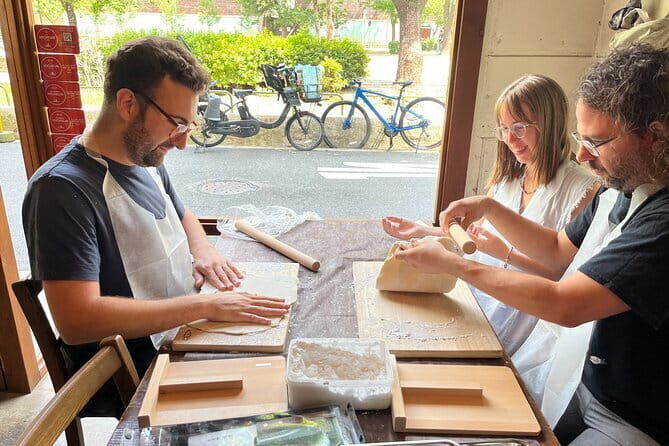
Once everyone is settled, the instructor walks you through the history and culture of udon. You’re not just learning technique—you’re learning why this food became such a daily staple in Japan. Then you get started on the dough.
Here’s what you can count on during the class:
- You’ll receive detailed instruction as you knead and shape the udon dough using the Sanuki method.
- The chef handles the cooking step. You do the dough work; the chef turns it into noodles.
- You’ll get your udon tasting right after the noodles are cooked and served.
- The instructor takes and shares photos during class, so you don’t have to worry about capturing every moment.
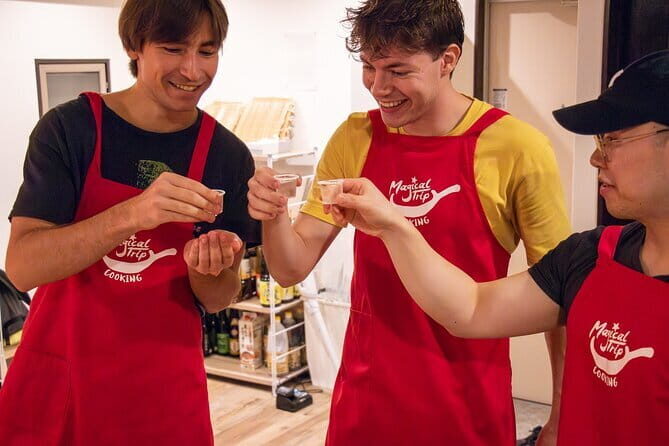
If you want to sip along, you can make the udon with sake or beer. Drinks aren’t included in the price, but the option is there during the activity.
This is the kind of experience that feels smooth because there are clear roles: instructors guide your technique, and the chef handles the hot work so you’re not stuck worrying about timing.
The Broth Is the Main Character: Kombu, Shiitake, Bonito in One Bowl
The udon you make isn’t served dry. It arrives with a special broth built from all-natural, additive-free ingredients. The ingredients called out are kombu, shiitake mushrooms, and katsuobushi (bonito stock).
That combo is classic Japanese “umami math.” Kombu brings deep kelp flavor, shiitake adds a mushroom backbone, and bonito adds the smoky, savory edge. Put together, the broth is designed to make the noodles taste better, not just to cover them.
The broth is served in beautiful bowls, which sounds like a small thing—until you’re actually eating. Food tastes better when the presentation is thoughtful, especially when the experience is about your hands-on work.
Chef service is a big part of the value here. You get a restaurant-quality result without needing to master multiple cooking stations yourself.
Your Udon Tasting, Hot or Cold

After the chef cooks your noodles, you eat what you made right away. You’ll choose tasting as hot or cold. That choice matters because udon can taste different depending on temperature and broth behavior, and it’s nice to have the option instead of being locked into one style.
Either way, the tasting is where the class pays off. You can knead, shape, and learn all you want—but the real test is the bite. This format keeps you motivated because you’re not studying a recipe for later. You’re applying it immediately and tasting the results the same day.
And because you’re at a real restaurant (not a demo kitchen), the final dish follows a proper service rhythm. That also helps explain why the session length is about 90 minutes: it’s built for food flow, not lingering.
What’s Included vs What Costs Extra (And Whether It’s Worth $52.85)
At $52.85 per person, you’re paying for more than a meal. You’re paying for instruction, a restaurant setting, and a guided end-to-end process from dough to tasting.
Included in the price:
- Handmade udon lesson
- Udon tasting (hot or cold)
- A recipe for making udon at home
- Free photos (the instructor takes your picture during class)
- Local taxes
Not included:
- Alcoholic beverages (sake or beer are optional)
- Side dishes like tempura or extra udon
So what’s the value? For me, the biggest win is the home recipe plus the hands-on technique. Many cooking classes give you a small meal and a vague summary. Here, you leave with a concrete recipe, so you can repeat the experience. The free photos are also a useful “hidden” perk because they remove the awkwardness of trying to document messy hands while learning.
If you want a fuller meal, you can add tempura or extra udon, but you’ll do that by paying extra on top. That’s a normal restaurant add-on, and it lets you choose how big of a lunch or dinner you want.


Vegetarian-Friendly, But Tell Them Up Front
Vegetarians are welcome. If you have dietary restrictions, you should let the team know in advance. That’s especially important because the broth and meal components matter for vegetarian needs.
The info you’re given is that the broth uses kombu, shiitake mushrooms, and katsuobushi (bonito stock). Since katsuobushi is fish-based, you’ll want to confirm how vegetarian versions are handled before you arrive. The class says vegetarians are welcome, so they should be able to accommodate—but your safest move is to communicate your needs during booking.
If you’re wheat-sensitive, note the warning: the class is not recommended for travelers with a wheat allergy.
Who This Class Fits Best (And Who Might Prefer Something Else)
This is a great fit for people who want something active without being intimidating. The class is described as fun for everyone, even if you have no cooking experience. That checks out because the hardest part—cooking the noodles and managing the broth—is handled by the chef. You focus on dough work and learning.
It’s also a strong family option. Kids aged 2 and above can participate (children pay ¥5000). The pace and hands-on style make it easier for families to stay engaged for the full session.
You might be grouped with other participants, which is part of the small-class vibe. If you love meeting people (or your group is flexible), this is a plus. If you want a private, quiet experience, it’s not advertised that way.
How to Prepare: Clothes, Timing, and Easy Practical Tips
Wear clothes you don’t mind getting messy. When you’re kneading dough with your feet, you should plan for flour, stickiness, and the kind of small mess that can’t be wiped away with good intentions. I’d treat it like wearing a paint-by-numbers outfit, just with starch.
Arrive on time. The restaurant needs to run its normal service after your class, so being late doesn’t help you or the schedule. If you’re coming from central Osaka, give yourself a little buffer so you’re not rushing to change clothes or find the exact spot.
Since this activity uses a mobile ticket and you’ll be near public transportation, it’s fairly straightforward once you’re in the area. Just make sure your ticket is ready on your phone before you head in.
Finally, if you’re joining alone, the class requires a minimum of two participants. The guidance is to contact them in advance if you’re traveling solo or with children as a group of one adult and kids. That’s the kind of detail that can save you a headache later.
Should You Book This Osaka Udon Class?
I’d book this if you want a hands-on food experience with a clear payoff: you make the dough, the chef turns it into noodles, and you eat your results right away. The combination of Sanuki technique, an additive-free broth, and a take-home recipe is where the value really shows.
I’d think twice if you need guaranteed privacy, or if you’re dealing with a wheat allergy. And if you’re vegetarian, message ahead so you’re comfortable with how the broth is handled for your dietary needs.
If you’re in Osaka and you want a class that feels local, practical, and genuinely hands-on—this is one of the better bets on the list. The kind of memory you can recreate later at home, instead of just photographing and forgetting.
FAQ
How long is the udon-making experience?
It runs about 1 hour 30 minutes (approximately).
Where does the experience meet and where does it end?
The meeting point is UDONZIN美糸1-chōme-16-17 Shinmachi, Nishi Ward, Osaka, and it ends back at the meeting point.
What is the price per person?
The price is $52.85 per person.
What’s included in the class?
You get the handmade udon lesson, udon tasting (hot or cold), a recipe for making udon at home, free photos taken by the instructor, and local taxes.
Are alcoholic drinks included?
No. Sake or beer is available, but alcoholic beverages aren’t included in the fee.
Is there a vegetarian option?
Yes, a vegetarian option is available. Let them know in advance if you have dietary restrictions.
Can I join if I’m traveling alone?
The class requires a minimum of two participants. If you want to join alone, contact in advance to find a suitable session.
Is it okay for kids?
Children aged 2 and above can participate. The fee for children is ¥5000.
Is it suitable for wheat allergies?
It’s not recommended for travelers with a wheat allergy.
Should You book?
If you want an active Osaka food experience with clear instruction, real ingredients, and a recipe you can use later, this fits well. If you need privacy or have wheat allergy concerns, choose carefully and message ahead for dietary needs.