REVIEW · OSAKA
Osaka Okonomiyaki Cooking Class “Learn here and make it at home”
Book on Viator →Operated by WashokuYanen · Bookable on Viator
The first time you hear the griddle sizzle, you get hooked. This hands-on Osaka cooking class teaches you to make two local favorites, okonomiyaki and takoyaki, and then you eat what you make with drinks. It’s practical, guided, and designed so you can actually recreate the dishes later at home.
I especially like the way the class is structured: a short orientation, a focused cooking block, and then a proper tasting time where your finished food is treated like the main event. I also love that you’re not left guessing—everything includes ingredients and tools, plus you get helpful written guidance so the process doesn’t vanish the next day.
One thing to consider: this is an evening-style activity with a fair chunk of time at the cooking station, so if you prefer watching only, you’ll probably want a different kind of experience. Also, alcoholic drinks are included but only for adults (20+), so the vibe changes a bit for under-20 guests.
In This Review
- Key things to know before you go
- Osaka okonomiyaki and takoyaki: what you’re really learning
- Where the class starts near Shinsaibashi and Honmachi
- The 30-minute orientation: get your tools and instincts aligned
- 90 minutes at the griddle: making okonomiyaki and takoyaki
- Tasting time: your okonomiyaki and takoyaki plus drinks
- The take-home edge: written recipes and supermarket shopping clues
- Food allergies, vegetarian needs, and families
- Price and value: what $70 covers in real life
- Logistics that matter: timing, weather, and how to dress
- Should you book this Osaka cooking class?
- FAQ
- What dishes will I make in this Osaka cooking class?
- How long is the class?
- What’s included in the price?
- Where does the class meet?
- How big is the group?
- Are alcoholic drinks included for everyone?
- Can the class accommodate vegetarian diets or food allergies?
Key things to know before you go
- Small group size (max 8) makes it easier to get real help, not just vague directions
- Everything is provided, from ingredients to tools, so you can focus on learning the method
- English-speaking instruction included, with Japanese and Spanish available on request
- 3-hour flow: 30 minutes prep, 1.5 hours cooking, 1 hour tasting with drinks
- Take-home confidence comes from written recipes and even ingredient packaging tips for shopping later
- Central location, about a 5-minute walk from Shinsaibashi and Honmachi stations, in a quieter neighborhood
Osaka okonomiyaki and takoyaki: what you’re really learning
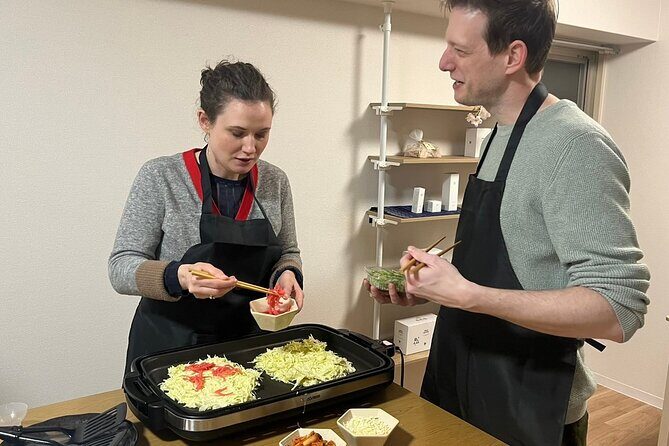
Okonomiyaki is often described as a savory Japanese pancake, but the real skill is building a batter-and-cabbage base that cooks evenly and holds together while toppings do their thing. You’ll make it with ingredients like batter, cabbage, and fillings such as pork and seafood, then finish with sauce and bonito flakes.
Takoyaki is the other half of the lesson: little fried dough balls with a filling—usually octopus—then topped with sauce, bonito flakes, and seaweed powder. The technique here is different. Instead of thinking pancake, you’re thinking portioning, frying, and getting those signature shapes as they cook.
The big value is that the class doesn’t just show you what to do. You work step by step, with instructors guiding you through the method so you’re not only eating Osaka food—you’re learning the mechanics behind it. That’s what helps this turn into a home-cooking win, not a one-time souvenir meal.
You can also read our reviews of more cooking classes in Osaka

Where the class starts near Shinsaibashi and Honmachi
The kitchen location is in the heart of Osaka, but it’s described as a quiet, peaceful pocket rather than an all-noise, all-people intersection. It’s about a 5-minute walk from both Shinsaibashi and Honmachi stations on the Osaka Metro, which makes it easy to combine with the rest of your evening.
You’ll meet at南船場コレット9044-chōme-3-1 Bakurōmachi, Chuo Ward, Osaka (activity ends back at the same meeting point). A mobile ticket is used, which is usually a time-saver in a city where transit and signboards can move fast.
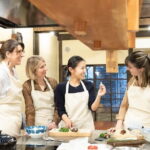
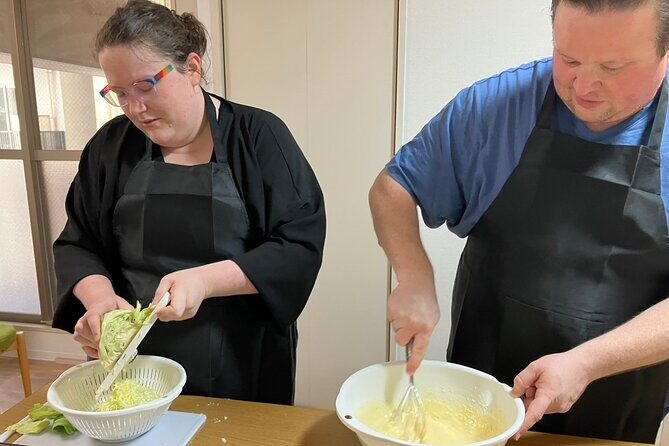
Since the class is capped at 8 travelers, you should feel the difference in pacing. In a big group cooking class, you can get swept along. Here, you’re more likely to get direct help when you hit a question mid-cook, like how to manage timing or how toppings should go for best results.
The 30-minute orientation: get your tools and instincts aligned
The first part is a 30-minute orientation and preparation session. This isn’t just paperwork. It’s where you get set up so the longer cooking block doesn’t turn into chaos.
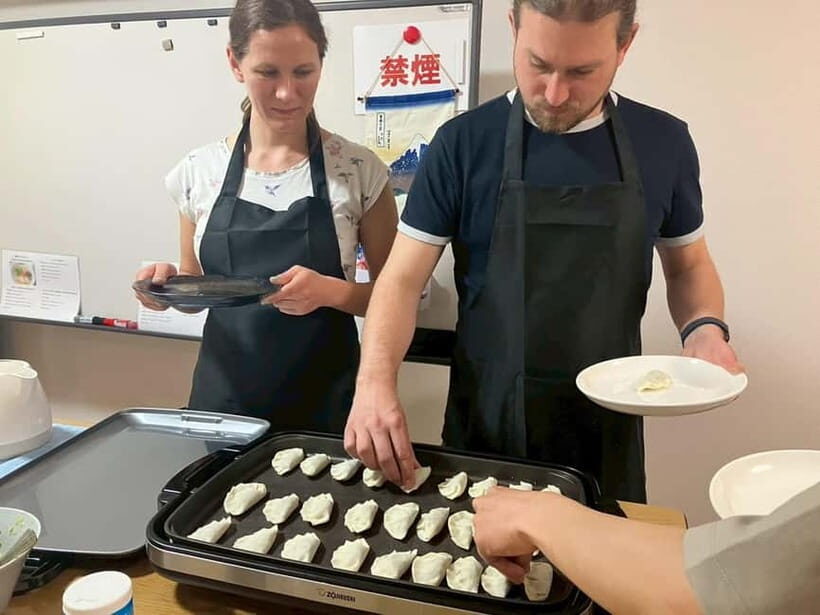
You’ll be given the practical basics: aprons and disposable plastic gloves, plus the kitchen tools you’ll need during cooking. That matters more than it sounds, because okonomiyaki and takoyaki are messy by nature—cabbage, batter, sauces, and hot surfaces don’t mix with street clothes.
You also start learning the ingredients as ingredients, not just labels. The class uses a step-by-step approach, and you can expect guidance in English from the instructor. There’s also the option to have instructors who speak Japanese and Spanish upon request, which can help if you want a deeper explanation of flavors or ingredient choices.
90 minutes at the griddle: making okonomiyaki and takoyaki
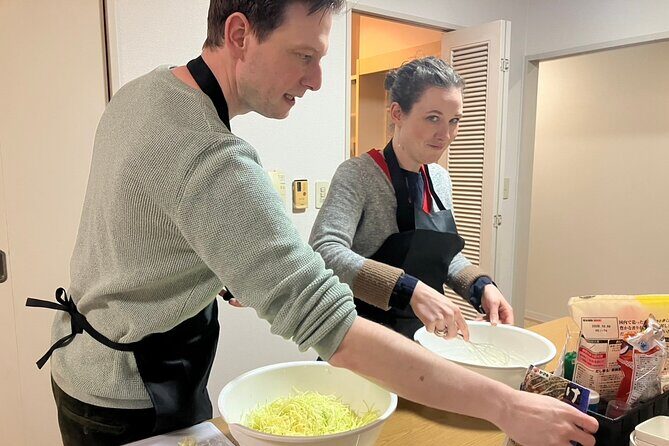
After orientation, the cooking portion runs about 1.5 hours. This is the heart of the class, and it’s where you move from understanding the dishes to actually making them with your own hands.
For okonomiyaki, your build starts with batter and cabbage, plus fillings like pork or seafood. The guiding idea is balance: the cabbage needs to cook through without leaving you with a raw center, and the batter needs to hold everything together so it comes out as a cohesive pancake rather than a pile. Then you finish with sauce and bonito flakes, which add that smoky, umami punch people associate with the best versions.
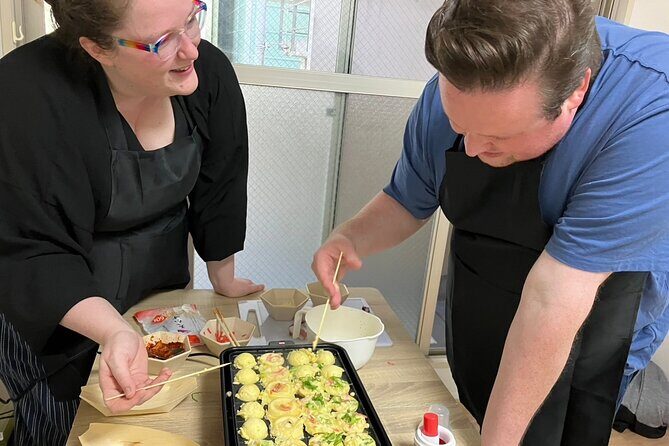
For takoyaki, you’re working with a very different format: fried savory dough balls filled with octopus. The topping layer is also part of the learning. You’ll add sauce, bonito flakes, and seaweed powder. Even if you’ve eaten takoyaki before, making it yourself helps you understand why these toppings are layered the way they are—texture, aroma, and flavor build in stages.
A small-but-important detail: the class is designed to be interactive. That showed up in how people described the experience as intimate and accommodating, even when the booking was just a couple of people. In practical terms, that usually means more attention when you need it, and more chance to get your questions answered while everything is still hot and in progress.
Tasting time: your okonomiyaki and takoyaki plus drinks
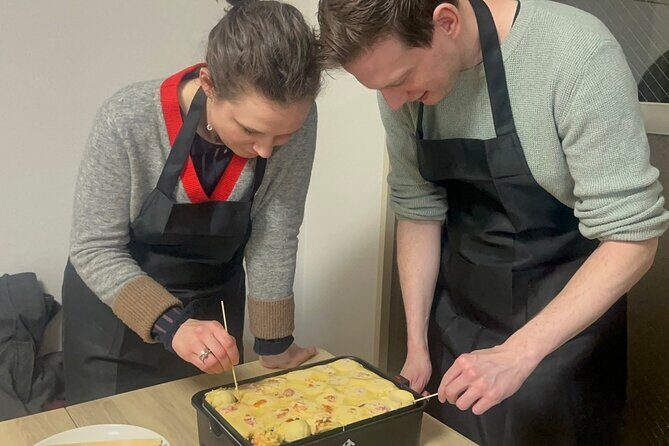
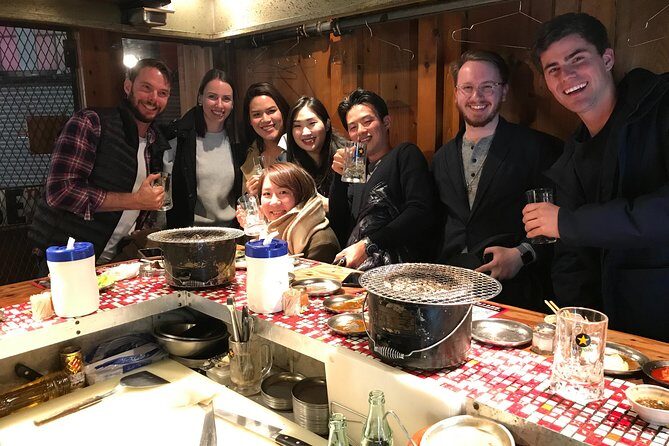
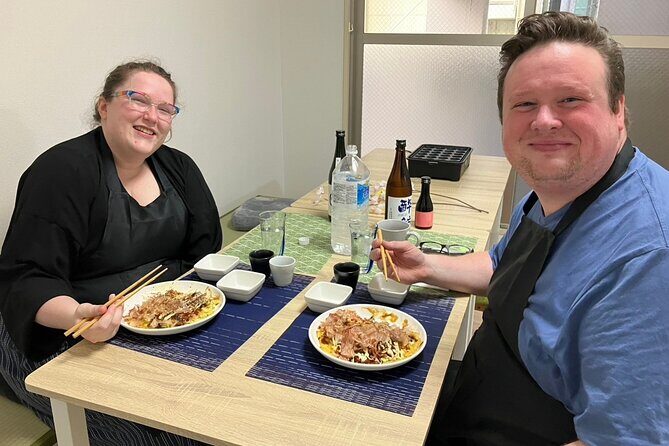
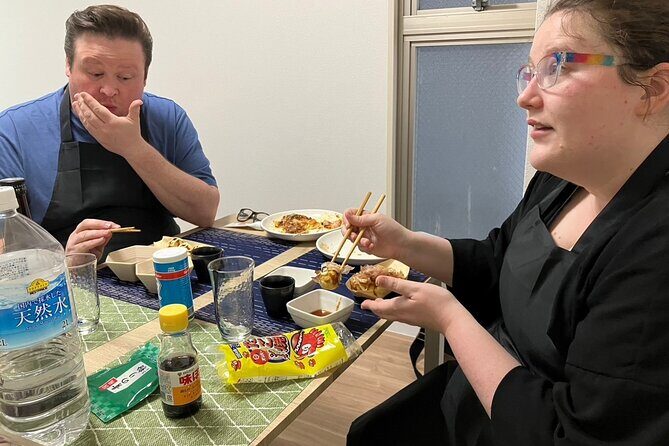
Once cooking wraps up, you get a full 1-hour tasting session. This is where the class stops being a lesson and becomes a meal—sit back, enjoy what you made, and compare what you think you nailed versus what you’d do differently next time.
Drinks are included with the tasting: sake, beer, and soft drinks. There’s an important age rule: alcoholic drinks are served only if you’re 20 years old or above, and under-20 guests will be served non-alcoholic drinks. That means the social vibe stays friendly, but the alcohol part depends on the group.
This tasting block is also part of why the class is worth doing instead of just eating a meal. You don’t just taste one version—you taste the results of your effort right away, while everything is still fresh and you can connect the flavor to the steps you followed.
You can also read our reviews of more tours and experiences in Osaka

The take-home edge: written recipes and supermarket shopping clues
One of the best surprises in this class is that it doesn’t treat your learning as temporary. You get written recipes, and you also get a chance to see packaging for different ingredients. That’s a big deal in Osaka, where lots of products exist—but not all are easy to identify quickly in a busy supermarket.
The practical payoff for you is this: after the class, you can shop with more confidence. Instead of guessing which sauce or which seaweed powder to buy, you have a better sense of what the ingredients are supposed to look like and how they fit into the dish.
If you like cooking at home, this is exactly the kind of class that helps you build a repeatable skill. Not every food experience does. Here, the goal is that you can actually make okonomiyaki and takoyaki again, not just talk about how fun it was.
Food allergies, vegetarian needs, and families
The class supports vegetarian or food allergy options, but you need to message after booking. The key point is that they don’t list details up front, so if you have restrictions, plan to contact the provider once you book so they can advise on what’s possible.
In terms of family-friendliness, the experience has worked well even with younger kids, based on how it’s been described. That doesn’t mean it’s a daycare, of course. It’s still cooking with hot surfaces and batter, so you’ll want to read the room and follow instructor guidance closely.
Also keep in mind the alcohol rule again for anyone under 20. Soft drinks are included, so younger guests aren’t left out of the tasting portion.
Price and value: what $70 covers in real life
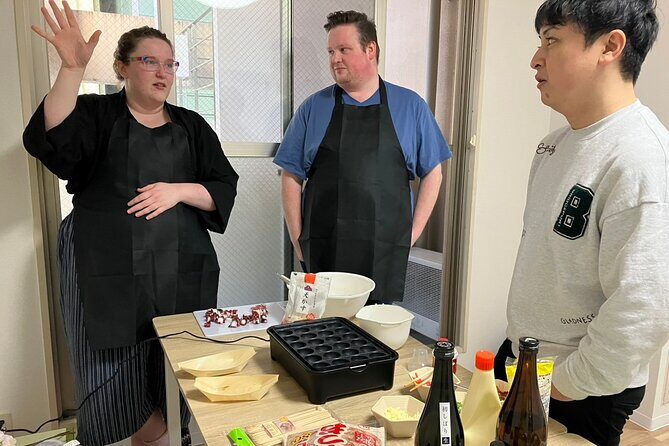
At $70 per person, you’re paying for more than food. You’re paying for guided instruction, hands-on practice, and all the ingredients and tools needed to make both dishes.
If you try to replicate this on your own in Osaka, the math can get tricky fast. Japanese ingredients can be hard to source quickly, and you can easily spend money on the wrong items before you find the right ones. The class reduces that risk by bundling the ingredients and showing you what to look for.
Then there’s the “learning time” factor. You get roughly 3 hours total, including orientation and a tasting period, with an instructor team that supports English and offers Japanese or Spanish instruction on request. That’s a lot of structured time at a price that’s reasonable for central Osaka activities—especially because you’re not just watching a demo.
Add the drinks during tasting (sake, beer, soft drinks) and the overall value improves for adults. Even if you don’t drink alcohol, the tasting portion is still included, and it’s part of why the class feels like a full experience, not a quick snack workshop.
Logistics that matter: timing, weather, and how to dress
This class runs about 3 hours and uses a mobile ticket. That’s helpful, because you can move through Osaka quickly without having to print anything.
One operational note: the experience requires good weather. If weather is poor and the class is canceled, you’ll be offered another date or a full refund. Since this is a cooking lesson in a kitchen, weather usually affects travel timing or safety, so just check the forecast and aim to arrive with a little buffer time.
For what to wear, go practical. You’ll be at a cooking station and handling batter and toppings. Wear something comfortable, easy to move in, and follow the instructor’s guidance about gloves and aprons. If you’ve got long hair, tie it back so you don’t end up fighting strands over a hot griddle.
Should you book this Osaka cooking class?
Yes—if you want a hands-on evening that teaches you real technique, this is a strong choice. I like how the class balances structure and fun: a quick orientation, real cooking time, and a tasting that lets you enjoy your own results with sake and beer (for adults) or soft drinks.
Book it especially if your travel style is “learn a skill, then reuse it.” The written recipes and ingredient packaging tips are exactly what make the experience useful after you leave Osaka. It’s also a good fit if you like small groups and don’t want to spend your evening waiting for a turn at the station.
Consider a different option if you hate cooking stations, or if your main goal is scenery and walking around. This class is about making food. If you’re comfortable with that, you’ll leave with both full bellies and a plan to cook okonomiyaki and takoyaki again.
FAQ
What dishes will I make in this Osaka cooking class?
You’ll make okonomiyaki (Japanese savory pancakes) and takoyaki (Japanese savory dough balls with octopus).
How long is the class?
The total duration is about 3 hours.
What’s included in the price?
The price includes all cooking ingredients and tools, aprons and disposable gloves, English speaking instruction (Japanese/Spanish on request), and a tasting with sake, beer, and soft drinks.
Where does the class meet?
It meets at 南船場コレット9044-chōme-3-1 Bakurōmachi, Chuo Ward, Osaka, 541-0059, Japan, and ends back at the meeting point.
How big is the group?
The class has a maximum of 8 travelers.
Are alcoholic drinks included for everyone?
Alcoholic drinks are included for travelers 20 years old and above. Guests under 20 will be served non-alcoholic drinks.
Can the class accommodate vegetarian diets or food allergies?
Vegetarian or food allergy options may be available, but you need to contact them after booking.