REVIEW · OSAKA
Osaka Traditional Performing Arts Heritage Night
Book on GetYourGuide →Operated by Yamamoto Noh Theater · Bookable on GetYourGuide
Osaka’s traditions play right in front of you. I like the variety—you get a real mix of Noh drama, Kyogen comedy, Bunraku puppets, Rakugo storytelling, and several Osaka-linked performance forms in one sitting. I also love how easy it is to follow, with multilingual explanations, subtitles, and printed materials. One drawback: you can’t record video or take photos inside.
This is hosted at Yamamoto Noh Theater, and it runs about 2 hours, so it’s a good culture stop when your day is already packed. Keep your expectations realistic: it’s a performance night, not a long workshop, and some moments involve audience participation.
In This Review
- Key things I’d watch for
- A 2-hour sampler of Osaka’s performing arts, not a museum lecture
- The lineup: Noh, Kyogen, Bunraku, Rakugo, and the Osaka-flavored extras
- Noh: slow intensity and meaning in the smallest gestures
- Kyogen: comedy that teaches you timing
- Bunraku: puppets, voice, and storytelling teamwork
- Rakugo: one storyteller, big character energy
- Rokyoku and Kodan: voice-driven performance
- Kamigata Mai, Gagaku, Onna Doraku, and Chikuzen Biwa: dance, court sound, and music
- The hands-on Noh moment: what it means, and how to be ready
- English support that actually helps you follow the show
- No photos, no video: the tradeoff for a focused theater
- Price and value: $32 for a full night of genres
- Practical details that affect your evening
- It runs 2 hours, so plan your timing
- Wheelchair accessible
- Age fit
- Should you book this Osaka traditional arts night?
- FAQ
- What performances are included?
- How long is the experience?
- Is English available?
- Can I record video or take photos inside?
- Is it suitable for young children?
- Is the venue wheelchair accessible?
Key things I’d watch for
- A single 2-hour program that samples Noh, Kyogen, Bunraku, Rakugo, and more
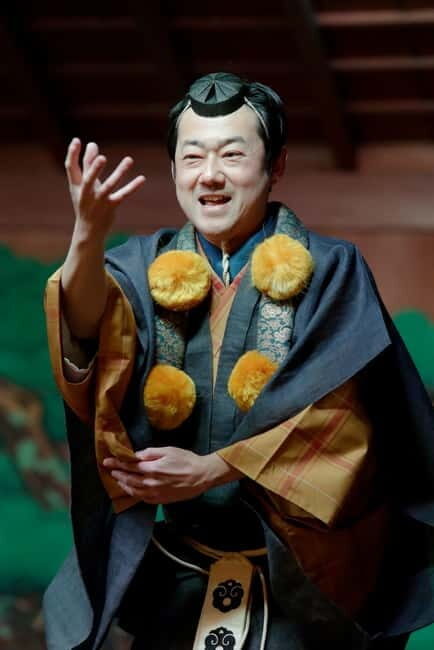
- Hands-on participation where audience members may try a Noh-related experience
- English support via multilingual explanations, subtitles, and materials
- Short, varied segments that help beginners stay oriented
- Strict no-photo and no-video rules inside the theater
A 2-hour sampler of Osaka’s performing arts, not a museum lecture
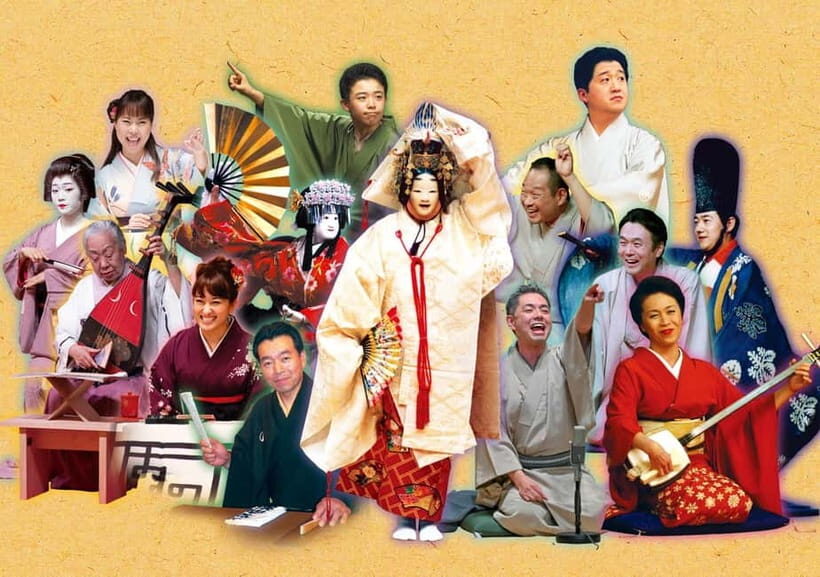
Think of this night as a live crash course in traditional Japanese performance—tight enough for a busy Osaka evening, but wide enough to show you how many different styles exist. Instead of focusing on only one art form, the show strings together a sequence of performances that each use different skills: masked acting, comic timing, puppetry, voice and rhythm, and story delivery.
For me, the biggest value is that you don’t need prior knowledge. The format and the support help you follow what’s happening and why it matters. You’ll still have moments where you can’t fully decode every cultural reference, but that’s normal. The goal is understanding the basics while you enjoy the performance itself.
And yes, it’s clearly designed for people who want to learn by watching closely, not by reading a guidebook for hours.
You can also read our reviews of more historical tours in Osaka

The lineup: Noh, Kyogen, Bunraku, Rakugo, and the Osaka-flavored extras
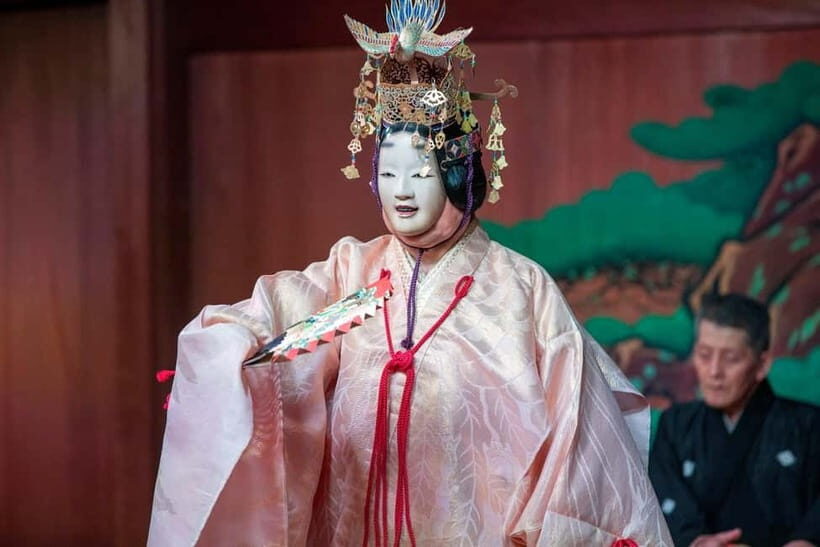
The program is an omnibus show, meaning it’s built from multiple traditional genres. Expect to see performances that include:
- Noh
- Kyogen
- Bunraku
- Rakugo
- Rokyoku
- Kodan
- Kamigata Mai
- Gagaku
- Onna Doraku
- Chikuzen Biwa
Here’s how to think about each one, so you know what to look for.
Noh: slow intensity and meaning in the smallest gestures
Noh is often the first style people feel intimidated by—slow, stylized, and sometimes mysterious. That’s also why it’s a strong start point for beginners: once you understand that Noh uses controlled movement and layered symbolism, it becomes easier to appreciate.
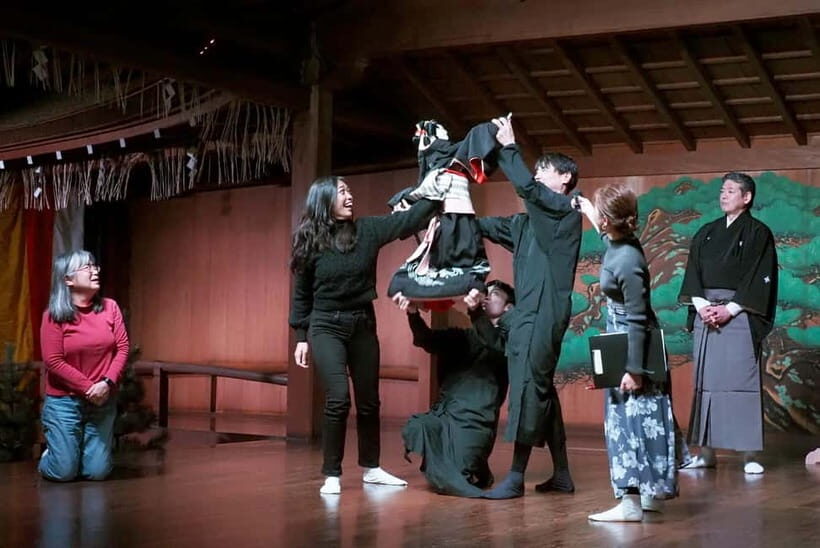
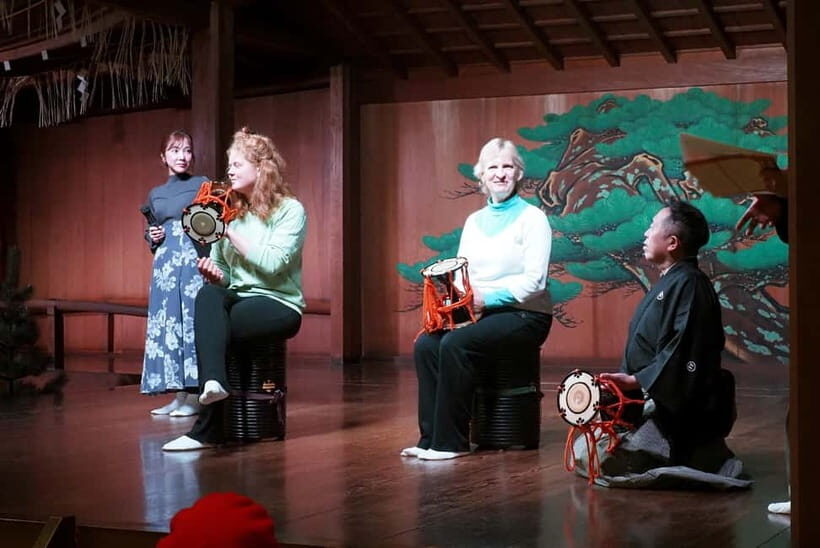
In this show, you’ll also get a hands-on angle. A couple of audience members are invited to go up to the Noh stage to experience Osaka traditional performing arts. If you’re drawn to Noh, this is where you may get the closest connection to the craft: you’ll see how stage posture and movement matter, not just the final dramatic effect.
Kyogen: comedy that teaches you timing
Kyogen is Noh’s comedic counterpart. It often feels more straightforward—less poetic, more human, and very focused on rhythm and punchlines. If Noh can make you feel like you’re watching art that requires translation, Kyogen acts like a palate cleanser.
Watch for how the actors use facial expression and quick changes in stance. Even if you don’t catch every nuance, you can usually feel the mechanics of the joke. It’s a smart pairing inside the same night because it keeps your brain switched on.
Bunraku: puppets, voice, and storytelling teamwork
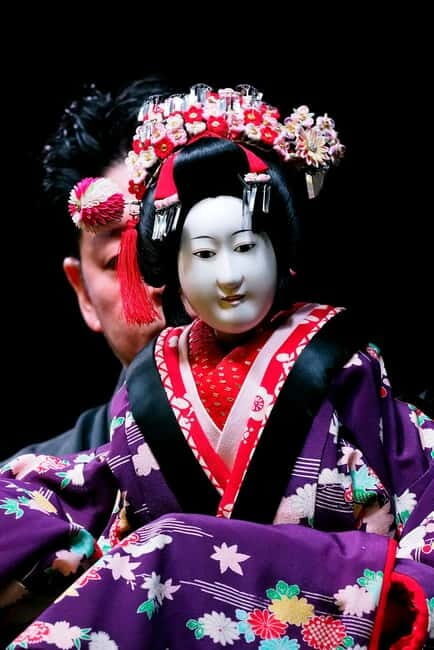
Bunraku is puppet theater, but don’t expect it to feel like a simple puppet show. It’s performance craft where puppeteers coordinate movement while a narrator supplies voice and dramatic pacing. When it’s done well, the puppet feels alive, almost more than a human actor would.
In a mixed-genre show like this, Bunraku is especially valuable because it shows how traditional Japanese performance isn’t only about acting. It’s also about vocal control, breath, and timing.
You can also read our reviews of more evening experiences in Osaka



Rakugo: one storyteller, big character energy
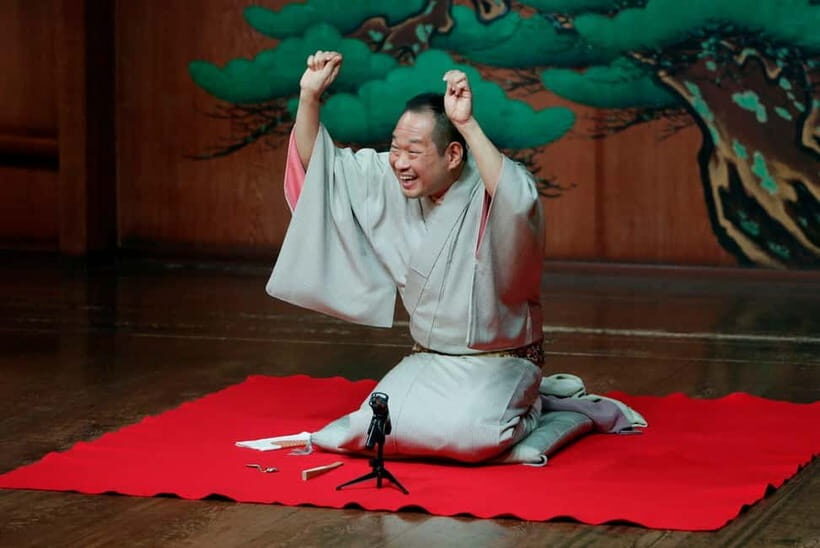
Rakugo is dramatic storytelling delivered by a single performer. You’ll watch one person spin a whole scene with voice shifts and body language, often with quick physical setups for different characters.
This matters for you because Rakugo is the easiest style to “get” quickly. You can treat it like live audio-visual narration: listen to the voice rhythm, follow the storyline, and let the physical acting carry the humor even if some lines are culturally specific.
Rokyoku and Kodan: voice-driven performance
Rokyoku and Kodan are voice and narrative styles, which means the performance leans heavily on vocal delivery, cadence, and storytelling structure. These segments can be short or extended depending on the night, but either way, they’re a reminder that traditional performance isn’t always about costumes or props—it’s also about how sound can paint a scene.
If you like theater, you’ll probably notice how closely the performer tracks the audience’s attention. If you’re visiting Japan for the first time, these pieces can give you a new respect for voice training.
Kamigata Mai, Gagaku, Onna Doraku, and Chikuzen Biwa: dance, court sound, and music
The remaining genres broaden the picture. You might see:
- Kamigata Mai: dance with style and precision
- Gagaku: classical court music atmosphere
- Onna Doraku: a performance category centered on female characters
- Chikuzen Biwa: music featuring the biwa (a traditional lute)
I like this mix because it prevents the show from feeling like one lane. If you came for “Japanese theater,” you’ll still get that—but you’ll also leave understanding how performance in Japan can be music-forward, dance-forward, and story-forward.
The hands-on Noh moment: what it means, and how to be ready
One of the most praised parts of this experience is the chance to do something, not just watch. A couple of audience members wearing white socks may be invited to go up to the Noh stage for an Osaka traditional performing arts experience.
That does two smart things for you:
- It gives you a physical reference point for the performance style—posture, movement restraint, and stage awareness.
- It turns the night from passive viewing into active learning, which helps when you’re a beginner or traveling with kids.
Practical tip: wear shoes you can manage quickly, and bring socks that look normal (if you’re hoping to participate). Also, don’t stress about being selected. Even if you don’t go on stage, the show explains enough that you can still connect the dots.
English support that actually helps you follow the show
This isn’t a silent spectacle where you hope your brain guesses the story. The experience includes multilingual explanations, subtitles, and materials. English support is available along with Japanese.
What you should notice is the timing: explanations happen before segments and continue through the evening via subtitles and handouts. That’s what makes the show work for non-specialists. It’s also why people often leave feeling educated without feeling lectured.
If you’re traveling with teenagers, or even with adults who usually tune out “culture nights,” this kind of built-in context is a big deal. It keeps you oriented during the slower, more stylized parts like Noh and Gagaku.
No photos, no video: the tradeoff for a focused theater
This is one of those policies that can annoy you—until you understand why it exists. Video recording and photography inside aren’t allowed. That means you won’t be able to capture performances for later.
The upside is focus. Traditional theater often depends on atmosphere, quiet attention, and the performers’ rhythm. Without screens popping up, you can settle in and actually watch.
If you’re the type who documents everything, plan to rely on memory instead. Take notes in your own way, but keep your phone away once the show starts.
Price and value: $32 for a full night of genres
At $32 per person for about 2 hours, this can feel like a fair deal if you want variety. You’re not paying for a single performance style. You’re paying for an organized sequence of multiple traditional arts, plus hands-on participation, plus English/Japanese language support and materials.
If you were to try to recreate this on your own—finding separate shows, arranging tickets, and figuring out what each one is—you’d likely spend more time and more money. Here, someone builds the learning arc for you. You still need to pay attention, but the show meets you halfway.
That said, if you only care about one specific art form—say you only want Bunraku puppets—then you might prefer a dedicated performance ticket. This one is best for people who enjoy sampling and comparing styles.
Practical details that affect your evening
A few things matter before you go, mostly because they influence your comfort and expectations.
It runs 2 hours, so plan your timing
Check starting times, but the main idea is simple: you’re committing to a short evening block. This is good for pairing with dinner nearby, or fitting into a day when you want one “big” cultural activity without stretching your schedule.
Wheelchair accessible
The experience is listed as wheelchair accessible, which helps if mobility is a concern.
Age fit
Children under 7 aren’t considered suitable. If you’re traveling with younger kids, I’d treat this as an adult-focused performance night.
Should you book this Osaka traditional arts night?
I’d book it if you want an efficient, beginner-friendly introduction to Japanese performance forms, especially if you like the idea of seeing Noh, Kyogen, Bunraku, and Rakugo in one continuous evening. The combination of multilingual explanations, subtitles, and hands-on participation means you’re not just watching—you’re learning along the way.
I’d skip it if you’re set on collecting photos and videos, or if you want only one genre. And if you’re bringing very young children, the age guidance is clear enough to plan another option.
If you want your Osaka trip to include something more authentic than a quick show-and-tell stop, this is a solid bet: you get a real sampler night, built for understanding, with enough variety to keep you paying attention from the first segment to the last.
FAQ
What performances are included?
The show includes performances of Noh, Kyogen, Bunraku, Rakugo, Rokyoku, Kodan, Kamigata Mai, Gagaku, Onna Doraku, and Chikuzen Biwa.
How long is the experience?
It lasts 2 hours.
Is English available?
Yes. The host or greeter speaks English and Japanese, and the show provides multilingual explanations, subtitles, and materials.
Can I record video or take photos inside?
No. Video recording and photography inside are not allowed.
Is it suitable for young children?
It is not suitable for children under 7 years.
Is the venue wheelchair accessible?
Yes, wheelchair access is listed as available.