REVIEW · OSAKA
Osaka: Dark Side of Osaka Night Walking Tour
Book on GetYourGuide →Operated by Localized Walking & Food Tours · Bookable on GetYourGuide
Osaka at night has a second face. I love how this tour uses real city streets to show Osaka’s darker social side while still keeping the mood informative and human. I also like the way the route mixes the iconic Shinsekai nostalgia with areas most guidebooks skip, and the guide ties it together with clear history and current-day context. One consideration: this is not a feel-good stroll, and some scenes and topics can be confronting.
You should book this only if you’re comfortable with the subjects that come with Nishinari and Tobita Shinchi. It’s also a walking tour in uneven areas, so it’s not suitable for wheelchair users, and it’s not for kids under 18. If you have a thinner skin or want only classic sightseeing, you may prefer a different Osaka night option.
In This Review
- Key things I’d bet you’ll care about
- Entering Osaka’s Night With a Different Lens
- Where You Meet: MEGA Donijote’s Giant Penguin
- Shinsekai: The New World That Was Built Like a Western Theme Park
- Nishinari After Dark: Working-Class Roots and a Changing Present
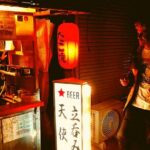
- Jyanjyan Yokocho Near Tsūtenkaku: Nostalgia in a Narrow Alley
- Tsūtenkaku: The Landmark That Anchors the Night
- Tobita Shinchi: Osaka’s Largest Red-Light District, Explained With Care
- Pace, Group Feel, and Why Your Questions Matter
- Price and Value: $25 for Two Hours on Foot
- Who This Osaka Night Walk Is Best For
- Should You Book This Osaka Dark Side Tour?
- FAQ
- How long is the Osaka Dark Side of Osaka Night Walking Tour?
- Where do I meet the guide?
- What’s included in the price?
- Are food and drinks included?
- What areas and landmarks will we see?
- Is this tour suitable for children?
- Is it wheelchair accessible?
- Is the tour available in English?
- Are there any rules about smoking or alcohol?
- Can I cancel and get a refund?
Key things I’d bet you’ll care about
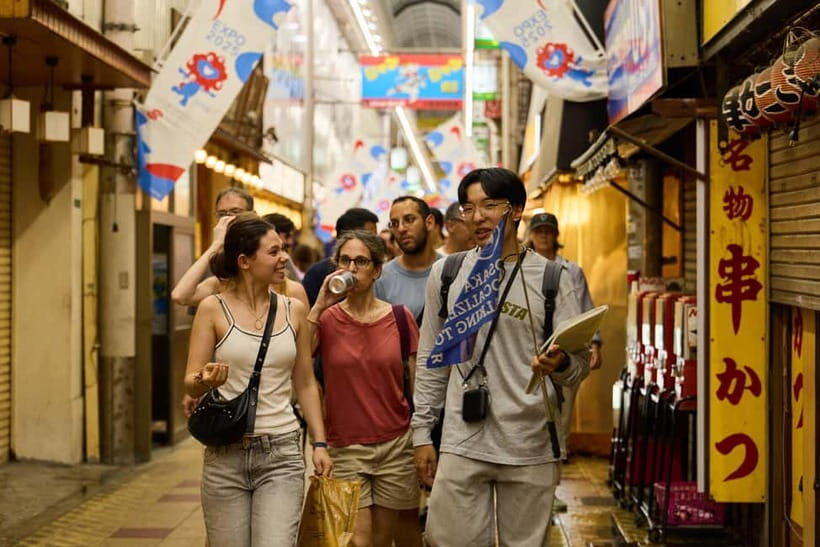
- Small, English-led street time focused on social context, not just photos
- Shinsekai’s Western-influenced roots explained in plain language
- Jyanjyan Yokocho by Tsūtenkaku for mid-century Osaka atmosphere
- Tobita Shinchi’s red-light district handled with clear, diplomatic framing
- Guides like Jay, Rico, and Matt who keep questions flowing (and adapt when weather turns)
Entering Osaka’s Night With a Different Lens
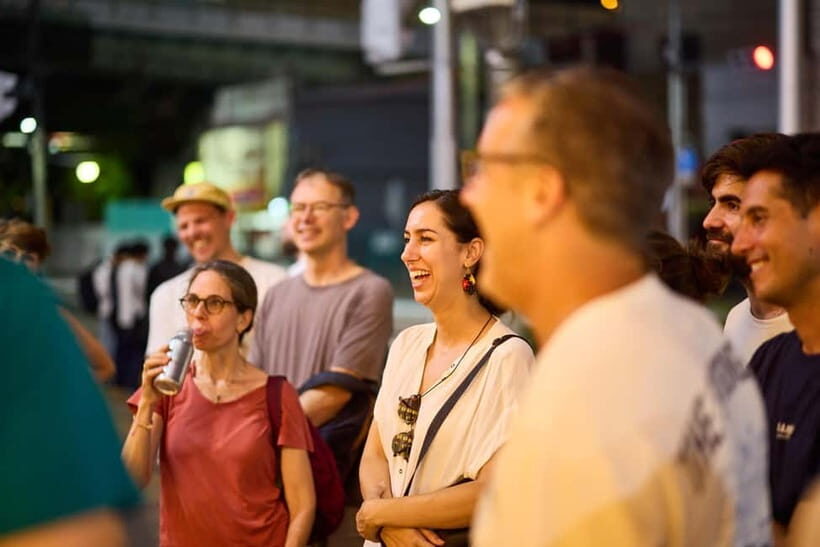
Osaka is famous for food, jokes, and neon. But at night, you also see the part of the city that runs on work, rules, and very specific local etiquette. This tour is built for that second layer. You’re walking through districts that many people pass quickly in the daylight—or miss entirely—while your guide connects the dots between past and present.
I like that the approach stays practical. You’re not just told what something is; you learn how to read it. Why this area formed, why it looks the way it does, and what it means in daily life. That matters because Osaka’s “night” isn’t only entertainment. It’s also labor history, social change, and how neighborhoods survive.
One more note before you go: the tour can include sensitive topics. Multiple guide experiences (with names like Jay, Rico, and Matt) are praised for being respectful and diplomatic. Still, you should come prepared to see a side of Japan that’s more complicated than postcard Japan.
You can also read our reviews of more walking tours in Osaka

Where You Meet: MEGA Donijote’s Giant Penguin
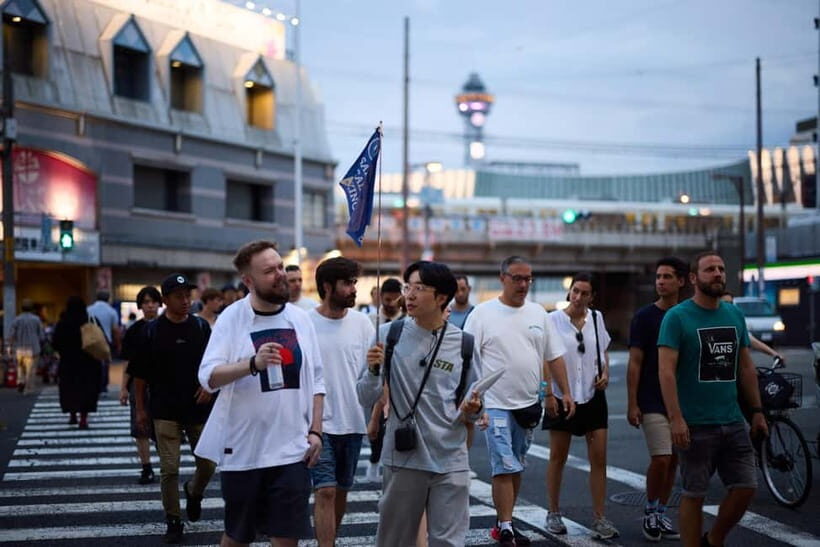
You’ll start at MEGA Don Quijote Shinsekai, meeting your guide at the Under the Giant Penguin spot. The guide holds a sign that says GetYourGuide, so you shouldn’t have trouble finding the group.
This is a good setup for a night walk. Don Quijote is easy to locate, open late, and full of helpful surroundings if you need a quick bathroom break or last-minute supplies. And because the tour starts right in Shinsekai, you’re into the atmosphere fast instead of spending the first minutes figuring out where you are.
Practical tip: wear shoes you can walk in for two hours on night sidewalks. This is not the time for fashion sneakers with thin soles.
Shinsekai: The New World That Was Built Like a Western Theme Park
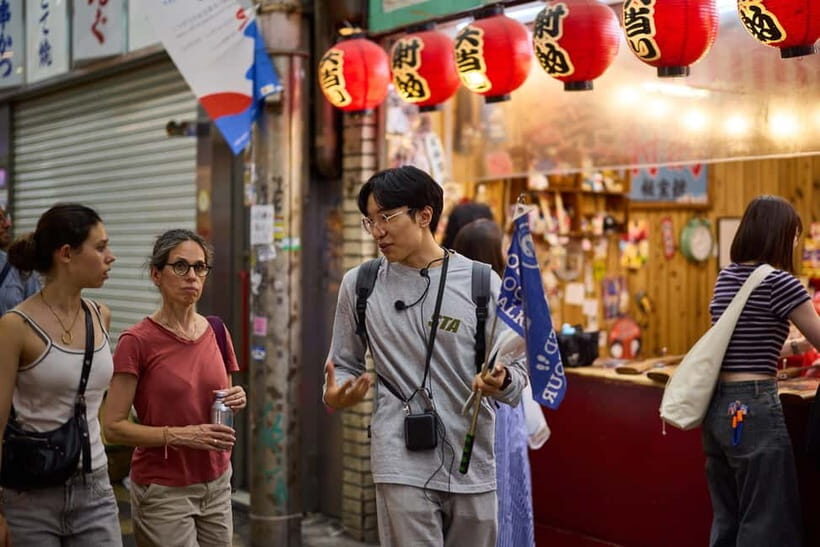
Your first big district is Shinsekai, which literally means New World. The area was laid out in 1912 as an entertainment district inspired by Western ideas—so it wasn’t just “Japanese fun,” it was a planned mix of modern spectacle for its time.
Here’s what I like about how this gets explained on the street: you can actually see the concept in the architecture and the street feel. Your guide points out how the area’s initial grandeur has faded, but the quirky character remains. That’s key. Shinsekai today isn’t the glossy dream it once was, and the tour doesn’t pretend otherwise.
Expect a mix of photo-worthy sights and smaller, overlooked details. It’s the kind of neighborhood where your eye learns to slow down. You’ll also get a sense of why the district keeps drawing people even after decades of change.
If you love places that feel lived-in—not staged—this is a strong start. If you want only shiny modern Osaka, you might find Shinsekai more “gritty charm” than “luxury glow.”
Nishinari After Dark: Working-Class Roots and a Changing Present
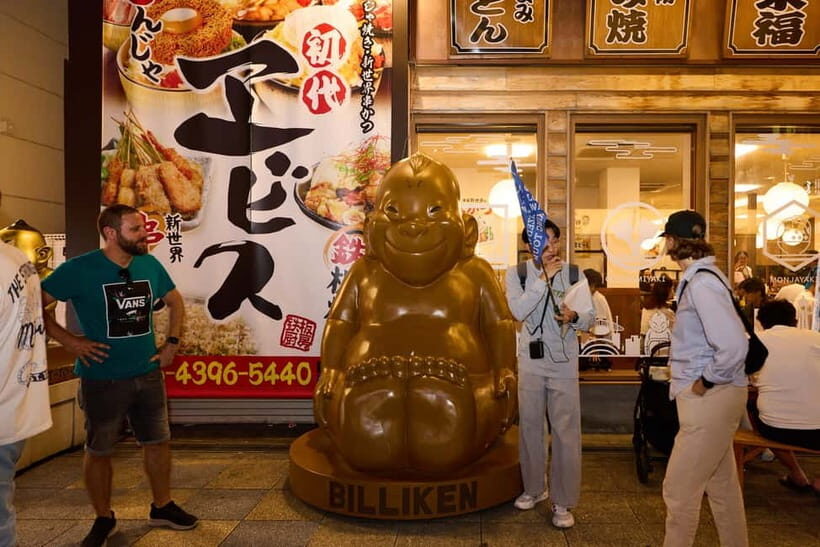
From Shinsekai you move into Nishinari, in southern Osaka. This district has a reputation for a raw, real feel. Once, it was a hub for day laborers and the working-class community. Over recent years, that foundation has shifted, and the area has drawn budget travelers and urban explorers curious about its gritty past and evolving present.
This is where the tour’s “dark side” theme matters most. Your guide frames what you’re seeing so it doesn’t feel like sensational sightseeing. Instead, you learn the human context: how neighborhoods are formed by work, money, and social policy, then slowly transform when the world around them changes.
I also appreciate the pacing here. The guide keeps you moving, but you’re not rushed past important details. It’s the kind of stop where you can ask questions and get straight answers, including the more uncomfortable parts. A couple of reviews singled out guides for handling sensitive topics in a diplomatic way—exactly what you want when you’re walking through lived environments.
Jyanjyan Yokocho Near Tsūtenkaku: Nostalgia in a Narrow Alley

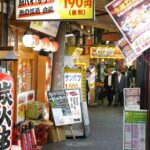
Next comes Jyanjyan Yokocho, a nostalgic shopping and dining street in Shinsekai, close to Tsūtenkaku Tower. If you like atmospheric alleys, this section is a treat.
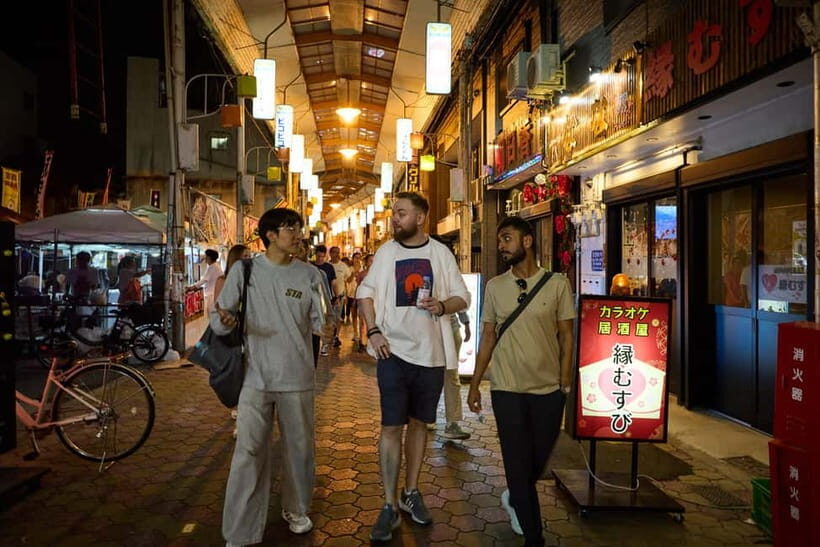
Jyanjyan Yokocho is known for a retro vibe that pulls you back toward mid-20th century Osaka. It’s narrow, so the street feels intimate. You’ll pass old-school eateries, bars, and shops—small places that often survive because locals keep showing up.
What I like here is the “texture.” You’re not only looking at buildings—you’re watching how a street works at night: where people pause, where they linger, and how the area’s energy changes block by block.
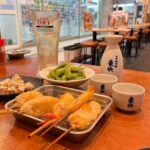
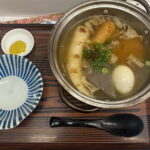
Even though food and drinks aren’t included on the tour, this is the moment when you’ll probably want to grab something afterward. The tour ends at Tsūtenkaku later, but you can use this stretch to plan your next bite.
You can also read our reviews of more evening experiences in Osaka



Tsūtenkaku: The Landmark That Anchors the Night
The tour finishes at Tsūtenkaku. This matters more than you’d think. In a night walk like this, a strong visual anchor helps you connect all the neighborhoods you just covered.
Tsūtenkaku is an iconic Osaka marker, and the guide uses it as a natural “wrap” point. You can look around and feel the whole area’s rhythm again. It’s also a practical finish: a landmark makes it easier to meet up with friends, catch a train, or continue exploring on your own.
My advice: treat the finish as a planning checkpoint. If you want dessert, drinks, or a last snack, pick it from nearby streets while you still remember what the guide pointed out.
Tobita Shinchi: Osaka’s Largest Red-Light District, Explained With Care
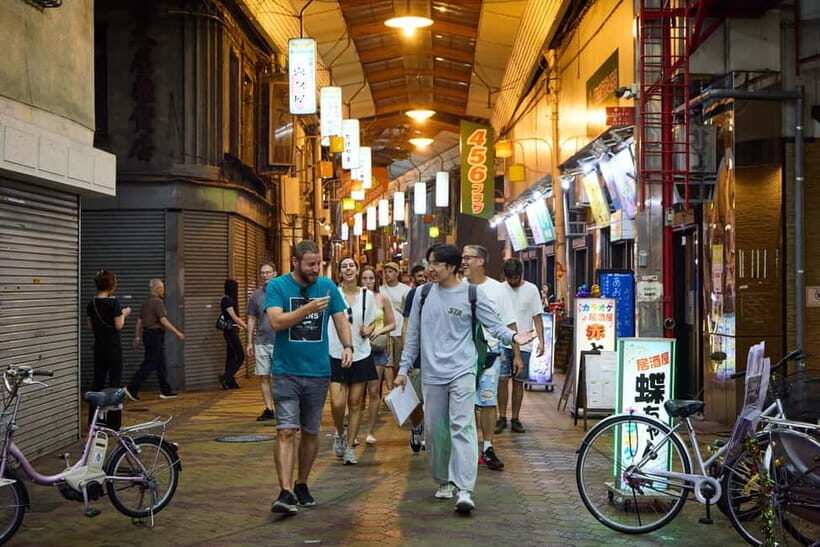
Finally, you reach Tobita Shinchi, Osaka’s best-known and largest red-light district. The tour doesn’t frame this as a dare or a scandal tour. It approaches it as an urban culture topic that’s historically tied to the city.
You’ll learn about its long history and about the unique architectural style and tightly regulated environment that shaped the district. The message is important: this area stays under a specific system of rules and discretion, not just “because nightlife.”
This is the section most likely to make you pause. A couple of reviews warn you not to bring young kids or if you have a thinner skin. That’s fair. Even if you’ve read about red-light districts before, seeing how the neighborhood functions in real life can feel intense.
What helps is the guide tone. Reviews praise guides for being respectful and careful, even when the subject matter is sensitive. You should still keep expectations realistic. This isn’t designed to shock you for entertainment. It’s designed to explain how people, businesses, and laws interact in a place that many outsiders only see through stereotypes.
Pace, Group Feel, and Why Your Questions Matter
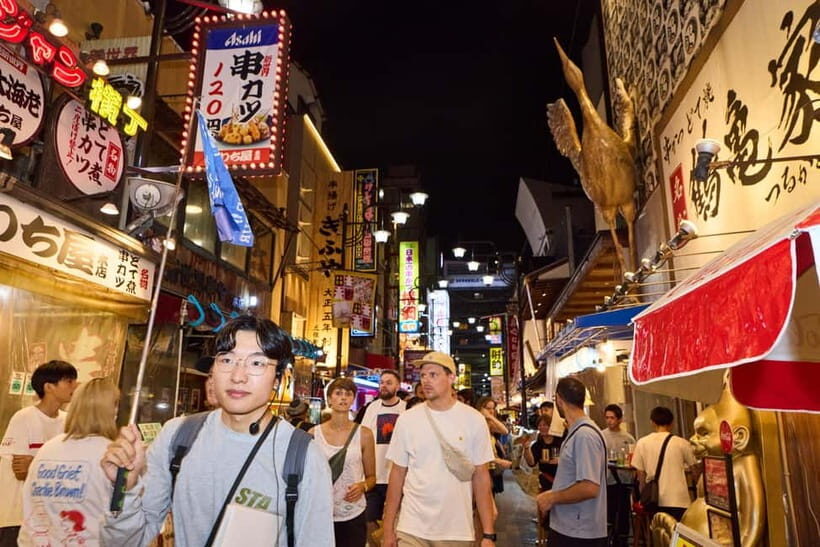
This is a 2-hour walking tour. That’s long enough to learn the story, but short enough that you won’t feel stuck for an entire evening.
I also like that several reviews mention small-group energy—one guest noted a group of six—which tends to make the experience more conversational. When the guide can tailor explanations and answer follow-ups, you leave with understanding instead of just names and locations.
Guides such as Jay, Rico, and Matt were repeatedly praised for history and context, and for being willing to answer questions. One review even mentioned a practical, street-level tip: a tori painted on a wall can mean please do not pee here. That’s the kind of detail you’d never get from a guidebook, and it helps you act appropriately while you’re walking through residential-feeling streets.
If you’re the type who likes to ask why something is designed the way it is, this tour rewards you. If you don’t speak up, you’ll still get the core route and explanations—but you’ll enjoy it more if you let curiosity steer.
Price and Value: $25 for Two Hours on Foot
At $25 per person for a 2-hour live guided walk, this is priced like a budget-friendly specialty tour. For the cost, you get more than a route—you get interpretation: how Shinsekai’s Western-style planning connects to later urban realities, how Nishinari’s working-class past shapes the atmosphere, and how Tobita Shinchi functions under rules.
What’s not included: food and drinks. That can be a good thing. You can choose what you want based on your comfort level and dietary needs, and you’re not paying a bundle for meals that might not fit your preferences.
You should also mentally treat it as “pay for the guide’s framing.” If you love walking and history-as-explanation, you’ll feel it’s good value. If you only want photos and you can manage the route alone, you might decide you don’t need a guide. But for most people—especially those who want context for sensitive areas—a guide is the point.
Who This Osaka Night Walk Is Best For
This tour fits you if:
- You like night neighborhoods with character, not only main-street highlights
- You want a social history angle on Osaka through real streets and districts
- You’re okay with talking about topics people often avoid
It may not fit you if:
- You want only cheerful, family-friendly sightseeing
- You’re uncomfortable with red-light district context
- You need wheelchair accessibility (it’s not suitable)
And because it’s English-guided and a live walking format, it also suits people who enjoy asking questions and listening closely. If your English is solid, you’ll get more out of it; if it’s not, you might still follow the basics, but you may miss faster spoken explanations.
Should You Book This Osaka Dark Side Tour?
Book it if you’re the type who wants Osaka to feel real and slightly uncomfortable in a thoughtful way. For the money, the guide-led context and the combination of Shinsekai, Nishinari, Jyanjyan Yokocho, and Tobita Shinchi make it hard to recreate on your own without missing the meaning behind what you’re seeing.
Skip it if you’re chasing only classic tourist sights, you want a kid-friendly night out, or you’d rather avoid sensitive urban topics entirely. This is honest Osaka at night—and that honesty is the whole value.
If you do book, go in with comfortable shoes, a respectful attitude, and a willingness to learn. You’ll come away with a better read on how Osaka works after dark.
FAQ
How long is the Osaka Dark Side of Osaka Night Walking Tour?
The tour lasts 2 hours.
Where do I meet the guide?
Meet the guide at Under the Giant Penguin at MEGA Don Quijote Shinsekai. The guide is holding a sign that says GetYourGuide.
What’s included in the price?
You get a live English-speaking tour guide and the guided walking tour of Osaka’s historic getto area and red-light district.
Are food and drinks included?
No. Food and drinks are not included.
What areas and landmarks will we see?
You’ll explore Shinsekai, Nishinari, Jyanjyan Yokocho near Tsūtenkaku, and Tobita Shinchi, with the tour finishing at Tsūtenkaku.
Is this tour suitable for children?
No. It’s not suitable for children under 18.
Is it wheelchair accessible?
No. It’s not suitable for wheelchair users.
Is the tour available in English?
Yes, the live tour guide speaks English.
Are there any rules about smoking or alcohol?
Smoking isn’t allowed. Alcoholic drinks in the vehicle are not allowed.
Can I cancel and get a refund?
Yes. Free cancellation is available up to 24 hours in advance for a full refund.