REVIEW · OSAKA
Best of Kyoto and Nara Highlights Day Tour from Osaka (7~9 spots)
Book on Viator →Operated by TOURSTORY · Bookable on Viator
One day, two legends of Japan. I really like how this tour fits Kyoto and Nara into a 10-hour loop without making you map every transit step, and I also love the human touch from guides like Yuri, Min, and Soae Lee, who explain patiently and even help solo travelers with photos. One thing to consider: the schedule is tight, and some of the most famous halls charge extra entry, so you need a bit of cash ready and realistic expectations about wandering time.
You start at 8:00 AM at Tsurutontan Soemoncho, get your first big moment around 9:00 AM, and roll back by about 6:00 PM. Along the way you get both classic religious landmarks and food-and-stroll breaks, with a choice of two routes depending on the day you book. If you want a stress-free overview and don’t mind moving from highlight to highlight, it’s a solid value play.
In This Review
- Key highlights you’ll actually feel during the day
- Why this Osaka-to-Kyoto-and-Nara day tour makes sense
- Two route options, and which days you’ll take each
- Kyoto and Nara + Fushimi Inari (Mon, Wed, Fri)
- Kyoto and Nara + Arashiyama (Tue, Thu, Sat)
- Getting started at 8:00 AM: the simple logistics that save your energy
- Kasuga Grand Shrine and Nara Park: lanterns and deer on the same first leg
- Todai-ji and the Great Buddha: awe, with a dose of time reality
- The Wakakusayama viewpoint shortcut (and why it’s smart)
- Uji’s Byodoin and Omotesando: a break from the crowds (with matcha options)
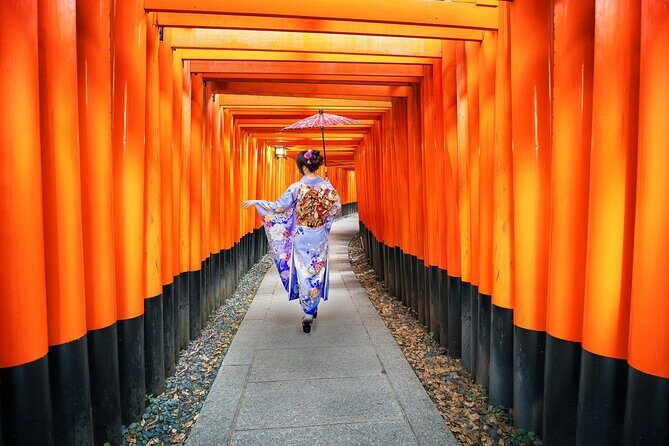
- Fushimi Inari Taisha: how to enjoy the torii gates without losing time
- Arashiyama bamboo, Nonomiya Shrine, and Togetsukyo Bridge: a calm pocket
- Nishiki Market shopping time, and the cherry blossom swap to Maruyama Park
- Kiyomizu-dera: UNESCO views, with a ticket decision
- Money and value: what $55.17 buys, and what you may pay extra
- Guide quality: why this tour tends to feel easy
- Who this tour is best for (and who should skip it)
- Should you book this Kyoto and Nara Highlights day tour?
- FAQ
- What time does the tour start and end?
- How long is the Kyoto and Nara day tour from Osaka?
- Which days do the Fushimi Inari and Arashiyama routes run?
- Are ticket fees included for Todai-ji, Byodoin, and Kiyomizu-dera?
- Does the guide speak English?
- Where do I meet the group?
- Is free cancellation available?
Key highlights you’ll actually feel during the day
- Two day-plan styles depending on the weekday: Fushimi Inari via Uji, or Arashiyama via the bamboo grove
- Patient guidance: guides like Yuri, Min, and Soae Lee are praised for slow, clear explanations
- Small group vibe: the tour caps at 49, and it can run even smaller in practice
- Free time at the right places: lantern shrine, deer park, bamboo forest, bridge photos, plus market browsing
- Classic photo stops: Kiyomizu-dera viewpoints and the torii tunnel at Fushimi Inari
- Optional tickets you control: choose whether to pay extra for Byodoin main hall and main halls at Todai-ji and Kiyomizu-dera
Why this Osaka-to-Kyoto-and-Nara day tour makes sense
If your Kyoto and Nara dreams came from a few photos you saved on your phone, this is the fastest way to turn those images into real moments. You’ll hit the must-sees: lanterns at shrines, the Great Buddha at Todai-ji, the torii gates at Fushimi Inari, and the big stage views at Kiyomizu-dera. The payoff is that you’re not spending your precious day solving routes.
I also like the pacing model: short visits to several big landmarks, then a couple of longer stretches where you can breathe, snack, and walk at your own speed. In a long day like this, that matters. You get just enough time to enjoy each place without feeling like you’re trapped for hours inside one ticket line.
The tradeoff is obvious: 10 hours means you won’t experience everything like a slow traveler. You can treat the tour like a highlight reel, then come back later for a deeper day if one area really hooks you.
You can also read our reviews of more tours and experiences in Osaka.


Two route options, and which days you’ll take each

This tour runs two different loops. Pick the weekday that matches what you want most.
Kyoto and Nara + Fushimi Inari (Mon, Wed, Fri)
This version leans toward Kyoto icons plus a stop in Uji:
- Kasuga Grand Shrine
- Nara Park
- Todai-ji
- Byodoin Temple and Byodoin Omotesando (Uji)
- Fushimi Inari Taisha
- Then Kiyomizu-dera
You’ll see the famous golden Phoenix Hall look at Byodoin from the outside/pond area, and you’ll get the iconic red torii gate path at Fushimi Inari.
Kyoto and Nara + Arashiyama (Tue, Thu, Sat)
This version swaps Fushimi Inari/Uji for Arashiyama:
- Kasuga Taisha
- Nara Park
- Todai-ji
- Wakakusayama viewpoint (a gentle hill for city views)
- Arashiyama Bamboo Forest, Nonomiya Shrine, Togetsukyo Bridge
- Nishiki Market (or Maruyama Park in cherry blossom season)
- Kiyomizu-dera
If you love outdoor Kyoto walking scenes, bamboo, and river-bridge photos, this is the better match.
Getting started at 8:00 AM: the simple logistics that save your energy
The day starts at 8:00 AM at Tsurutontan Soemoncho. If you’re staying in Osaka, that’s a big deal because you’re not doing a complicated morning scramble. The tour is listed as taking about 10 hours total and returning to the same meeting point around 6:00 PM.
You also get a mobile ticket, which helps on a day when you’ll be checking in quickly and hopping between stops. Plan for a full day out of your routine. Wear shoes that can handle lots of walking and crowded lanes, especially around Nishiki Market and Kiyomizu-dera.





Kasuga Grand Shrine and Nara Park: lanterns and deer on the same first leg
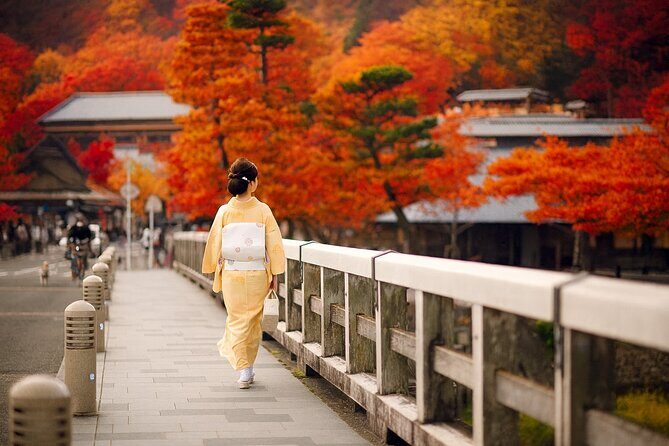
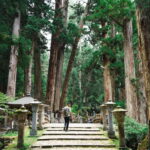
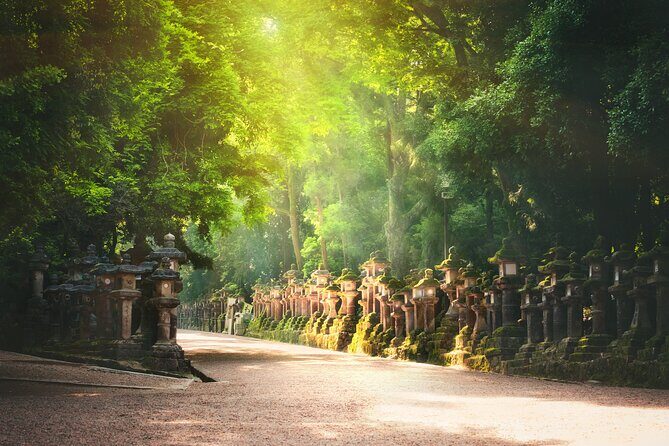
Your first stop is Kasuga Grand Shrine, known for being covered with hundreds of stone and bronze lanterns. It’s a free admission stop on the tour and you get about 30 minutes. That time is short, but it’s enough to walk the main shrine areas and catch the lantern details up close.
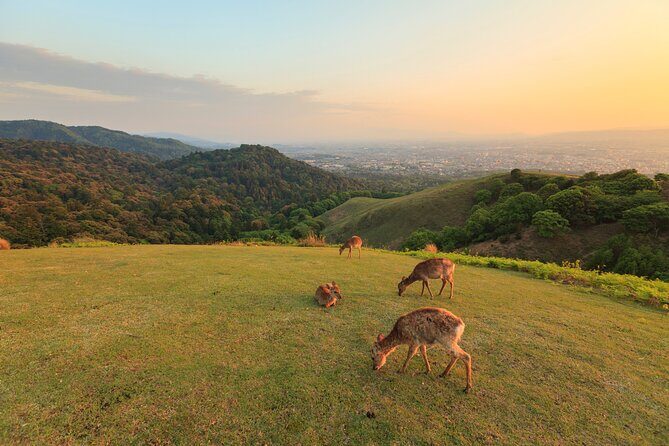
Then comes Nara Park (also about 30 minutes, free). This is where the trip turns from architectural to alive. The park is famous for its freely roaming deer, so you’ll see them right in the walking paths. I find this part works best when you treat it like a photo walk with rules: stay aware, keep a bit of distance, and don’t get stuck staring at one deer while the group moves on.
If you’re sensitive to crowds, know that deer + sightseeing tends to draw people fast. Still, it’s one of those locations that feels unmistakably Nara within minutes.
Todai-ji and the Great Buddha: awe, with a dose of time reality
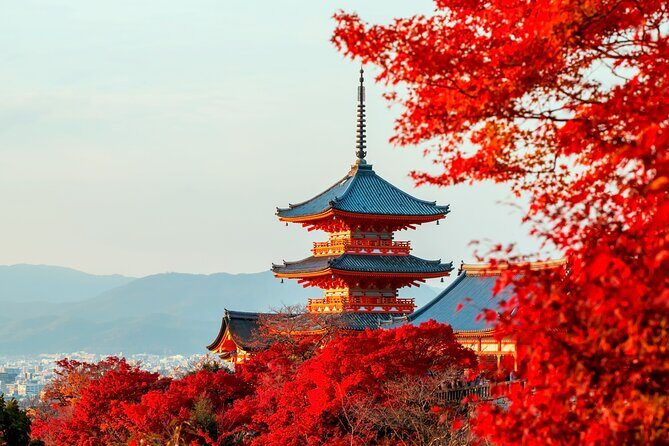
Todai-ji is next and it’s one of Japan’s big-ticket religious sights for a reason. You’ll spend around 30 minutes there, and the tour notes that admission to the Great Buddha hall is not included in the base price.
Optional main hall admission is listed at 800 yen for Todai-ji. In practice, that means you’ll have to decide on the spot: pay for entry if you want to go inside the massive wooden hall and see the Great Buddha properly, or stay outside if you want to conserve your budget and energy for the rest of the day.
For me, this is the stop where you should match your expectations to the time. Thirty minutes sounds short until you remember you’re doing a one-day whirlwind. If seeing the inside is a priority, plan to buy the ticket and go straight in rather than lingering.
The Wakakusayama viewpoint shortcut (and why it’s smart)
In the Arashiyama route, you also get a short hill stop behind the Nara sights: Wakakusayama viewpoint. It’s described as a gentle grassy hill with panoramic views over Nara City and major landmarks, including the great roof of Todai-ji.
This is a clever buffer in the day. You get a quick stretch of open air and a view that you can’t replicate from inside temples. You’re also not spending long enough hiking to get drained before Arashiyama, which would be a shame.
Uji’s Byodoin and Omotesando: a break from the crowds (with matcha options)
Only the Fushimi Inari route includes Uji. You’ll stop at Byodoin Temple for about 40 minutes, plus Byodoin Omotesando for around 50 minutes.
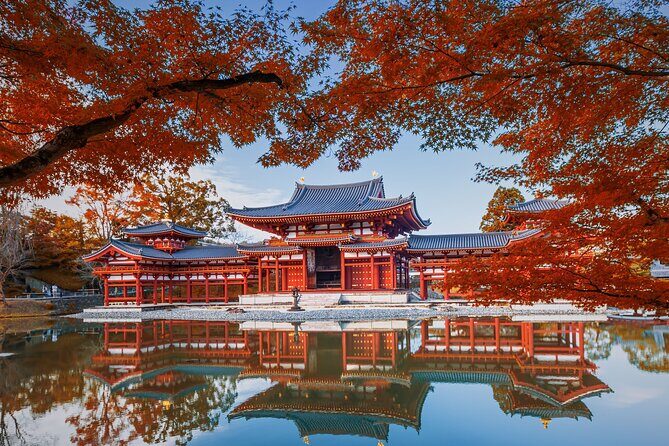
Byodoin is famous for the Phoenix Hall image people associate with the 10-yen coin. The tour notes optional entry for the main hall at 700 yen, and it’s a great place to choose intentionally. If you’re the type who wants the full moment, pay and go inside. If you prefer to budget, the outside/pond views can still do a lot for your photos.
Then comes Byodoin Omotesando, a traditional street where you can slow down for lunch on your own. This is one of the few meal windows you control. You’ll have time to look for Uji matcha treats and other local snacks without the pressure of a pre-set group menu.
Fushimi Inari Taisha: how to enjoy the torii gates without losing time
Fushimi Inari Taisha is the star of the Fushimi Inari route. You’ll spend about 50 minutes here and the admission is listed as free for the torii walk.
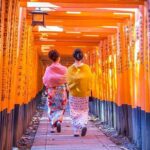
The famous vermillion torii gates climb Mount Inari. The sacred atmosphere is part of the point, but here’s how I’d think about your experience: treat it like a walking loop with decisions. If you try to rush to the highest spots, you’ll end up tired and cranky. If you enjoy the lower-mid sections, you can still get that torii tunnel feeling and make the rest of the day smoother.
Also, keep an eye on timing. The group needs to move on, and you don’t want to be late for the bus ride back to the main Kyoto sights.
Arashiyama bamboo, Nonomiya Shrine, and Togetsukyo Bridge: a calm pocket
On the Arashiyama route, the day gets a quieter flavor. You’ll visit Arashiyama Bamboo Forest, then Nonomiya Shrine, and then Togetsukyo Bridge.
The time blocks are short but focused:
- Bamboo Forest: about 25 minutes
- Nonomiya Shrine: about 30 minutes
- Togetsukyo Bridge: about 25 minutes
The Bamboo Forest stop is free admission and feels almost cinematic—light filtering through the stalks, people pausing for photos, and that soft hush you get in place like this. If you want a less chaotic photo, walk a few steps past the first obvious spots. The best bamboo shots often come a bit deeper, not right at the entry photo spot.
Togetsukyo Bridge is one of the most recognizable Arashiyama landmarks. It crosses the Katsura River, and the tour notes it traces back to the Heian period and was later reconstructed. Again: short visit, strong payoff. You can get your bridge photos and still have energy left for the rest of the day.
Nishiki Market shopping time, and the cherry blossom swap to Maruyama Park
On the Arashiyama route, you get a market stop: Nishiki Market Shopping District for about 1 hour. It’s famous as Kyoto’s Kitchen, with over a hundred stalls selling snacks, seafood, and Kyoto specialties.
The key practical point: go hungry (or at least snack-ready), but don’t blow your time here. One hour can vanish fast in a crowd. Pick a few things you truly want and then move on. It’s better to have a clear snack mission than to wander endlessly.
There’s also a seasonal adjustment you should know about: during cherry blossom season, Nishiki Market is replaced by Maruyama Park and the order of stops is adjusted. So if you’re traveling in spring, be flexible in how the day feels. The vibe shifts from market browsing to park views and seasonal scenery.
Kiyomizu-dera: UNESCO views, with a ticket decision
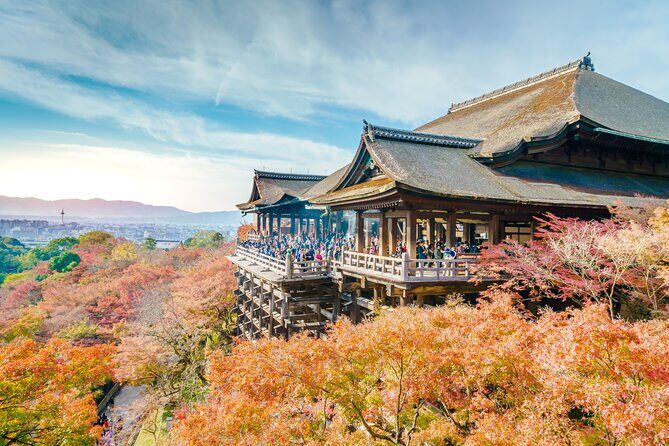
Kiyomizu-dera is your final big highlight stop, with about 1 hour 20 minutes on the tour. It’s a UNESCO World Heritage site, and it’s known for the grand wooden stage and panoramic views over Kyoto.
Optional admission for the main area is listed at 500 yen. If you want the full Kiyomizu-dera experience, plan to pay and go in. If you’ve already seen enough paid interiors for the day, you can still appreciate the setting, but the star moment is tied to being inside the key viewing areas.
This is also one of the stops where your energy management matters. The day’s almost over, and Kiyomizu-dera involves walking and moving through crowds. I’d keep your pace calm. You want good photos, not a sprint.
Money and value: what $55.17 buys, and what you may pay extra
The headline price is $55.17 per person. That low number is the main reason this tour works for many people: you’re paying for transportation and a guide across multiple cities and major sights in one day.
What’s not included:
- Meals
- Optional admission fees and activity charges
- Travelers insurance
- Personal expenses
The tour lists optional main hall admissions for the big-ticket places:
- Todai-ji: 800 yen
- Byodoin Temple: 700 yen
- Kiyomizu-dera: 500 yen
So your total day cost depends on how many paid halls you choose. If you’re the type who pays for the inside views at each major stop, you’ll add those three amounts. If you skip one, your budget stays light. Either way, the tour still delivers a lot because many of the stops are free.
My advice: decide your ticket budget before you go. Then you won’t have to debate at the gate while everyone else is moving.
Guide quality: why this tour tends to feel easy
This is one of the most praised parts of the experience, and for good reason. In the feedback I saw, guides like Yuri, Min, and Soae Lee get credit for being patient, clear, and helpful with practical needs.
One detail I especially like: guides help solo travelers with photos. That’s not just a nice gesture. It’s the difference between leaving with random blurry selfies and leaving with real memories that you can actually use later.
Group size matters too. The cap is 49, but people have described smaller on-the-ground groups, which helps you hear the guide and move together without chaos. You’ll still face crowds at famous sites, but having an organized guide makes the day feel controllable.
Who this tour is best for (and who should skip it)
This day tour is a good fit if:
- you’re short on time and want a strong overview from Osaka
- you like big iconic sights more than deep local wandering
- you want help with explanations and photo logistics
- you’re traveling solo or with a small group and don’t want to plan transit
You might want a different plan if:
- you hate schedules and want long stays at each site
- you want to soak up neighborhoods without constant moving
- you’re trying to avoid any paid-entry decisions (because several big halls are optional)
Should you book this Kyoto and Nara Highlights day tour?
I’d book it if your goal is simple: see Kyoto and Nara highlights in one smooth day with transportation + guide done for you. The routes are thoughtfully split—Fushimi Inari gives you torii-and-Uji vibes, while Arashiyama adds bamboo, bridge photos, and a market break. And the guide reputation is strong, especially for patient explanations and practical help.
Book it with a realistic mindset: you’ll get broad highlights, not a slow, detailed study of each temple complex. If that’s what you want, this tour is a great value way to get oriented and decide what you want to revisit later.
FAQ
What time does the tour start and end?
The tour starts at 8:00 AM and returns to the meeting point at around 6:00 PM.
How long is the Kyoto and Nara day tour from Osaka?
It runs for about 10 hours.
Which days do the Fushimi Inari and Arashiyama routes run?
The Fushimi Inari route runs on Mon, Wed, and Fri. The Arashiyama route runs on Tue, Thu, and Sat.
Are ticket fees included for Todai-ji, Byodoin, and Kiyomizu-dera?
Optional main hall admissions are not included. The listed prices are 800 yen for Todai-ji, 700 yen for Byodoin Temple, and 500 yen for Kiyomizu-dera.
Does the guide speak English?
Yes. The tour includes an English and Korean speaking guide.
Where do I meet the group?
The departure and return meeting point is Tsurutontan Soemoncho (near public transportation).
Is free cancellation available?
Yes. You can cancel for a full refund up to 24 hours before the experience’s start time.