REVIEW · OSAKA
Matcha Tea Bowl Experience in Osaka
Book on GetYourGuide →Operated by Tocoton LLC · Bookable on GetYourGuide
Clay turns into a tea ritual souvenir.
In Osaka, you carve your own matcha tea bowl and learn why it matters in the tea ceremony. I like how hands-on it is, and how the lesson connects craft details to everyday Japanese culture you’ll actually notice on your trip.
Two standout things for me are the kurinuki technique (your design ends up truly one-of-a-kind) and Anna’s clear, patient teaching style. One thing to think about: your bowl isn’t finished that day. You’ll ship it later, and shipping costs aren’t included.
In This Review
- Key things to know before you go
- Why this Osaka workshop feels like more than pottery class
- Meet at JR Teradacho Station and settle in quickly
- Kurinuki carving: the wabi-sabi look is the point
- The tea bowl lesson you’ll actually use at home
- Your bowl’s finishing steps: pick a color and enjoy your drink
- What’s included (and why it’s good value at $83)
- The private-group feel: learning from Anna’s teaching style
- The ceramic gift you take home right away
- The optional combined workshop with tea ceremony masters
- Languages, pace, and how the session usually runs
- Logistics that can trip you up (and how to avoid it)
- Price and Logistics (the part to do the math on)
- Who should book this (and who should skip it)
- Should you book the Matcha Tea Bowl Experience in Osaka?
- FAQ
- FAQ
- How long is the matcha tea bowl workshop?
- Where do we meet for the workshop?
- Do I need any experience with ceramics or the tea ceremony?
- Will I get the finished bowl immediately?
- Is there an option to learn tea ceremony basics too?
- Is the workshop wheelchair accessible or suitable for young children?
Key things to know before you go
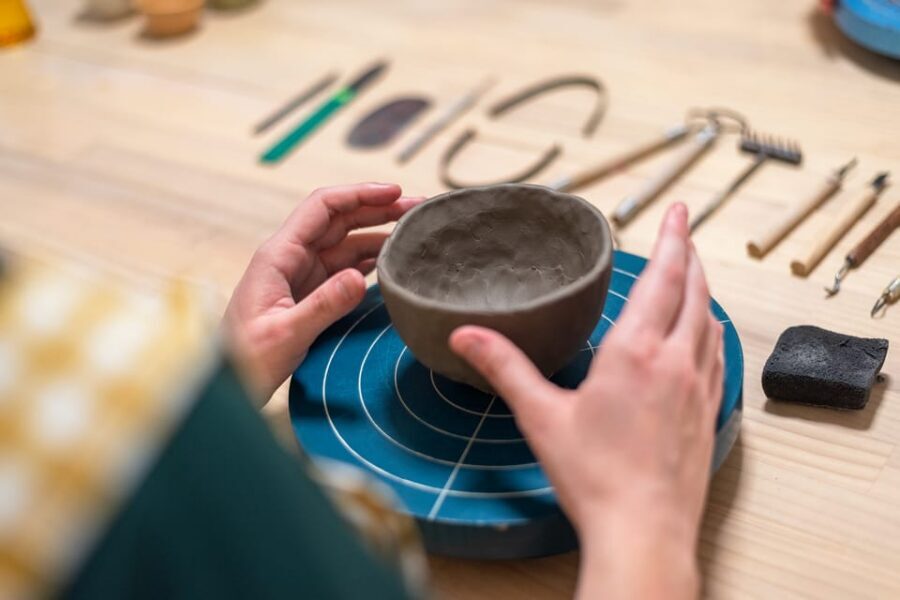
- You make a chawan-style bowl: carve, personalize, and then use it later for tea at home
- Kurinuki carving teaches wabi-sabi: small tools shape a handmade, imperfect look
- Sign your bowl in Japanese characters: a simple extra step that feels meaningful
- You drink matcha with sweets: not just making pottery, but learning how it’s enjoyed
- Private group feel: the pace stays relaxed and questions are welcome
- Your bowl ships in ~2 months: plan for a delayed souvenir, not an instant one
Why this Osaka workshop feels like more than pottery class
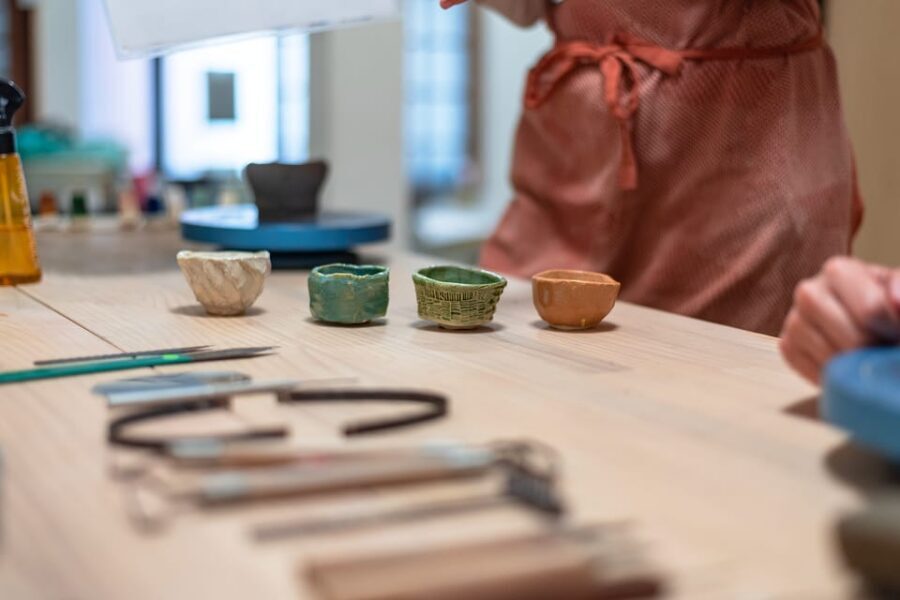
This isn’t just a craft activity where you copy a pattern and leave with a finished object. You’re building a matcha tea bowl (chawan) meant for a real ritual. That changes the energy in the room: you’re working with purpose, not just decoration.
The workshop also gives you something practical for your trip. You’ll learn the cultural meaning behind the bowl and the tea ceremony elements, so when you see matcha sets in shops or tea rooms later, you’ll understand what you’re looking at. It makes Osaka feel less like a checklist and more like a place with traditions you can actually recognize.
You can also read our reviews of more tours and experiences in Osaka.



Meet at JR Teradacho Station and settle in quickly
You meet at JR Teradacho Station (north exit). The team will be easy to spot because they carry a sign with Ceramics Tocoton written on it.
From there, the flow is usually straightforward. Pickup service is included, so you’re not left figuring out where to go next with tired legs and a head full of train lines. The session also runs 90 minutes to 2 hours, so it’s long enough to get into a rhythm, but not so long that you’re mentally fried.
If you’re early, great. If you’re running late, do the smart thing: contact them if you’ll be more than 15 minutes late. Past that, it can count as a no-show.
Kurinuki carving: the wabi-sabi look is the point
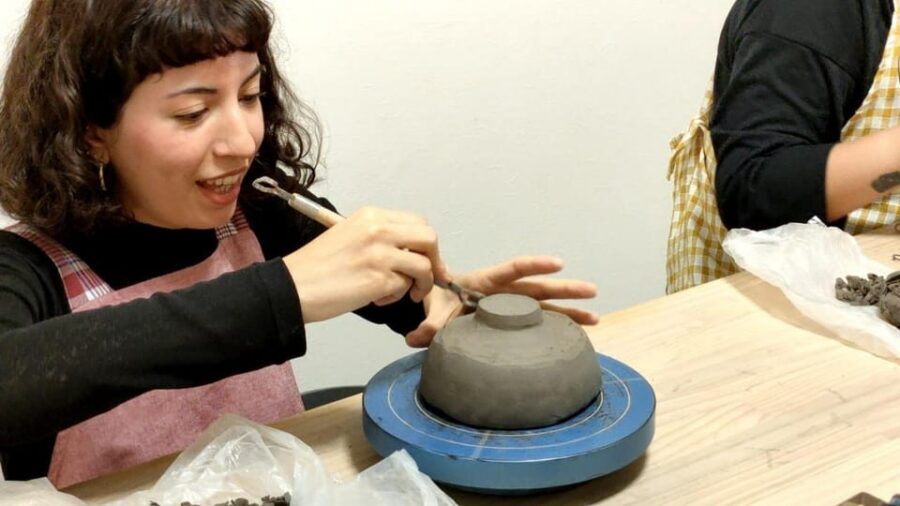
The main act is learning how to decorate your bowl using the traditional kurinuki technique. This involves carving the clay with different tools to create a design that’s completely yours.
Here’s why this matters: kurinuki doesn’t aim for perfectly uniform decoration. The value is in the handmade character—those slight irregularities that feel calm, lived-in, and honest. That wabi-sabi vibe is often what visitors struggle to understand, because it’s the opposite of “perfect.” In the workshop, it clicks fast because you’re the one shaping it.
You’ll also personalize the bowl further by signing it using Japanese characters. It’s a small step, but it turns your piece into something you’ll remember with more than a photo. The bowl stops being a souvenir and becomes a memory you can hold.
The tea bowl lesson you’ll actually use at home
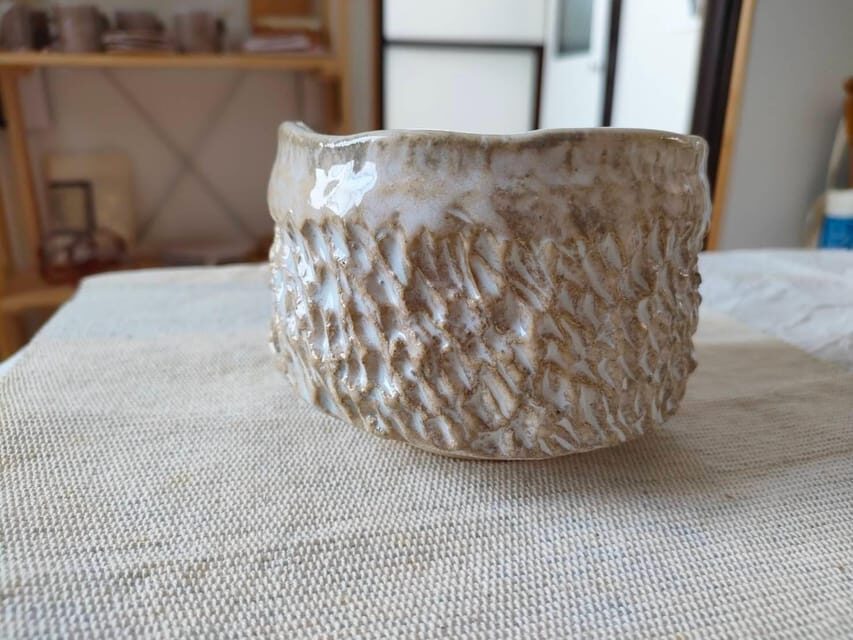
You’ll talk about the role of the bowl in Japanese tea practice, not just the steps for making it. You learn how matcha tea is connected to the chawan—and why people care about the bowl’s feel, shape, and presence.
Then you get to prepare matcha and Japanese sweets to go with it. This is important: it’s one thing to “hear about” the tea ceremony, and another to experience matcha and sweets paired with the idea of the bowl.
If you’ve ever done a pottery workshop where the tea part feels like an afterthought, you’ll probably appreciate how this one treats it as part of the same lesson. You’re learning the culture through use, not through lectures.
Your bowl’s finishing steps: pick a color and enjoy your drink
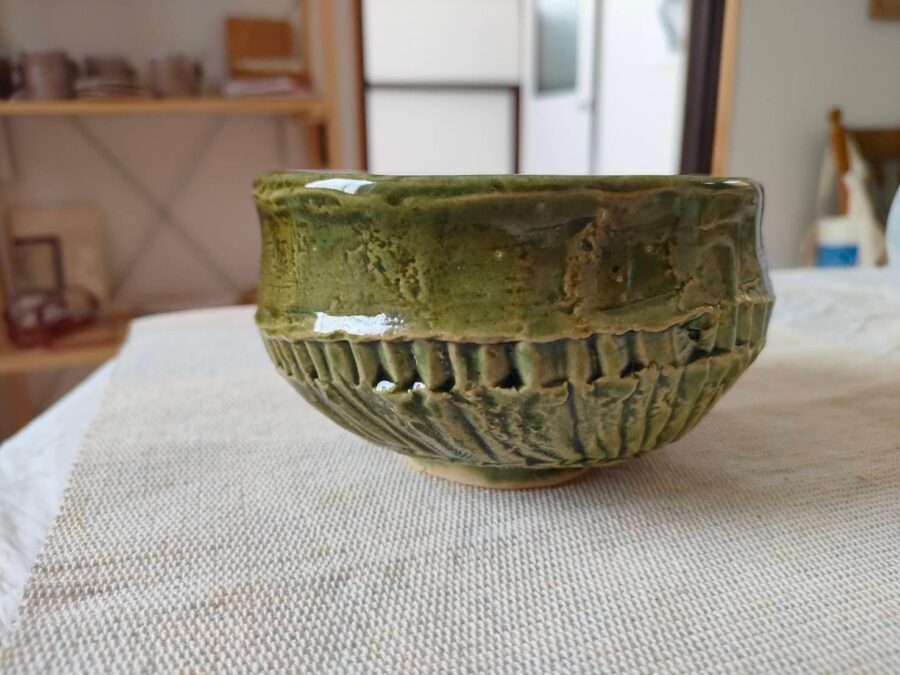
By the end, you choose the bowl color. That final choice is more than cosmetic. It affects the personality of the finished piece, and your bowl will reflect your tastes rather than a studio’s default.
After that, you enjoy a drink—matcha as part of the experience. You’ll also have Japanese sweets as accompaniment. This combination helps you “close the loop”: craft → culture → taste.
What I like about this stage is how it gives you a clear ending. You’re not stuck waiting for instructions you already finished. You get a calm moment to sit, drink, and connect the work you just did to what you’ll remember later.




What’s included (and why it’s good value at $83)
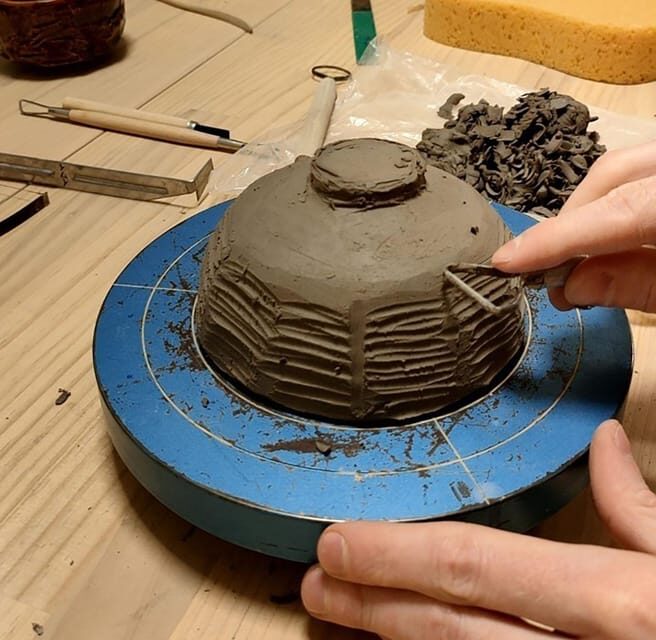
The price is $83 per person. For that, you get a lot of the expensive bits handled: materials, equipment, drinks, and a ceramic gift. You also get technical and cultural explanations, plus station pickup.
Most DIY workshops charge extra for tools, firing, or the “project overhead.” Here, your bowl is made as a proper ceramic piece and then shipped later. That “later” part is a big part of the value, because you’re essentially commissioning a handmade item from start to finish, with a guided hand that helps you avoid the usual beginner mistakes.
You should also know what’s not included: shipping costs for the bowls. They’ll estimate shipping depending on your country and group size, and your bowl ships about two months after the workshop.
Also, the experience is a private group. That tends to mean a more relaxed pace and more time for questions—especially helpful when you’re learning a technique like kurinuki that isn’t intuitive on first try.
The private-group feel: learning from Anna’s teaching style
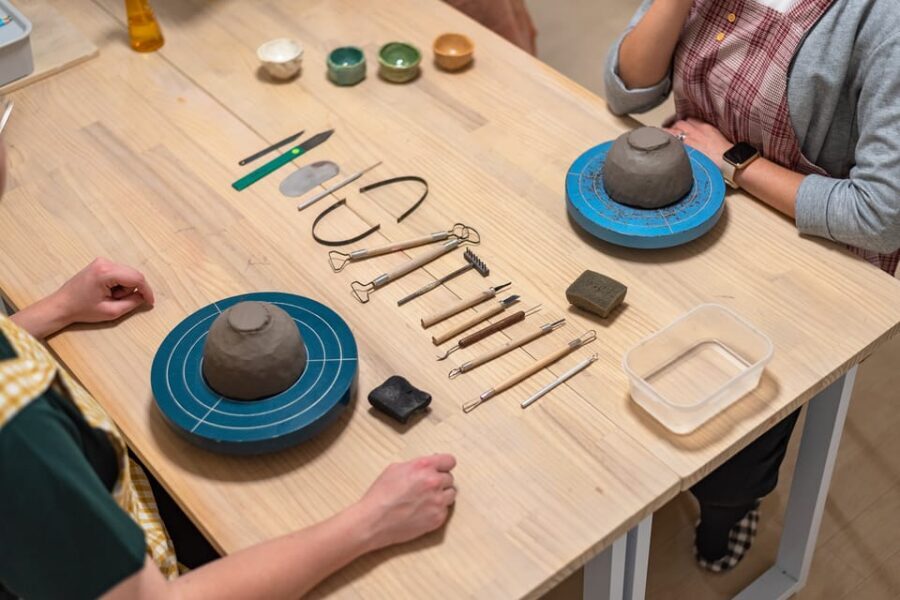
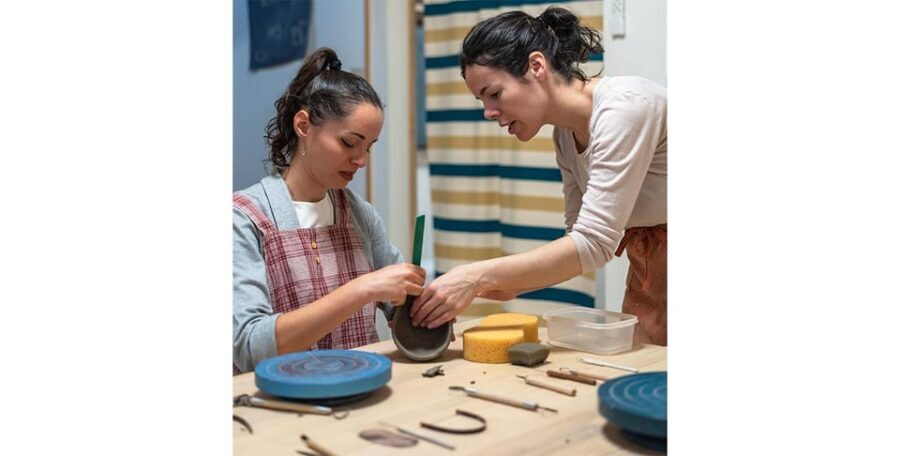
The instructor for the bowl workshop is Anna, a ceramist who studied ceramics in Osaka. She guides the process from start to finish, and you don’t need previous experience.
What you can expect from her teaching approach (based on how people describe their sessions) is hands-on help when something doesn’t look right. When you’re carving clay, tiny adjustments make a big difference, and a good teacher can correct without making you feel rushed.
In one-on-one or small-group setups, you’re also more likely to get useful explanations as you go. People tend to appreciate that Anna doesn’t limit herself to technical clay talk. She also shares context about Japanese pottery and how the tea ceremony elements fit together.
The ceramic gift you take home right away
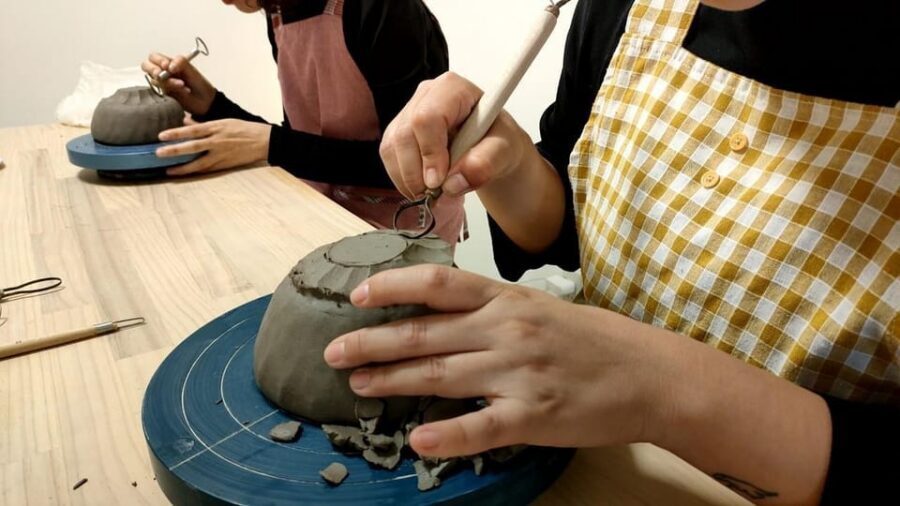
You’ll receive a ceramic gift included in the workshop. That means you’re not leaving with only a promise of something coming later.
In practice, this is a nice balancing trick for the “I want something now” feeling. Your main bowl is shipped later, but you still get a tangible item that marks the experience immediately.
It’s also a good chance to appreciate the studio’s aesthetic. Many ceramic workshops have a “show your work” vibe—this one also lets you see craftsmanship you might want to buy while you’re there.
The optional combined workshop with tea ceremony masters
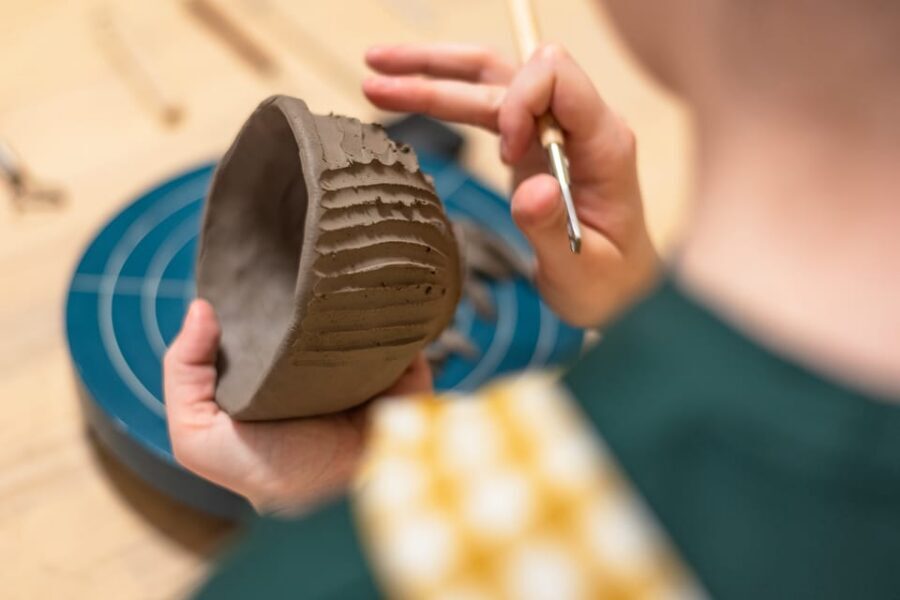
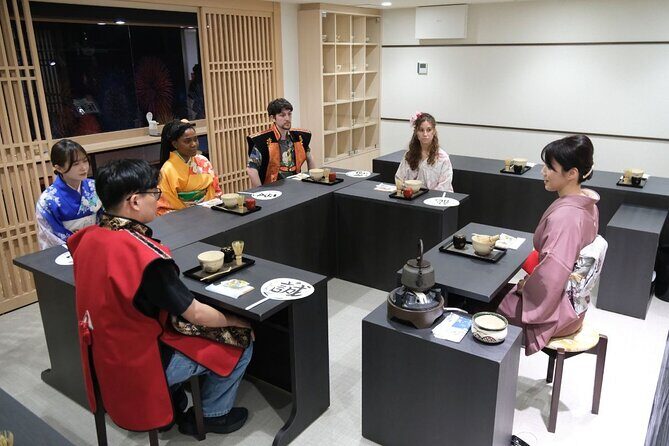
There’s an optional addition that turns this into a longer, more ritual-focused day. You first learn the basics of the tea ceremony and prepare matcha with tea ceremony masters Kiyomi and Masako. Then you switch gears and make your matcha bowl with Anna.
This combined format matters if you want the cultural thread to run through the whole experience. Instead of pottery as the headline with tea as a side dish, you get tea ceremony first—then the bowl becomes part of your understanding, not just your craft project.
The combined workshop also includes matcha and Japanese sweets, plus you take home a small dish gift meant for enjoying sweets during tea ceremony at home. Afterward, you can explore the local area of Ikuno Ward in Osaka.
If your schedule is tight, the stand-alone matcha tea bowl workshop is already packed. But if you love rituals, this option gives you more context for what the bowl is for and why the details matter.
Languages, pace, and how the session usually runs
The workshop is conducted in English, Spanish, Catalan, or Japanese. That’s a real help in Osaka, where tea ceremony terms and pottery technique names can otherwise get confusing fast.
You’ll be working in a traditional building setting, and the space isn’t adapted for wheelchair users. It also isn’t suitable for children under 6 years old.
The pace is built for beginners. You’re learning kurinuki carving, signing your bowl, and making matcha—so you need time to focus. Private-group pacing helps, especially if you’re the type who asks questions as you work.
Logistics that can trip you up (and how to avoid it)
Plan around the fact that your bowl won’t be ready for immediate pickup. Your bowl is shipped to the address you provide in about two months, and shipping costs aren’t included. If you’re only in Japan for a short time, this is fine—just don’t make the mistake of expecting to pack the bowl in your suitcase.
Also keep an eye on timing. If you’re more than 15 minutes late and don’t contact them, it may count as a no-show. This is one of those small rules that’s worth respecting, especially on busy travel days.
No alcohol or drugs are allowed. Simple rule, but it matters if you’re thinking of pairing this with a night plan.
Price and Logistics (the part to do the math on)
Let’s talk value in plain terms. At $83 per person, you’re paying for:
- Guided ceramic instruction (kurinuki carving)
- Materials and equipment
- Drinks and Japanese sweets
- A ceramic gift you take home
- Station pickup service
- Technical and cultural explanations
Your bowl’s shipping happens later, and shipping costs depend on country and number of people. If you’re traveling solo, shipping could feel like the “hidden” part—but you still aren’t responsible for the firing/glazing labor upfront. This is less like buying a souvenir and more like commissioning a handmade item.
If you already know you want a meaningful ceramic piece from Osaka, the workshop price starts to make sense fast. You’re not just getting an object; you’re getting the story and the technique behind it.
Who should book this (and who should skip it)
Book it if you want a hands-on Japanese craft experience tied directly to matcha culture. It’s a good fit if you like making things with your hands, and if you enjoy learning how traditions work in real life—especially when you can taste the results.
It’s also a strong choice if you want a smaller, private feel. The workshop is designed as a private group, and it tends to work well when you want attention and guidance rather than a “move along” class format.
Skip it if you need wheelchair access, or if you’re traveling with very young kids under 6. Also skip it if you absolutely need a fired ceramic item to take home in your luggage. The bowl ships later, so it’s not a quick grab-and-go souvenir.
Should you book the Matcha Tea Bowl Experience in Osaka?
Yes—if you want a souvenir that’s personal, usable, and connected to Japanese culture beyond photos. The kurinuki technique gives you a result that looks and feels genuinely handmade, and the matcha + sweets part turns the lesson into something you can experience, not just watch.
My recommendation comes down to this: you’re paying for guided craftsmanship and cultural understanding, not just a one-time activity. If you can handle the idea of waiting for shipping, this is one of the more memorable ways to spend a couple hours in Osaka.
FAQ
FAQ
How long is the matcha tea bowl workshop?
It runs about 90 minutes to 2 hours, depending on the starting time and flow of the session.
Where do we meet for the workshop?
You meet at JR Teradacho Station (north exit). The team will carry a sign that says Ceramics Tocoton.
Do I need any experience with ceramics or the tea ceremony?
No previous experience is required. You’ll be guided through the process from start to finish.
Will I get the finished bowl immediately?
No. Your bowl is fired and shipped to the address you provide in about two months. Shipping costs are not included.
Is there an option to learn tea ceremony basics too?
Yes. There’s an optional combined workshop where you learn tea ceremony basics with Kiyomi and Masako, then make your bowl with Anna.
Is the workshop wheelchair accessible or suitable for young children?
No. It’s not suitable for wheelchair users and not suitable for children under 6 years old.